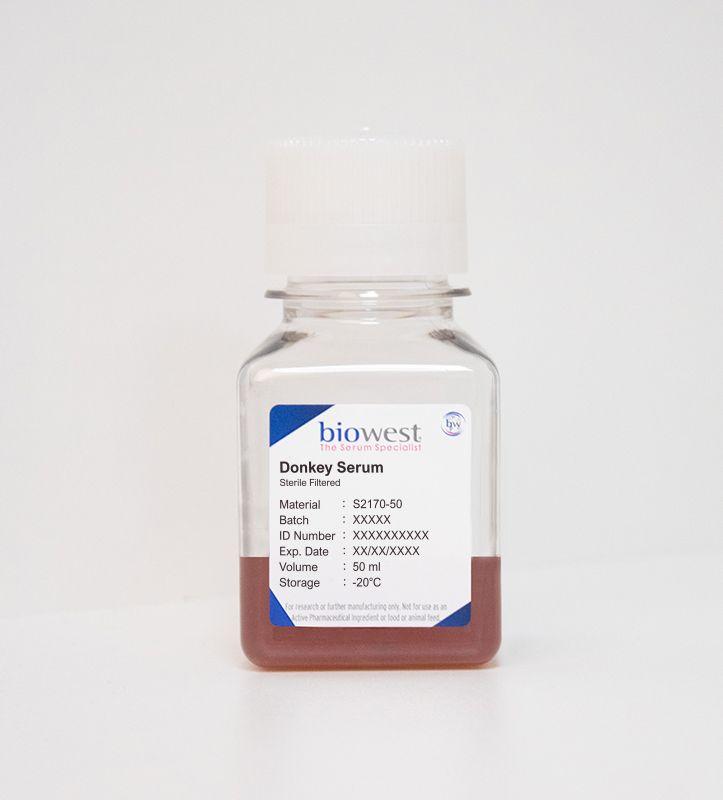
Why Are Researchers Turning to Donkey Serum for Specialized Cell Culture?
Specialized cell culture depends on more than growth media and sterile technique. Many assays need serum additives that reduce unwanted binding, protect delicate cells, and support clearer readouts. Donkey serum has gained attention because it can serve targeted roles in immunology, tissue staining, and antibody-based workflows. Its value comes from species origin, protein balance, and compatibility with certain detection systems where background signal must stay low.
Why Donkey Serum Fits Specialized Workflows
Researchers often choose serum based on the host species used in an experiment. In antibody-based culture studies, donkey serum may help block nonspecific sites before secondary antibodies are applied. This match can reduce stray interactions, support cleaner imaging, and improve confidence in results without changing the core biology under review.
How It Supports Cleaner Cell Culture Results
Serum contains albumin, globulins, growth-supporting proteins, and other natural components. These elements can help stabilize cells during handling and reduce stress during sensitive procedures. In specialized culture systems, even small sources of interference can affect signal quality.
Donkey-derived serum is often selected when a protocol uses donkey-hosted secondary antibodies. Matching the blocking serum to the secondary antibody host can help reduce unwanted binding. That choice supports stronger contrast between true signal and background staining.
Why Background Control Matters
Cell culture experiments often depend on precise visual or measurable outputs. Background noise can hide weak signals, blur staining patterns, or create false confidence in poor data. Blocking steps are meant to limit these issues before detection begins.
A suitable serum can coat open binding sites on cells, slides, or tissue sections. That barrier lowers the chance that antibodies attach where they should not. Better blocking can make later analysis more reliable.
Signal Clarity in Complex Assays
Multiplex staining places extra pressure on every reagent. Several antibodies may be present at once, which raises the risk of cross-reaction. Donkey serum can be useful where donkey secondary antibodies appear in the same workflow.
Clearer signal separation helps researchers compare markers across cell types. It also supports stronger image analysis, especially when low-abundance proteins are being measured.
Use in Immunology and Tissue Culture
Donkey serum is common in immunofluorescence, immunohistochemistry, and related cell-based assays. These methods often require a blocking phase before primary antibodies contact the sample. The goal is simple: reduce binding that does not reflect the target.
Some laboratories also use serum during assay development. Testing different serum sources can reveal which one gives the lowest background for a given antibody panel. This step can save time before larger studies begin.
Fit With Sensitive Samples
Primary cells, neural cultures, and tissue-derived samples can react strongly to handling conditions. Serum quality can influence how stable these samples remain during preparation. Consistent sourcing and processing help reduce lot-to-lot variation.
Heat-inactivated formats may be selected when complement activity needs reduction. Sterile-filtered formats can support cleaner handling in culture-related workflows. Selection depends on the assay goal and sample type.
What Researchers Evaluate Before Use
Laboratories rarely choose serum by name alone. They review processing method, sterility, species origin, filtration, storage, and compatibility with the protocol. These factors affect consistency across repeated experiments.
Documentation also matters. Researchers may check certificates, lot details, and intended research use before ordering. Reliable records make it easier to repeat a method months later.
Small pilot tests are still useful. A brief comparison can show whether donkey serum lowers background better than another serum source. The best choice is the one that supports the cleanest data for that exact system.
Conclusion
Donkey serum is gaining attention because specialized cell culture needs precision at every step. Its main value lies in blocking support, antibody compatibility, and improved signal clarity in selected assays. Researchers use it when species matching and low background are central to dependable results. Careful selection, proper documentation, and small validation tests help ensure this serum fits the protocol before broader experimental use.