
Unleash Your Power Cultivating Inner Strength
Unleash Your Power Cultivating Inner Strength
How to Cultivate Inner Strength in Everyday Life
To cultivate inner strength, start small and practice often. Notice what you already handle well, set one realistic goal, pause before reacting under stress, and treat setbacks as information rather than proof that you have failed. Add support from people you trust, protect your time with clear boundaries, and record small wins.
Inner strength is not about acting tough or never feeling afraid. It is the mix of resilience, self-awareness, self-compassion, and steady action that helps you meet hard moments without losing sight of your values. While some strengths reflect temperament, research suggests many are built through intentional practice over time.
This guide will help you build that capacity with practical habits for your mind, body, relationships, and daily choices. I am W.A. Muller, and we will begin with the inner resources you can use today.
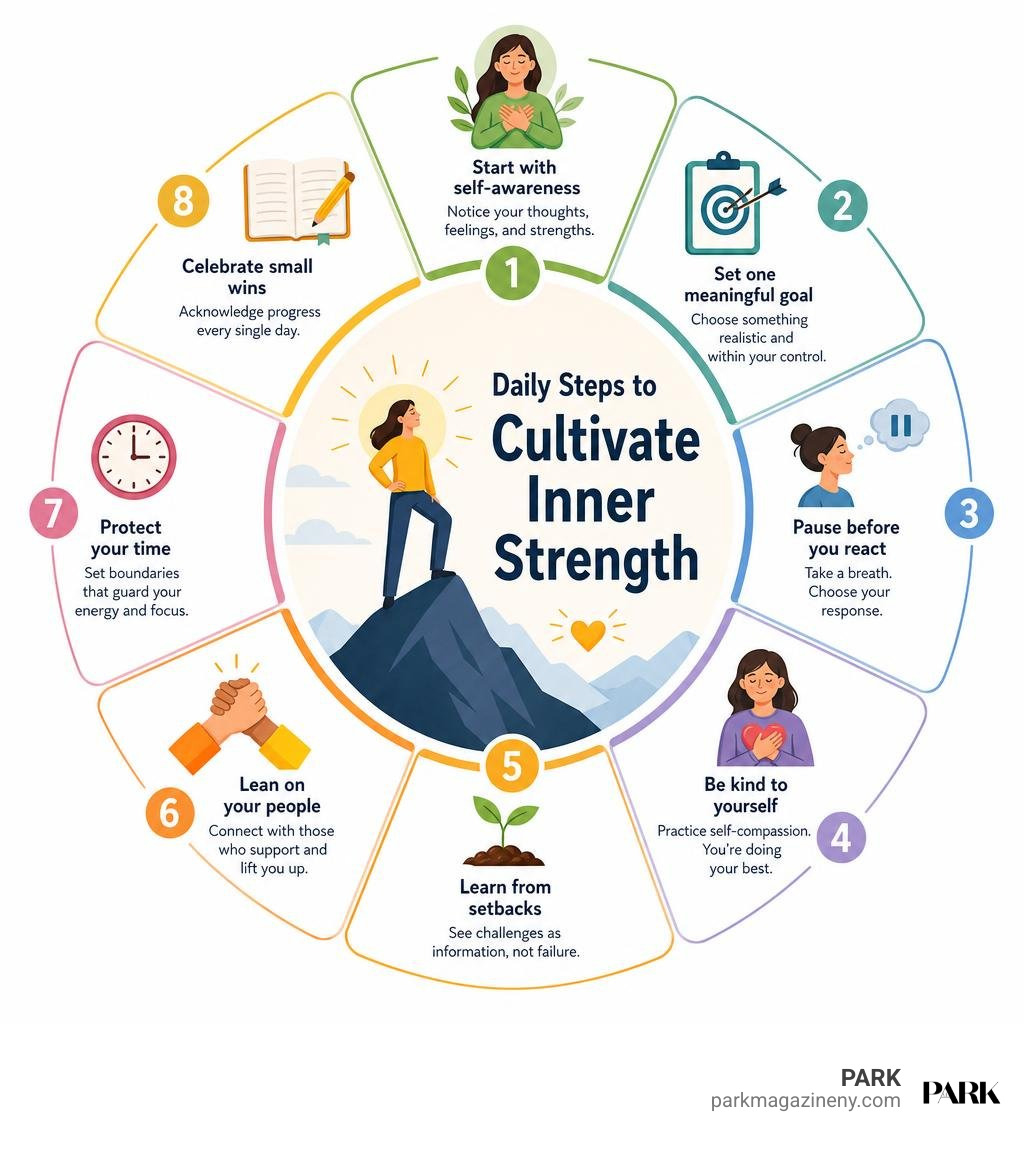
Cultivate inner strength terms to remember:
What Is Inner Strength and Why Does It Matter?
At its core, inner strength is a reservoir of psychological resources, emotional stability, and adaptive behaviors that keep us grounded when external circumstances turn volatile. Rather than an aggressive posture of dominance, it acts as an internal anchor that allows us to respond consciously rather than react impulsively.
A 2023 study on resilience found that inner strength was inversely correlated with symptoms of anxiety, depression, and somatization. When we possess strong internal resources, our nervous systems regulate more efficiently, preventing prolonged stress activation. Furthermore, clinical investigations have revealed that building inner strength could be an effective tool in improving the quality of life among women with cancer, highlighting its tangible power during deep physical and emotional adversity.
Research on older adults in Finland and Sweden discovered that inner strength and wellbeing have a reciprocal positive relationship: as inner resilience rises, subjective wellbeing increases, which in turn reinforces further resilience.
Understanding where our strengths originate helps us recognize that we are not fixed in place. Research indicates that on average, about a third of a person’s strengths are innate, built into his or her genetically based temperament, talents, mood, and personality. The other two-thirds are developed over time through deliberate experience and daily application.
| Dimension | Innate Temperament (Approx. 1/3) | Developed Inner Strengths (Approx. 2/3) |
|---|---|---|
| Origin | Genetic baseline, nervous system sensitivity | Intentional practice, habit cultivation |
| Examples | Baseline energy, natural introversion/extraversion | Emotional regulation, self-compassion, boundary setting |
| Adaptability | Relatively stable across the lifespan | Highly malleable through neuroplastic training |
| Role in Adversity | Initial physiological stress reactivity | Conscious coping strategies, meaning-making, resilience |
Identifying and Auditing Your Core Strengths
To grow our capacities, we must first recognize our existing foundation. Many people suffer from strength blindness—we downplay our skills simply because they come naturally to us.
A structured method to uncover your toolkit is the Reflected Best Self (RBS) exercise. Reach out to three or four trusted mentors, colleagues, or friends, and ask them to share specific examples of times you were at your best. Reading these external observations helps you compile an objective skill inventory, spanning emotional intelligence, problem-solving, and relational warmth. Review past triumphs where you survived challenging moments; those experiences serve as empirical proof that you already possess the grit to navigate upcoming hurdles.
7 Core Habits to Cultivate Inner Strength Daily
Building resilience does not require drastic overhauls. Instead, consistent micro-habits reshape neural pathways over time. Examining how daily lifestyle choices shape your mental health illustrates how everyday micro-actions create compounding psychological dividends.
Here are the 7 core habits to implement:
- Establish a 3-Breath Pause: Before answering high-stakes emails or reacting to stressful news, take three deliberate diaphragmatic breaths to disengage reactive pathways.
- Set and Execute Daily Micro-Goals: Choose one tiny, non-negotiable objective each morning—such as finishing an uncomfortable task or walking for 15 minutes—to reinforce self-trust.
- Audit Your Circle of Control: Draw a line between what you can directly influence and what you must accept, directing your energy exclusively toward actionable elements.
- Practice Decisive Action: Treat decision-making as a muscle; avoid lingering over small daily choices to eliminate cognitive fatigue.
- Acknowledge Daily Micro-Wins: Write down three things you handled effectively before going to sleep to counter natural self-criticism.
- Embrace Intentional Discomfort: Take a brisk walk in cold weather or speak up first in a meeting to stretch your stress tolerance threshold.
- Hold Anchoring Mantras: Repeat grounding statements during high-pressure situations, such as “I have handled difficulty before, and I can handle this step today.”
Using Mindfulness and Gratitude to Cultivate Inner Strength
Mindfulness provides the mental space necessary to choose resilience over reactivity. When we practice staying present, we observe thoughts and emotions without becoming consumed by them.

Pairing mindful awareness with intentional gratitude systematically shifts attention away from perceived threats toward abundance. Practice mudita (sympathetic joy)—the deliberate celebration of other people’s successes—which dismantles unhealthy social comparison and fosters authentic goodwill. Incorporating these elements into building a sustainable self-care routine safeguards long-term mental well-being against burnout.
Establishing Mindful Evening Rituals for Mental Clarity
The state of our mind during sleep recovery dictates our emotional bandwidth the next morning. Unwinding intentionally discharges residual stress hormones accumulated throughout the day. Designing mindful evening rituals that improve mood and sleep clears mental clutter, resets cognitive function, and equips us to meet new challenges with renewed clarity.
Transforming Positive Experiences into Lasting Brain Traits
The human brain evolved with a survival-driven negativity bias—it acts like Velcro for negative experiences and Teflon for positive ones. To counter this tendency, we must deliberately convert passing positive mental states into lasting neural traits.
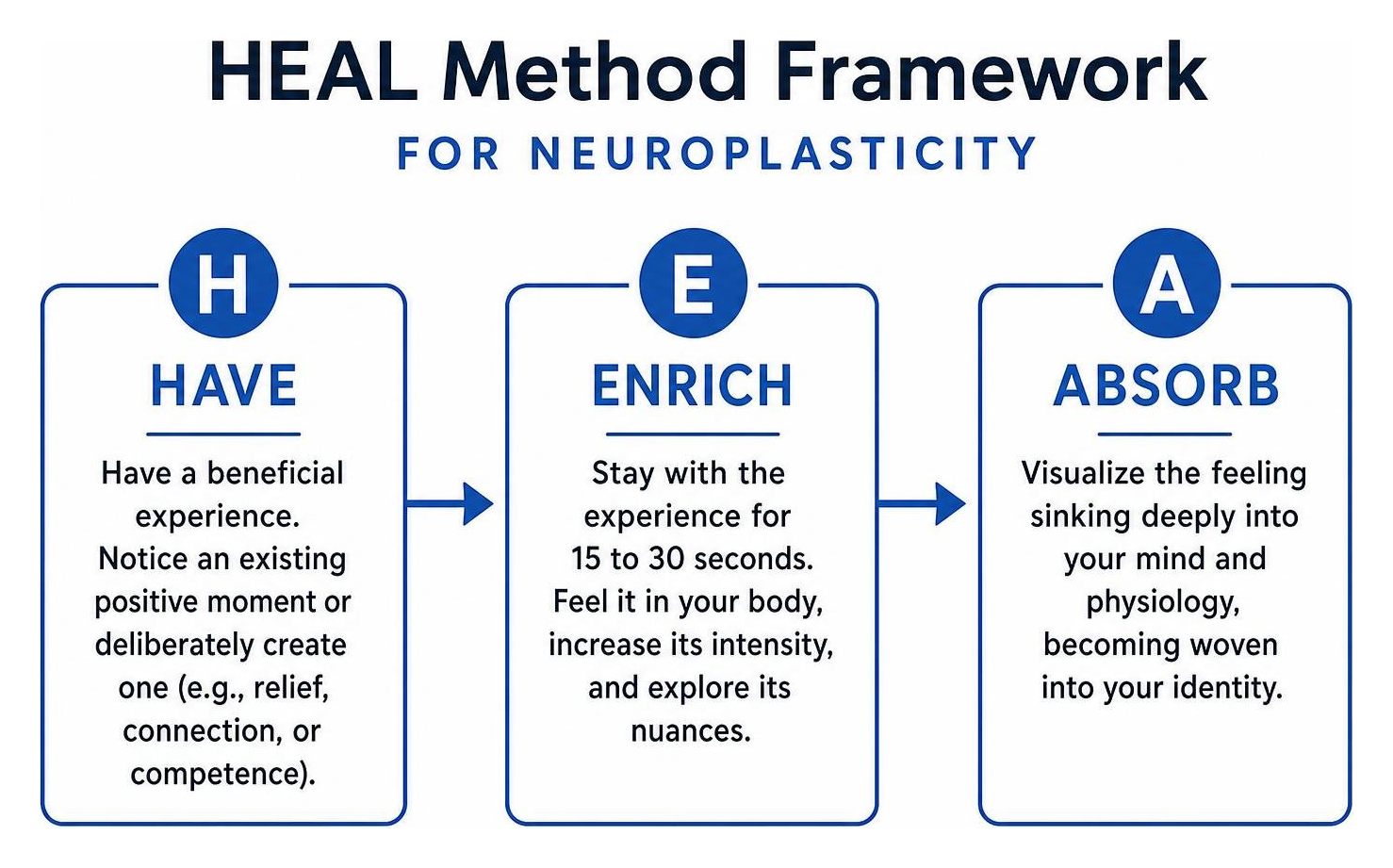
Renowned psychologist Dr. Rick Hanson created the HEAL framework to operationalize this positive neuroplasticity. You can explore Dr. Rick Hanson on growing inner strengths to examine how these neurobiological mechanisms permanently strengthen internal resources:
- H (Have a beneficial experience): Notice an existing positive moment or deliberately create one (e.g., a sense of relief, connection, or competence).
- E (Enrich it): Stay with the experience for 15 to 30 seconds. Feel it in your body, increase its intensity, and explore its nuances.
- A (Absorb it): Visualize the feeling sinking deeply into your mind and physiology, becoming woven into your identity.
- L (Link it): Concurrently hold the positive experience in awareness alongside an older, mildly negative pattern to soothe and replace the old distress.
This method systematically nurtures the three evolutionary layers of the brain: satisfying the need for safety (calming the survival core), satisfaction (rewarding the motivational centers), and connection (nurturing social bonds).
Reframing Setbacks and Silencing Negative Self-Talk
When plans unravel, harsh self-talk often compounds the problem. Negative internal narratives like “I always ruin things” hijack personal agency and inflate self-doubt.
Cognitive reframing allows us to treat setbacks as empirical feedback rather than character flaws. Instead of spiraling into imposter syndrome, ask: “What useful lesson does this outcome provide for my next attempt?” Approaching your missteps with self-compassion does not mean lowering standards; it provides the psychological safety required to remain courageous and persist through inevitable failures.
Somatic Grounding and Physical Discipline
Inner strength is an embodied reality, not merely an abstract concept. Our physiological state directly dictates our mental fortitude.

Physical conditioning trains the brain to tolerate physical and emotional friction. When we engage in cardiovascular exercise or resistance training, the brain releases endorphins and brain-derived neurotrophic factor (BDNF), rewiring neural circuits to maintain poise under strain. When stress strikes outside the gym, somatic awareness—such as grounding your feet firmly onto the floor, scanning for muscular tension, and adopting slow belly breathing—sends immediate biofeedback signals to the brain that you are safe.
Protecting Your Energy and Navigating Relationships
Resilience is not a solitary endeavor. While personal discipline is essential, our immediate environment either bolsters or depletes our reserves. When facing complex emotional challenges, taking the first step toward mental health support is an act of proactive courage rather than a sign of weakness.
How to Cultivate Inner Strength Through Supportive Relationships and Boundaries
Establishing boundaries is essential for energy conservation. Saying “no” to demands that exceed your capacity protects the mental bandwidth needed for meaningful goals.
Surround yourself with accountability partners and supportive communities who reinforce your aspirations rather than feed cynicism. Avoid the trap of comparing your behind-the-scenes struggles to curated highlight reels on social media. True relational resilience comes from knowing when to lean on others, communicating clear personal boundaries, and maintaining relationships that encourage mutual growth.
Frequently Asked Questions About Cultivating Inner Strength
Can inner strength be learned if I have experienced past trauma?
Yes. Because roughly two-thirds of our strengths develop through ongoing experience, neural pathways remain adaptable across your lifespan. While trauma requires careful, professional processing, intentional micro-practices in grounding, self-compassion, and emotional regulation help rebuild self-trust and cultivate post-traumatic growth over time.
How long does it take to see noticeable changes in inner strength?
Immediate emotional relief can occur from a single breathing reset or reframing exercise. However, hardwiring structural neural traits typically takes several weeks of consistent, daily micro-actions. Tracking your reactions in a journal helps reveal how your baseline resilience expands incrementally.
What is the primary difference between inner strength and stoic toughness?
Stoic toughness often relies on emotional suppression, ignoring physical distress, and projecting an unyielding exterior. Genuine inner strength pairs determination with self-compassion, emotional awareness, and flexibility, allowing you to process difficult feelings honestly while choosing values-aligned action.
Conclusion
Building resilient character is an ongoing journey of small, consistent choices rather than an overnight transformation. By conducting honest strength audits, embracing daily micro-habits, taking advantage of positive neuroplasticity, and upholding healthy personal boundaries, you assemble an enduring internal foundation capable of weathering any storm.
We invite you to continue exploring empowering lifestyle practices by visiting the health and fitness resources curated by the PARK team. Step forward today by selecting one small practice, leaning into your capabilities, and claiming the power within you.