
Beyond the Noise Discovering Your Inner Calm
How to Find Inner Calm When Life Feels Loud
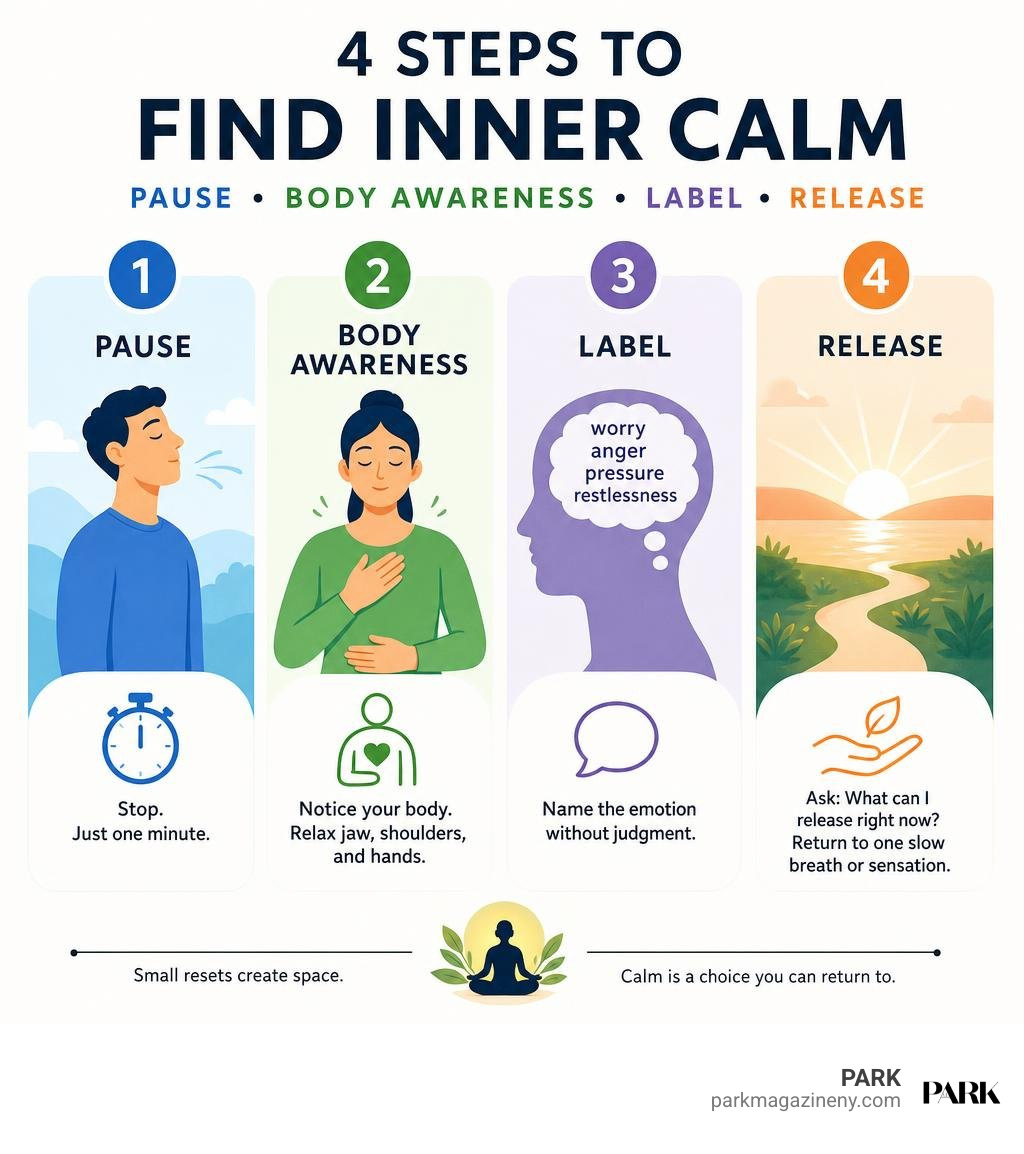
To find inner calm, do not wait for life to become quiet. Pause, notice what is happening in your body, name the emotion without judging it, and return attention to one slow breath or a physical sensation. These small resets create space between a stressful trigger and your response.
Inner calm is not the brief relief that follows a massage, vacation, or perfectly empty calendar. It is a trainable ability to stay steady while deadlines, conflict, noise, and uncertainty continue around you. The goal is not to erase difficult feelings. It is to let them move through without letting them run the day.
A useful starting point:
- Stop for one minute before the next task.
- Relax your jaw, shoulders, and hands.
- Label the experience: “worry,” “anger,” “pressure,” or “restlessness.”
- Ask: What can I release right now?
This matters because fighting for calm can become another source of pressure. Acceptance, attention, and small daily practices build the emotional balance needed to meet stress with more clarity and less reactivity.
I am W.A. Muller, and this guide explores practical ways to build that steadiness in ordinary days and demanding seasons alike.
Quick find inner calm terms:
Understanding Inner Calm: Beyond Fleeting Relaxation
We often confuse temporary relaxation with genuine, sustainable serenity. Sinking into a plush armchair at a spa or lounging on a quiet beach feels wonderful, but that tranquility often vanishes the second we step back onto a noisy street or encounter a difficult email. Fleeting relaxation depends entirely on external comfort; real inner calm is an internal foundation anchored in equanimity.
Equanimity is the learned capacity to maintain psychological balance regardless of whether our circumstances feel delightful, tedious, or chaotic. Rather than demanding a pristine environment, true mental stability allows us to regulate our autonomic nervous system amid unpredictable conditions. When we develop psychological resilience, stress stops acting as an uncontrollable storm and becomes manageable weather we can navigate with composure.
The Paradox of Striving for Peace
One of the greatest obstacles to achieving tranquility is our intense desire to force it into existence. When we aggressively chase relaxation, we treat peace as an achievement to unlock. This striving trap creates cognitive friction: the moment our mind wanders during meditation, we judge ourselves, sparking meditation-induced anxiety.
A study discussed by psychologists on calm habits reveals that deeply grounded individuals do not experience fewer negative feelings. Instead, they excel in psychological distress tolerance by letting initial emotions exist without immediately rushing to fix or eliminate them. Releasing rigid expectations through radical acceptance transforms our relationship with discomfort, allowing mental unrest to settle on its own.
Internal Peace vs. External Silence
Living in a high-intensity environment like New York City means true silence is rare. Sirens, subway rumbles, and relentless schedules create sensory overload. If we believe tranquility requires absolute quiet, we set ourselves up for perpetual frustration.
Internal peace focuses on emotional harmony and mental containment rather than external silence. By practicing non-judgmental awareness, we observe urban chatter and shifting thoughts without absorbing them as personal emergencies. Cultivating self-compassion helps us realize that our internal landscape can remain gentle, spacious, and steady even when surrounding environments are bustling.
The Neuroscience of Stress: How to Find Inner Calm
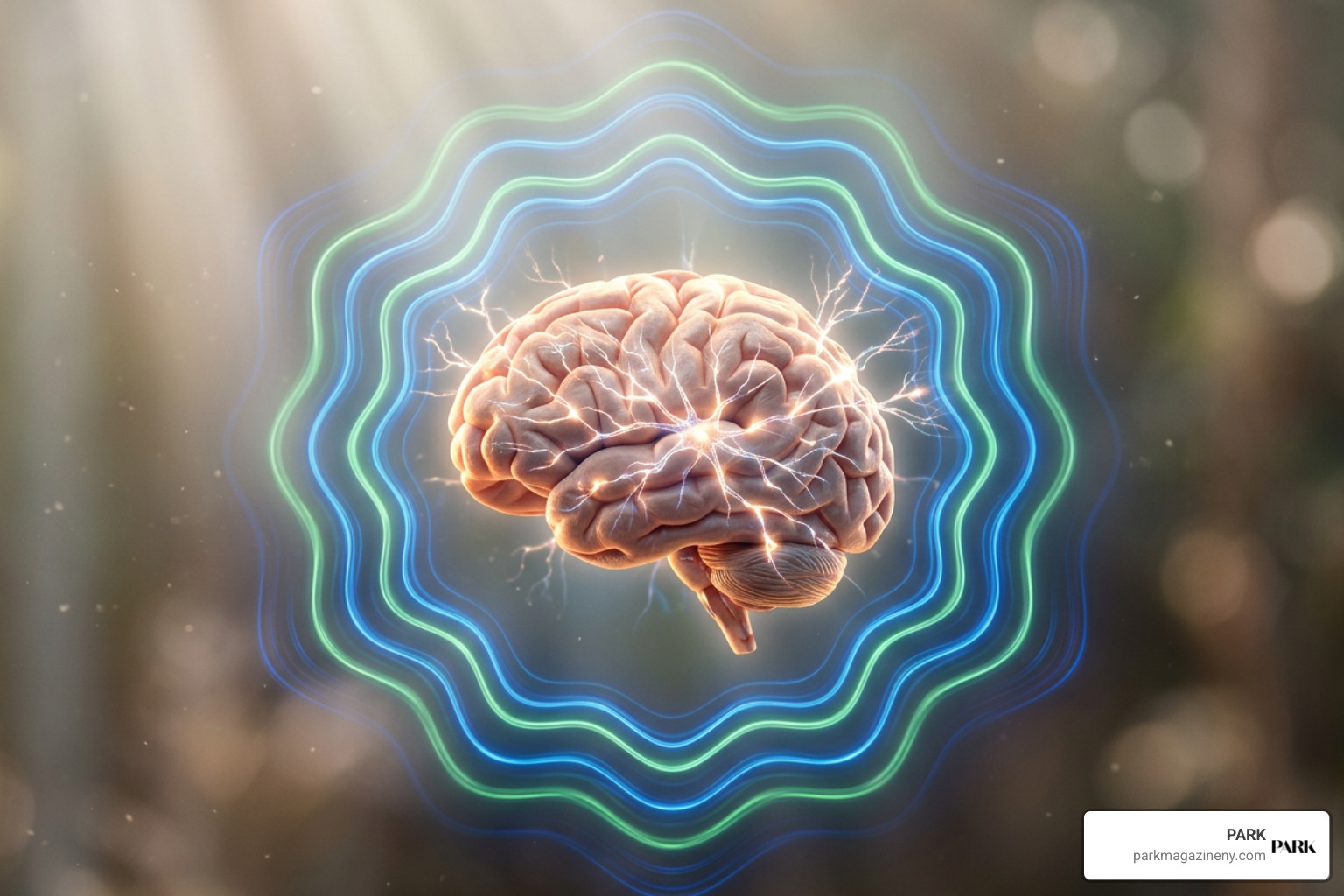
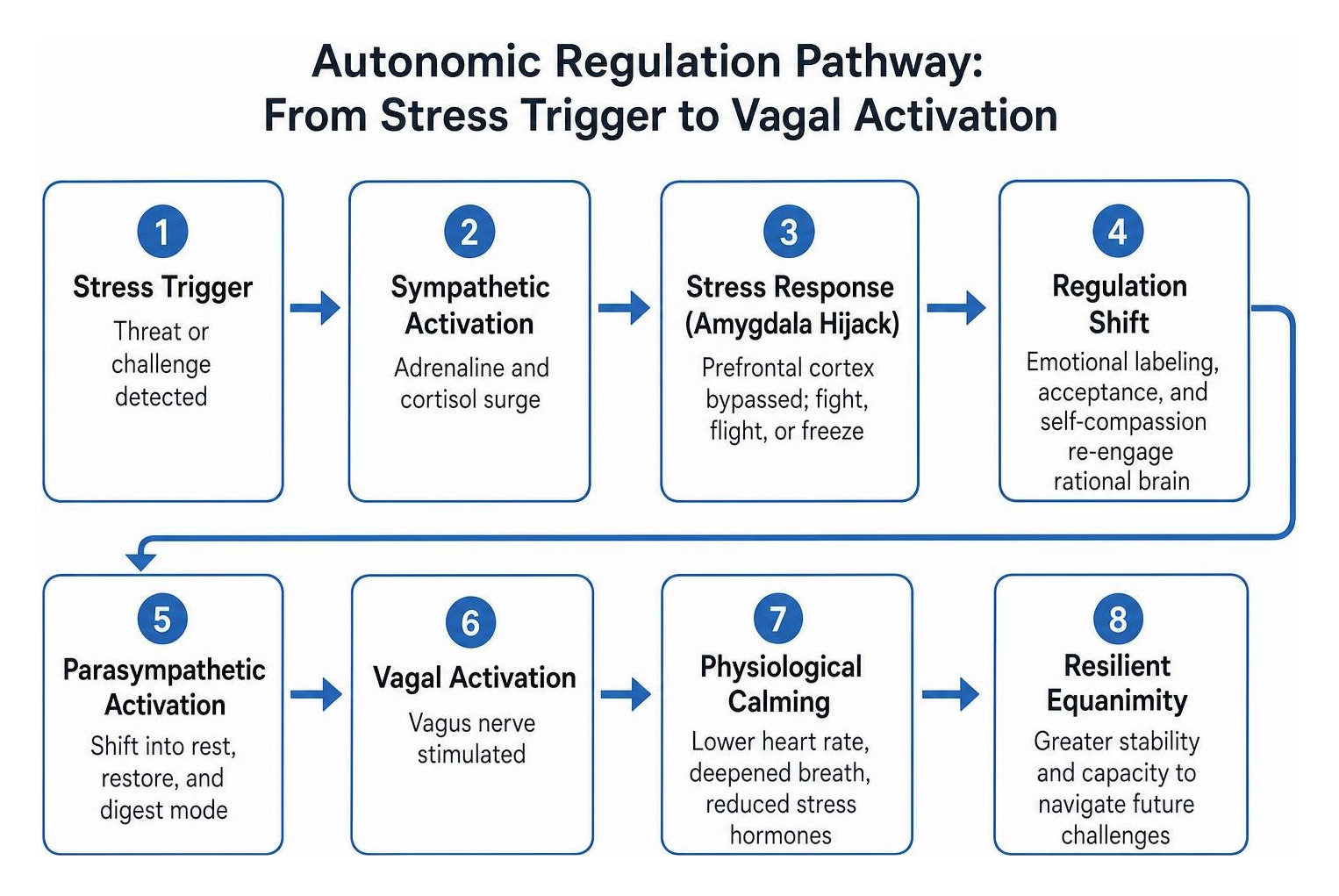
Our biology is wired for survival, treating modern workplace deadlines with the same primal urgency our ancestors reserved for predators. When perceived threats arise, the sympathetic nervous system floods our bloodstream with adrenaline and cortisol, shifting blood away from vital organs toward our limbs. Cultivating sustainable tranquility relies on intentional practices that stimulate the vagus nerve, lower baseline cortisol, and activate the parasympathetic nervous system.
Overcoming the Amygdala Hijack
Emotional intelligence pioneer Daniel Goleman popularized the term “amygdala hijack” to describe what happens when our brain’s emotional center bypasses rational thought. During an acute stress reaction, blood flow shifts away from the prefrontal cortex—the seat of executive function, reasoning, and logic.
During an amygdala hijack, it is said that our IQ temporarily drops by ten to fifteen points. This sudden cognitive drop explains why we often make irrational choices or say things we immediately regret during intense conflicts. Fortunately, practicing simple emotional labeling—silently noting “I am experiencing frustration”—prompts the prefrontal cortex to re-engage, neutralizing primal panic and restoring mental clarity.
The Ninety-Second Rule for Emotional Lifecycles
Neuroscientist Jill Bolte Taylor established that all emotions have a beginning, middle, and end—all within ninety seconds from when they first arise. The physical surge of adrenaline, elevated heart rate, and flushed skin naturally run their course and dissolve in under two minutes.
Why, then, do we stay upset for hours or days? We reignite the cycle through repetitive mental narratives and blame. By interrupting the storyline, keeping our attention on somatic sensations, and allowing the physiological wave to crest and break, our neurochemistry resets itself naturally.
Practical Daily Habits to Build Sustainable Peace

Cultivating steady emotional ground requires weaving micro-rest routines, conscious breathwork, and sensory grounding into our daily flow. Modern routines like the little habits expected to redefine everyday life in 2026 show that minor behavioral pivots deliver profound cumulative rewards over time.
Daily Micro-Practices to Find Inner Calm Fast
You do not need an hour of isolation to ground your nervous system. These micro-practices can be used anywhere:
- The One-Minute Rest: Before opening a new browser tab or entering a meeting, pause for sixty seconds. Rub your palms together to generate warmth, place them gently over your closed eyes or chest, and breathe slowly.
- Diaphragmatic Breath Awareness: Inhale deeply through your nose, expanding your belly, and exhale through your mouth with a prolonged sigh. This physical action signals immediate safety to the vagus nerve.
- Sensory Noting: Engage in simple noting—naming three textures you can touch, two sounds you can hear, and one scent in the air to anchor your mind in physical reality.
Designing Restorative Spaces and Mindful Routines
Our physical environment directly influences mental calm. Visual clutter increases cognitive load, subtly draining energy throughout the day. By creating a peaceful morning space free of scattered paperwork and digital distractions, we start our day centered rather than rushed.
Equally important are evening decompression habits. Establishing structured mindful evening rituals that improve mood, sleep, and decision-making gives the brain clear cues to wind down. Setting digital boundaries by putting phones away an hour before bed protects sleep quality and mental rest.
Navigating High-Stress Seasons, Grief, and Chronic Overwhelm
During intense life chapters—such as managing a health crisis, balancing professional stress, or navigating caregiver burnout—generic advice to “just relax” can feel hollow. When nervous system sensitization peaks, trying to push through with sheer willpower only leads to exhaustion. Supporting physical recovery with natural sleep support healthy habits for better sleep recovery and relaxation becomes essential for replenishing depleted internal reserves.
How to Find Inner Calm During Severe Life Crises
Facing a personal crisis requires letting go of the willpower myth. We cannot force our way through emotional hardship. Instead of resisting emotional holding, adopting a gentler posture creates space to feel sorrow or concern without being consumed by it.
By the quiet power of inner ease, we learn to anchor our breathing in the heart area, meeting complex logistics and personal grief with steady presence. Setting proactive boundary scripts—such as kindly declining non-essential commitments—protects our energy so we can care for ourselves and others effectively.
Trauma, Cortisol Shifts, and Somatic Grounding
Trauma and prolonged distress alter physiological baselines. Studies show that people with PTSD may experience high cortisol levels whilst others can have normal to low levels of cortisol and elevated levels of other stress-related chemicals. This chemical imbalance makes everyday sensory triggers feel magnified.
Restoring autonomic balance requires gentle somatic techniques rather than intellectual reasoning alone:
- Trigger Tracking: Maintain a brief journal to spot environmental, sensory, or emotional stressors before they escalate.
- Progressive Muscle Relaxation (PMR): Systematically tense and release muscle groups from your toes to your forehead to discharge stored physical tension.
- Personal Safety Planning: Outline grounding exercises, trusted contacts, and quiet locations to step into when feeling overwhelmed.
Frequently Asked Questions About Finding Inner Calm
What is the difference between inner peace and temporary relaxation?
Temporary relaxation is a passive, situational state resulting from external comforts like vacations or massages. Inner peace is an active, sustainable equanimity that enables you to stay mentally balanced and emotionally steady regardless of external noise, pressure, or challenges.
How does emotional labeling stop an amygdala hijack?
When an emotional trigger occurs, the amygdala initiates an impulsive stress reaction that impairs clear thinking. Silently naming or labeling the exact emotion engages the prefrontal cortex, bringing language and executive processing back online to restore rational balance.
Why does trying hard to relax sometimes increase anxiety?
Striving aggressively for calm creates performance pressure and unrealistic expectations. When intrusive thoughts inevitably appear, you may judge yourself for failing to relax. Embracing radical acceptance of whatever you are currently feeling dissolves this cognitive resistance.
Conclusion
At PARK Ave Magazine, we believe true sophistication lies in cultivating intentional stillness amidst the vibrant energy of New York City life. Tranquility is not a luxury reserved for remote retreats; it is an accessible, everyday habit built through non-judgmental presence, nervous system awareness, and somatic letting go.
By giving yourself permission to pause, breathe, and step away from mental reactivity, you build an unshakeable sanctuary within. To continue your journey toward vitality and mental clarity, we invite you to continue exploring holistic health and fitness insights tailored for modern living.