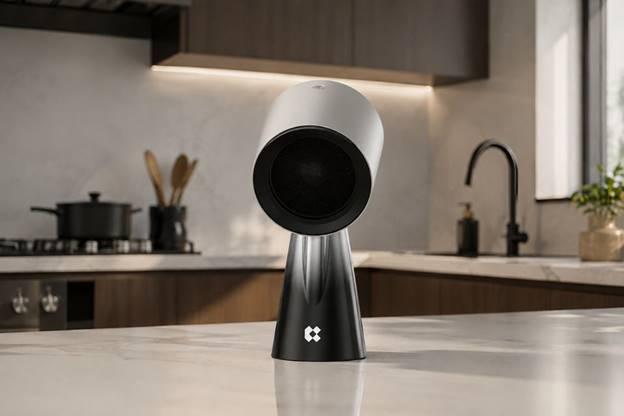
How to Position a Portable Range Hood for Better Smoke and Odor Capture
A portable range hood can be running at full power and still leave smoke drifting through the kitchen if it is positioned poorly. Where the hood sits in relation to the cooking surface can affect how much smoke, steam, grease, and cooking odor reaches its intake before spreading through the room.
Good positioning is therefore about more than simply placing a fan near the stove. The cooking zone, hood intake, surrounding airflow, cookware, and type of food being prepared can all influence the result. A portable range hood may work noticeably better when its intake is placed close to the main source of emissions and away from strong cross-drafts. This guide explains how to position one more effectively, how different cooking methods can affect placement, which common mistakes to avoid, and what to check when smoke or odors persist.
Why Positioning Matters for a Portable Range Hood
Smoke and steam produced during cooking generally rise with warm air, but they do not always travel straight upward. Heat, cookware shape, room temperature, and moving air can change their path. Grease particles and cooking odors can also spread outward before reaching a ventilation intake.
A portable range hood works most effectively when its intake is positioned where contaminated air is likely to pass. Keeping the intake reasonably close to the cooking source reduces the distance smoke and steam have to travel before reaching the hood. That can limit how much airborne material disperses into the surrounding kitchen.
However, closer does not automatically mean better. The hood still needs to be positioned according to the manufacturer’s instructions and required safety clearances. The goal is to create a practical balance between proximity, safe placement, and effective airflow. If the cooking source sits well outside the hood’s capture area, even a powerful fan may struggle to collect everything produced during cooking.
Position the Hood Close to the Main Cooking Area
A portable range hood should generally be positioned as close to the main cooking area as practical while maintaining the clearances and placement requirements specified by the manufacturer. There is no single distance that works for every portable unit, because designs, cooking appliances, heat output, and installation arrangements can differ.
Think about the path that smoke and steam must travel. If the hood intake is positioned far from the active pan, emissions have more opportunity to spread before they reach it. That can reduce capture and allow odors or grease particles to move into other parts of the kitchen.
At the same time, moving the hood extremely close to the cooking surface can create its own problems. Heat, splashes, cookware, and other hazards need to be considered. Always follow the product’s instructions instead of relying on a generic measurement. The most useful position is the closest safe location that keeps the intake near the source of cooking emissions.
Center the Hood Over Where Smoke Is Produced
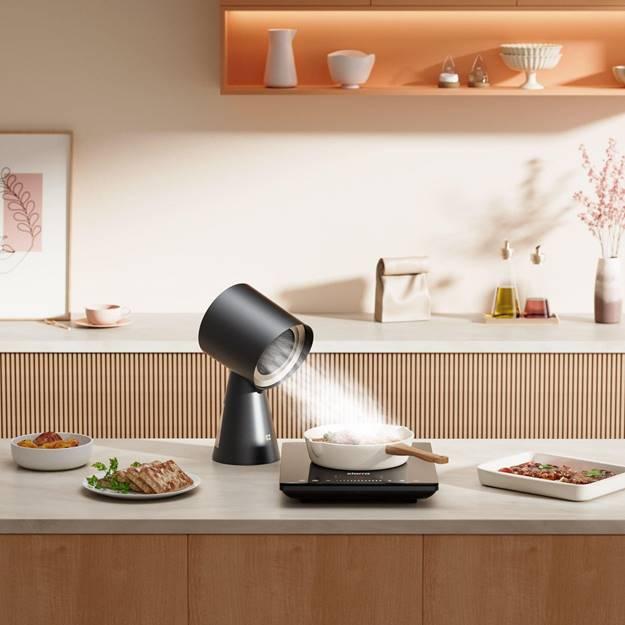
Being close to the cooking appliance is only half the equation. The hood’s intake should also be aligned with the area producing the most smoke, steam, or odor. A hood positioned beside the main cooking zone may capture some emissions, but more can escape before reaching the intake.
Imagine a frying pan sitting toward the front-right side of a cooking surface while the portable hood is positioned farther back and slightly to the left. Smoke may rise from the pan and drift into the room before it reaches the hood. Moving the intake closer to the active pan can shorten that path and improve the chance of capture.
The same principle applies when using large skillets, griddles, or several pieces of cookware. If the main cooking zone changes during a meal, the hood’s position may need to change with it. Centering the intake over the actual source is usually more useful than simply centering it over the countertop.
Control Airflow Around the Cooking Area
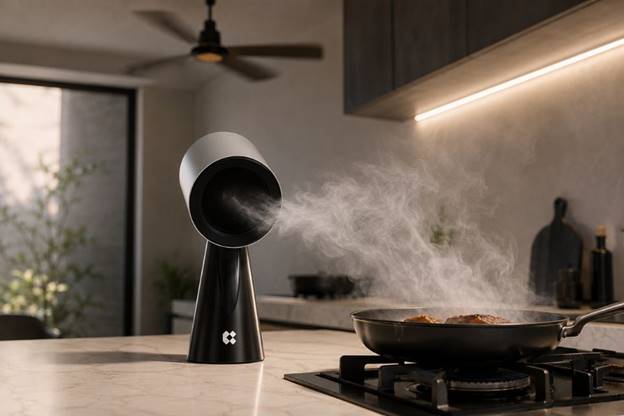
A hood can be correctly positioned and still struggle if surrounding airflow carries smoke away from it. Open windows, ceiling fans, HVAC vents, portable fans, and open doors can all influence how warm air moves through a kitchen.
Watch what happens to steam or visible cooking vapor as it rises. If it consistently bends sideways before reaching the intake, look for a nearby source of moving air. A ceiling fan, for example, may push rising smoke across the room. Similarly, a portable fan aimed across the cooking surface can disturb the airflow pattern around the hood.
This does not mean every window or ventilation source should be closed. Fresh air and general kitchen ventilation can be important. Instead, the objective is to avoid strong, uncontrolled drafts that disrupt the path between the cooking source and the hood. Small changes to the hood’s position or competing airflow can sometimes make a noticeable difference.
Adjust the Position for Different Cooking Methods
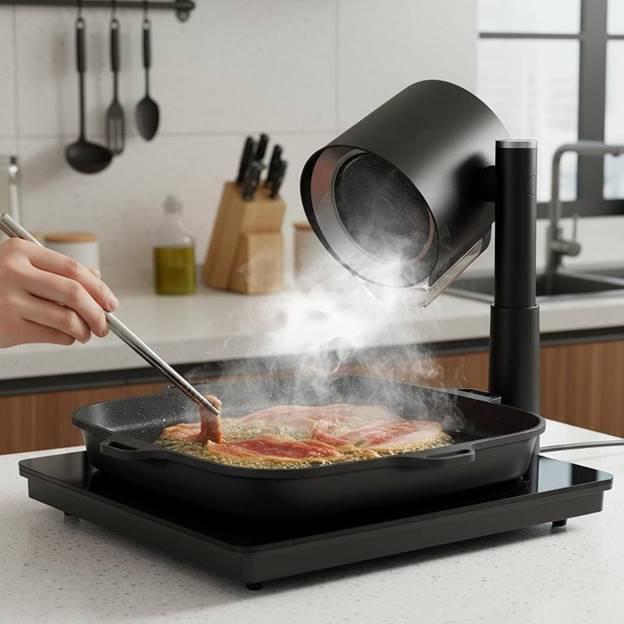
Different cooking methods release different combinations of smoke, steam, grease, and odor. Frying and sautéing can produce grease particles and visible smoke that spread quickly, particularly when oil becomes very hot. In these situations, keeping the hood intake close to the active pan can help capture emissions before they disperse.
Searing can produce a concentrated burst of smoke, while boiling may create more steam than visible smoke. Low-temperature cooking may release little visible smoke but still produce noticeable odors. Because of these differences, the ideal position is not necessarily identical for every meal.
The same principle applies to different cooking appliances. For example, when considering ventilation around an oven such as the Ciarra Nosh Oven, it is useful to think about how the cooking process releases heat, moisture, and odors and how those emissions move through the surrounding space. Looking at the cooking method rather than treating every appliance the same can lead to more practical ventilation decisions.
Keep the Intake and Filters Unobstructed
Good positioning also means leaving the hood’s intake and ventilation pathways clear. Cookware, utensils, towels, or nearby objects should not block openings needed to draw in air. Even a small obstruction can affect how air reaches the intake.
Filters deserve attention as well. Depending on the design, they can collect grease and other particles during cooking. As residue builds up, airflow may be affected and the unit may not perform as consistently. Follow the manufacturer’s cleaning and maintenance instructions rather than assuming every filter needs the same cleaning schedule.
Take a moment to check the area around the hood before cooking. A clear path gives air a better route toward the intake, while clean components help the system operate as intended. Maintenance cannot fix poor placement, but neglecting it can make an otherwise well-positioned hood less effective over time.
Common Portable Range Hood Positioning Mistakes
Several simple mistakes can reduce smoke and odor capture even when the hood is operating normally.
- Placing the hood too far from the main cooking source.
- Positioning the intake beside rather than over the active cooking area.
- Ignoring manufacturer instructions or required safety clearances.
- Allowing a strong fan or draft to push smoke away from the intake.
- Blocking the intake with cookware or nearby objects.
- Assuming maximum fan speed can compensate for poor positioning.
These problems can also compound each other. A hood positioned too far away may perform even worse when a ceiling fan pushes smoke sideways. Likewise, a correctly positioned unit may struggle if its intake is obstructed or its filter has accumulated substantial grease.
Before concluding that the hood lacks sufficient power, check the basics. Position, airflow, clearance, and maintenance can all affect the result. Correcting those factors may improve capture without requiring a more complicated setup.
What to Do When Smoke or Odors Still Escape
If smoke continues to escape, start by checking the hood’s physical position. Is the intake close enough to the active cooking zone? Is it centered over the pan or other main source? If the cookware has moved, reposition the hood when appropriate and safe.
Next, observe the surrounding airflow. Watch steam or visible vapor and see whether it moves sideways before reaching the intake. Check nearby windows, fans, doors, and vents for drafts that could be redirecting emissions. If you identify a strong competing airflow, adjust it when practical and safe.
Then inspect the intake and filters. Look for obstructions, accumulated grease, or anything that could interfere with airflow. Confirm that the hood is being operated according to the manufacturer’s instructions and that the selected setting suits the cooking task.
If the problem remains after these checks, consider the scale of the cooking conditions. A portable unit has limits. Very smoky cooking or persistent kitchen ventilation problems may require a more comprehensive approach.
When a Portable Range Hood May Not Be Enough
A portable range hood can be useful when a permanent ventilation system is unavailable or impractical, but it is not designed to solve every kitchen ventilation challenge. Its airflow capacity, capture area, filtration system, and intended use all influence what it can reasonably handle.
Heavy smoke from very high-heat cooking, persistent odors, or a kitchen with significant ventilation problems may require a more comprehensive ventilation solution. A portable unit should not automatically be treated as a substitute for a properly designed permanent system.
It is also worth keeping expectations realistic. Effective capture does not necessarily mean that every trace of heat, moisture, or odor will disappear immediately. Some emissions may remain in the room, particularly during demanding cooking tasks. Understanding those limitations makes it easier to judge whether the current setup is working appropriately or needs additional ventilation.
Final Takeaway
Good smoke capture starts with positioning, not simply maximum fan speed. Keep the intake close to and aligned with the main cooking source while respecting manufacturer instructions and safety clearances. Then consider the airflow around the cooking area, keep the intake unobstructed, and maintain filters according to the manufacturer’s guidance.
If smoke or odors escape, change one factor at a time and observe the result. A small adjustment to the hood’s position or surrounding airflow may solve a problem that initially appears to be a lack of power. For more practical guidance on kitchen appliances and everyday ventilation, explore the resources from Ciarra Appliances.
FAQs
1. Where should a portable range hood be positioned?
A portable range hood should generally be positioned close to and aligned with the main cooking area, while following the manufacturer’s placement instructions and required safety clearances. Positioning the intake near the source of smoke and steam can reduce the distance those emissions travel before reaching the hood.
2. How close should a portable range hood be to the cooking surface?
There is no universal distance that applies to every portable range hood. The correct position depends on the unit’s design, the cooking appliance, heat output, and manufacturer requirements. The hood should be as close to the cooking source as practical without violating the specified safety clearances.
3. Why does smoke escape from my portable range hood?
Smoke can escape when the hood is positioned too far from the cooking source, poorly aligned with the active cooking area, or affected by cross-drafts. Open windows, ceiling fans, HVAC vents, and portable fans can redirect rising smoke before it reaches the intake.
4. Does a portable range hood remove cooking odors?
A portable range hood can help reduce cooking odors by capturing and filtering airborne emissions, but its effectiveness depends on the hood’s design, filtration system, positioning, and the type of cooking. Persistent odors may also require broader kitchen ventilation.
5. Can a portable range hood handle smoke from frying?
A portable range hood can help capture smoke and airborne grease produced during frying when it is positioned appropriately and operated according to the manufacturer’s instructions. However, very high-heat or heavily smoky cooking may produce more emissions than a portable unit can effectively capture.