The Case for a Custom Dress Shirt (And Why Off-the-Rack Falls Short)
A dress shirt is one of the most frequently worn pieces of clothing in a professional wardrobe, yet it is also one of the most misunderstood. Many men buy shirts off the rack for years without ever questioning whether the fit, fabric, or finish is actually serving them well. The truth is that most off-the-rack shirts are built for an average body that does not exist. They are designed around standardized measurements meant to fit as many people as possible, which means they rarely fit anyone perfectly. This is where the case for a custom dress shirt becomes clear. Understanding custom dress shirt benefits can change the way you think about your entire wardrobe, not just your shirts.
The Fundamental Problem with Off-the-Rack Sizing
Off-the-rack shirts are manufactured using a limited set of size templates, usually based on neck size and sleeve length. The problem is that the human body does not conform to a simple two-dimensional measurement system. Two men can share the same neck size and sleeve length yet have completely different shoulder widths, torso shapes, and arm proportions. When a shirt is built around only two variables, something almost always has to give.
This is why so many men end up with shirts that gap at the chest, billow at the waist, or pull awkwardly across the shoulders. A shirt that fits in the neck might be too tight through the midsection. A shirt that accommodates broader shoulders might leave excess fabric everywhere else. Manufacturers try to compensate with slim fit, regular fit, and athletic fit categories, but these are still broad approximations, not true solutions. They narrow the gap slightly, but they do not close it.
A custom dress shirt eliminates this guesswork entirely. Every measurement, from the collar to the cuff to the shirt’s overall length, is taken directly from your body. The result is a garment that moves with you rather than against you.
How Proper Fit Changes the Way You Look and Feel
Fit is the single most important factor in how a dress shirt looks on a man’s body, more important than fabric quality, color, or even the pattern. A shirt that fits properly creates clean, straight lines down the torso. It skims the body without clinging to it, and it allows for full range of motion in the shoulders and arms without creasing or pulling.
When a shirt fits poorly, the eye is drawn to the mistakes: the pooling fabric at the lower back, the collar that stands away from the neck, the sleeves that bunch up at the wrist. These small details add up to an overall impression of carelessness, even if the wearer put thought into the rest of his outfit. On the other hand, a well-fitted shirt projects precision and intentionality. People may not be able to articulate exactly why a well-dressed man looks put together, but a properly fitted shirt is almost always part of the answer.
There is also a physical comfort component that is often overlooked. A shirt that is too tight in the chest or shoulders restricts movement and can feel confining during a long workday. A shirt that is too loose can feel sloppy and require constant adjustment, tucking, and smoothing. A custom shirt removes both of these frustrations. You stop thinking about your clothing and start simply wearing it, which is exactly how a good shirt should function.
Fabric Selection: A Level of Control Off-the-Rack Cannot Match
When you buy a shirt from a department store, you are selecting from whatever fabrics that brand happened to choose for that season. Your options might be limited to a handful of colors in a single fabric weight, regardless of your climate, your personal sensitivities, or your intended use for the shirt.
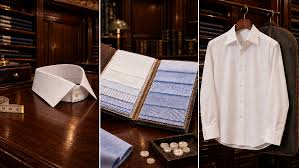
Custom shirtmaking opens up an entirely different world of options. You can choose fabric weight based on the climate you live in and the season you are dressing for. A lightweight cotton or linen blend makes sense for a humid summer in a city like Houston or Miami, while a heavier oxford cloth might be better suited for a colder climate like Chicago or Minneapolis. You can also select the weave: poplin for a crisp, formal appearance, twill for a bit more texture and durability, or oxford cloth for a slightly more casual, textured look that still reads as professional.
Thread count and fabric origin matter too. Many custom shirt makers offer fabrics from well-regarded mills in Italy, Switzerland, or England, offering a noticeably different hand-feel and durability compared to mass-produced alternatives. For men with sensitive skin, custom options also allow you to avoid synthetic blends or finishes that might cause irritation, something that is nearly impossible to control when buying off-the-rack.
Details That Reflect Personal Style
Beyond fit and fabric, a custom dress shirt allows for a level of personalization that off-the-rack shirts simply cannot offer. Collar style is one of the most impactful choices a man can make, and yet most off-the-rack shirts only offer one or two options per style. With custom shirtmaking, you can choose between a spread collar, a button-down collar, a club collar, or a point collar, each of which changes the overall character of the shirt and how it pairs with different tie knots and jacket lapels.
Cuff style is another area where customization matters. Barrel cuffs, French cuffs, and convertible cuffs all serve different purposes and suit different levels of formality. A man who regularly attends formal events might want the option of French cuffs with a favorite set of cufflinks, something rarely available in standard off-the-rack options without searching extensively.
Smaller details, like monogramming, contrast button colors, or a unique inner collar stand fabric, allow a shirt to feel distinctly personal rather than mass-produced. These are not purely aesthetic indulgences either; they are expressions of attention to detail that others notice, even if only subconsciously.
Longevity and Long-Term Value
There is a common misconception that custom shirts are simply an expensive luxury, but this overlooks the long-term value they provide. A well-made custom shirt, constructed with quality fabric and proper reinforcement at stress points like the collar, cuffs, and yoke, often outlasts several off-the-rack shirts combined.
Off-the-rack shirts are frequently produced with cost-cutting measures that are not visible at first glance: thinner interfacing in the collar, lower stitch density, or fabric blends that pill and thin out after repeated washing. These shortcuts shorten the usable life of the shirt considerably. A custom shirt, by contrast, is typically made with construction techniques designed for durability, such as split yokes, reinforced stitching, and higher-quality interfacing.
When you calculate the cost per wear over several years, a well-maintained custom shirt frequently proves to be the more economical choice, not the more expensive one. You are not replacing shirts every year because they have stretched out of shape or developed collar fraying. Instead, you are building a smaller, more durable wardrobe that continues to perform at a high level.
The Professional Impact of Looking Deliberate
In professional settings, clothing communicates before a single word is spoken. A client, a colleague, or a hiring manager forms an impression within seconds, and clothing fit plays a significant role in that first judgment. A custom dress shirt signals that the wearer takes his presentation seriously, not out of vanity, but out of respect for the setting and the people in it.
This is particularly relevant in client-facing roles, leadership positions, or industries where appearance is closely tied to credibility, such as finance, law, consulting, and sales. A well-fitted shirt paired with a tailored jacket creates a cohesive, intentional silhouette that is difficult to replicate with off-the-rack pieces, no matter how expensive the brand name might be.
It is worth noting that this does not require an entirely custom wardrobe to start. Many men begin with a single custom dress shirt for important occasions, such as client meetings, interviews, or formal events, before gradually expanding their collection as they recognize the difference in comfort and appearance.
Addressing Common Hesitations
Many men hesitate to try custom shirts because they assume the process is complicated, expensive, or only for a certain type of professional. In reality, the process has become significantly more accessible. Many custom shirtmakers now offer measurement guides, virtual consultations, or simple home measurement kits that make the initial fitting process straightforward.
Price points have also become more competitive as the custom clothing industry has grown. While a fully bespoke shirt made by a traditional tailor can be a significant investment, made-to-measure options, where your measurements are used to adjust a standardized pattern, offer many of the same fit benefits at a more moderate price point. This middle ground has made custom dress shirts accessible to a much wider range of professionals, not just executives or those in highly specialized fields.
FAQ
What is the difference between made-to-measure and bespoke shirts?
Made-to-measure shirts start with an existing pattern that is adjusted based on your measurements, while bespoke shirts are built entirely from scratch using a pattern drafted specifically for your body. Made-to-measure is generally more affordable and has a shorter turnaround time, while bespoke offers the highest level of personalization.
How many measurements are typically needed for a custom dress shirt?
Most custom shirtmakers take between eight and fifteen measurements, which usually include:
- Neck circumference
- Chest and waist measurements
- Shoulder width
- Sleeve length
- Shirt length
- Cuff circumference
Is a custom dress shirt worth it if I only wear dress shirts occasionally?
Yes, even occasional wearers benefit from a properly fitted shirt, particularly for important events like interviews, client meetings, or weddings, where appearance carries extra weight.
How long does it typically take to receive a custom shirt?
Turnaround time varies by provider, but most made-to-measure shirts arrive within two to four weeks, while fully bespoke shirts can take six to eight weeks or longer, depending on the tailor’s workload.
Can custom shirts be altered later if my body changes?
In many cases, yes. Because your measurements are kept on file, future orders can be adjusted easily, and some tailors offer alteration services for existing shirts if your body changes modestly over time.
Do custom shirts require special care compared to off-the-rack shirts?
Not typically. Most custom shirts can be laundered the same way as high-quality off-the-rack shirts. Following the fabric’s specific care instructions, whether that means machine washing or professional laundering, will help preserve both fit and fabric quality over time.
Making the Shift to a Better-Fitting Wardrobe
Choosing a custom dress shirt is not simply about luxury or status; it is about solving a practical problem that off-the-rack shirts were never designed to address. The benefits extend beyond appearance into comfort, durability, and long-term value, making a compelling case for any professional who relies on dress shirts regularly. Once you experience the difference that a properly fitted shirt makes, in both how it looks and how it feels throughout a long day, it becomes difficult to go back to the compromises of standard sizing. For many men, that first custom shirt marks a turning point in how they think about their wardrobe altogether.