How to Diagnose Basement Moisture Before Choosing a Repair in Louisville, Kentucky
Key Takeaways
- Determine the moisture source before selecting a repair method.
- Start with gutters, downspouts, grading, window wells, plumbing, and sump equipment.
- Condensation, seepage, and structural movement require different responses.
- Paint and sealant may conceal a symptom without stopping water behind a wall.
- Resolve moisture concerns before finishing a basement or installing new flooring.
Table of Contents
- Why Diagnosis Matters
- Common Sources of Basement Moisture
- Inspect the Outside First
- Condensation or Seepage?
- Foundation Warning Signs
- Low-Cost Checks to Try First
- Matching Repairs to Problems
- When to Call a Professional
- Questions to Ask Before Hiring
- Final Takeaway
In Louisville, a damp basement can follow a heavy rain, a humid summer week, a plumbing issue, or water pressure building outside the foundation. Before paying for a coating, sump pump, drain system, or structural repair, identify where the moisture begins. Homeowners seeking a local evaluation can explore waterproofing and foundation services in the Louisville area from Aqua Lock, a family-owned Jeffersontown company that provides basement waterproofing, foundation repair, sump pump, and moisture-control services across Louisville Metro and nearby Kentucky communities.
Aqua Lock’s Louisville service information emphasizes an important point for local homeowners: basement water control is not one product or one-size-fits-all repair. A wall stain, wet floor, and musty odor may look related, but each can have a different cause. A thoughtful diagnosis helps prevent spending money on work that addresses only the visible symptom.
Why Diagnosis Matters
A dehumidifier can lower indoor humidity, but it cannot repair an active crack, redirect roof runoff, or relieve water pressure outside a wall. Likewise, a fresh coat of waterproof paint may improve appearance while water continues to enter through a wall-to-floor joint. The practical sequence is to control indoor moisture, correct exterior drainage, and then evaluate drainage or waterproofing systems if the problem persists. The guidance on basement moisture from the University of Minnesota Extension follows this same source-first approach.
Diagnosis matters even more before remodeling. Insulation, drywall, carpet, and finished storage areas can hide evidence of a leak and make later repairs more disruptive.
Common Sources of Basement Moisture
Start by considering when and where water appears. Roof runoff can collect beside the foundation when gutters are blocked, or downspouts discharge too close to the house. Soil that slopes toward the home can send rainfall against the foundation. Groundwater may move through cracks, porous masonry, or the seam where the floor meets the wall.
Not every damp surface comes from outdoors. Warm, humid air can condense on cool pipes, windows, and walls. A leaking water heater, supply line, appliance hose, or drain line can also resemble a foundation leak. If water appears only during storms, exterior drainage or groundwater is more likely than a plumbing source. If it appears regardless of the weather, investigate indoor sources as well.
Inspect the Outside First
Exterior checks are often the safest and least expensive place to begin. Do not excavate near the foundation or alter major drainage routes without understanding utility locations and local requirements. Instead, walk the property during rain and again after the ground has had time to drain.
Exterior Inspection Checklist
- Look for leaves, sediment, or overflow in gutters.
- Confirm downspouts carry water away from the foundation.
- Watch for settled soil or low spots beside exterior walls.
- Check window wells for standing water, debris, or blocked drains.
- Notice whether patios, driveways, or walkways slope toward the home.
For example, a basement that leaks only after a hard rain may have a surface-water problem. Correcting a clogged gutter or poorly placed downspout can be more relevant than applying another interior wall coating.
Condensation or Seepage?
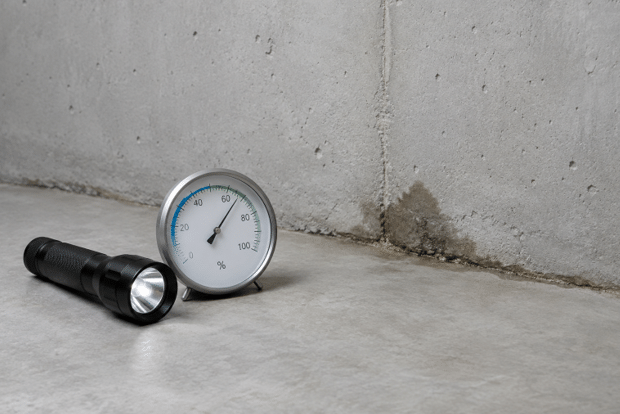
Condensation usually appears on cool surfaces when humid air meets them. It may be worse in warm, muggy weather, and a hygrometer can reveal elevated relative humidity. Pipes sweating, window moisture, and broadly damp surfaces without a distinct water path often point toward humidity.
Seepage is more likely when water follows a crack, collects at one wall, leaves mineral deposits, or appears at the wall-to-floor seam after rain. The EPA’s recommendations for controlling moisture in your home stress fixing leaks and seepage, managing drainage, and reducing excess indoor moisture rather than relying on one measure alone.
Foundation Warning Signs
A small crack does not automatically mean serious foundation failure. However, arrange a qualified assessment if you see horizontal cracks, stair-step cracking in masonry, bowing or inward-leaning walls, cracks that widen over time, displaced surfaces, or uneven floors paired with new cracking. Photograph the area, date the images, and record whether water follows particular weather events. That record can make patterns easier to explain during an inspection.
Low-Cost Checks to Try First
- Clean gutters and make sure downspouts are open.
- Move roof runoff farther from the house where practical.
- Clear window wells and exterior drains of debris.
- Test the sump pump according to its manufacturer’s instructions.
- Use a hygrometer to monitor basement humidity.
- Inspect nearby plumbing, appliances, and drain lines for leaks.
- Track the problem through more than one rainfall event.
These checks may resolve minor drainage or humidity issues. They will not correct a persistently high groundwater condition, significant wall movement, or a drainage system that cannot handle the water reaching it.
Matching Repairs to Problems
- Water beside the foundation after rain: Review gutters, downspouts, grading, and hard-surface slopes.
- Water at the wall-to-floor seam: Evaluate groundwater pressure, interior drainage, and sump discharge.
- One leaking crack: Determine whether the crack appears stable before choosing a repair method.
- High humidity without standing water: Improve humidity control while checking for concealed leaks.
- Bowing walls with horizontal cracks: Seek a structural assessment rather than treating it as a simple waterproofing issue.
Interior drainage, exterior waterproofing, crack repair, sump systems, and wall-to-floor sealing all serve different purposes. Treating any one of them as a universal solution can leave the true source unaddressed.
When to Call a Professional
Professional help is appropriate when standing water returns after ordinary rainfall, water enters faster than it can be removed, a sump pump cannot keep up, mold or damaged materials cover a broad area, or the home has an older masonry foundation. Call promptly when cracks are widening, walls bow inward, or moisture is present before a basement-finishing project.
Questions to Ask Before Hiring
- What is causing the water, and what evidence supports that diagnosis?
- Does the proposed work control water, repair the structure, or both?
- Will the work address the source or only the visible symptom?
- Where will the collected water be discharged?
- What areas will be opened, removed, or restored?
- Are permits, utility locates, or backup power considerations involved?
- What does the written scope include, exclude, and warrant?
Final Takeaway
Do not cover, paint, pump, or excavate before identifying why the basement is wet. Begin with drainage and humidity checks, document what you observe, and bring in qualified help when water persists or structural warning signs appear. The right repair depends on the source of the moisture, not simply the location of the stain.