Choosing the Right Residential Heating and Cooling Solutions
hen it comes to maintaining comfort in our homes, especially with fluctuating weather patterns, our heating and cooling systems play a pivotal role. Beyond just keeping us warm in winter and cool in summer, these systems significantly impact our energy bills, indoor air quality, and overall well-being. With global climate changes introducing more extreme temperatures, the efficiency and reliability of our home comfort systems have never been more critical.
However, with a myriad of options from traditional furnaces to cutting-edge hybrid heat pumps, navigating the landscape of residential heating and cooling solutions can feel overwhelming. We understand the challenges homeowners face in making informed decisions that balance upfront costs with long-term efficiency and comfort. Selecting the right system involves understanding complex factors such as climate zones, heating and cooling loads, and advanced technological features.
In this comprehensive guide, we’ll delve into the various types of systems available, decode crucial efficiency ratings, and highlight essential installation requirements. We’ll explore the benefits of modern innovations like smart thermostats and whole-home dehumidifiers, and guide you on how to find reliable contractors and understand warranty protections. Our aim is to equip you with the knowledge to select the optimal solution for your home, ensuring lasting comfort and efficiency. We believe that securing the right residential heating and cooling solution often starts with understanding the choices available and consulting with expert family-owned HVAC solutions to guide you through the process.
Choosing the optimal residential heating and cooling system for your home in October 2026 requires a careful evaluation of various factors, including your local climate, the size and insulation of your home, and your budget for both initial investment and ongoing operational costs. The landscape of home comfort solutions has evolved significantly, offering more efficient and adaptable options than ever before. Understanding the fundamental differences between system types, how they perform under varying heating and cooling loads, and their seasonal adaptability is crucial for making an informed decision.
Modern HVAC systems are designed not just to heat or cool, but to provide year-round comfort with optimized energy consumption. This involves considering factors like load calculations, which precisely determine the heating and cooling requirements of your home, and operational costs, which are influenced by fuel type, system efficiency, and local energy prices. Seasonal adaptability is another key aspect, particularly for regions experiencing wide temperature swings between summer and winter.
Single-Fuel vs. Hybrid Residential Heating and Cooling Solutions
The primary distinction in residential heating and cooling often lies between systems that rely on a single fuel source and those that intelligently combine two. Traditional single-fuel systems typically consist of either an electric heat pump or a gas furnace. Heat pumps are highly efficient for both heating and cooling, moving heat rather than generating it. They are excellent in milder climates but can see a drop in efficiency as outdoor temperatures plummet. Gas furnaces, on the other hand, provide robust heat, even in extreme cold, by burning natural gas or propane.
Hybrid systems, also known as dual-fuel systems, offer the best of both worlds. They pair an electric heat pump with a gas furnace, leveraging the strengths of each. During moderately cold weather, the heat pump operates as the primary heating source, offering superior energy efficiency compared to a furnace. However, when temperatures drop below a pre-set “switchover temperature” (typically around 35-40°F, but some advanced models can heat efficiently down to -22°F), the system automatically switches to the gas furnace. This ensures consistent, powerful heating even in the most extreme conditions, while maximizing overall thermal efficiency and minimizing energy costs.
For example, a high-performance hybrid system, such as the ACiQ Extreme Series, boasts a 96% AFUE (Annual Fuel Utilization Efficiency) rating for its furnace component, meaning 96% of the gas used is converted to heat. Its heat pump can provide efficient heating down to -22°F, potentially saving up to 75% on cold weather heating bills compared to traditional systems. Similarly, the Bryant Preferred Series Hybrid Heat/Electric Cool System offers cooling efficiency up to 15.5 SEER2 and heating efficiency up to 7.5 HSPF2, alongside an 81% AFUE furnace. These systems are particularly popular in climates with both hot summers and cold winters, as they intelligently adapt to provide optimal comfort and energy savings.
We can illustrate the core differences:
Feature Electric Heat Pump (Single-Fuel) Gas Furnace (Single-Fuel) Hybrid Dual-Fuel System Primary Function Heating & Cooling Heating only Heating & Cooling Primary Fuel Source Electricity Natural Gas/Propane Electricity (heat pump) & Natural Gas/Propane (furnace) Cold Weather Performance Efficient in mild cold; efficiency drops in extreme cold Highly effective in extreme cold Highly effective; heat pump for mild, furnace for extreme cold Efficiency (Heating) HSPF (Heat Season Performance Factor) AFUE (Annual Fuel Utilization Efficiency) HSPF (heat pump) & AFUE (furnace) Operational Cost Varies with electricity prices; lower in mild climates Varies with gas prices; generally higher in mild cold than HP Optimized; switches to most cost-effective fuel automatically Typical Application Milder climates, energy-conscious homeowners Colder climates, homes with existing gas lines Varied climates, seeking year-round efficiency and reliability
Standard Single-Stage vs. Inverter Residential Heating and Cooling Solutions
Beyond the fuel source, another critical distinction lies in how the compressor and blower motor operate: single-stage versus inverter (variable-speed) technology.
Standard single-stage systems operate at full capacity whenever they turn on, regardless of the actual heating or cooling demand. This “all-or-nothing” approach can lead to temperature swings, as the system cycles on and off frequently. This frequent cycling, known as short-cycling, can also increase wear and tear on components and consume more energy during startup.
In contrast, inverter systems, often featuring inverter compressors and variable-speed blowers, offer a much more sophisticated and efficient operation. Instead of running at a fixed speed, the inverter compressor can modulate its output, adjusting precisely to the heating or cooling needs of your home. This allows the system to run for longer periods at lower capacities, providing continuous airflow and maintaining much more stable temperatures. The variable-speed blower motor works in tandem, slowly ramping up or down, which results in quieter operation and better humidity control.
The benefits of modulation are significant:
- Temperature Stability: By continuously running at a lower capacity, inverter systems avoid the temperature fluctuations common with single-stage units, providing consistent comfort throughout your home.
- Energy Savings: Matching output precisely to demand prevents energy waste from over-cooling or over-heating, leading to considerable energy savings.
- Enhanced Dehumidification: Longer run times at lower speeds allow for more effective moisture removal, improving indoor air quality and comfort, especially during humid summers.
- Reduced Noise: Variable-speed operation means quieter performance, as the system avoids the loud on/off cycles of traditional units.
- Extended Equipment Lifespan: Less frequent cycling and reduced stress on components can prolong the life of your HVAC system.
Many modern high-efficiency systems, like the ACiQ Extreme Series, integrate inverter technology and variable-speed ECM (Electronically Commutated Motor) blowers to deliver superior comfort and efficiency. This technology significantly reduces short-cycling, making them a preferred choice for homeowners prioritizing comfort and long-term energy savings.
Understanding Energy Efficiency Standards and Refrigerants
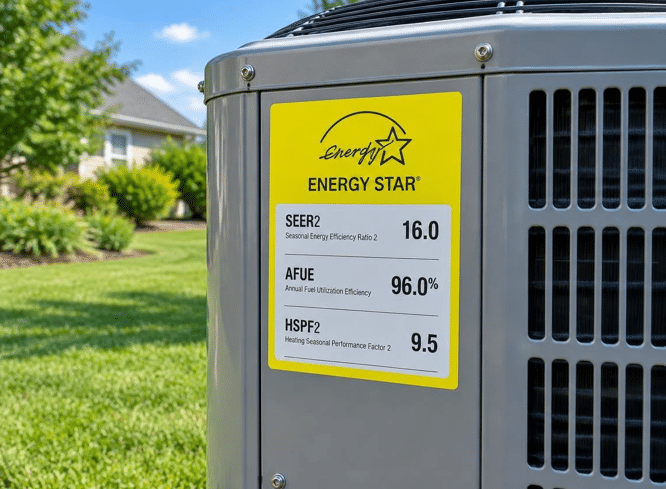
When selecting a residential heating and cooling solution, understanding energy efficiency ratings is paramount. These metrics provide a standardized way to compare the performance and potential energy savings of different systems. In October 2026, the key ratings to look for are SEER2, AFUE, and HSPF2.
- SEER2 (Seasonal Energy Efficiency Ratio 2): This rating measures the cooling efficiency of air conditioners and heat pumps. Introduced in 2023, SEER2 reflects higher efficiency under updated testing methods that better simulate real-world operating conditions. A higher SEER2 number indicates greater cooling efficiency and lower electricity consumption during the cooling season. For instance, the ACiQ Standard Series hybrid system boasts an 18.8 SEER2 rating, signifying high cooling efficiency.
- AFUE (Annual Fuel Utilization Efficiency): This metric applies specifically to furnaces and measures how efficiently they convert fuel (natural gas or propane) into usable heat over a typical heating season. An AFUE of 96% means that 96 cents of every dollar spent on fuel is converted into heat for your home, with only 4 cents lost through the exhaust. High-efficiency furnaces typically have AFUE ratings of 90% or higher, such as the ACiQ Extreme Series and LG Hybrid systems, both offering 96% AFUE.
- HSPF2 (Heating Seasonal Performance Factor 2): Similar to SEER2, HSPF2 measures the heating efficiency of heat pumps. Also updated in 2023, a higher HSPF2 rating indicates more efficient heating performance during the colder months. For example, the Bryant Preferred Series Hybrid system offers up to 7.5 HSPF2.
These ratings directly impact your energy costs. Choosing a system with higher efficiency ratings, even if it has a higher upfront cost, can lead to significant savings on utility bills over the lifespan of the equipment. Annual HVAC maintenance, for instance, can reduce energy use by up to 15%, further enhancing these savings.
The Evolution of Refrigerants
Another critical aspect of modern HVAC systems is the type of refrigerant they use. Historically, systems relied on refrigerants with high Global Warming Potential (GWP), such as R-410A (often marketed as Puron®). However, due to environmental regulations and a global push towards sustainability, the industry is rapidly transitioning to refrigerants with significantly lower GWP.
Newer systems, particularly those designed for high efficiency, are increasingly using refrigerants like R-454B and R-32.
- R-454B: This refrigerant is becoming a standard for new high-efficiency HVAC systems. It offers higher efficiency and a lower environmental impact compared to older refrigerants like R-410A. It’s a low-GWP alternative, aligning with current environmental compliance standards.
- R-32: Similarly, R-32 is gaining traction, particularly in hybrid systems. It boasts a GWP 68% lower than R-410A, making it a much more environmentally friendly choice.
This transition reflects the industry’s commitment to reducing its carbon footprint and ensuring that residential heating and cooling solutions are not only energy-efficient but also environmentally responsible.
Here’s a comparison of how efficiency metrics might differ between standard and high-efficiency systems:
Performance Metric Standard Efficiency System (Example) High-Efficiency Inverter System (Example) SEER2 (Cooling) 13.4 – 15.0 15.5 – 20.0+ AFUE (Furnace) 80% – 85% 90% – 97% HSPF2 (Heating) 6.7 – 7.0 7.5 – 10.0+ Operation Type Single-stage Variable-speed / Two-stage Refrigerant R-410A (older) R-454B, R-32 (newer, lower GWP) Humidity Control Moderate Excellent Temperature Stability Good, but with wider swings Excellent, very consistent
Essential Components, Accessories, and Installation Requirements
A complete residential heating and cooling solution involves more than just the primary furnace or heat pump unit. Several essential components, accessories, and specific installation requirements must be considered to ensure optimal performance, efficiency, and longevity of your system.
Modern furnaces and air handlers are often designed for multi-positional configurations, allowing them to be installed in upflow, downflow, or horizontal orientations. This flexibility is crucial for adapting to various home layouts, whether it’s an attic, crawl space, or basement installation. For instance, ACiQ and LG systems often feature multi-positional designs, providing contractors with greater versatility during installation.
Venting requirements are critical, especially for furnaces. High-efficiency furnaces (those with 90% AFUE or higher) produce cooler exhaust gases, allowing them to use PVC venting pipes, which are less expensive and easier to install than traditional metal flues. Furnaces with lower AFUE ratings (e.g., 80%) still require a metal flue for their hotter exhaust. Proper venting is not just about efficiency; it’s a safety requirement to ensure combustion byproducts are safely expelled from your home.
For the outdoor unit of an air conditioner or heat pump, insulated line sets are indispensable. These copper tubes carry refrigerant between the indoor and outdoor units. High-quality line sets are durable, often “no-tear,” and feature UV protection for long-term outdoor performance, preventing degradation from sun exposure and ensuring the integrity of the refrigerant lines. The outdoor unit also requires a stable base, typically a condenser pad made of durable composite material, sometimes elevated with risers to protect the unit from ground moisture and debris.
Beyond the core equipment, several accessories can significantly enhance comfort and energy savings:
- Smart Thermostats: These devices are no longer just for setting temperatures. Modern smart thermostats offer Wi-Fi connectivity, remote control via smartphone apps (like the ACiQ Home App), learning capabilities, and integration with smart home systems like Alexa. They can optimize system operation based on occupancy, weather forecasts, and energy pricing, leading to substantial savings.
- Whole-Home Dehumidifiers: Humidity control is vital for comfort and indoor air quality, especially in humid climates or during summer months. A whole-home dehumidifier, such as the Santa Fe Ultra70, can remove up to 70 pints of moisture per day, covering homes up to 1,800 square feet, and using roughly 15% less energy than comparably sized units. By reducing humidity, you can often feel comfortable at higher temperatures, further reducing cooling costs.
- Indoor Air Quality (IAQ) Enhancements: Beyond dehumidification, accessories like high-efficiency air filters (e.g., MERV-13 rated filters), UV lamps, and air purifiers can drastically improve the air you breathe, reducing allergens, pollutants, and pathogens.
Proper installation of all these components is paramount. It ensures that the system operates as designed, meets efficiency ratings, and complies with local building codes. This complex process requires specialized knowledge and tools. For comprehensive guidance on selecting and installing these critical components, homeowners often turn to expert family-owned HVAC solutions who can provide tailored advice and professional service.
Contractor Selection, Equipment Sourcing, and Warranty Protection
The journey to a comfortable home with an efficient HVAC system extends beyond choosing the right equipment; it critically involves selecting a reliable contractor and understanding how to protect your investment through warranties.
Choosing a Reliable HVAC Contractor
Finding a reputable HVAC contractor is arguably one of the most important decisions homeowners will make. A skilled and trustworthy professional ensures proper system sizing, correct installation, and reliable ongoing service. When evaluating contractors, consider the following:
- Experience and Licensing: Look for companies with a proven track record and ensure they are properly licensed and insured in your state or municipality. An experienced contractor will understand the nuances of various system types and installation challenges.
- Customer Reviews and References: Online reviews and personal referrals can offer valuable insights into a contractor’s reliability, quality of work, and customer service.
- Clear Warranties and Guarantees: A reputable contractor will offer clear warranties on their workmanship in addition to the manufacturer’s equipment warranty. They should also provide written estimates that detail all costs and services.
- Comprehensive Services: Choose a provider that offers a full range of residential and light-commercial HVAC services, including installation, repair, and crucially, routine maintenance. This ensures a consistent level of care for your system throughout its lifespan.
- Emergency Service Availability: HVAC emergencies can happen at any time. A contractor offering 24/7 emergency services can provide peace of mind.
- Maintenance Plans: Many contractors offer annual maintenance plans that include seasonal tune-ups. Regular maintenance is vital for extending equipment lifespan, maintaining efficiency, and preventing unexpected breakdowns. Annual tune-ups can help reduce energy use by up to 15% and catch minor issues before they become costly repairs.
Equipment Sourcing and Cost Considerations
Homeowners today have options for sourcing HVAC equipment, including purchasing directly online or through a local contractor. While buying equipment online might seem appealing due to potentially lower upfront prices, understand the implications. Online purchases often come as equipment-only, leaving homeowners responsible for finding a qualified installer, which can be challenging as many contractors prefer to install equipment they source themselves. Furthermore, warranty claims can sometimes be more complex if the equipment was not purchased and installed by an authorized dealer.
Purchasing through a local contractor typically means a bundled service that includes equipment, professional installation, and often, immediate warranty registration and support. While the initial cost might appear higher, this approach often provides greater peace of mind, comprehensive support, and a single point of contact for any issues.
Warranty Protection and Registration Requirements
Modern HVAC equipment comes with robust warranty coverage, but understanding the terms and ensuring proper registration is critical. Most manufacturers offer a standard warranty (e.g., 5 years) on parts, which can be extended significantly (often to 10 years) if the equipment is registered within a specific timeframe, typically 60 to 90 days of installation.
Key warranty components include:
- Parts Warranty: Covers the cost of replacement parts for a specified period. Many high-efficiency systems, like those from ACiQ, Bryant, and LG, offer a 10-year parts warranty when registered.
- Heat Exchanger Warranty: This is a crucial component in furnaces, and some manufacturers offer extended coverage, including lifetime limited warranties, especially when registered promptly. For example, Bryant offers a lifetime limited warranty on the heat exchanger if registered within 90 days, and LG offers a lifetime heat exchanger warranty when registered within 60 days.
- Compressor Warranty: For heat pumps and air conditioners, the compressor is the heart of the system. Extended warranties often cover this component for 10 years or more.
Failing to register your equipment within the manufacturer’s specified window can revert your warranty to a shorter, standard term, potentially leaving you responsible for costly repairs down the line. A reputable contractor will guide you through the registration process or handle it on your behalf.
Frequently Asked Questions About Residential HVAC Systems
Navigating the complexities of residential heating and cooling solutions often brings up specific questions. Here, we address some of the most common inquiries homeowners have about modern HVAC systems.
How does a hybrid dual-fuel heating system operate during extreme winter freezes?
Hybrid dual-fuel heating systems are engineered for optimal performance across a wide range of temperatures, making them ideal for climates with significant seasonal variations. During milder winter days, the electric heat pump operates as the primary heating source. Heat pumps are incredibly efficient at extracting ambient heat from the outside air, even when temperatures are cool, and transferring it indoors. This process uses electricity more efficiently than traditional electric resistance heating.
However, as outdoor temperatures drop significantly, typically below a pre-set “balance point” or “switchover temperature” (which can be as low as -22°F for advanced systems like the ACiQ Extreme Series), the heat pump’s efficiency can diminish. At this point, the system’s intelligent controls automatically switch to the gas furnace. The furnace, fueled by natural gas or propane, provides powerful, reliable heat, ensuring your home remains warm and comfortable even during the most extreme winter freezes. This automated transition ensures that your home is always heated by the most efficient and cost-effective method available at any given outdoor temperature, preventing discomfort and managing energy consumption effectively.
Why are newer HVAC systems transitioning to refrigerants like R-454B and R-32?
The transition to newer refrigerants like R-454B and R-32 in HVAC systems is primarily driven by global environmental regulations and a commitment to reducing the industry’s impact on climate change. Older refrigerants, such as R-410A, have a high Global Warming Potential (GWP), meaning they contribute significantly to global warming if released into the atmosphere.
Regulatory bodies worldwide are phasing out high-GWP refrigerants. R-454B and R-32 are being adopted as replacements because they offer significantly lower GWP values compared to R-410A (R-32, for instance, has a GWP 68% lower than R-410A). This transition ensures environmental compliance and aligns with sustainability goals. Beyond environmental benefits, these newer refrigerants also demonstrate excellent thermodynamic performance, which contributes to the higher energy efficiency ratings (like SEER2 and HSPF2) seen in modern HVAC equipment. By using these advanced refrigerants, manufacturers can design systems that are not only more environmentally friendly but also more efficient in their heating and cooling capabilities.
What is the importance of registering HVAC equipment within 60 to 90 days?
Registering your new HVAC equipment within the manufacturer’s specified timeframe, typically 60 to 90 days from installation, is crucial for maximizing your warranty protection. Most manufacturers offer a standard warranty (often 5 years) on parts for unregistered equipment. However, by registering your system promptly, you can often extend this coverage significantly, commonly to an extended 10-year parts warranty.
This registration also frequently applies to other critical components, such as the heat exchanger in furnaces and the compressor in heat pumps. For example, some brands offer a lifetime limited warranty on the heat exchanger if the unit is registered within the initial window. Without proper registration, you might be left with only the standard, shorter warranty, which could result in substantial out-of-pocket costs for repairs should a component fail after the standard period but within the extended period. Always check the specific manufacturer terms for your equipment, and ensure your contractor assists you with or confirms the registration process. It’s a simple step that provides long-term peace of mind and financial protection for your investment.
Conclusion
Navigating the diverse landscape of residential heating and cooling solutions in October 2026 demands a thoughtful approach. From understanding the nuanced comparisons between single-fuel and hybrid systems to appreciating the energy-saving prowess of inverter technology, each decision impacts your home’s comfort, efficiency, and environmental footprint. The evolving standards, such as SEER2, AFUE, and HSPF2, coupled with the transition to lower GWP refrigerants like R-454B and R-32, underscore an industry moving towards greater sustainability and performance.
Optimizing your home comfort involves more than just selecting the right equipment. It requires a thorough climate assessment to match the system to your specific needs, considering factors like heating and cooling loads. The long-term lifecycle savings from investing in high-efficiency equipment, coupled with the benefits of smart accessories like whole-home dehumidifiers and smart thermostats, can significantly enhance your living environment while reducing operational costs.
Perhaps most importantly, the success of your residential heating and cooling solution hinges on professional commissioning and ongoing maintenance. Partnering with a reputable HVAC contractor ensures proper installation, adherence to safety standards, and reliable support throughout the system’s lifespan. By making informed choices and engaging with qualified professionals, you can achieve optimal home comfort, energy efficiency, and lasting value from your investment.