Commercial Asphalt Maintenance in Clark, NJ: A Practical Plan for Safer, Longer-Lasting Parking Lots
Key Takeaways
- Small cracks and surface wear deserve attention before water and traffic create more serious damage.
- Regular inspections make it easier to prioritize repairs and prepare realistic budgets.
- Crack sealing, patching, sealcoating, resurfacing, and replacement serve different purposes.
- Loading zones, truck lanes, and sharp turning areas often need more durable repair planning.
- Drainage, markings, pedestrian routes, and accessible parking should be reviewed with pavement conditions.
For Clark property owners, facility managers, and business operators, asphalt maintenance is not simply an appearance issue. A parking lot must handle daily customer traffic, delivery vehicles, changing weather, and the practical demands of keeping entrances open. Working with experienced Clark, NJ, commercial asphalt companies helps decision-makers identify damage early and choose repairs that fit the site, rather than relying on a one-size-fits-all approach. Commercial pavement is a layered system. When cracks, poor drainage, or heavy loads affect the surface, moisture can reach the materials beneath it, accelerating deterioration. A planned maintenance program helps local businesses protect access, improve safety, and schedule work before a small defect becomes a disruptive repair project.
Why Commercial Asphalt Maintenance Matters
Asphalt performs best when the surface, base, drainage, and traffic patterns are considered together. Delivery trucks braking near a storefront, vehicles turning into a loading area, and repeated forklift traffic can place concentrated stress on certain sections. Delaying repairs can narrow the available options. An isolated crack may be manageable with sealing, while widespread structural cracking may require deeper work. A smooth, clearly marked lot also supports safer vehicle movement and reduces avoidable trip hazards.
Early Warning Signs to Watch
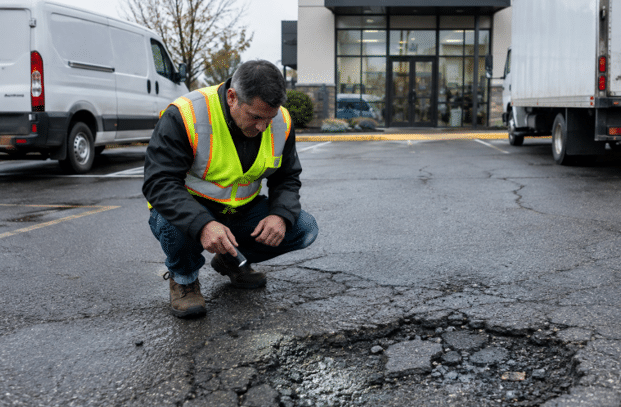
A monthly walk-through can reveal issues before they interfere with operations. Watch for hairline cracks, wider openings, potholes, loose aggregate, faded striping, standing water, rutting in wheel paths, and interconnected “alligator” cracks. Alligator cracking often indicates that the problem is more than cosmetic, particularly when the surface flexes, sinks, or breaks apart under traffic. Note where defects occur, since recurring damage near an inlet, curb, entrance, or loading dock may point to an underlying cause.
A Simple Pavement Inspection Process
- Walk parking stalls, drive aisles, entrances, exits, sidewalks, loading areas, and service lanes.
- Photograph defects from consistent locations so changes are easier to compare.
- Mark each issue on a site plan and classify it as routine, planned, or urgent.
- Check whether puddles remain after rain and whether nearby drains or curbs are damaged or blocked.
- Request a professional evaluation for settlement, recurring potholes, deep cracks, or rutting.
Choosing the Right Repair Option
Crack Sealing
Crack sealing is intended to limit water entry through suitable cracks before the surrounding pavement breaks apart. It is most useful when the pavement remains structurally sound, and the crack pattern is not due to major subsurface movement.
Asphalt Patching
Patching addresses isolated potholes, broken edges, and localized failures. Durable repairs require removing unsound material and evaluating the supporting base when damage extends below the surface. Simply covering a failed spot can leave the original problem in place.
Sealcoating, Resurfacing, and Replacement
Sealcoating can protect a suitable asphalt surface from ordinary weathering and wear, but it does not repair structural failure. Resurfacing may be appropriate when surface wear is widespread, but the underlying pavement remains stable. Full-depth replacement is more appropriate for severe settlement, persistent base failure, or extensive cracking that returns after repeated repairs.
How Drainage and Traffic Affect Pavement
Water management should be part of every maintenance decision. Blocked inlets, poor slope, failing curbs, and roof downspouts that discharge onto pavement can leave water where it does not belong. Stormwater can also carry pollutants into drainage systems, which is why the EPA notes that runoff is commonly conveyed through municipal storm sewer systems and may reach local waters untreated. Keeping stormwater runoff away from pavement trouble spots supports both site maintenance and responsible property management. Separate ordinary parking areas from truck routes, dumpster pads, service entrances, and loading zones when planning repairs. Turning vehicles can stress asphalt more heavily than vehicles traveling straight ahead. Oil, fuel, deicing materials, and vehicle leaks should also be cleaned promptly in accordance with appropriate site procedures, as spills can affect the pavement surface.
Building a Seasonal Maintenance Plan for Clark
Spring and Summer
Spring is a practical time to document winter damage, inspect drainage, repair potholes, and refresh markings after pavement work. During warmer, suitable weather, property managers can schedule crack treatment, patching, and surface work in sections that preserve essential access for customers, tenants, and deliveries.
Fall and Winter
In the fall, clear leaves and debris from drains, repair open defects before cold and wet conditions arrive, and coordinate pavement concerns with snow and ice planning. During winter, record new potholes, cracking, and curb damage when conditions allow safe inspection. That record can make spring repair planning faster and more accurate.
Planning a Smarter Budget, Safer Access, and Clear Markings
A useful pavement budget includes routine inspections, cleaning, crack treatment, markings, planned patches, drainage corrections, and longer-term capital work. Compare options based on expected service life, operational disruption, and whether the repair addresses the cause of failure. Keep a reserve for urgent access issues after storms or unexpected pavement breaks. Striping should clearly identify travel lanes, fire lanes, crosswalks, loading areas, and pedestrian routes. Review accessible spaces, access aisles, curb ramps, signs, and the route to the building entrance whenever pavement work changes the site. The ADA Standards for accessible design address accessible parking and routes for covered facilities, while local requirements and site-specific conditions may also apply. Phased construction, temporary signs, and barriers can help maintain safer operations during repairs.
Common Questions About Commercial Asphalt
How often should a commercial parking lot be inspected?
A basic visual inspection each month is a sensible routine, with additional checks after severe weather, construction activity, unusually heavy traffic, or snow removal operations.
Can every crack be sealed?
No. Wide, displaced, or interconnected cracks may indicate deeper movement or support problems that require patching, reconstruction, or further evaluation.
Can a parking lot stay open during repairs?
Many projects can be completed in phases. The best approach depends on the repair depth, layout, traffic volume, weather, curing needs, and emergency access requirements.
Final Thoughts
Commercial asphalt maintenance in Clark, New Jersey, works best as an ongoing process rather than a response to emergencies. Regular inspections, timely repairs, sound drainage, visible markings, accessible routes, and realistic budgeting can help prevent small surface problems from becoming more disruptive and expensive repairs. Businesses should also keep track of previous maintenance work, monitor areas with heavy traffic or standing water, and plan improvements around normal operating schedules when possible. Seasonal changes and repeated exposure to traffic can gradually affect pavement condition, making consistent monitoring useful year-round. By taking a proactive approach to maintenance and addressing concerns as they appear, property owners and managers can extend the useful life of a parking lot while helping businesses maintain safer, more functional spaces and protect everyday operations in 2026 and beyond.