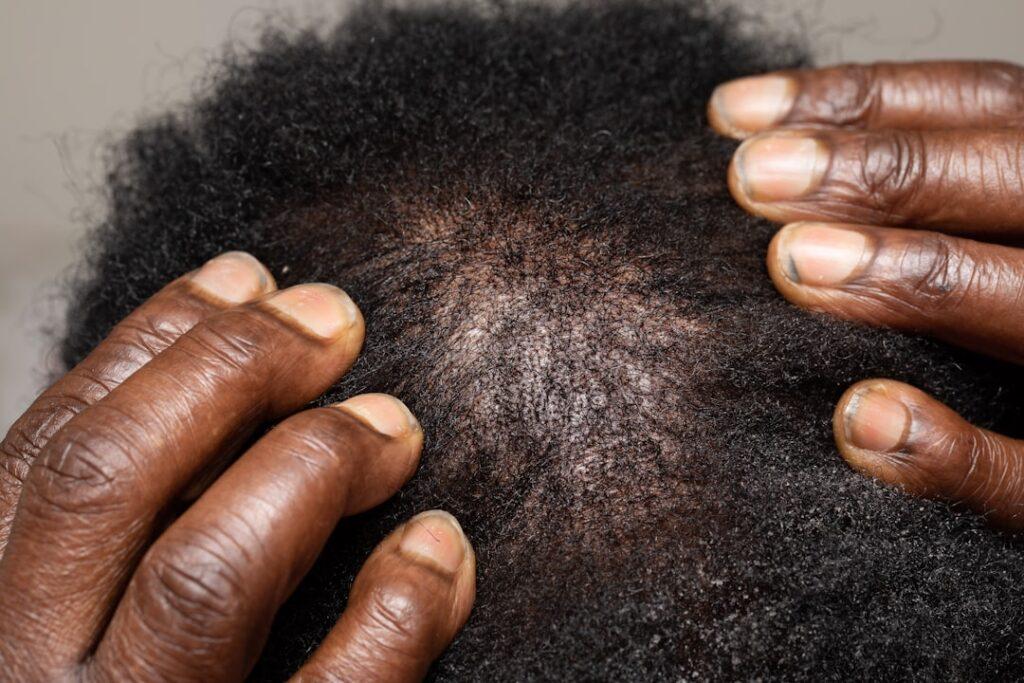
Beginner’s Guide to Effective Dandruff Treatment
Beginner’s Guide to Effective Dandruff Treatment
Start With a Simple, Proven Dandruff Treatment Routine
For most mild dandruff, start by washing your scalp regularly and using an over-the-counter medicated shampoo with an antifungal or scale-lifting active ingredient. Massage it into the scalp, leave it on for about 5 minutes if the label allows, then rinse well. Use it two to three times a week at first, or less often if your hair is tightly coiled, very dry, or chemically treated. Once flakes and itch improve, continue weekly maintenance washes to help prevent relapse.
Dandruff is common, affecting about half of people at some point. It happens when scalp skin cells shed and clump together with oil, creating visible white or yellow flakes. A mix of scalp oil, skin-barrier changes, and a natural yeast called Malassezia can drive the process.
The good news: dandruff is usually manageable with consistent, targeted care. I am W.A. Muller, and this guide will help you choose a practical routine and know when scalp symptoms need medical attention.
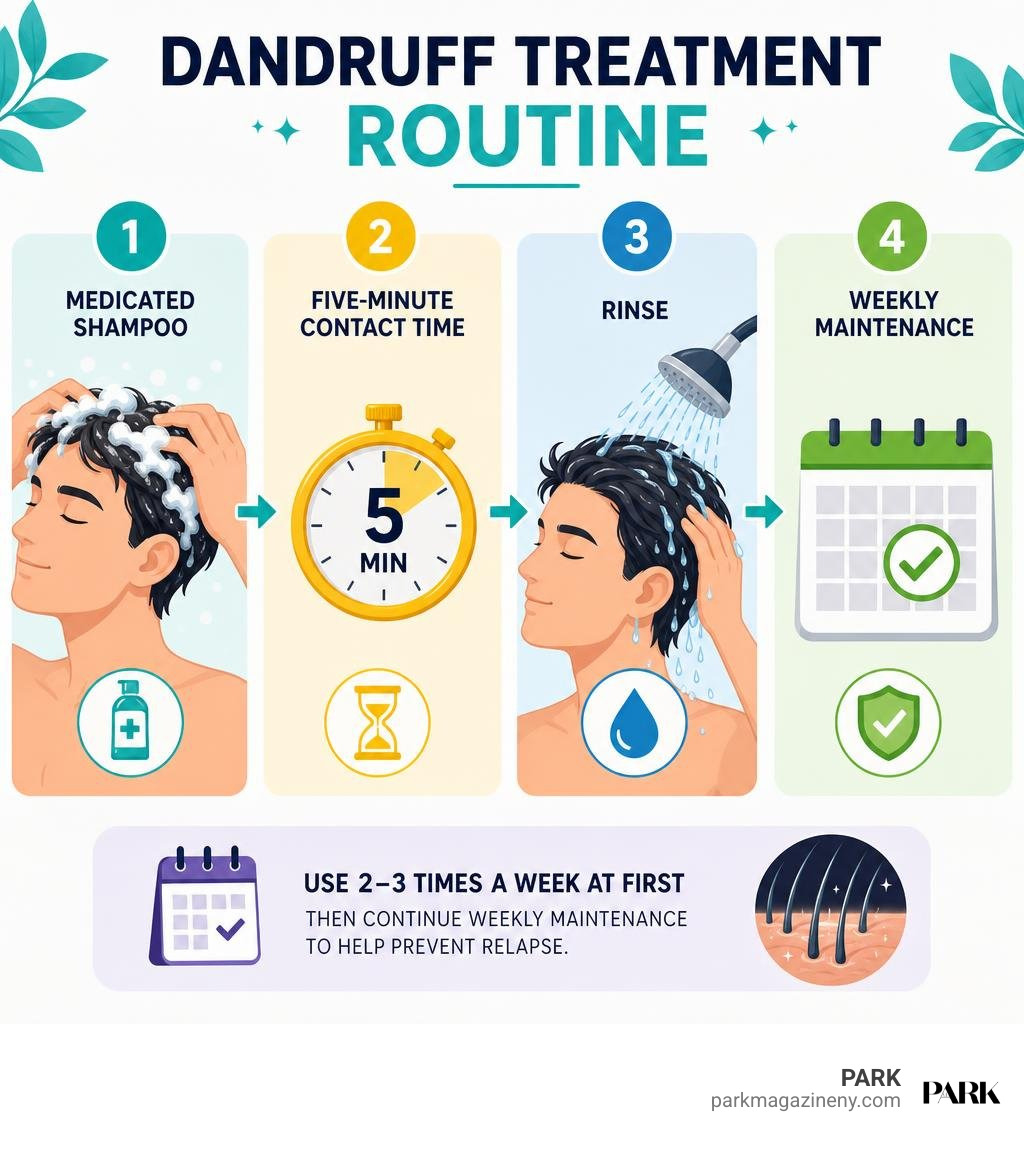
Dandruff treatment terms at a glance:
Understanding Dandruff Causes and Related Scalp Conditions
At its biological core, dandruff is a disorder of epidermal renewal and cellular adhesion. In a balanced scalp environment, the skin sheds microscopic individual corneocytes unnoticed. Under baseline conditions, normal physiological scaling releases roughly 487,000 cells per square centimeter after washing. However, during active flaking, this escalates dramatically to approximately 800,000 cells per square centimeter.
This hyper-proliferation causes immature cells to retain their nuclei (parakeratosis) and stick together in visible clusters rather than shedding individually. As scalp lipids break down, free fatty acids penetrate the stratum corneum, compromising the barrier function and triggering local histamine release. This histamine cascade is the primary reason an irritated scalp itches so persistently.
Scalp barrier disruption shares notable similarities with other inflammatory dermatoses. Just as following Skincare Tips for People with Eczema requires rebuilding moisture barriers, treating a flaking scalp requires calming cutaneous reactivity. When diagnosing underlying triggers, clinical guidelines detailed in Seborrheic Dermatitis: Diagnosis and Treatment highlight how sebum production, barrier permeability, and individual immune responses intersect.
Dandruff vs. Seborrheic Dermatitis and Scalp Psoriasis
Distinguishing between everyday flaking, seborrheic dermatitis, and scalp psoriasis is essential for choosing the right regimen. Dandruff is clinically understood as the mildest, non-inflammatory presentation along the seborrheic spectrum, confined strictly to the scalp without marked redness. Seborrheic dermatitis introduces visible erythema, inflammation, and greasy yellow scales that frequently extend beyond the hairline to the eyebrows, glabella, nasolabial folds, and ears.
Scalp psoriasis presents differently: it forms sharply demarcated, thick, silvery-white plaques on an erythematous base, often extending past the hairline and presenting with the classic Auspitz sign (pinpoint bleeding when scales are lifted). When features of both conditions overlap, clinicians refer to it as sebopsoriasis.
| Feature | Mild Dandruff | Seborrheic Dermatitis | Scalp Psoriasis |
|---|---|---|---|
| Visible Erythema | Absent or minimal | Present (pink to bright red or hypopigmented) | Marked, well-demarcated plaques |
| Flake Characteristics | Fine, loose, white to light yellow | Greasy, adherent, yellowish scales | Thick, silvery-white, dry micaceous scales |
| Anatomical Distribution | Scalp only | Scalp, eyebrows, nasolabial folds, ears, chest | Scalp, elbows, knees, lumbosacral region |
| Barrier Pathology | Mild subclinical irritation | Moderate inflammation with barrier compromise | Severe hyperkeratosis and rapid cell turnover |
As detailed in the Seborrheic Dermatitis – Dermatology – Merck Manual Professional Edition, accurate differential diagnosis ensures you do not mistake autoimmune plaque buildup for simple fungal-associated scaling.
The Biological Role of Malassezia and Hair Shedding
The human scalp microbiome is a dense ecosystem, hosting between 10^3 and 10^5 micro-organisms per square millimeter. While bacteria such as Cutibacterium and Staphylococcus comprise roughly 90% of scalp bacterial sequences, the lipophilic yeast genus Malassezia (predominantly M. globosa and M. restricta) plays the primary role in flaking. Malassezia relies on external lipids for survival because it cannot synthesize its own fatty acids. It secretes lipase enzymes to hydrolyze scalp sebum triglycerides, consuming saturated fatty acids and leaving behind unsaturated oleic and arachidonic acids.
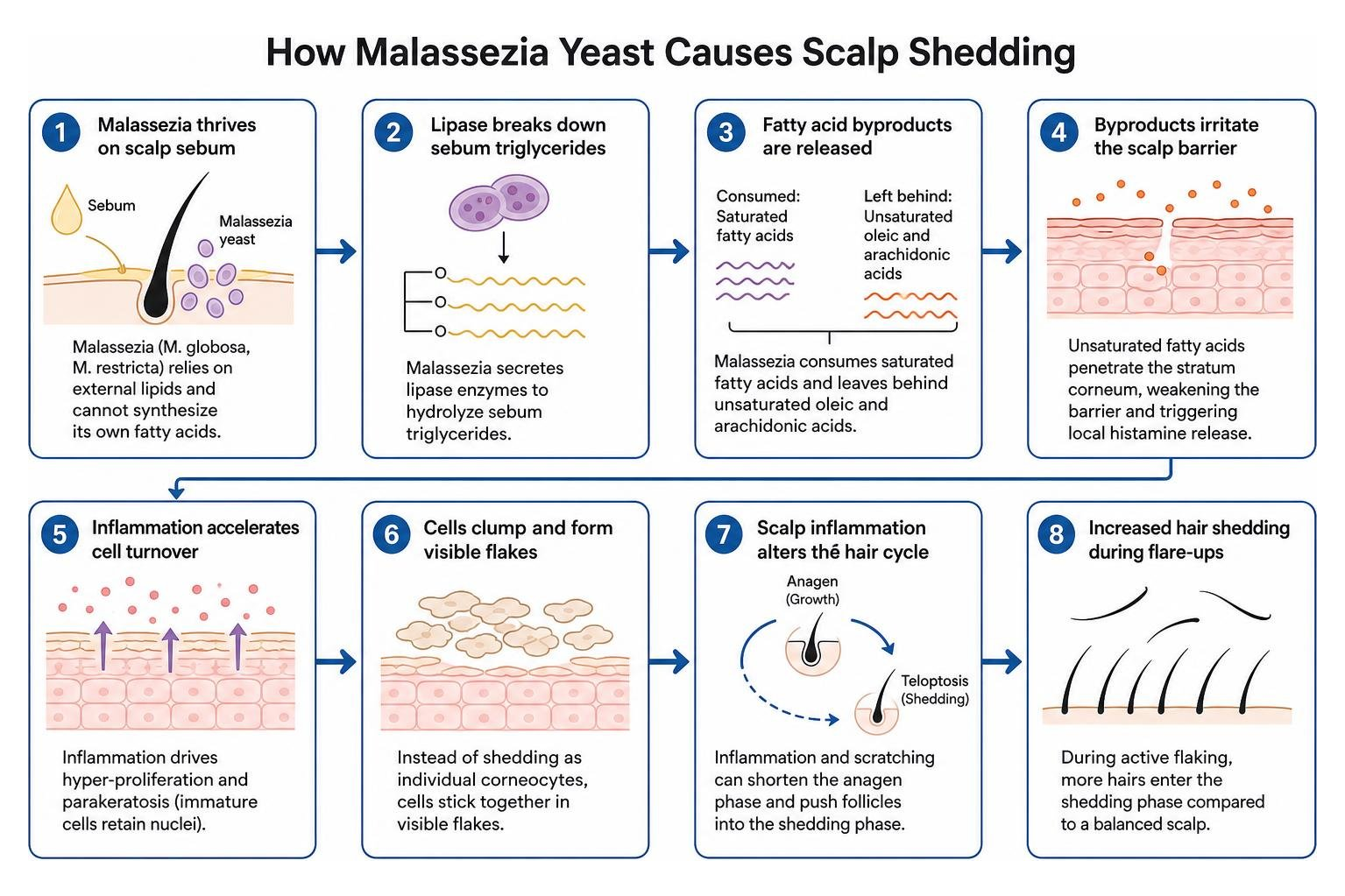
During active flare-ups, Malassezia density increases by 1.5 to 2 times its normal baseline. These byproducts irritate the scalp barrier, prompting an inflammatory response that accelerates cellular turnover.
This inflammation can alter the hair cycle. Severe scaling and vigorous scratching can shorten the anagen (growth) phase and push follicles prematurely into the teloptosis shedding phase. Studies show that individuals experiencing active flaking shed between 100 and 300 hairs over a two-day period, compared to the 50 to 100 hairs shed by those with a balanced scalp. Fortunately, Scientific research on scalp seborrheic dermatitis confirms that this telogen shedding is temporary and resolves once scalp inflammation is controlled.
Active Ingredients in Medicated Dandruff Treatment
Medicated shampoos form the cornerstone of effective scalp therapy. Understanding the distinct pharmacological mechanisms of over-the-counter and prescription compounds allows you to target the root causes of flaking: fungal proliferation, hyperkeratinization, and inflammation.
Over-the-Counter Actives and How They Function
Different active ingredients serve distinct clinical functions:
- Ketoconazole (1% OTC, 2% Prescription): A broad-spectrum imidazole antifungal. It disrupts fungal cellular membranes by inhibiting the enzyme 14-alpha-demethylase, blocking ergosterol synthesis in Malassezia. Clinical trials reveal an impressive Number Needed to Treat (NNT) of 5 for total symptom clearance.
- Zinc Pyrithione (1% to 2%): A coordination complex that delivers antimicrobial, antifungal, and cytostatic actions. It normalizes epithelial keratinization, reduces parakeratosis, and diminishes Malassezia colonization.
- Selenium Sulfide (1% OTC, 2.5% Prescription): An antifungal and cytostatic agent that slows epidermal cell turnover while reducing fungal density. Note: Ensure thorough rinsing to avoid potential discoloration of light, grey, or chemically processed hair.
- Salicylic Acid (2% to 3%): A beta-hydroxy acid (BHA) acting as a keratolytic agent. It dissolves intercellular desmosomes, loosening stuck corneocyte clumps so they can be washed away easily.
- Coal Tar (0.5% to 5%): A byproduct of coal processing that suppresses epidermal DNA synthesis, reducing hyper-proliferation. Tar can increase scalp sensitivity to sunlight and may stain blonde or bleached hair.
- Piroctone Olamine: A second-generation antifungal and anti-inflammatory agent known for its gentle safety profile, making it a reliable option for frequent use.
According to the Dandruff – Diagnosis and treatment – Mayo Clinic guidelines, active compounds require sufficient contact time—typically at least 5 minutes—to precipitate out of the lather and bind to the scalp before rinsing.
Choosing the Right Dandruff Treatment for Your Hair Type
Medicated formulas must be balanced against individual hair textures to maintain strand strength:
- Straight and Fine Hair: Tends to accumulate sebum rapidly. Daily or every-other-day washing with zinc pyrithione or salicylic acid prevents oil accumulation and eliminates loose flakes without weighing strands down.
- Curly, Wavy, and Chemically Treated Hair: Benefits from washing 2 to 3 times weekly. Alternate an antifungal wash like ketoconazole with a sulfate-free hydrating shampoo, and always follow with a deep conditioner applied strictly to the mid-lengths and ends.
- Tightly Coiled and Kinky Hair (Types 3C–4C): Highly susceptible to moisture loss and surfactant-induced breakage. Washing is generally limited to once weekly. For these textures, leave-in zinc pyrithione lotions, scalp oils, or prescription topical corticosteroid solutions are often preferred over drying, alcohol-based foaming shampoos.
Pairing your medicated wash with a matching anti-dandruff conditioner can increase therapeutic efficacy by 5% to 10%, whereas heavy cosmetic conditioners applied directly to the scalp can coat active residues and reduce their benefits.
Step-by-Step Scalp Care, Lifestyle Habits, and Natural Remedies
Successful scalp management combines targeted topical products with gentle daily care. Mechanical technique and daily hygiene habits play a significant role in calming inflammation.
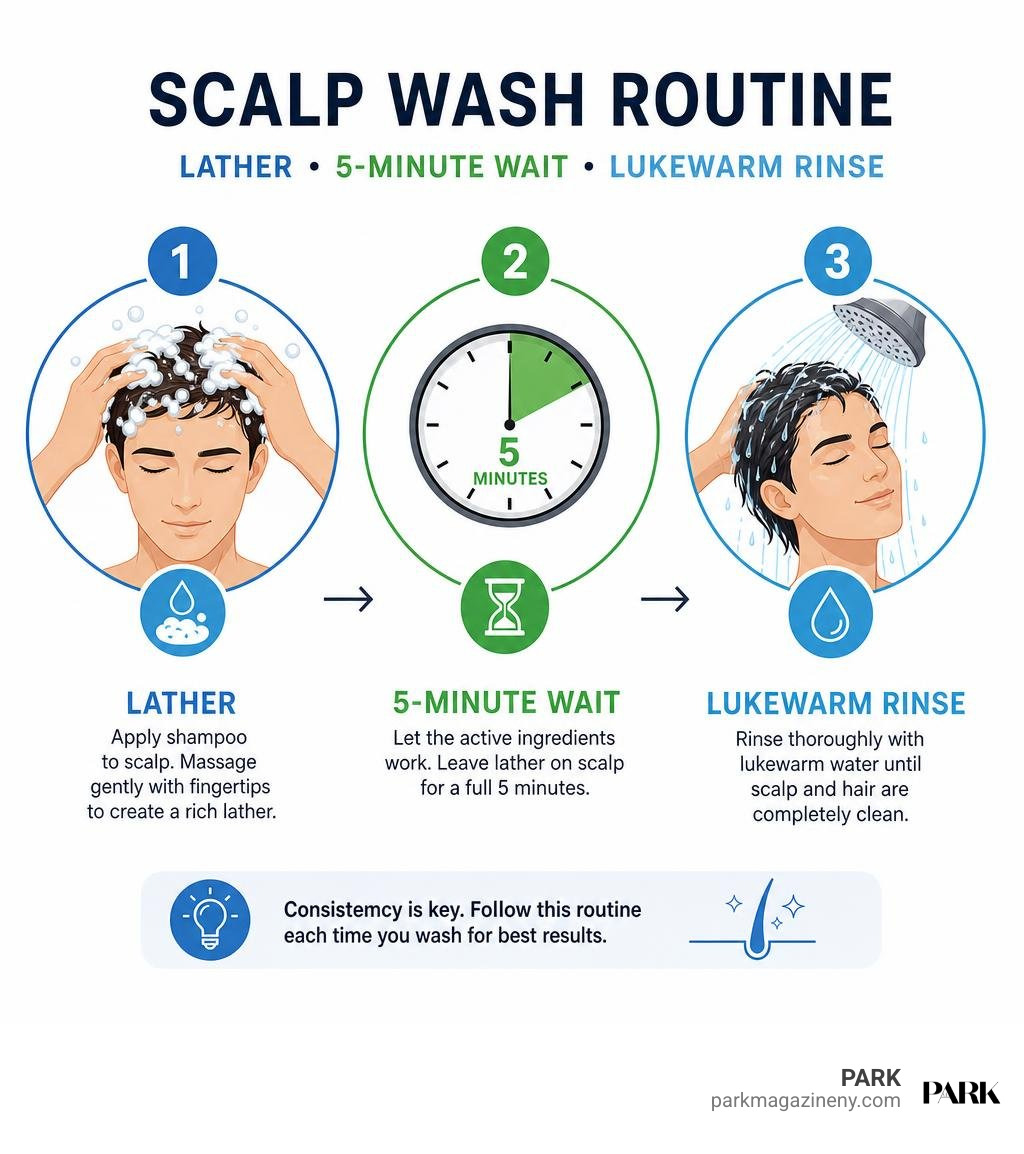
- Cleanse on a Consistent Schedule: Infrequent washing allows sebum to pool, feeding Malassezia and worsening scale buildup. Establish a steady cadence suited to your hair texture.
- Massage with Fingertips, Not Nails: Never scratch the scalp with fingernails. Scratching causes micro-abrasions, introducing secondary bacterial pathogens like Staphylococcus and triggering inflammatory flare-ups. Use soft circular fingertip motions to distribute lather.
- Use Lukewarm Water: Scalding hot water strips the scalp barrier and dilates surface capillaries, exacerbating itching and causing hair frizz.
- Practice Tool and Bedding Hygiene: Wash hairbrushes, combs, and styling tools weekly in warm, soapy water to remove residual yeast, sebum, and styling residue. Change pillowcases at least twice weekly.
- Manage Stress and Internal Balance: Emotional stress and fatigue alter immune regulation and neurogenic inflammation, triggering flare-ups. Integrating Simple Daily Habits That Support a Balanced Lifestyle into your weekly schedule supports long-term skin health.
Long-Term Maintenance and Dandruff Treatment Rotation
Medicated shampoos typically require 5 to 10 consecutive washes to clear visible flakes. Once control is established, tapering daily use to a maintenance frequency of once or twice per week prevents recurrence.
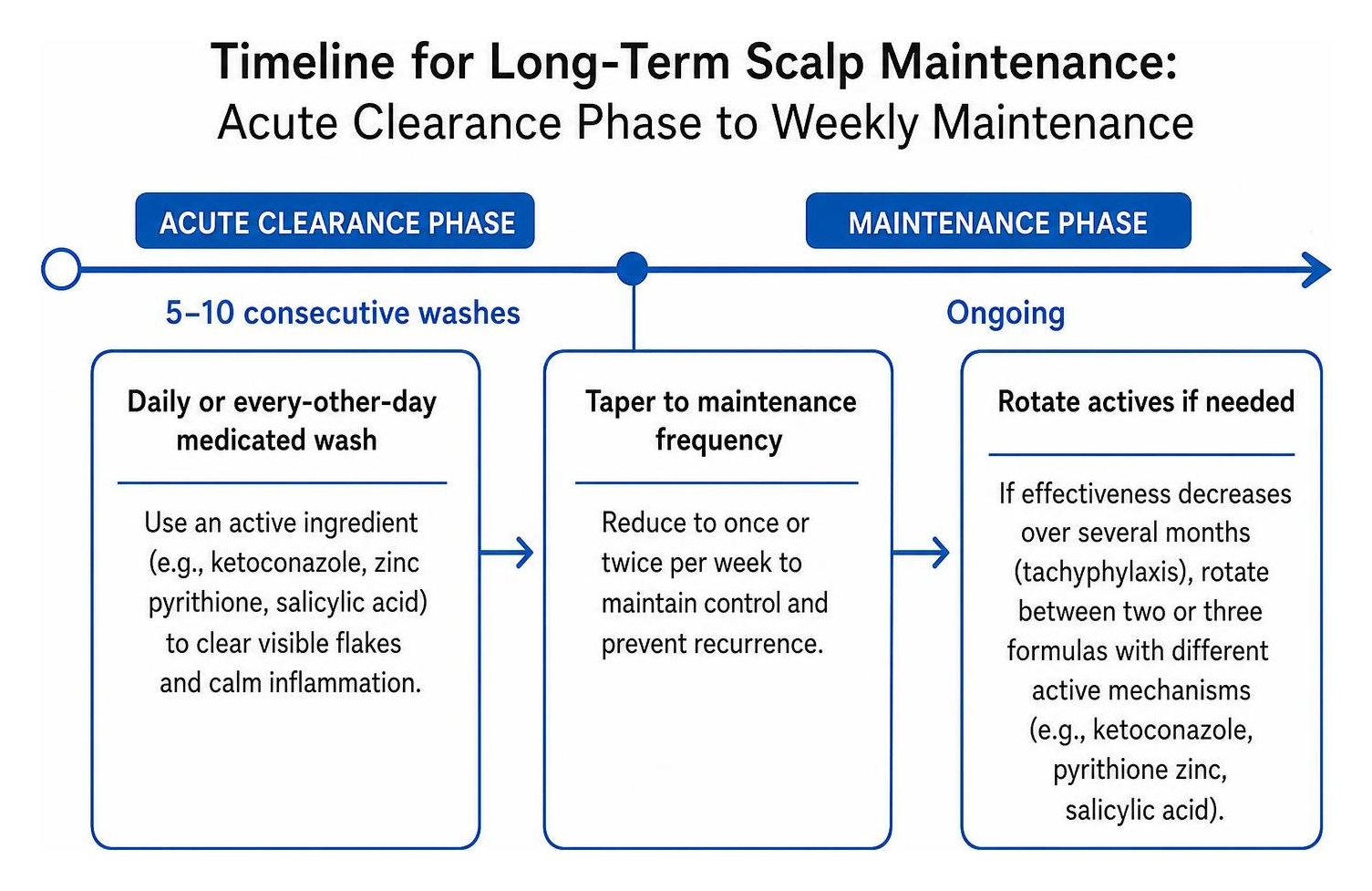
If an active ingredient appears to lose its effectiveness over several months—a common clinical phenomenon known as tachyphylaxis—rotate between two or three formulas with different active mechanisms (for instance, alternating ketoconazole, pyrithione zinc, and salicylic acid).
Natural Scalp Care and Plant-Based Approaches
For those seeking supportive plant-based methods, natural ingredients can complement medicated therapies by softening scales and calming irritation:
- Scale-Softening Carrier Oils: Thick, adherent scales can be softened prior to washing by applying warm mineral oil, coconut oil, or olive oil for 1 to 3 hours under a shower cap. This softens crusts, allowing them to be gently lifted with a fine-toothed comb before shampooing.
- Tea Tree Oil (Melaleuca alternifolia): Known for natural antifungal and anti-inflammatory properties. Shampoos formulated with 5% tea tree oil have shown benefits in mild flaking, though raw, undiluted tea tree oil carries a known risk of allergic contact dermatitis.
- Botanical Barrier Support: For deeper insights into plant-derived hair wellness, exploring What is the Best Plant-Based Scalp Treatment offers helpful context on botanical care. Additionally, pairing scalp treatments with holistic skincare, such as incorporating Herbal Remedies for Clear and Glowing Skin, supports your overall barrier function.
- Bergamot Essential Oil Precautions: While bergamot contains soothing properties, it must always be diluted (1 to 2 parts per 100 parts carrier oil) and never applied prior to sun exposure due to potential photosensitivity.
When to Consult a Dermatologist for Scalp Irritation
Most mild cases improve with consistent over-the-counter care, but persistent or severe scalp symptoms warrant professional medical evaluation.

Schedule an appointment with a board-certified dermatologist if you experience:
- Refractory Scaling: Flaking and scaling that show no improvement after 3 to 4 weeks of consistent over-the-counter medicated shampoo use.
- Severe Erythema and Pruritus: Intense redness, swelling, burning, or unbearable itching that disrupts sleep or daily activities.
- Extensive Body Involvement: Lesions spreading extensively across the face, eyelids (blepharitis), chest, or body folds.
- Signs of Secondary Bacterial Infection: Crusting, oozing, purulent discharge, or painful localized swelling.
- Unexplained Patchy Hair Loss: Broken hairs or noticeable bald patches developing beneath scaly plaques.
Dermatologists have access to potent prescription interventions, as outlined in clinical literature on Seborrheic dermatitis – Diagnosis and treatment – Mayo Clinic:
- Prescription Topical Antifungals: Ketoconazole 2% shampoo/cream and Ciclopirox 1% shampoo/gel, which have higher bio-availability against resistant Malassezia strains.
- Topical Corticosteroid Solutions and Foams: Formulations containing fluocinolone 0.01%, clobetasol propionate 0.05%, or desonide offer rapid anti-inflammatory relief during acute flares. These are used in short bursts to prevent side effects like skin thinning (atrophy) or telangiectasia.
- Topical Calcineurin Inhibitors: Tacrolimus 0.1% ointment and pimecrolimus 1% cream serve as steroid-sparing anti-inflammatory treatments, ideal for delicate facial skin, hairlines, and behind the ears.
- Topical PDE-4 Inhibitors: Roflumilast 0.3% foam represents a non-steroidal option for chronic inflammatory plaques.
Frequently Asked Questions About Scalp Care
How many washes does it take for dandruff shampoo to work?
It typically takes between 5 and 10 washes with a medicated shampoo to clear visible flaking and calm itchiness. Active ingredients require a full 5-minute contact time on the scalp during each wash to precipitate out of the lather and penetrate the outer skin layers. Once symptoms clear, continue using the shampoo once a week to maintain your results.
Does dandruff cause permanent hair loss?
No. Dandruff and uncomplicated seborrheic dermatitis do not cause permanent damage to hair follicles or lead to scarring alopecia. However, heavy scale accumulation and vigorous scratching can induce temporary telogen effluvium (diffuse shedding). Shedding normalizes once the scalp barrier heals and inflammation subsides.
What should you do if an anti-dandruff shampoo causes irritation?
If you experience intense burning, stinging, worsening redness, or hives, rinse the product off immediately with cool water and discontinue use. These symptoms may indicate an allergic contact dermatitis or sensitivity to specific surfactants, fragrances, or active ingredients (such as coal tar or sulfur). Switch to a gentle, fragrance-free formula and consult a physician if irritation persists.
Conclusion
At PARK Ave Magazine, we believe achieving a healthy, comfortable scalp comes down to steady care, evidence-based ingredients, and an understanding of your unique hair texture. Dandruff is a manageable biological reality that responds well to proven antifungal and scale-lifting solutions. By maintaining consistent washing habits, giving medicated shampoos adequate contact time, and rotating formulas when necessary, you can keep flakes away for good.
For more curated wellness resources, explore our expert health and wellness guidance to support your daily self-care journey.