How to Choose a Reliable Mold Remediation Company for Safe and Thorough Property Restoration
Mold can become a serious property concern when moisture remains present for an extended period. It can develop in areas affected by leaks, flooding, condensation, poor ventilation, or excessive humidity, often growing behind walls, beneath flooring, above ceilings, and in other hidden spaces. Although small amounts of surface mold may sometimes appear manageable, widespread or concealed growth can be much more difficult to address. Proper mold remediation involves more than simply cleaning visible discoloration. It requires identifying the moisture source, containing affected areas, removing contaminated materials when necessary, cleaning appropriate surfaces, and taking steps to prevent the problem from returning.
Understanding how mold develops and how professional remediation works can help property owners respond appropriately when signs of growth appear. Acting promptly is important because moisture-related damage can continue even when visible mold seems limited. A careful approach can protect the building, reduce the likelihood of recurring problems, and restore affected areas more effectively.
Understanding How Mold Develops
Mold is a type of fungus that can grow in many environments when moisture and suitable organic materials are available. Spores are naturally present in the environment, so completely eliminating them from an indoor space is generally not the objective. Instead, effective mold control focuses on preventing conditions that allow mold to grow and addressing contamination when it occurs.
Common moisture sources include plumbing leaks, roof damage, flooding, appliance failures, poor drainage, condensation, and excessive indoor humidity. Buildings with inadequate ventilation can also experience moisture accumulation in bathrooms, kitchens, basements, crawl spaces, and other areas.
Mold may grow on materials such as drywall, wood, insulation, carpeting, paper products, and other materials that can retain moisture. In some cases, the visible growth represents only a small portion of a larger problem hidden behind surfaces. This is why identifying the source and extent of moisture is an essential part of any remediation effort.
Recognizing Potential Mold Problems
Visible discoloration is one of the most obvious signs of possible mold growth. Mold can appear in different colors and textures depending on the species, surface, moisture conditions, and stage of development. However, appearance alone cannot reliably determine the type or severity of contamination.
A persistent musty odor may also indicate moisture or hidden mold, particularly when there is no obvious visible source. Odors can sometimes originate from areas behind walls, under flooring, inside cabinets, or within ventilation systems.
Water stains, peeling paint, warped materials, swollen baseboards, and damaged drywall can provide additional clues. These signs do not necessarily prove that mold is present, but they indicate that moisture has affected the building and further investigation may be appropriate.Recurring moisture problems should never be ignored. Even if visible mold is cleaned away, continued water intrusion or high humidity can create conditions for new growth.
Why Addressing the Moisture Source Comes First
Removing visible mold without correcting the moisture problem is unlikely to provide a lasting solution. If a leaking pipe continues to release water behind a wall, for example, newly cleaned surfaces may become contaminated again.
The source may be relatively obvious, such as a leaking faucet or damaged roof, but some moisture problems can be difficult to identify. Condensation, inadequate ventilation, foundation seepage, and hidden plumbing leaks can all contribute to persistent dampness.
A professional assessment should therefore consider where moisture is entering or accumulating and how it can be controlled. Depending on the situation, solutions may involve plumbing repairs, roof repairs, improved ventilation, dehumidification, drainage improvements, waterproofing, or replacement of damaged materials.
Controlling moisture is one of the most important elements of successful remediation because it addresses the underlying condition that allowed mold to develop.
What Mold Remediation Involves
The remediation process varies according to the size and location of the affected area, the materials involved, and the source of moisture. A typical project begins with an inspection to identify visible growth, moisture conditions, affected materials, and potential areas of hidden contamination.
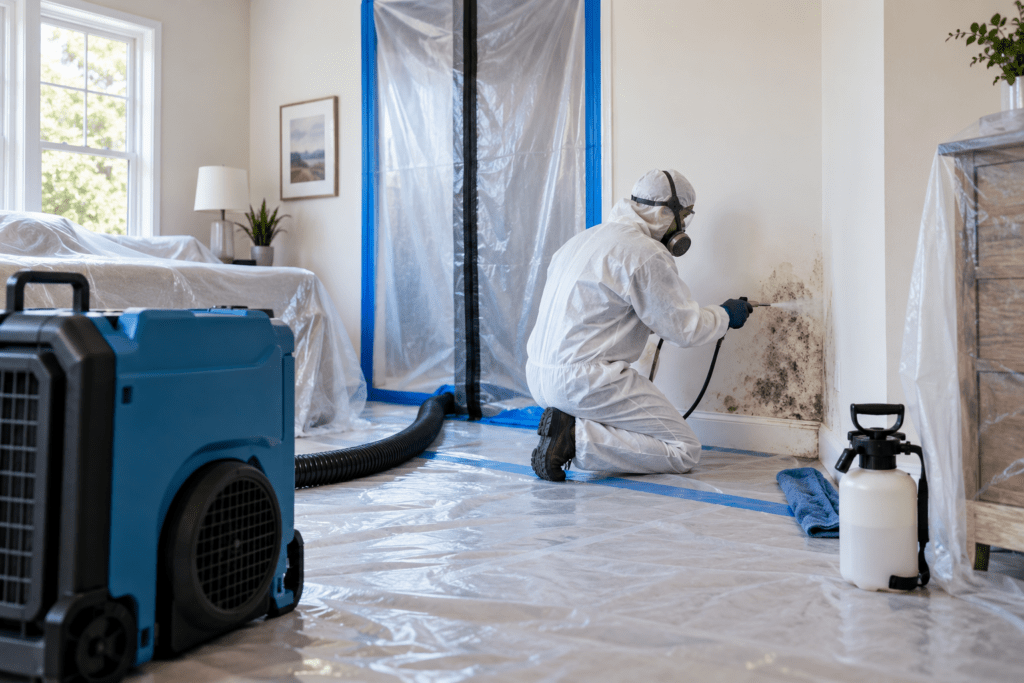
The affected area may then be contained to reduce the movement of dust and mold-containing particles into unaffected parts of the property. The specific containment approach depends on the circumstances and scale of the work.
Damaged porous materials may need to be removed if they cannot be adequately cleaned. Materials such as heavily contaminated drywall, insulation, or carpeting may be difficult to restore, particularly when they have remained wet for an extended period.
Surfaces that can safely be cleaned may be treated using appropriate methods and products. The goal is to remove contamination without spreading it to other areas. After cleaning and removal, affected spaces should be dried thoroughly and monitored for remaining moisture.
The Importance of Professional Assessment
Not every situation requires extensive professional intervention, but larger or complicated mold problems can benefit from expert evaluation. Professionals can help determine the extent of contamination and identify moisture sources that may not be immediately visible.
An assessment may include visual inspection, moisture measurements, examination of building materials, and evaluation of areas where water damage is suspected. In certain circumstances, additional testing may be considered, although testing is not always necessary to determine whether visible mold should be addressed.
A professional can also distinguish between materials that can reasonably be cleaned and those that should be removed. This helps prevent unnecessary demolition while ensuring that significantly damaged materials are not left in place.
Containment and Protection During Remediation
Containing an affected area is an important part of many remediation projects. Disturbing contaminated materials can release particles into the surrounding environment, potentially spreading the problem beyond the original area.
Professionals may use physical barriers and controlled work practices to separate the affected space from occupied areas. Air-handling considerations may also be important depending on the size and location of the project.
Workers should use appropriate protective equipment based on the conditions and scope of the work. The exact requirements vary, but protective clothing, gloves, eye protection, and suitable respiratory protection may be necessary in certain situations.
Occupants may need to stay away from the work area while remediation is underway. Special consideration should be given to individuals who may be particularly sensitive to indoor environmental conditions. When extensive contamination exists, professional guidance can help determine appropriate precautions.
Removing Damaged Materials
One of the more difficult decisions during remediation is determining whether contaminated materials should be cleaned or removed. Nonporous surfaces can often be cleaned more effectively than porous materials because mold can penetrate deeply into absorbent materials.
Heavily damaged drywall, insulation, carpeting, and other porous materials may need to be removed when cleaning cannot reliably restore them. Removal should be performed carefully to minimize the spread of particles.
The affected materials should be handled and disposed of according to applicable requirements. Simply moving contaminated materials through occupied areas without proper precautions can spread debris and increase the affected area.After removal, the underlying surfaces should be inspected. Hidden moisture damage may be discovered once wall coverings, flooring, or other materials are opened.
Cleaning and Drying Affected Areas
Cleaning is only one part of the remediation process. The affected space must also be thoroughly dried because remaining moisture can support renewed growth.
Drying methods may include increased airflow, dehumidification, controlled ventilation, or other appropriate techniques. The exact approach depends on the building materials, environmental conditions, and source of moisture.
Moisture levels should be monitored rather than judged solely by how a surface feels. Materials can appear dry while retaining moisture internally. Proper measurement can provide greater confidence that the area has been adequately dried.After cleaning, the affected surfaces should be inspected again to confirm that visible contamination has been addressed and that no obvious moisture sources remain.
Mold and HVAC Systems
Heating, ventilation, and air-conditioning systems require special consideration when mold contamination is suspected. If mold has entered an HVAC system, operating the equipment without proper evaluation could potentially distribute particles through the building.
The system should therefore be assessed when contamination is located near air handlers, ducts, filters, insulation, or other components. Not every nearby mold problem means that an HVAC system is contaminated, so a professional assessment can help determine whether cleaning or other action is necessary.
Filters should also be maintained according to the equipment manufacturer’s recommendations. Good ventilation and appropriate humidity control can reduce conditions that support mold growth.
Controlling Indoor Humidity
Humidity management is one of the most effective ways to reduce the likelihood of recurring mold. Indoor spaces that remain excessively humid can provide favorable conditions for fungal growth, especially in areas with limited ventilation.
Bathrooms and kitchens often require effective exhaust ventilation because normal activities generate moisture. Exhaust fans should direct humid air appropriately rather than simply moving it into another part of the building.
Dehumidifiers can be useful in spaces that naturally experience elevated humidity, such as basements or other enclosed areas. However, equipment should be selected and maintained appropriately so that it operates effectively.
Condensation should also be monitored. Cold surfaces can collect moisture when warm, humid air comes into contact with them. Improving insulation, ventilation, and humidity control can sometimes reduce this problem.
Preventing Future Water Damage
Long-term prevention requires attention to the building’s sources of moisture. Plumbing systems should be inspected for leaks, and damaged fixtures or pipes should be repaired promptly. Roofs, gutters, downspouts, windows, and exterior drainage systems should also be maintained to reduce water intrusion.
Water should be directed away from the building where possible. Poor exterior drainage can allow moisture to accumulate near foundations and contribute to damp interior conditions.
After a flood or significant water event, rapid drying is especially important. Wet materials should be addressed promptly because prolonged moisture exposure increases the risk of mold and other forms of deterioration.Routine maintenance may seem unrelated to mold prevention, but preventing water damage is often the most effective long-term strategy.
Common Mistakes to Avoid
One common mistake is painting over visible mold without addressing the underlying moisture. Paint may temporarily conceal discoloration, but it does not solve the source of contamination. If moisture remains present, growth may return and the affected materials may continue to deteriorate.
Another mistake is relying exclusively on household cleaning products for a large or hidden contamination problem. Surface cleaning may be appropriate for limited situations, but extensive growth can require more comprehensive evaluation and controlled removal.
Failing to investigate musty odors is another potential problem. An odor may indicate hidden moisture even when no visible mold can be found. Ignoring the source can allow damage to continue behind walls or under flooring.
Property owners should also avoid unnecessary demolition. Removing large sections of a building without determining the actual extent of contamination can increase costs and create additional repair work. A careful assessment can help establish an appropriate scope.
Choosing a Remediation Professional
When professional assistance is needed, property owners should look for companies with relevant experience, appropriate training, and a clear process for evaluating and addressing moisture-related problems. A reputable provider should explain the proposed work rather than simply offering a generic treatment.
The scope of work should identify affected areas, containment procedures where appropriate, removal of damaged materials, cleaning methods, drying procedures, and any recommended repairs. If the moisture source requires a separate contractor, that responsibility should also be clearly established.
Property owners should be cautious of companies that make unsupported promises about completely eliminating all mold spores from a building. Because mold spores naturally exist in the environment, the practical goal is to remove or clean affected materials and control the moisture conditions that support growth.Clear communication, documentation, and realistic expectations can make the remediation process much easier to manage.
Understanding the Cost of Remediation
The cost of a mold-related project can vary significantly depending on the size of the affected area, location of contamination, materials involved, extent of water damage, accessibility, and amount of demolition required.
A small surface issue may require relatively limited work, while contamination hidden behind walls or beneath flooring can involve removal, drying, reconstruction, and repairs to the original moisture source.
Property owners should ask for a detailed estimate that explains what is included. If reconstruction is necessary after contaminated materials are removed, the estimate should clarify whether that work is included in the remediation price or handled separately.The cheapest proposal is not necessarily the best choice. A proper solution should address both contamination and moisture so that the problem is less likely to return.
Protecting the Property After Remediation
Once the remediation work has been completed, ongoing monitoring and maintenance remain important. Areas that experienced water damage should be checked periodically for new stains, odors, dampness, or other signs of recurring moisture.
Plumbing fixtures, roofing systems, drainage components, windows, and ventilation systems should be maintained as part of normal property care. Small leaks should be addressed promptly rather than allowed to become long-term moisture sources.
Indoor humidity should also remain within an appropriate range for the building and climate. Monitoring humidity can help identify conditions that may contribute to condensation or fungal growth.Good housekeeping can support overall indoor environmental quality, but cleaning alone cannot compensate for structural leaks or persistent moisture. Prevention must focus on the building conditions that allow mold to thrive.
Certain situations deserve prompt evaluation, particularly when substantial water damage has occurred or when mold appears to cover a large area. Extensive contamination, recurring leaks, significant flooding, or suspected growth inside walls and ventilation systems can be difficult to address safely without professional assistance.
Water-damaged materials can also create secondary problems if they remain wet for too long. Structural materials may deteriorate, finishes may warp, and odors may become more persistent. Acting quickly can limit the amount of material that needs to be removed and reduce the overall scope of repairs.When in doubt, documenting the affected area and seeking an appropriate professional assessment can provide a clearer understanding of the situation.
Building a Long-Term Prevention Strategy
Effective mold remediation should be viewed as part of a larger moisture-management strategy rather than a one-time cleaning service. Removing visible growth is important, but preventing future moisture problems is what helps protect the property over the long term.
Property owners can support prevention by maintaining plumbing, roofs, gutters, drainage systems, windows, ventilation equipment, and humidity-control systems. They should also respond quickly to spills, leaks, flooding, and condensation problems.
Regular inspections are particularly useful in areas that are naturally prone to moisture. Basements, bathrooms, kitchens, crawl spaces, utility rooms, and areas surrounding plumbing fixtures deserve periodic attention.A proactive approach can make a significant difference. Instead of waiting until mold becomes widespread or visible, identifying moisture problems early allows them to be corrected before they create extensive damage.
Final Thoughts on Mold Remediation
Mold problems are closely connected to moisture, so successful remediation requires more than treating visible surfaces. A comprehensive approach involves identifying the source of moisture, evaluating the extent of contamination, containing affected areas when necessary, removing materials that cannot be adequately restored, cleaning suitable surfaces, and thoroughly drying the environment.
Professional help can be especially valuable when contamination is extensive, hidden, recurring, or connected to significant water damage. Experienced specialists can help establish an appropriate scope of work and reduce the risk of spreading contamination during removal.
For property owners, prevention remains one of the strongest defenses. Maintaining plumbing, roofing, drainage, ventilation, and humidity-control systems can reduce the conditions that allow mold to develop. When water damage does occur, prompt action can limit the extent of the problem.
Ultimately, effective mold remediation combines careful assessment, controlled removal, thorough cleaning, moisture management, and long-term prevention. Addressing both the visible contamination and the underlying cause provides a more reliable solution and helps protect the building’s materials, comfort, and overall condition for years to come.