
How to Pack a Suit for a Destination Wedding Abroad (Without It Arriving Wrinkled)
A destination wedding moves the dress code several thousand miles from the hanger. The suit now has to survive a long-haul flight, a connecting transfer and coastal or tropical humidity before it reaches the aisle. Bathroom steam at the hotel can only do so much. Once a crease sets under compression at altitude, no short recovery window will restore the fabric to its original drape, and the photographs will remember every misjudgement in the packing method.
Destination weddings continue to expand as a tourism segment, with Italy, the Caribbean, Thailand, Greece and Mexico all positioning themselves as primary venues for the market (source). That growth has outpaced the average traveller’s understanding of how to transport tailoring across climates. What follows is a considered guide to the packing decisions that matter, the garment-bag decision that underwrites them and the arrival protocol that returns a compressed suit to ceremony-ready condition.
Why Destination Weddings Break Normal Packing Rules
(source – https://unsplash.com/photos/clothing-items-and-pair-of-shoes-in-luggage-Nl-SXO4FAHw)
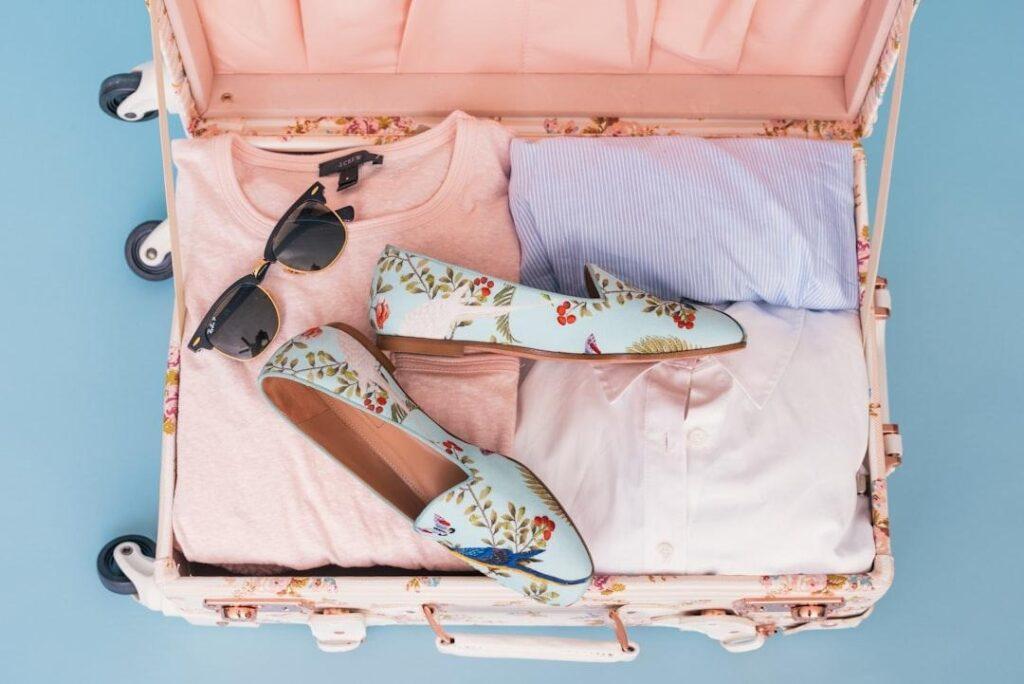
A business trip with a suit is a different problem to a destination wedding with one. A single-night business traveller can usually hang the suit, steam on arrival and accept that a mid-week jacket crease will recover by the afternoon. A wedding guest or groom facing a long-haul flight into a tropical climate is working with different physics.
Wool’s crease-recovery properties deteriorate measurably in high-humidity environments (source), which is exactly the condition that greets a suit stepping off a Caribbean or Mediterranean connecting flight. Add the pressure of overhead-bin storage across two sectors, a night in a hot hold in transit, and the last-leg taxi from the airport at 30°C (86°F), and the fabric is being asked to recover from a combination of stressors no domestic trip subjects it to.
There is also the arrival logistics problem. Most resort venues are nowhere near a dry cleaner, let alone one that handles wool suiting with any care. If the suit arrives compromised, the remedy on site is limited to hotel pressing, which ranges from excellent to ruinous depending on the property.
Fold, Hang or Carry: The Three Options
(source – https://unsplash.com/photos/black-suit-jacket-on-white-hanger-ip4CjkTWGmI)
There are three credible ways to move a suit across a long-haul itinerary, and they sit on a sliding scale of fabric risk.
Folding the suit into a conventional suitcase is the quickest method and the worst outcome for fabric recovery. Even with tissue-paper interleaves, the fold lines at the shoulder and across the skirt of the jacket absorb the full weight of whatever is packed above them. For cotton or linen this is recoverable; for worsted wool at destination-wedding weight, it usually is not.
Packing the suit in a soft garment pouch inside a regular case reduces abrasion but not compression. It is a reasonable method for shirts and trousers packed alone. It is not a method for a jacket carrying structure in its canvas.
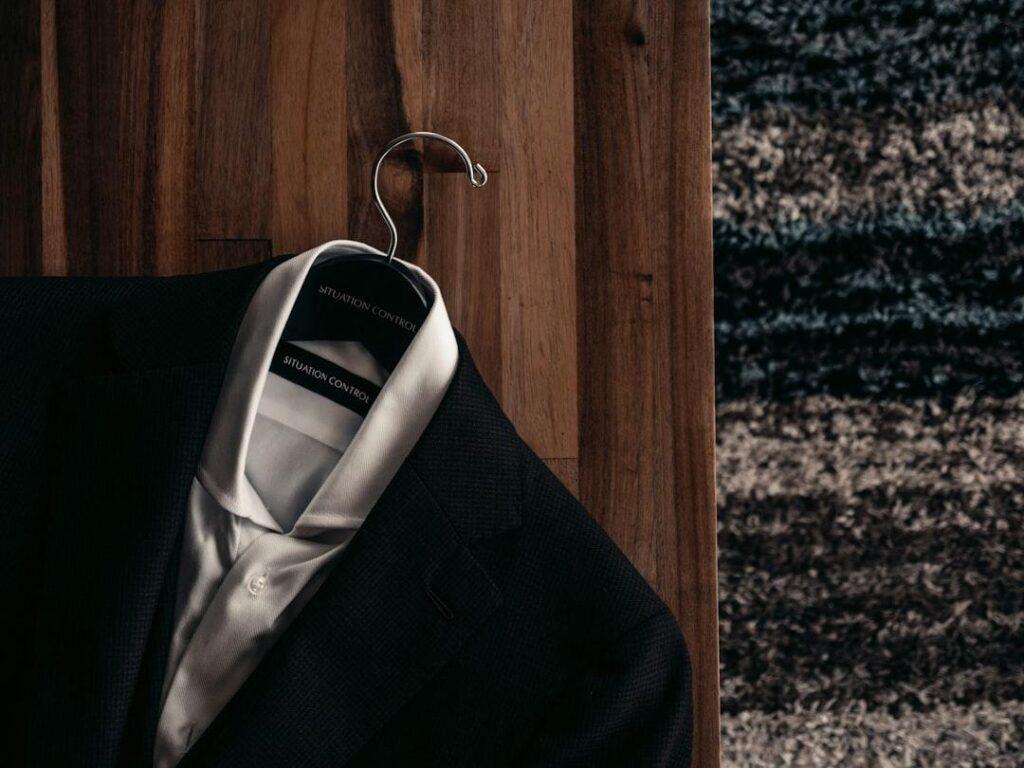
Hanging the suit in a dedicated carrier is the only approach that treats a ceremony suit as a ceremony garment rather than holiday laundry. The structure of the carrier, the internal hanger and the outer material decide whether the suit arrives wearable. That is the decision worth making carefully.
Choosing the Right Garment Bag for Abroad Travel
(source – https://unsplash.com/photos/a-brown-leather-duffel-bag-sitting-on-top-of-a-table-GcEr6y7ZQvQ)
The garment-bag category divides into two tiers.
- Thin, fold-over dust covers in nylon or polyester are genuinely useful inside a larger case for domestic trips. They are not useful as standalone carriers for an international ceremony suit.
- The second tier is structured, carry-on compliant garment duffel bags designed to occupy the overhead bin or the aircraft wardrobe in lieu of a regular suitcase.
Five attributes separate a serviceable carrier from a travel-grade one.
Dimensions matter first. A bag built to the standard IATA carry-on envelope (approximately 55 x 40 x 20 cm, or 22 x 16 x 8 in) means the suit never leaves the passenger’s line of sight during transit. Anything larger risks being gate-checked into the belly, which defeats the purpose of the carrier.
Structure matters second. A semi-rigid body retains its shape under the pressure of neighbouring cabin baggage; a floppy shell passes that pressure straight to the suit shoulders.
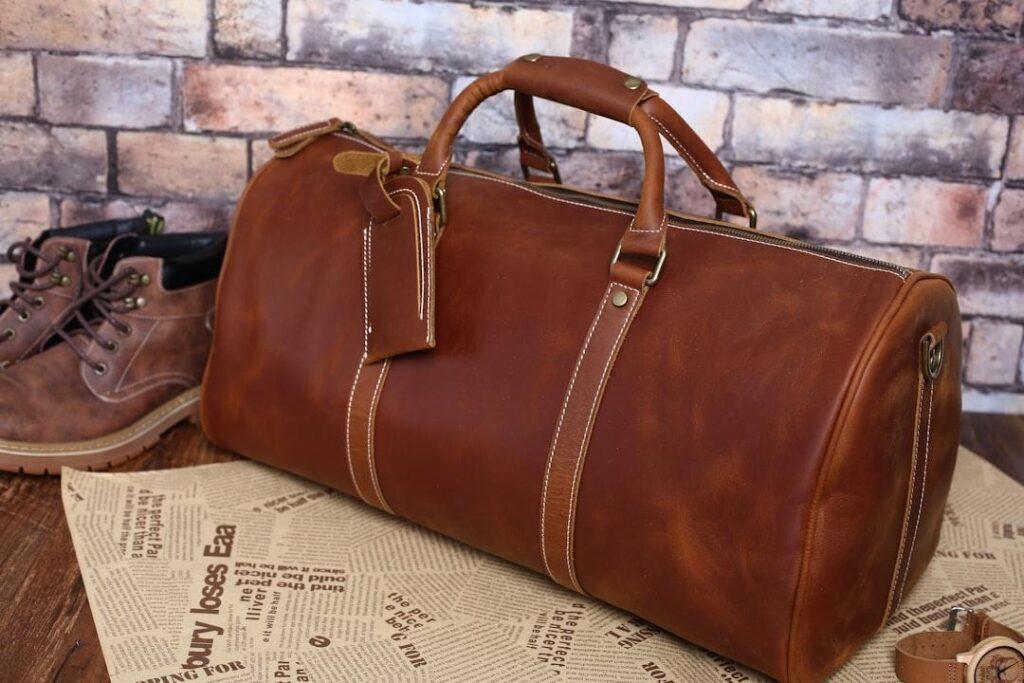
Outer material matters third. Full-grain leather ages and handles repeated use without surface failure. Waxed canvas holds up. Thin synthetics are not built for this, and their zips typically fail before the bag does. Cuoio Superiore certified Italian vegetable-tanned full-grain leather is the category benchmark on this specification.
Hardware matters fourth. The most common failure point on a garment bag is the zip. Solid brass hardware from Italian workshops is the reliable standard; plated zinc alloy tarnishes and fails at the joint within a handful of trips.
Lining matters fifth. Wool suiting resting against a polyester interior picks up synthetic fibre shed and traps moisture against the fabric. Italian cotton canvas lining breathes, which matters when the bag spends twelve hours in a hot cabin hold.
Which one do we like?
(Source: https://vonbaer.com/cdn/shop/files/von-baer-grand-high-quality-large-full-grain-leather-garment-travel-bag-carried-by-male-model.jpg?v=1713182293&width=1000)
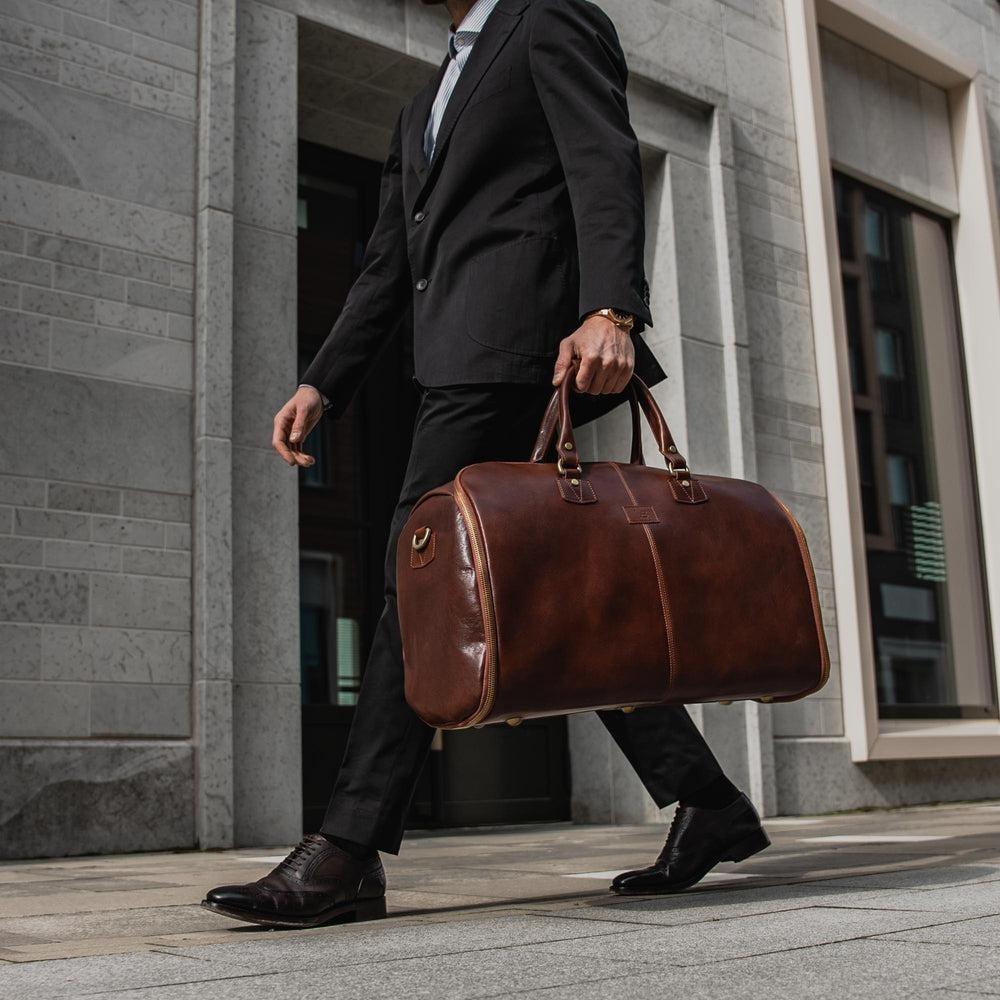
For grooms and wedding guests specifying at the considered end of the category, the Von Baer Grand is a really good option. It is a 55 x 33 x 25 cm (21.6 x 13 x 9.8 in) carry-on-compliant carrier in Cuoio Superiore certified Italian vegetable-tanned full-grain leather, with an internal hanger clamp and removable hook, which converts between hanging-bag and duffle configurations depending on whether the outbound flight has a cabin wardrobe or an overhead-only cabin. The hardware is solid brass from Italian workshops, the lining is fine Italian cotton canvas and the piece is backed by a 5-year warranty against defects in materials and workmanship.
Packing Technique: Layering the Suit for Travel
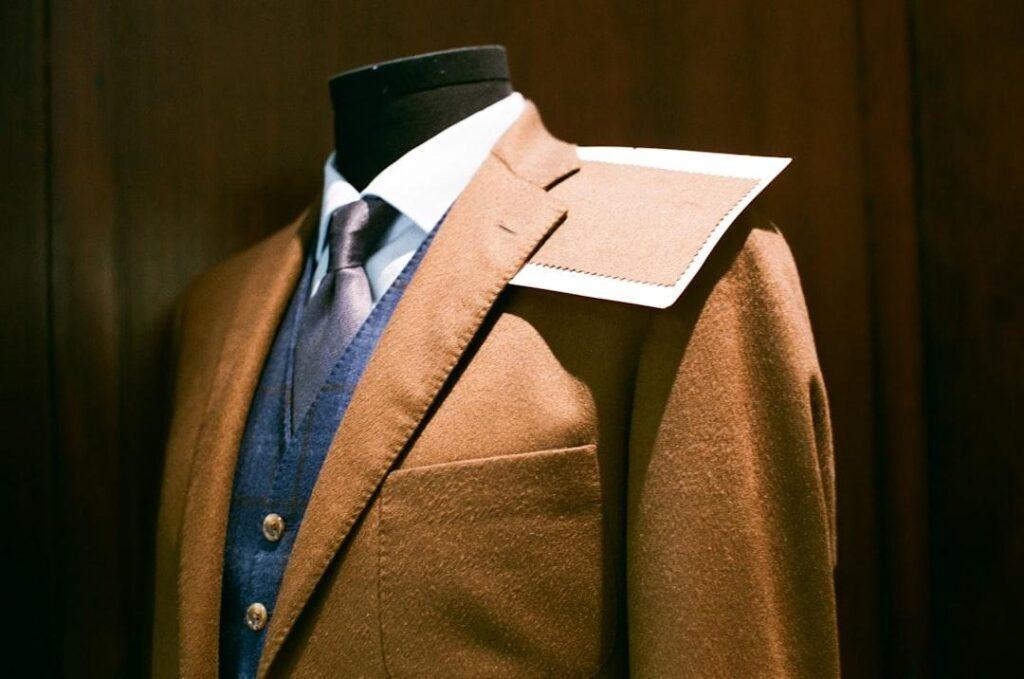
(source – https://unsplash.com/photos/a-suit-and-tie-on-a-mannequins-dummy-tOubjwKS6f0)
Once the carrier is chosen, the technique of laying the suit into it decides the remaining fabric risk. Worsted wool fabrics have good inherent crease-recovery characteristics when pressed correctly, but that recovery is conditional on the packing method (source).
Turn the jacket inside out at the shoulders, folding one shoulder into the other. This is the standard conservator’s method for transporting structured tailoring, and it protects the canvas and lining from surface compression. Interleave two sheets of acid-free tissue paper at the principal fold lines. Pack shirts flat with tissue in the layer beneath the suit, rather than rolled, to minimise transferred creasing. Shoes belong in cotton or felt dust bags at the base of the carrier, never loose against the lining. Cufflinks, the tie pin and a pocket square sit in a small leather pouch rather than rattling in the main compartment.
Day-of-Arrival Protocol

(source – https://unsplash.com/photos/a-bedroom-with-a-white-bed-and-a-wooden-headboard-WWYF8Lts8Ho)
The humidity rule cuts both ways. It damages a compressed suit over long-haul transit, and it rescues one on arrival when applied with control.
Hang the suit on the bathroom shower rail with the hot tap running behind a closed door for fifteen to twenty minutes. The enclosed steam relaxes the fibres and allows the weave to recover. Leave the suit on the hanger in open air for a further twenty-four hours before the ceremony where the schedule permits. Brush the jacket down with a clothes brush in the direction of the nap. If the room offers a travel iron, press the trousers only, not the jacket, and use a pressing cloth.
The Return Trip
(source – https://unsplash.com/photos/a-group-of-people-in-a-room-EmqjMxS7IsY)
The return leg is a different packing problem from the outbound. A worn suit carries perspiration, fragrance and atmospheric moisture that are already in the fibres, and sealing it straight into a closed bag compounds the issue.
Hang the suit outside the carrier in the hotel wardrobe overnight before packing for the return flight. Steam lightly if the room has the means. Pack using the same shoulder-fold technique used outbound. At home, unpack immediately, hang in open air for forty-eight hours and consider a professional press before the next wear.
A Considered Verdict
The difference between a ceremony suit that arrives ready and one that arrives compromised is the kit that carries it, not the airline. A carry-on-compliant structured leather carrier, selected with attention to dimensions, outer material, hardware and lining, removes most of the fabric risk that destination-wedding travel introduces. The packing method and the arrival protocol handle the remainder. For the considered traveller planning a multi-leg trip to an overseas ceremony, that decision order – starting with the carrier and ending with a slow return home – is the one worth learning once.