
World Cup Prediction Games That Make Every Match Matter
A World Cup prediction game changes the emotional shape of the tournament. Instead of waiting for famous teams or knockout drama to create interest, fans begin reading every fixture as part of a longer chain. A group-stage match can matter because one correct call keeps everyone interested. One late goal can turn a casual viewing night into a story people remember.
The habit fits how fans already watch live sport. A PLOS One study of online sports viewing found that game-related factors shape chat interaction, using 25 million-plus messages. During the World Cup, that second-screen energy moves through phones, group chats, short clips, and prediction threads. A recent Resource Guide piece on World Cup 2026 as a global shared event makes the same point in cultural terms: once the tournament starts, routines shrink around the matches.

Why Streaks Work
A streak format works because it gives each match a clean question before kickoff. Who looks sharper today? Which side can handle the first 20 minutes? Does the favorite have enough control, or is the underdog ready for a surprise win? Soccer is suited to that tension because dominance and scoring do not always move together. A team can seem to have control, win corners, and still leave themselves open to an unexpected counterattack.
To place a personal read beside a wider tournament frame, a fan might check out World Cup Odds and compare that view with form, lineup news, rest days, group pressure, and the match they expect to see. The useful part is not replacing judgments with numbers. It is noticing where public expectation, tactical context, and personal instinct agree or split. That makes each prediction feel less like a guess and more like a small reading of the tournament.
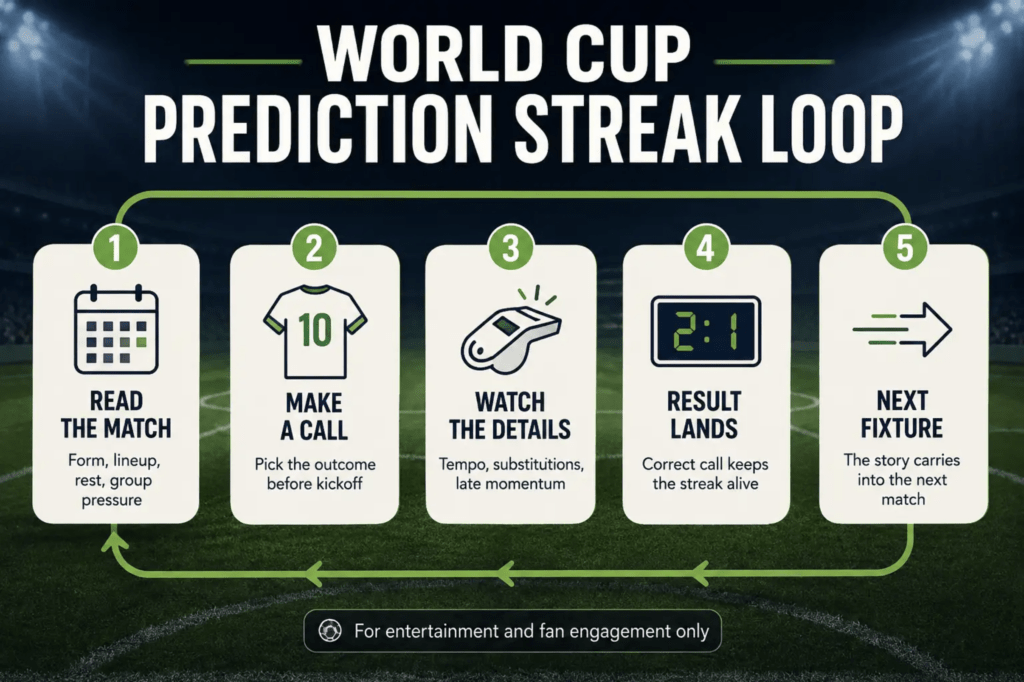
This specific idea further appears in Crash It, a World Cup challenge built around making predictions for every match. A correct call keeps the streak going, a wrong call resets it, and each user has three shields that can protect a run from a missed call. The fan is not making isolated picks that vanish. Every call carries the memory of the last one, which is why an early fixture between less familiar teams can feel personal.
Every Fixture Carries Weight
The biggest shift is attention. Without a prediction attached, many fans treat unfamiliar group games as background viewing. They may look up when a goal goes in, then drift back to messages, food, or another screen. A streak changes that by giving the viewer something to protect.
That does not mean every fan becomes a tactical analyst, but ordinary details start to matter sooner. A fullback getting pinned back can change the mood. A goalkeeper taking extra time over goal kicks can hint at pressure. A coach who refuses to push numbers forward may be protecting the group table, rather than chasing the crowd’s idea of entertainment. The prediction gives those details practical use.
The 2026 World Cup’s 48 teams and 104 matches make that habit more useful. Someone may begin with only 4 or 5 teams they know. After a week of predictions, they may have opinions about pressing styles, set-piece threats, travel rhythm, and which teams look better than their reputations.
Simple Psychology
Streaks work because people remember runs. A single correct prediction is pleasant. Four in a row feels like a pattern. After that, the next fixture has emotional pressure, even if the teams are unfamiliar. The fan is not only watching the match. They are watching their own read of the tournament survive contact with reality.
Soccer adds friction. A prediction can look safe for the majority of the game, then change with one deflection, red card, or loose clearance. That rhythm makes streaks fragile enough to stay interesting. A format with shields helps because one missed call does not always erase the whole run. The viewer still feels the consequence of being wrong, but the tournament does not immediately become flat.
Prediction games also give fans a low-friction reason to talk before kickoff, instead of only reacting afterward. Friends compare calls, defend instincts, tease cautious picks, and remember who saw the upset coming. The match becomes a shared test without needing everyone to support the same country.
Better Watching, Better Predictions
The best prediction games reward attention, rather than noise. A good fan read usually comes from combining simple signals: team form, lineup strength, rest, weather, crowd energy, tactical matchups, and group-table needs. None of those signals guarantees anything. Together, they make the act of watching sharper.
That is the real value of the streak. It pulls the viewer closer to the match, gives smaller teams more space in the imagination, and turns the tournament into connected choices, rather than scattered highlights. By the time the knockout rounds arrive, the fan has not only watched more games. They have built a memory of decisions, surprises, near misses, and small corrections.
A strong World Cup prediction game does not need to make every viewer right. It needs to make every match readable. The pleasure comes from forming a view, seeing the game answer back, and carrying that answer into the next fixture.