The New Language of Luxury Living: How Homes Sell a Lifestyle Before the First Visit
The decision to pursue a luxury home often begins long before a scheduled showing.
It begins with an image — a photograph of a terrace over a Manhattan skyline, a listing detail that suggests the property was designed with unusual care, a broker presentation that captures the quality of light in the main living room at a particular time of day. By the time a buyer steps through the door, they’ve already formed a significant impression. The visit is often confirmation, not discovery.
In the premium market, the home is being evaluated before it can be experienced. Which means the presentation — the visual language through which the property communicates its identity — is doing more work than it’s usually given credit for.
What Buyers Are Actually Reading
Square footage, building pedigree, and location are the conditions of entry. They determine who considers a property. They rarely determine who falls in love with one.
What creates desire in a luxury buyer is harder to itemize. It’s closer to a set of signals about how the home will feel to live in: whether the privacy feels genuine or merely claimed, whether the light at a certain hour suggests calm or compromise, whether the materials indicate that someone cared deeply about the specifics or simply spent freely. Whether the home communicates the right kind of life.
This is the increasingly sophisticated work that luxury property presentation has to do — not demonstrate value in the financial sense, but invite a particular kind of imagination.
Before the Photography, Before the Visit
Some of the most interesting challenges in luxury real estate presentation arise when a home isn’t quite ready to be shown on its own terms.
A renovation still underway. Interiors not yet staged. A new development whose best units haven’t been finished. A townhouse redesign where the outdoor space is still coming together. In these situations, the property needs to communicate atmosphere, material quality, light, and lifestyle before any of that can be directly photographed.
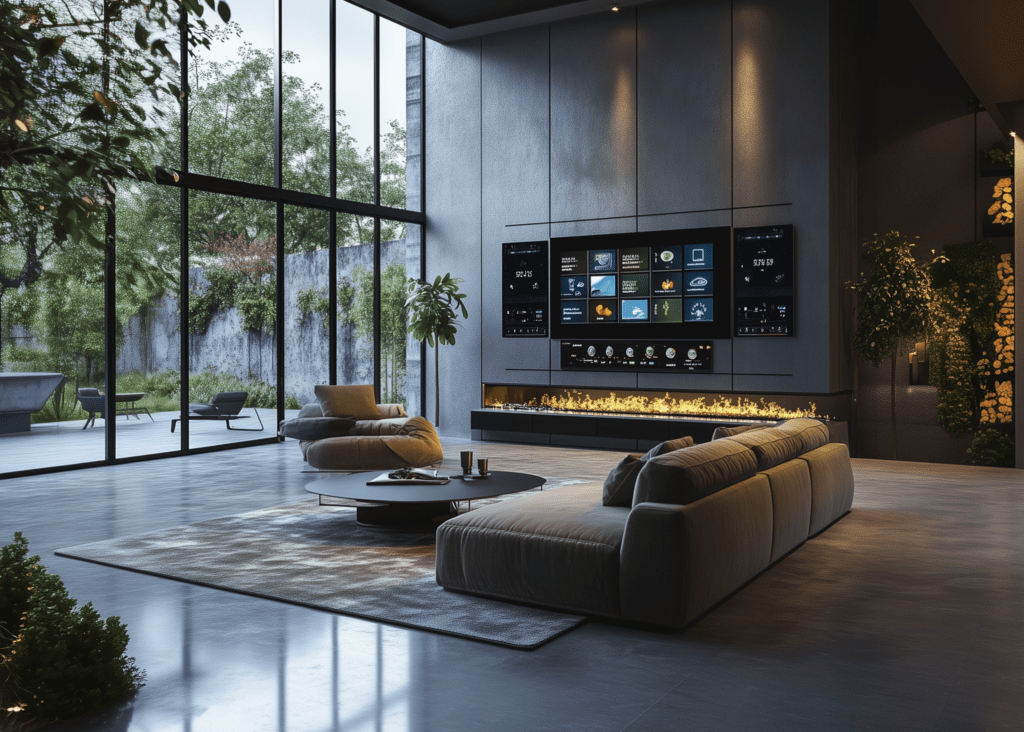
For high-end homes that are still being renovated, redesigned, or marketed before final photography is possible, architectural visualization can help communicate the intended atmosphere, materials, light, and lifestyle before a buyer ever steps inside. The goal isn’t to substitute for the real thing but to give serious buyers enough to engage with a property that isn’t physically ready to be seen — to build anticipation rather than asking them to wait.
Interiors That Suggest a Specific Life
The interior is where a luxury home makes its most specific argument.
Not through the scale of the rooms — though scale matters — but through the particularity of how they’re put together. The relationship between the kitchen and the dining area, and what that implies about how the home supports entertaining. The way the primary suite is separated from the rest of the floor plan, and what that implies about privacy. The quality of the light that falls across the living room in the late afternoon.
These details don’t read as design decisions to most buyers. They read as atmosphere. They read as the feeling of waking up in the apartment, or coming home after a long evening, or sitting with the city below on a Sunday morning. The interior is where architecture becomes daily life, and daily life becomes something a buyer can imagine inhabiting.
Staging as Lifestyle Argument
The best staging in luxury real estate isn’t furniture placement. It’s identity curation.
A dining room that seats ten, impeccably set, argues for a host. A bedroom where everything has been stripped back to the essentials — perfect linen, a single lamp, the view — argues for someone who values quiet above all. A terrace where a single chair faces the water argues for solitude. A library where books are clearly used rather than arranged argues for a life of substance.
None of this is accidental when it’s done well. Each room is making a case for a particular kind of person and a particular kind of living. The staging that works in luxury real estate is the kind that feels like the life is already happening there, and the buyer is simply being offered the chance to step into it.
The Outdoor Space as Urban Escape
Manhattan has trained its residents to place extraordinary value on outdoor space, and that value has only intensified.
A terrace above a certain height isn’t just an outdoor room — it’s a genuinely private escape in one of the most densely inhabited places in the world. The dinner that can be eaten outside in the city without being seen or heard by anyone. The morning coffee above the noise. The garden that makes a floor-through apartment feel, inexplicably, like a house.
In the luxury market, outdoor space has become one of the strongest differentiators — not because every buyer will use it constantly, but because it signals a kind of freedom. The ability to be in New York and also, for a moment, apart from it. Terraces, rooftop access, wraparound setbacks, private landscaped spaces: these are no longer amenities in the traditional sense. They’re part of the property’s identity.
Materials as a Signal of Seriousness
Modern luxury doesn’t announce itself through excess. It announces itself through restraint — through the specific quality of a material and the care with which it’s been used.
Polished plaster that took weeks to apply correctly. Limestone with a particular character that couldn’t be replicated with a synthetic alternative. Custom bronze hardware, heavy and cool to the touch in a way that standard fittings aren’t. Reclaimed timber with a history that gives the floor grain and variation no new wood can provide.
These are the details that serious buyers notice without always being able to articulate why. They create the sense that the property was built by someone who cared — not just someone who spent. And in a market where the spend is often assumed, the evidence of care is the differentiator.
Curation Over Accumulation
The homes that leave the strongest impression are almost never the most fully furnished or the most extensively decorated.
They tend to be the ones where something has been edited out — where the space allows the architecture to do its work rather than filling every surface with evidence of wealth. A single strong material rather than four competing ones. A focal point that the room is organized around rather than multiple competing claims on attention. Light that has been thought about as a design element rather than simply provided.
This restraint is itself a form of sophistication. It requires more confidence, more clarity of vision, and more genuine quality in the fewer things that are included. In the luxury market, it signals something that buyers recognize even when they don’t have the vocabulary for it: the sense that someone knew exactly what they were doing.
The Narrative Behind the Property
Luxury buyers increasingly ask about provenance. Not in the auction-house sense, but in the sense of understanding what decisions were made and by whom.
Was this designed by a specific architect with a recognizable sensibility? Was the renovation led by an interior designer whose work reflects a particular point of view? Is there a story about the building — its history, its conversion, its unusual position within the neighborhood — that gives the property a context beyond its specifications?
These narratives matter because luxury real estate in New York is rarely anonymous. The buyer of a SoHo loft or a Tribeca townhouse or a Central Park West co-op is not only buying the apartment — they’re becoming part of a particular history and community. The best luxury properties understand this and communicate it. The home has a story, and the buyer is being invited to continue it.