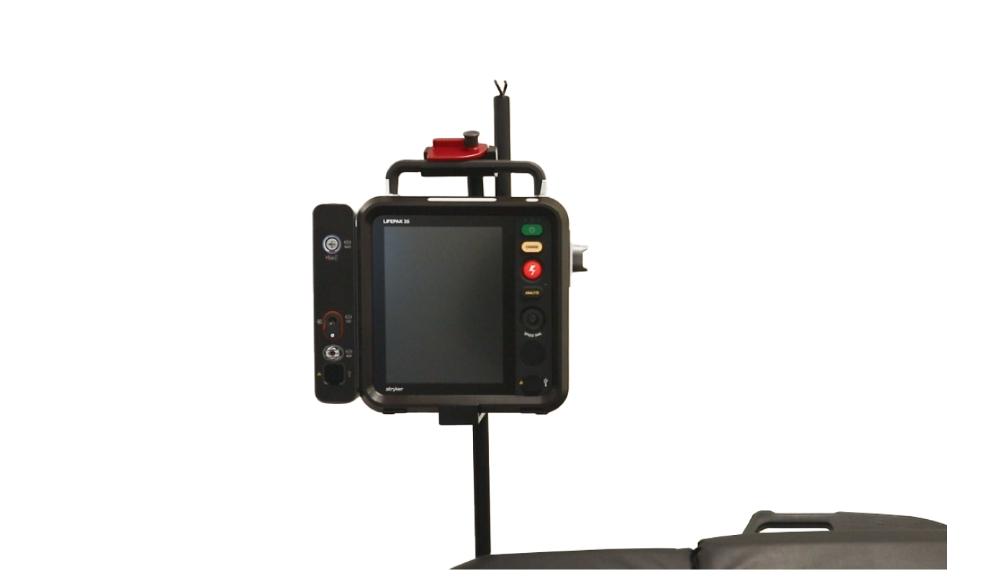
Defibrillator Mounting Systems: What Every EMS Director Should Know Before Outfitting a Fleet
Introduction
Outfitting an emergency response fleet involves far more than selecting medical equipment. For EMS directors responsible for supervisor SUVs, command units and community paramedicine vehicles, every component must support operational efficiency, crew safety and equipment protection in demanding field environments. Defibrillators are among the most frequently used pieces of life-saving equipment, making how your defibrillator is mounted just as important as the device itself.
A well-designed defibrillator mounting system does more than keep equipment securely in place. It improves accessibility during emergency response, protects valuable equipment from damage caused by vibration and vehicle movement, and supports a consistent workflow across the fleet. When evaluating mounting solutions, EMS leaders should consider equipment compatibility, durability, compliance with applicable Canadian and Ministry safety requirements, and how the mounting configuration supports clinicians from deployment through field response. Choosing the right system from the outset helps maximise fleet readiness, safeguard equipment investments and support efficient emergency response operations every day.
Why Mounting Matters More
Inside an emergency response vehicle, movement is regular. The vehicle turns, stops and reacts in unexpected conditions. If equipment is not properly secured, it can become a safety risk to vehicle occupants and responding personnel.
A good mounting setup keeps the defibrillator secure. Your team knows where it is, how to release it and how to place it back after use.
When every vehicle follows the same equipment layout, crews can move between units without confusion. That consistency can make a big difference during busy shifts.
The Problem with Generic Mounts
It can be tempting to choose a basic mount and move on. On paper, it may look like the fastest option. But Emergency response vehicles are not basic workspaces. They are active care environments where every inch matters.
A generic mount may not align with your vehicle layout, specialised cargo shelving, equipment system or crew workflow. It may block movement, sit too far from the vehicle’s primary access points or make the device harder to remove quickly.
Before choosing a defibrillator mounting system, you need to think about how your team actually works in the field. The best setup should support real calls, not only look neat when the vehicle is parked.
What to Check Before You Choose
A mount should do more than hold the device in place. It should make the job easier, safer and more uniform for your crew. Here are a few things worth studying before you outfit your emergency response vehicle fleet:
- Is it compatible with your existing defibrillator model?
- Can crews remove the device quickly?
- Does it stay secure during transport?
- Is it easy to clean after calls?
- Will it work with your supervisor SUV, command vehicle or community paramedicine vehicle layout?
- Can the same setup be used across multiple vehicles?
These questions help you avoid costly changes later. They help you choose a solution that suits your fleet today and still makes sense when equipment changes.
Cot-Mounted or Vehicle-Mounted
There is no one perfect answer for every EMS team. Some services may select a cabin-mounted setup between the front seats for rapid access the moment a supervisor arrives on scene. Others may choose a rear cargo-bay option integrated into a pull-out storage system to keep the device centralized with other command gear.
A good choice depends on your specific vehicle configuration, how your crews organize their gear and how they access equipment during an active field response. A well-planned defibrillator mounting system should match that workflow rather than forcing your crew to adjust to poor placement.
Planning early helps. If the mounting structure is considered in emergency response vehicle planning, you get cleaner results and fewer compromises.
Think About Safety and Daily Use
EMS directors have to think beyond the first day a vehicle enters service. The mount will be used often, in stressful conditions. It needs to withstand daily handling, cleaning, vibration, repeated access and demanding EMS field conditions.
Your crew should be able to release the defibrillator without second-guessing the mechanism. They should also be able to return it securely without wasting time. If a mount feels awkward or poorly placed, that frustration will show up during real calls.
This article focuses specifically on defibrillator mounting systems for emergency response vehicles such as supervisor SUVs, command units and community paramedicine vehicles, not full-size ambulance storage systems. The mount should keep the defibrillator secure without overcrowding the vehicle interior or blocking access to other essential tools.
This is also why in-vehicle cabin safety matters so much. Modern emergency vehicle design standards focus heavily on high-velocity crash testing to ensure that loose, heavy medical devices like defibrillators do not become dangerous projectiles during a high-speed collision response.
A strong setup can also protect the device itself. Defibrillators are expensive and essential. A stable mount can reduce shifting, drops and wear.
Fleet Consistency Saves Time
When you manage several units, consistency matters. If each vehicle has a different mounting setup, crews have to pause and adjust. In EMS work, small delays are never welcome.
Using the same layout across your fleet makes training easier. It also helps new staff and rotating teams feel more confident in any unit.
The right defibrillator mounting system can become part of your fleet standard, not only another accessory. That makes future planning smoother when you add vehicles or upgrade equipment.
Build a Fleet That Works Better in the Real World
When your defibrillator is mounted securely, set up smartly and kept easy to reach, your crew can focus on managing the scene and delivering rapid intervention rather than worrying about equipment issues that occur.
A purpose-built mounting solution supports a safer, faster and more organised approach to outfitting supervisor SUVs, command vehicles and community paramedicine units. For EMS leaders seeking practical solutions built for real-world emergency response, Rowland Emergency is ready to help you outfit your emergency response vehicle fleet with confidence.