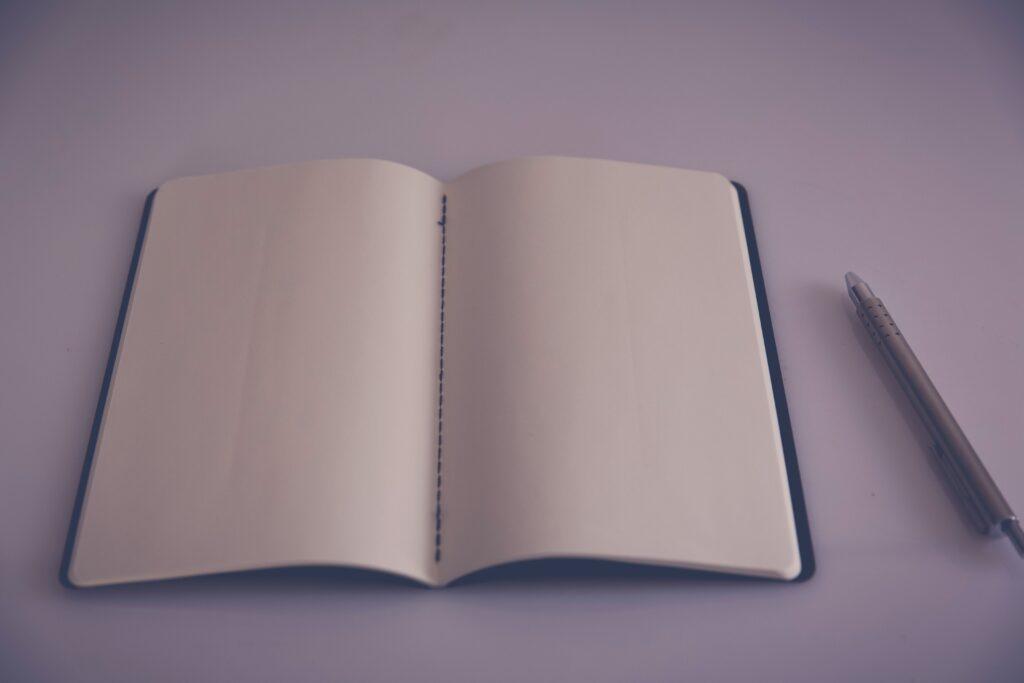
The Blank Page Problem: Why a Notebook Is the Only Promotional Product People Actively Want to Fill
Most promotional products are passive. You receive a branded water bottle and you drink from it. You are handed a logo keyring and it holds your keys. The recipient is a spectator to the object’s function. A notebook is different, and the difference matters more than it first appears.
A notebook arrives empty. It comes with an implicit invitation: fill me. And in accepting that invitation, the recipient of a branded notebook does something no other promotional item asks of them. They participate.
Participation beats passive exposure
Marketing psychology has long understood that active engagement embeds a brand more deeply than passive exposure. Watching an advert is passive. Doodling in the margin of a branded notebook during a dull meeting is active. Every time the recipient opens the cover to jot a phone number or sketch an idea, they are choosing to interact with an object carrying someone’s logo.
That repeated, self-directed interaction is worth far more than a single glance at a billboard. The recipient is not being marketed at; they are quietly co-authoring a relationship with the brand, one to-do list at a time.
“There’s something almost collaborative about a notebook,” says Jessica Bane, Director of Business Operations at GoPromotional. “The client provides the object and the recipient provides the content. Once someone has written in it, it’s genuinely theirs, and people don’t discard things they’ve personally invested in. That blank first page is doing a lot of quiet work.”
The IKEA effect, on paper
There is a well-known cousin of this idea called the IKEA effect: we value things more when we have put effort into them. A flat-pack table assembled with mild frustration on a Sunday afternoon feels more valuable than an identical one bought pre-built. The same principle applies, in miniature, every time someone fills a page of a promotional notebook.
By the time the notebook is half full of meeting notes, shopping lists and half-formed plans, it has become a personal artefact. Discarding it would mean discarding one’s own thinking. So it stays, and the logo on the cover stays with it.
Designing for the invitation
If the blank page is the notebook’s secret weapon, the design should make that page as inviting as possible. Good quality paper that does not bleed, a ruling style suited to the audience, and a cover that opens flat all encourage use. A notebook that is awkward to write in gets abandoned, and an abandoned notebook is a wasted impression.
This is where the choice between styles matters. Dotted grids appeal to designers and planners; plain pages suit sketchers; lined pages remain the safe universal choice. Matching the format to the likely recipient turns a generic giveaway into something that feels considered.
Businesses weighing up merchandise for an event or onboarding pack often focus entirely on the cover, where the logo goes, and forget that the inside is where the engagement actually happens. The cover earns the first glance. The pages earn the years that follow.
A worked example from the meeting room
Picture two people in the same dull budget meeting. One has a phone, on which they occasionally tap, indistinguishable to everyone around them from someone checking messages. The other has a branded notebook, open, in which they jot the odd note and, in the longer silences, doodle in the margin. Both are half-listening. But only one is repeatedly, physically engaging with a branded object, and only one is broadcasting a logo to everyone across the table.
By the end of a single week of such meetings, the notebook user has interacted with the brand dozens of times and displayed it to dozens of colleagues. The phone user has interacted with nothing brandable at all. Multiply that across a working year and the gap becomes enormous, all flowing from the simple fact that a blank page invites participation while a screen does not.
The threshold for participation
There is a catch worth naming. The blank page only works its magic if the recipient actually wants to write on it. A notebook with unpleasant paper, an awkward binding that will not lie flat, or a size that does not fit a bag never gets filled, and an unfilled notebook is just a branded object gathering dust, no better than any other giveaway.
So the invitation to participate has to be a genuine one. Everything about the notebook, from paper quality to format, should say please, use me. Get that right and the recipient becomes an active, willing participant in carrying the brand. Get it wrong and the blank page stays blank, and the opportunity is lost.
The product that asks something of you
In a world of promotional clutter, the humble notebook stands out precisely because it demands a little something from its owner. It does not simply sit there being branded at people. It invites them in, hands them a pen, and lets them make it their own. And that, quietly, is how a logo ends up living on someone’s desk for years.