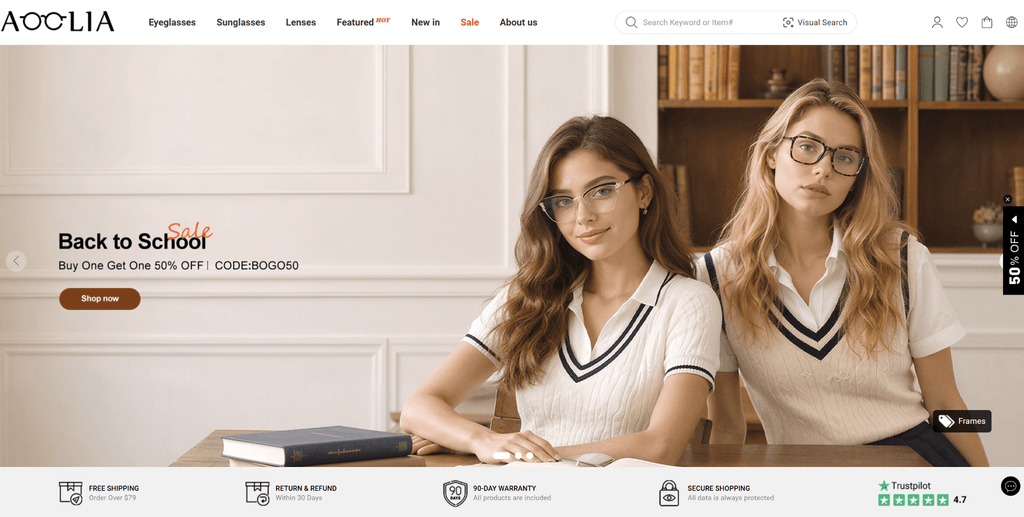
Aoolia Optical and the New Era of Accessible Style-Driven Eyewear
New York has never treated eyewear as an afterthought. On the subway, in a Midtown office, at a downtown gallery opening or over dinner on the Upper East Side, glasses are often one of the first details people notice. They sit at the center of the face, communicate personality and remain visible throughout the day.
For decades, consumers who wanted distinctive eyewear often faced a familiar choice. They could invest in expensive designer frames or settle for a practical pair with less personality. The growth of direct-to-consumer optical brands is changing that calculation.
Companies such as Aoolia Optical are building their identities around the idea that prescription eyewear can be expressive, functional and accessible at the same time. This approach reflects a wider change in fashion: consumers increasingly expect good design without assuming that a recognizable style must always carry a traditional luxury markup.
For New Yorkers, whose days routinely move across different neighborhoods, professional settings and social occasions, that flexibility has particular relevance.
Glasses Have Become Part of the Wardrobe
The idea of an “eyewear wardrobe” would have seemed excessive when prescription glasses were treated mainly as a medical necessity. Many people bought one neutral pair and wore it until their prescription changed or the frame could no longer be repaired.
Today, glasses are increasingly selected in the same way as shoes, jewelry or bags. A minimal frame may work for formal meetings, while a bolder shape can add character to a simple weekend outfit. Prescription sunglasses serve another purpose, as do lightweight glasses intended for long hours at a computer.
This does not mean consumers need a different pair for every outfit. It means they are beginning to consider context when choosing eyewear.
New York makes this shift easy to understand. A single day may include a crowded commute, several hours in front of a screen, an afternoon appointment and an evening event. One conservative frame can handle all of those situations, but it may not be the only option someone wants.
The demand for multiple pairs is therefore not purely about fashion. It also reflects the different practical roles glasses play in modern life.
Why Distinctive Eyewear Traditionally Cost More
Designer eyewear has long benefited from craftsmanship, recognizable branding and carefully developed aesthetics. However, its final retail price can also reflect a complicated distribution structure involving manufacturers, licensors, wholesalers and physical stores.
Traditional optical shops provide valuable services, particularly for customers who want in-person adjustments or professional guidance. At the same time, maintaining physical locations and carrying limited showroom inventory adds costs that are eventually reflected in retail prices.
Direct-to-consumer brands use a different structure. By presenting their collections primarily through their own websites, they can reduce some of the layers between product development and the customer.
The result is not that every online frame is equivalent to a luxury product. Rather, consumers now have more access to expressive silhouettes, interesting colors and fashion-conscious details at a wider range of prices.
Aoolia, for example, offers frames starting at $18.95. That pricing helps move glasses away from the idea of a rare, high-commitment purchase and toward a product that can be selected for a specific use, mood or personal style.
Style Does Not Have to Depend on a Logo
One of the most notable changes in fashion is the growing separation between style and visible branding. A large logo can still signal status, but many shoppers are more interested in shape, color and how an item fits into their lives.
Eyewear is particularly suited to this change. Because glasses are worn on the face, the frame itself creates a stronger visual impression than a small brand name on the temple.
A sharply angled cat-eye frame can appear confident and polished. A translucent oversized frame can feel artistic and contemporary. Thin metal aviators may communicate something entirely different from a heavy rectangular acetate design.
Browsing designer-inspired glasses gives shoppers a way to consider these design cues without beginning with a luxury label. The decision becomes less about displaying a particular name and more about finding a shape that supports the wearer’s identity.
This approach fits naturally with New York style, which rarely follows one uniform definition. Uptown polish, downtown experimentation, Brooklyn minimalism and vintage-inspired dressing can exist within the same city, sometimes within the same closet.
Digital Tools Are Becoming the New Showroom
The greatest challenge for an online eyewear brand is not displaying enough options. It is helping consumers make a confident decision without trying on the frames in a physical store.
Virtual try-on tools attempt to close part of this gap. Using a phone or computer camera, shoppers can preview how different colors and silhouettes may look on their faces. The technology cannot reproduce the exact weight or feel of a frame, but it can help eliminate choices that seem too narrow, too wide or inconsistent with the desired style.
Face-shape guidance offers another starting point. A person with a round face may explore angular frames, while someone with sharper facial features may prefer a design with softer curves. These suggestions are not fixed fashion rules, but they can make a large online collection easier to navigate.
Measurements remain essential. Lens width, bridge width and temple length provide more objective information than a virtual image alone. Comparing those dimensions with a comfortable pair of existing glasses can help shoppers estimate fit more accurately.
Together, virtual try-on, face-shape education and clearly displayed measurements create a digital version of the showroom experience. They give shoppers more control while preserving the efficiency of ordering online.
Trust Matters as Much as Convenience
Prescription glasses are not ordinary fashion accessories. A frame may express personal style, but the lenses still need to meet an individual’s vision requirements.
That distinction makes trust particularly important in online optical retail. Customers need a clear process for entering or uploading their prescription, selecting lenses and providing additional information such as pupillary distance.
Aoolia states that its prescription glasses and sunglasses are checked by a licensed optician before dispatch. This type of professional review helps address a central concern about buying eyewear online: whether convenience comes at the expense of appropriate oversight.
Transparent customer policies also influence trust. Aoolia offers free US shipping on qualifying orders over $79, a 30-day return period and a 90-day warranty. These policies allow customers to understand what support is available before committing to an order.
For a digital brand, clarity is part of the product experience. The website must do more than show attractive frames. It also needs to explain what happens after a prescription is submitted and what options are available if the finished glasses do not meet expectations.
Lens Choices Now Reflect Daily Life
The evolution of online eyewear is not limited to frame design. Lens options increasingly respond to the way people work, travel and spend their time.
Someone who moves between multiple screens may consider blue-light-filtering lenses. A person who frequently transitions between indoor and outdoor environments may prefer photochromic lenses that adapt to changing light. Progressive lenses can support more than one viewing distance, while driving lenses address another set of daily needs.
The useful question is not which option sounds most advanced. It is which lens configuration matches the wearer’s actual routine.
For a New York professional, that routine might include checking a phone during the morning commute, working on a laptop for most of the day and walking several blocks between appointments. Another wearer may need glasses primarily for reading, driving or weekend activities.
Online optical brands can add value by explaining these differences in straightforward language. The goal should be to help customers connect lens features with real situations rather than encouraging upgrades that may not be necessary.
The Second Pair Is Becoming a Practical Purchase
As prices become more accessible, the second pair of glasses begins to look less like an indulgence and more like a practical addition.
One pair may be reserved for work, while another offers a more expressive weekend look. Someone may keep a backup pair at home or in a travel bag. Prescription sunglasses can remove the need to choose between clear vision and sun protection outdoors.
Aoolia’s offer of 50 percent off a second pair supports this multi-pair approach. The promotion creates an opportunity to select two frames for different purposes rather than buying an identical backup.
This also changes the relationship between the customer and the brand. Instead of returning only when a prescription changes, customers may revisit an optical retailer as their work habits, wardrobe or style preferences evolve.
For direct-to-consumer companies, repeat purchases can be more valuable than relying on a single high-priced transaction. For shoppers, the benefit is greater flexibility without treating every new pair as a major luxury investment.
Brand Values Are Part of the Story
Modern consumers often look beyond the product when deciding which companies deserve their attention. They may consider how a brand communicates, which causes it supports and whether its initiatives are specific enough to be credible.
Aoolia participates in a donation-matching initiative connected with Plastic Odyssey. When customers donate, the company matches those contributions on a one-to-one basis, with proceeds supporting work related to marine plastic pollution.
An environmental program does not compensate for poor products or unclear service. The fundamentals of prescription accuracy, comfort and customer support must come first. However, a defined initiative can add another dimension to a brand’s identity.
This is especially relevant in a crowded online market. Frame collections and promotional pricing can be imitated. A brand story becomes more distinctive when it connects product design, customer experience and clearly described values.
Accessible Style Is Reshaping Eyewear
Aoolia’s approach reflects a larger movement in fashion and retail. Consumers want products that feel personal, but they also expect transparency, convenience and reasonable pricing.
In eyewear, satisfying those expectations requires more than releasing fashionable frames. Online brands must reduce uncertainty through virtual tools and measurements, protect confidence through professional checks and clear policies, and offer enough functional choices to support different lifestyles.
New York style provides a useful lens through which to understand this shift. The city celebrates individuality, but it also demands practicality. An accessory must survive commuting, work, changing weather and a full social calendar. Glasses, perhaps more than almost any other fashion item, need to look right while performing an essential job.
The new generation of direct-to-consumer optical brands is responding to that combination. By making design-focused eyewear available at more accessible prices, companies like Aoolia are helping consumers think beyond the single neutral pair.
The future of eyewear may not be defined by one dominant trend or logo. It may be defined by choice: the ability to select frames that suit different parts of life without sacrificing vision needs, personal style or financial practicality.
Frequently Asked Questions
What is a direct-to-consumer eyewear brand?
A direct-to-consumer eyewear brand primarily sells through its own channels rather than relying entirely on traditional distributors and physical retailers. This structure can reduce certain retail layers and give the brand more control over pricing, product presentation and the customer experience.
Why are consumers buying more than one pair of prescription glasses?
Different glasses can support different activities, including office work, driving, outdoor use and social occasions. More accessible prices and second-pair offers also make it easier to maintain a backup pair or choose an additional style.
What should shoppers check before ordering glasses online?
Shoppers should confirm that their prescription is current and review the frame’s lens width, bridge width and temple length. They should also examine lens options, production expectations, shipping terms, return conditions and warranty coverage before placing an order.