Lagree, Pilates and the New York Body: A Guide to the City’s Most Coveted Workouts
Nobody owns the word “Pilates.” A federal judge in Manhattan said so in 2000, in an opinion that ran 93 pages, and it’s a big reason you can’t walk ten blocks below 96th Street now without passing a reformer studio. Lagree came along later and turned the same basic idea into something slower, sweatier, and a lot more intense.
Both now sit at the top of New York’s workout wish list. So, a bit of history, what an hour in each really feels like, and some help working out which one’s yours.
Blame It on a Judge
Before that, a company called Pilates, Inc. owned trademarks on the name and would come after studios using it. Judge Miriam Cedarbaum of the Southern District of New York didn’t buy it. In 2000, she decided Pilates was a generic word for a kind of exercise, same as yoga or karate, and told the trademark office to cancel the marks.
From then on, anyone teaching it could call it Pilates, and it drifted out of the dance and physical therapy world where it had mostly lived. It’s a strange thing to think about while you’re lying on a reformer in Tribeca. Your class exists, at least partly, because of a trademark fight in a downtown courtroom.
When the Megaformer Hit Manhattan
The next wave came about a decade later, and NBC New York covered it in December 2011. The studio was SLT (short for Strengthen, Lengthen and Tone), and Amanda Freeman opened it because nobody in the city was teaching on the Megaformer yet. Fifty minutes, $40 a class, and that was 2011 money.
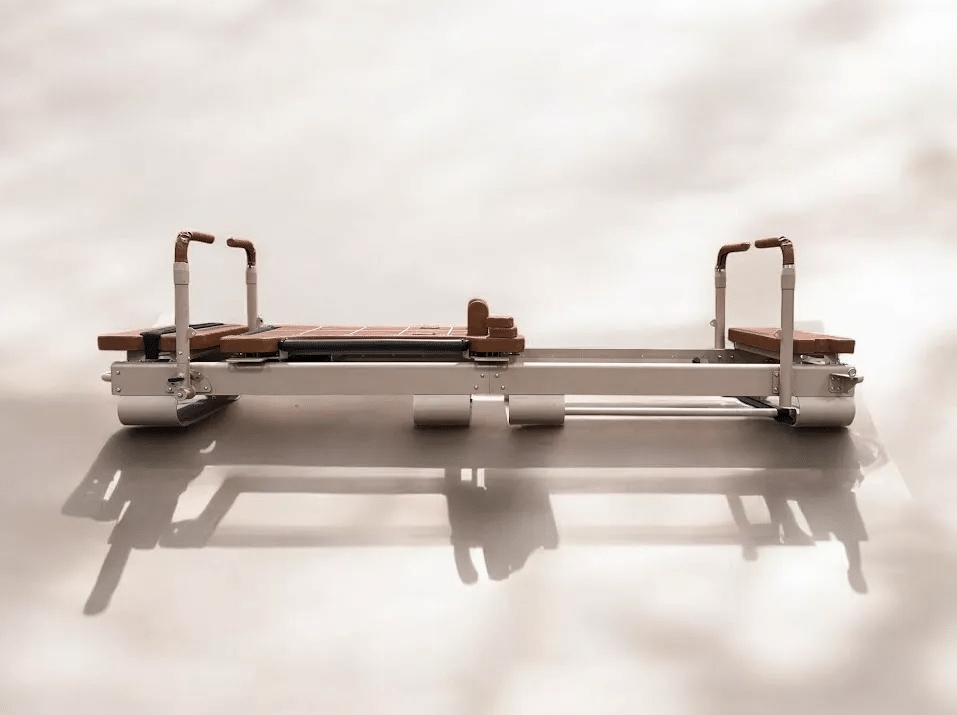
Picture a reformer that’s been hitting the gym. Platform at each end, carriage in the middle, handles, straps, a spring box, and a workout that was part Pilates and part cardio.
It took off, and SLT went on to open outside New York. A class that has your legs shaking in under an hour was an easy sell here.
Same Carriage, Different Rules
Stick your head in the door of either, and you probably couldn’t tell them apart. Give it five minutes.
Pilates is fussy, in a good way. Breathing, lining things up, short breaks to swap springs, and a teacher who’ll notice your hip is half an inch off. Lagree-style classes are fussy in a different way: every move so slow you could almost brew coffee during a lunge, hardly any rest, and you keep going until the muscle starts shaking (regulars call that the burn).
Some equipment is built to handle both styles. The Core Collab’s Sculptformer is a machine built for both methods, and its maker says it can run traditional Pilates as well as Lagree-style classes, and it’s sold to personal trainers and home buyers as well as studios. For anyone who can’t decide which camp they belong to, that flexibility is the selling point.
Which One Belongs in Your Week
Both are easy on the joints, so that part’s a wash. What’s bugging you is a better guide than whose studio has nicer lighting.
- Cranky back or a desk job? Pilates is the gentler start,
- Want to get stronger quickly, and you’re fine soaking your leggings? Lagree,
- If you get bored easily, Lagree’s quick changes between moves help, even though every rep is slow,
- If you’re coming back from an injury, find a Pilates teacher with rehab experience before anything else,
A lot of regulars don’t pick at all. They’ll do a precise Pilates session early in the week and save Lagree for Thursday, when they want to leave a little wobbly. Different jobs, so they don’t really compete.
First class? Bring grip socks, since most studios want them and plenty sell them at the desk for when you forget. Show up ten minutes early, mention any old injuries, and go for the lighter spring the first time, ego be damned. You can always go heavier next week.
One honest note before you book a ten-class pack. There’s very little published research on Lagree as its own method, so much of what you’ll hear about it comes from studios and loyal clients. That doesn’t make it a bad workout. It just means some of the bigger promises you’ll hear in a locker room are word of mouth, so ask what’s behind a claim before you buy into it.
The Studio Comes Home
Some New Yorkers have moved part of this out of the studio and into the apartment. Trainer shows up Tuesday and Friday, the machine lives in the spare room or the far end of the loft, and the 7 am waitlist stops being your problem.
That’s not for everyone, though. These machines are long; a lot of prewar buildings have elevators the size of a phone booth, and getting one up to the eighth floor can turn into a whole saga. Ask your building about freight elevator rules before anything gets ordered.
I’d still do a bunch of studio classes before buying anything. That’s where you figure out your spring settings and what decent form feels like, because nobody at home is going to tell you your knees are caving in unless you’re paying a trainer to.
What you get back is privacy, and a workout that fits in the 40 minutes between two calls instead of a 6:15 slot you had to book a week ago. For plenty of people, that beats the candles and the playlist, and nobody’s watching you wobble through the last set.
One of Each, Then Decide
Pilates is for the patient, detail-oriented type, and Lagree is for the stubborn. New York has room for both, partly thanks to a judge who decided a man’s name had become a word for a way of moving. Try one class of each before you commit, and pay attention to which one you’re already thinking about on the way home.