A History of Warcraft’s Most Memorable Villains
A good villain gives a story its shape, and few game series have built as many lasting ones as Warcraft. Over three decades, the series has handed players noble tyrants, betrayed friends turned enemies, and cosmic horrors indifferent to mortal life, and the best of them share one thing in common: a point of view that made sense from the inside, even when it led somewhere terrible. Looking back at the names that stuck says a lot about what the writing team has always done well.
Arthas Menethil: The Fall That Started It All
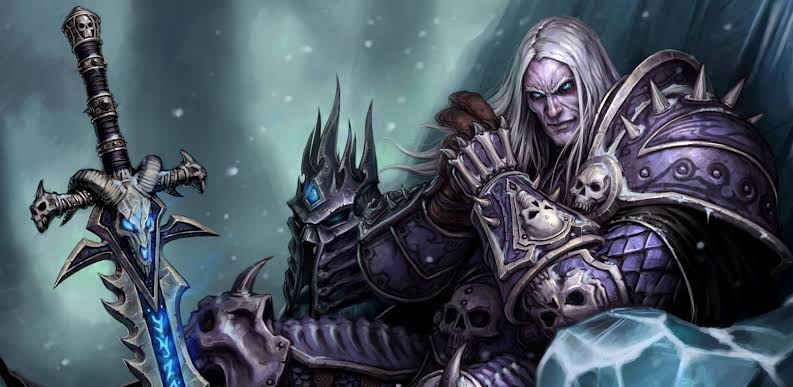
No villain in the series looms larger than Arthas Menethil. Warcraft III spent an entire campaign showing exactly how a promising young prince turned into the Lich King, and that patience is what made the fall land so hard. Arthas didn’t wake up evil. He made one bad choice trying to save his people from a plague, then another to punish those responsible, and each step afterward felt like a logical extension of the last, right up until he was wielding the cursed sword Frostmourne and marching against everything he once loved. Wrath of the Lich King gave players the chance to finally face him at the top of Icecrown Citadel, closing a story that had been building since 2002 and giving an entire community a shared, hard-won ending.
Illidan Stormrage: Right for the Wrong Reasons
Illidan occupies a strange place among Warcraft villains because so much of what he did turned out to be justified, even as the world treated him as a traitor for doing it. Banished by his own brother for making a desperate bargain with demons, Illidan spent years trying to warn Azeroth about the Burning Legion while everyone around him assumed the worst. “You are not prepared” became one of the series’ most quoted lines because it captured exactly who he was: a figure convinced he alone understood the real threat, willing to burn every bridge to stop it. Legion finally let players see his story through, giving him one of the more complete redemption arcs the series has managed.
Sylvanas Windrunner: From Ranger to Reckoning
Few characters have traveled as far as Sylvanas Windrunner. She began as a loyal ranger-general defending Silvermoon, was killed and raised as a Banshee Queen by Arthas himself, and spent years afterward channeling her grief and fury into building the Forsaken. By Shadowlands, Sylvanas had become the antagonist behind the setting’s biggest cosmic stakes, tearing open the veil between life and death itself. Her arc split the community more than almost any other character choice in the game’s history, which is itself proof of how much weight she carried by that point.
The Lich King and the Scourge: Horror Without a Face
Before Arthas took up the crown, the Lich King existed as Ner’zhul, a broken orc shaman bound to a block of ice and forced to spread an undead plague across an entire continent. The Scourge that followed worked as a villain almost differently than any single character could, a spreading horror that turned neighbors and family members into monsters. That kind of threat gave Warcraft III’s human and undead campaigns their weight, and it’s part of why Wrath of the Lich King’s ending felt like it mattered so much when it finally arrived.
Deathwing: When the World Itself Turns Against You
Deathwing took villainy in a different direction entirely by making the enemy the planet’s own crust. Once a noble Dragon Aspect charged with protecting Azeroth, Neltharion was pushed into madness by the Old Gods and returned in Cataclysm to tear the world apart, literally reshaping zones players had spent years getting to know. He wasn’t a schemer or a tragic figure so much as an unstoppable force of nature wearing dragon scales, and that made him one of the few villains in the series whose defeat felt like survival rather than victory.
Xal’atath: The Voice in the Dark
The current era of storytelling has leaned on a subtler kind of threat in Xal’atath, a sentient blade whose whispers have been steering events since Legion without most players even realizing it. Rather than a single dramatic reveal, Xal’atath’s influence built slowly across several expansions before stepping fully into the light during the War Within, and that patient, whispering presence has made her one of the more unsettling additions to the cast in years. The current Midnight story keeps that thread alive alongside smaller, more personal threats like Ula’tek, the venomous creature at the center of this season’s raid, proof that the series still knows how to build villains at more than one scale at once.
What Makes a Warcraft Villain Work
Looking across three decades of these characters, the pattern holds up well. The strongest villains in the series are rarely evil for its own sake. Arthas believed he was protecting his kingdom. Illidan believed he was the only one willing to do what needed doing. Sylvanas acted out of grief that curdled into something darker. Even Deathwing, closer to a force of nature than a person, had a tragic origin as a protector pushed into madness rather than born cruel. That approach gives players a reason to remember these characters years after their questlines wrapped up, long after the specific raid mechanics have faded from memory.
Revisiting the Legacy
Players who want to relive these arcs firsthand can still walk through Icecrown Citadel, Black Temple, or the Cataclysm-scarred zones that Deathwing tore open, and plenty of guilds still run those older raids for transmog runs and nostalgia nights. Getting a group together for an old raid clear or gearing up an alt to finally see Ula’tek in the current season both come with the usual costs of repairs, consumables, and mounts along the way, and the WoW Gold marketplace is a simple way to keep that part of the trip from getting in the way of the story itself.
Three decades on, the villains are still what people talk about first when the conversation turns to Warcraft’s story. That’s a hard thing to pull off once, let alone across an entire cast spanning that many years, and it’s a big part of why players keep coming back to see who the story turns its attention to next.