Privacy Fence Installation Cost and Process: What Homeowners Should Know Before Building a New Backyard Fence
A well-designed fence can transform an outdoor area by providing privacy, defining property boundaries, improving security, and creating a more comfortable environment for everyday activities. Whether a property has a large backyard, a compact garden, a patio, or an outdoor entertaining area, the right fence can make the space feel more organized and secluded. Privacy is especially valuable for homeowners who want to enjoy their outdoor space without feeling constantly visible to neighbors, pedestrians, or surrounding properties. A carefully planned privacy fence can provide that separation while also contributing to the appearance and functionality of the property.
Choosing and installing a fence requires more than selecting a material and placing posts in the ground. The design needs to account for the property’s layout, desired level of privacy, durability, maintenance, drainage, access points, and overall appearance. Homeowners also need to consider how the fence will interact with landscaping, gates, outdoor structures, and existing boundaries. When these factors are considered from the beginning, privacy fence installation can become a valuable improvement that offers practical benefits for many years.
Why Privacy Fencing Matters
Privacy is one of the main reasons homeowners choose to install a solid or semi-solid fence. An open backyard may feel exposed, particularly when homes are positioned close together or when outdoor areas face roads and walkways. A suitable fence can create a visual barrier that makes the space feel more secluded and comfortable.
A privacy fence can also help establish a defined outdoor environment. Instead of having an open area that visually blends into the surrounding properties, fencing creates a clear boundary. This can make a yard feel more structured and intentional while providing a greater sense of ownership over the space.
Privacy fencing can be particularly useful for outdoor activities. Families may want a more private area for children to play, while adults may want to create a comfortable setting for entertaining guests, relaxing, gardening, or enjoying meals outdoors. By reducing visibility from outside the property, a fence can make these activities feel more personal and enjoyable.
The benefits are not limited to visual privacy. A solid fence can also help reduce some outdoor distractions and may provide a degree of protection from wind, depending on its design and location. However, the level of noise reduction achieved by a fence varies significantly based on height, construction, surrounding structures, and the type of sound involved.
Selecting the Right Fence Material
One of the most important decisions is choosing a material that fits the property’s needs. Wood is one of the most traditional choices for privacy fencing because it offers a warm and natural appearance. It can be stained or painted in different colors and is available in many styles. Properly maintained wood fencing can last for years, although it generally requires more ongoing care than some synthetic alternatives.
Vinyl is another popular option for homeowners who want a relatively low-maintenance fence. It is available in different colors and styles and does not require the same type of staining or painting associated with many wooden fences. Quality vinyl can resist moisture and may maintain its appearance for an extended period when properly installed and maintained.
Composite fencing combines materials to provide durability and a modern appearance. Depending on the product, composite fencing can offer resistance to moisture, insects, and other common causes of deterioration. It may also be suitable for homeowners who want the appearance of wood without some of the maintenance associated with natural timber.
Metal fencing can provide strength and a distinctive appearance, although traditional metal designs may not provide complete privacy unless combined with panels or screens. Some homeowners choose metal frames with privacy inserts, creating a combination of structural strength and visual separation.
The best material depends on the property’s environment, budget, desired appearance, and willingness to perform maintenance. A fence should be evaluated as a long-term investment rather than simply as a one-time purchase.
Planning the Fence Layout
Careful planning is essential before installation begins. The first step is determining exactly where the fence should be placed. Property boundaries should be identified accurately, particularly when the fence will be installed close to neighboring land or existing boundary markers.
The layout should also account for the shape of the property. Not every yard has perfectly straight boundaries. Slopes, corners, trees, retaining walls, buildings, driveways, and pathways can all influence the fence design.
The location of gates should be planned at the same time. A gate that provides access to the backyard may need to accommodate people, gardening equipment, bicycles, lawn equipment, or other items. If the gate is too narrow or positioned inconveniently, it can make everyday use unnecessarily difficult.
Homeowners should also consider future changes. Landscaping, patios, sheds, pools, play areas, and outdoor kitchens may be added later. A fence layout that works today should ideally avoid creating unnecessary obstacles for future improvements.
Understanding Fence Height
Height has a direct effect on privacy. A taller fence generally blocks more of the surrounding view, but the appropriate height depends on the property’s needs, design, and applicable requirements.
A fence that is too short may fail to provide the desired level of privacy, particularly when people outside the property are standing or when neighboring properties are elevated. On the other hand, an unnecessarily tall fence may make a small yard feel enclosed or reduce natural light.
The ideal height should therefore be considered in relation to the surrounding environment. Homeowners should think about the viewpoints they want to block and how the fence will look from both sides. The design should also remain visually balanced with the size and architecture of the property.
Where local rules or neighborhood requirements apply, these should be checked before construction. Restrictions can sometimes affect fence height, placement, materials, or visibility near entrances and property lines. Confirming requirements early can prevent costly changes later.
Preparing the Installation Area
The condition of the installation area can have a major influence on the final result. Before posts are installed, the site should be cleared of obstacles that may interfere with construction. This can include overgrown vegetation, old fencing, debris, roots, or other structures.
The ground should also be evaluated carefully. Soil conditions can vary significantly within the same property. Some areas may have loose soil, heavy clay, rocks, or other conditions that affect how posts need to be installed.
Drainage is another consideration. Water that consistently collects around fence posts can contribute to deterioration, movement, or other problems depending on the material and construction method. Proper planning can help reduce these risks.
If the property has a significant slope, the fence may need to follow the terrain using a stepped or contoured design. The appropriate approach depends on the fence material and the desired appearance. A professional assessment can help determine the most practical solution for difficult terrain.
Installing Strong and Stable Posts
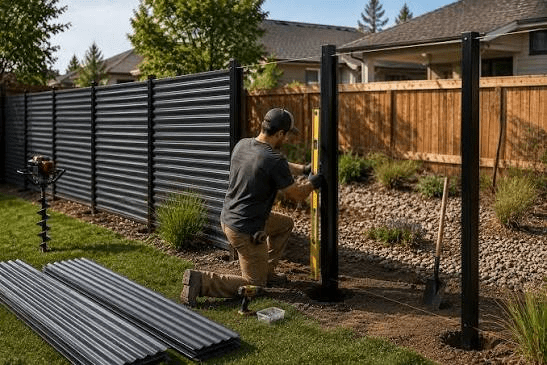
Posts are among the most important structural components of a fence. They support the panels or boards and help the fence withstand wind, impact, and everyday use. If posts are poorly positioned or inadequately secured, the entire structure may become unstable.
Post spacing should be appropriate for the chosen material and fence design. Wider spacing may reduce structural strength, while excessively close spacing can increase material and installation costs without providing a meaningful benefit.
The depth and installation method also matter. Posts need adequate support to remain stable over time, particularly in areas exposed to strong winds or heavy weather. The exact approach depends on the soil, fence height, material, and construction method.
After the posts are positioned, they should be checked for alignment and level. Small errors can become much more noticeable once panels or boards are attached. Taking time to establish a straight and consistent foundation helps produce a cleaner final appearance.
Choosing a Privacy-Friendly Design
Not every privacy fence has to look like a completely solid wall. Different designs can provide varying levels of visual separation. Closely spaced vertical boards create a traditional privacy appearance, while horizontal designs can provide a more contemporary aesthetic.
Lattice panels can be incorporated into some designs to add decorative detail while allowing limited visibility and airflow. Some homeowners choose a solid lower section combined with a more open upper section, creating a balance between privacy and openness.
The spacing between boards should be considered carefully. Even small gaps can affect how much of the surrounding area is visible. The desired privacy level should therefore be determined before selecting the specific design.
Color also contributes to the overall appearance. Natural wood tones can blend well with gardens and landscaping, while painted or synthetic fences can provide a more consistent modern look. Darker colors may make a fence visually recede, while lighter colors can create a brighter appearance.
Adding and Positioning Gates
A privacy fence is only as functional as its access points. Gates should provide convenient entry while maintaining the overall design and security of the enclosure. The size, swing direction, hardware, and location should all be considered.
A gate that is frequently used should be built with durable hinges and a reliable latch. If the gate is particularly wide or heavy, additional structural support may be required. Gates should also be aligned correctly so that they open and close without rubbing against the ground.
For homeowners seeking greater privacy, the gate design should match the rest of the fence. Large gaps or open sections can undermine the visual barrier created by the surrounding panels.
Automatic or specialized gate systems may be appropriate in certain situations, particularly for vehicle access. However, additional equipment increases complexity and should be selected according to the property’s actual requirements.
Maintenance for Long-Term Performance
Every fence requires some level of maintenance. The amount depends heavily on the material and environmental conditions. Wood typically requires periodic inspection, cleaning, staining, or painting to protect it from moisture and deterioration. Damaged boards should be replaced before problems spread to surrounding sections.
Vinyl and composite fences generally require less maintenance but should still be cleaned periodically. Dirt, algae, and other buildup can affect appearance and may become more difficult to remove if ignored for long periods.
Hardware should also be inspected. Hinges, latches, screws, brackets, and other fasteners can loosen over time. Addressing these issues early can prevent gates from sagging and panels from becoming unstable.
Homeowners should also monitor the area around the fence. Plants and vines can grow against panels, while tree roots may affect posts or surrounding ground conditions. Keeping vegetation under control can make inspection and maintenance easier.
Privacy, Security, and Outdoor Comfort
Privacy and security often overlap, although they are not exactly the same. A privacy fence can make it more difficult for outsiders to see into a property, which may provide a greater sense of security. However, the fence itself should not be treated as a complete security system.
The effectiveness of a fence depends on its height, construction, gate design, and surrounding environment. Strong materials and secure hardware can help create a more robust barrier, but additional security measures may be appropriate depending on the property.
Privacy fencing can also improve outdoor comfort by creating a more defined area. A backyard can feel like an extension of the living space when it is visually separated from surrounding properties. This can encourage homeowners to use outdoor areas more frequently for relaxation, dining, recreation, and social activities.
Considering Professional Installation
Although some homeowners choose to install fencing themselves, professional installation can provide significant advantages for larger or more complicated projects. Experienced installers understand how to work with different materials, terrain conditions, slopes, gates, and structural requirements.
Professional installation can also improve consistency. Posts can be aligned carefully, panels can be installed evenly, and gates can be adjusted for proper operation. These details may have a significant effect on the finished appearance.
Before hiring an installer, homeowners should ask about the materials, installation methods, project timeline, preparation work, and warranty coverage. It is also useful to understand whether removal of an existing fence, disposal, site preparation, and cleanup are included in the quoted price.
A properly executed privacy fence installation can help ensure that the investment provides the intended combination of privacy, durability, and visual appeal.
Budgeting for the Project
The total cost of a fencing project depends on several variables, including fence length, material, height, design, gates, terrain, labor, and site preparation. Homeowners should establish a realistic budget before selecting materials.
It is important to compare complete project costs rather than focusing only on the price per panel or board. Posts, hardware, concrete or other installation materials, gates, finishing, removal of old fencing, and labor can all contribute to the final expense.
Long-term costs should also be considered. A fence that requires regular painting or staining may have greater maintenance expenses than a low-maintenance alternative. Conversely, a more expensive material may offer a longer lifespan and require fewer repairs.
Getting multiple detailed estimates can help homeowners understand the range of available options. Each estimate should clearly explain what is included so that comparisons are meaningful.
Avoiding Common Installation Mistakes
Several common mistakes can reduce the performance and appearance of a privacy fence. One of the most serious is failing to establish the correct property boundary before construction. Even a small positioning error can create disputes or require expensive relocation.
Another common issue is inadequate post support. If posts are not installed securely, sections of the fence may lean or shift over time. Poor alignment can also make the finished installation look uneven.
Ignoring drainage and ground conditions can create additional problems. Water accumulation, unstable soil, or improperly managed slopes may affect the fence’s long-term stability.
Homeowners should also avoid selecting a design based solely on appearance. A beautiful fence that does not provide the desired privacy level or cannot withstand the property’s conditions may become a disappointing investment. Practical requirements should be established first, followed by aesthetic considerations.
Creating a Fence That Lasts
A successful fencing project begins with clear goals. Homeowners should determine how much privacy they need, what material suits their lifestyle, how much maintenance they are willing to perform, and how the fence should complement the surrounding property.
Once these factors are understood, the design can be selected with greater confidence. Accurate measurements, appropriate materials, secure posts, properly installed gates, and regular maintenance all contribute to long-term performance.
Privacy fencing installation can provide much more than a visual barrier. It can help define an outdoor living area, improve the appearance of a property, create a greater sense of seclusion, and support everyday comfort. When properly planned and maintained, it can become an important part of the property’s overall design.
Ultimately, the best privacy fence is one that balances appearance, durability, functionality, and the specific needs of the people using the property. A thoughtful privacy fence installation can turn an exposed outdoor area into a more comfortable and private space while providing lasting value. By investing in quality materials, careful planning, appropriate installation, and ongoing maintenance, homeowners can enjoy the benefits of their fence for many years while avoiding many of the common problems associated with poorly planned fencing projects.