Modern Parenting Choices: Why Bamboo Baby Clothes Are Becoming Popular Among Families
A baby can turn a normal evening into a relay race. One parent is warming a bottle, another is clearing the bath, and someone still has to find clean pajamas that fit, open easily, and will not create another laundry problem tomorrow. These are small details, but small details are where much of early parenting actually happens.
For fathers, being involved is not a matter of “helping” with the baby when asked. It means knowing the routine well enough to take ownership of it: which size is current, which zipper is easier during a change, which clothes are ready for washing, and which labels need a second look. The Good Men Project has published extensively about fathers being active participants rather than treating parenting as a supporting role.
Bamboo-related baby apparel has become part of those conversations because many current styles are built around soft, stretchy viscose blends and practical one-piece designs. But “bamboo” is not a shortcut to a better product. The useful questions are more grounded: What is the actual fiber? How does the garment open? Does the size chart match the baby’s current measurements? Can both parents follow the care routine without guessing?
Dad Isn’t the Backup Parent at 2 A.M.
Diaper changes have a way of exposing whether a garment was chosen mainly for its appearance or with everyday use in mind. A two-way zipper, for example, can let a parent open the lower part of a footie without fully removing the upper section. Fold-over cuffs can also reduce the need to search for separate pieces when additional hand or foot coverage is wanted.
Those features are not “dad features” or “mom features.” They are simply useful when caregiving is shared. When both parents know how the clothes work and where the clean options are kept, one person does not have to carry all the invisible information behind the routine.
The Fabric Label Deserves More Attention Than the Buzzword
Bamboo is a plant, but the soft textile used in much bamboo-marketed clothing is commonly rayon or viscose made from bamboo. The Federal Trade Commission says textiles manufactured this way should use the appropriate fiber name, such as rayon or viscose made from bamboo, rather than being represented as raw bamboo fiber.
That distinction matters because the plant source does not automatically make the finished textile antibacterial, hypoallergenic, chemical-free, biodegradable, or environmentally superior. A family can prefer the feel, drape, or stretch of a viscose-based knit without turning those preferences into health or environmental promises.
A Better Pajama Choice Starts With the Change Table
Instead of asking which fabric sounds most impressive, picture the next ordinary change. Can the garment be opened without a complicated sequence? Is there protection around the zipper near the neckline? Are the cuffs useful for the way the baby moves? Does the garment provide a product-specific size chart rather than leaving the parent to choose by age alone?
These questions are especially helpful when comparing bamboo pajamas because the category can include different constructions, prints, sizes, and closure types. The fabric may attract attention first, but the complete garment determines how easily it fits into the household routine.
A parent who shares nighttime care can make a practical shortlist by checking three things before ordering: whether the needed size is available, whether the closure makes sense for frequent changes, and whether the care directions work with the household’s normal laundry habits. That says more about everyday convenience than a broad material slogan.
Construction Vehicles, Two-Way Zips, and Details That Earn Attention
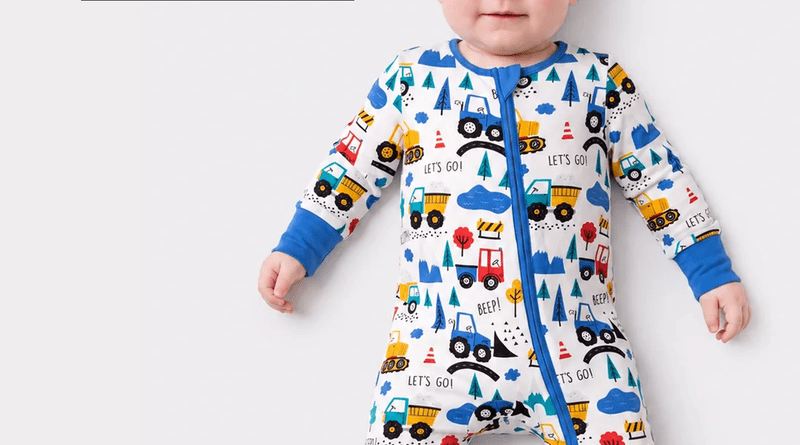
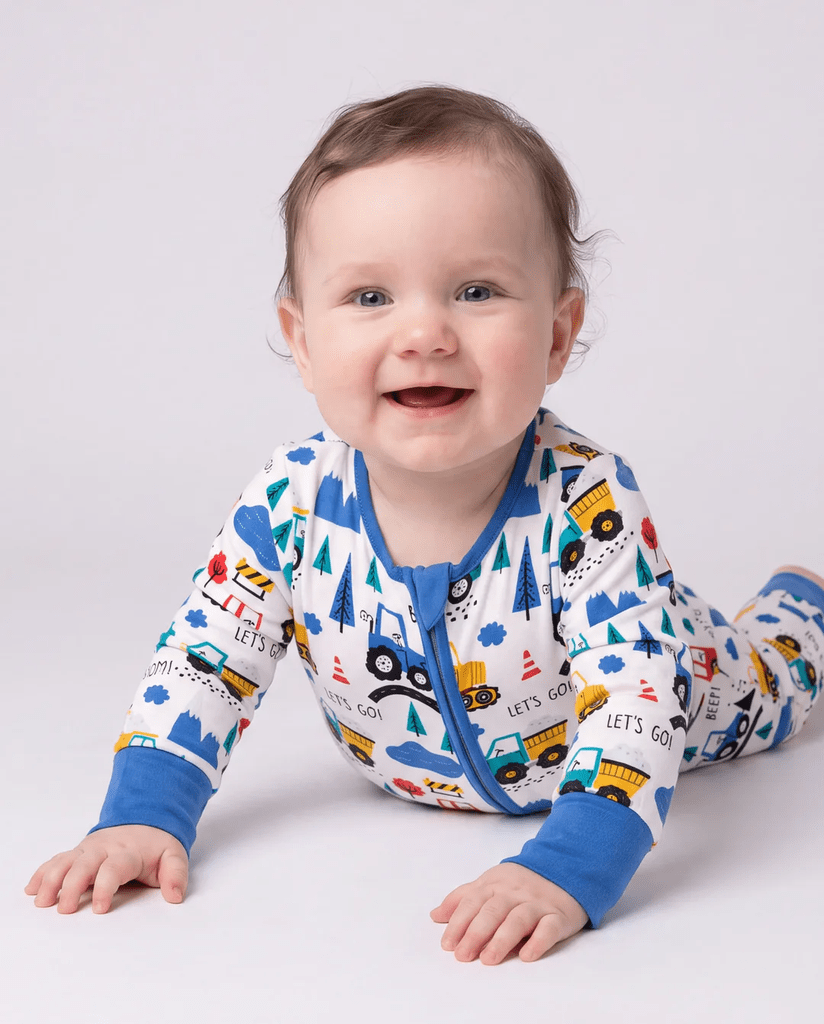
PatPat currently lists the featured blue style as Baby 2-Way Zip Construction Vehicle Footie from its BambooCloud™ line. The U.S. page displays sizes from Newborn through 18–24M and currently marks the product out of stock, so availability and other dynamic details should be checked again close to publication or purchase.
The page’s Fabric section lists 93% “bamboo fiber” and 7% spandex, while its Fit & Silhouette section refers to the material as bamboo viscose. Given the FTC terminology for regenerated bamboo-derived textiles, U.S. readers should understand the regenerated portion as viscose made from bamboo rather than assuming the garment is made from raw natural bamboo fiber.
The construction-vehicle design gives the blue footie a playful identity, but its practical details deserve more attention than the print alone. The exact listing includes a two-way zipper, soft zipper guard at the neckline, fold-over hand and foot cuffs, flat seams, a heat-pressed tagless label, and pre-shrunk construction. Its care instructions call for machine washing cold, tumble drying low, and gentle ironing if needed.
Selling Points Parents Can See and Verify
The strongest selling points of this exact style are straightforward:
- Two-way zipper: opens from the top or bottom for dressing and diaper access.
- Soft zipper guard: positioned at the neckline between the zipper area and the baby’s chin.
- Fold-over hand and foot cuffs: provide adjustable coverage without requiring separate pieces.
- Flat seams and heat-pressed tagless label: reduce bulky interior construction details.
- 7% spandex: adds stretch to the knit listed on the page.
- Pre-shrunk construction: identified by PatPat as a feature of this SKU.
- Blue construction-vehicle design: gives the footie a playful, distinctive look.
- Straightforward care: machine wash cold, tumble dry low, and gently iron if necessary.
None of these selling points needs a promise about better sleep, temperature regulation, eczema, or sensitive skin. They stand on their own as specific features parents can compare with their own routine.
“He Wore This Size Last Month” Isn’t a Sizing Method
Babies grow quickly enough that a familiar age label should not be the only reason for choosing a size. The exact chart and current measurements provide a better starting point, particularly with sleepwear where fit can have safety implications.
The U.S. Consumer Product Safety Commission has specific requirements covering infant garments and tight-fitting children’s sleepwear, including measurements and labeling. Parents do not need to interpret federal regulations every time they dress a baby, but they should follow the exact garment label and size guidance rather than deliberately choosing oversized sleepwear simply to extend wear time.
The practical habit is simple: measure again when needed, compare those measurements with the exact chart, and pay attention to the product’s intended fit. “Usual size” is useful background information, not a guarantee.
One Parent Shouldn’t Hold All the Clothing Knowledge
There is an overlooked advantage to both parents knowing what is in the baby’s drawer: fewer handoffs require instructions. Dad should not need to text, “Which pajamas fit now?” while the other parent becomes the permanent keeper of every size, wash setting, and bedtime detail.
A simple shared system can help. Keep current-size clothing together, move clearly outgrown garments out of the main drawer, and make care instructions easy for either adult to check. When a new material or garment construction enters the rotation, both parents can become familiar with it instead of depending on one person to remember everything.
Shared parenting is often discussed through major responsibilities, but competence is built in ordinary moments too. Knowing how a footie opens, where the next size is stored, or how it should be washed is not glamorous. It is still part of showing up.
Daytime Dressing Deserves a Different Game Plan
A preference for a certain textile can continue beyond bedtime, but sleepwear and daytime clothing should not automatically be treated as interchangeable. When families explore bamboo baby clothes, the first question should be what the individual garment is actually designed to do.
A daytime romper, bodysuit, top, or set can have different closure, layering, movement, and care considerations from a footie intended for sleep. Two garments may use similar bamboo-derived viscose textiles while serving completely different jobs.
That is why the decision should move from purpose to construction to material, rather than starting and ending with “bamboo.” Check the intended use, exact fiber wording, closures, size chart, care directions, and how often the item is likely to enter the laundry cycle.
Care Instructions Belong to Both Parents
Laundry rarely appears in the glossy part of parenting, yet it determines whether clothing remains practical after the first wear. The featured PatPat footie currently calls for machine washing in cold water and tumble drying on low, with gentle ironing if needed. Those directions belong to this particular SKU and should not be generalized to every bamboo-labeled garment.
Both parents should know the routine well enough that a full hamper does not become another request for instructions. Different blends and garments can have different care requirements, so checking the label should become normal rather than something only one person remembers to do.
Before ordering, review the current product page for the complete product name, exact size chart, fiber wording, zipper and cuff details, care instructions, inventory, and applicable return information. Dynamic details can change, so the checkout decision should use the information available at that time.
Modern Parenting Looks Like Knowing the Small Stuff
There is no fabric that can make someone a more involved father. Parenting is built through presence, repetition, and a willingness to learn ordinary tasks along with the memorable ones. Clothing belongs firmly in that ordinary category.
The interest in bamboo-derived baby apparel becomes easier to understand when the conversation stays focused on tangible details: fabric composition, stretch, closures, cuffs, seams, size guidance, and care.
Modern parenting does not require one person to know everything. Read the fiber information carefully, use current measurements, follow sleepwear labels and fit guidance, and choose designs that either caregiver can manage confidently. When both parents know the small stuff, responsibility feels genuinely shared.