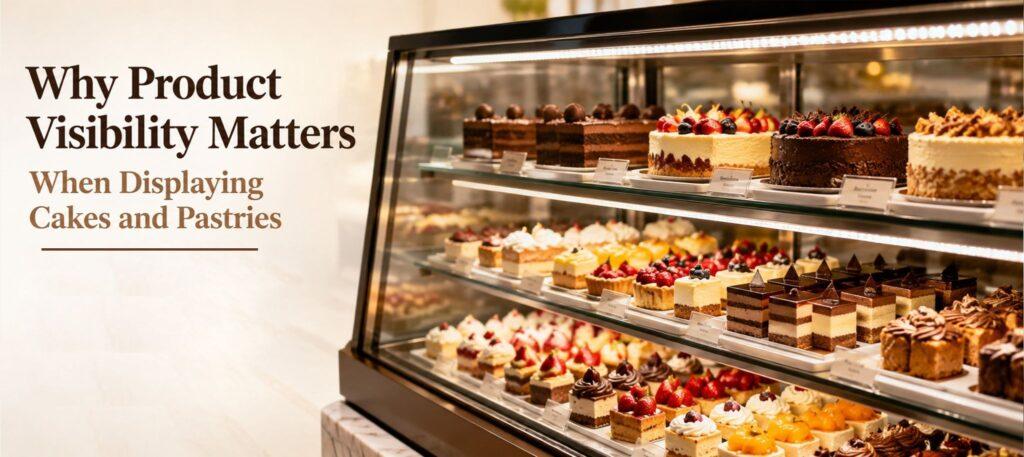
Why Product Visibility Matters When Displaying Cakes and Pastries
Customers often decide whether a cake or pastry looks appealing before they read its description, ask about ingredients, or compare prices. The color of the frosting, the texture of the crust, the arrangement of decorations, and the overall condition of the product all contribute to that first impression.
For bakeries, product visibility can therefore be a powerful sales tool. When customers can see what they are purchasing, they may feel more confident about freshness, portion size, decoration quality, and value. A clear view can also reduce uncertainty, particularly when the product is being purchased as a gift or for an important celebration.
Window packaging allows bakeries to combine protection with presentation. It keeps cakes and pastries covered while giving customers a direct look at the product inside. However, visibility creates higher expectations. Smudged windows, uneven arrangements, condensation, crumbs, and damaged decorations become immediately noticeable.
The best results come from treating visibility as part of the complete packaging and merchandising strategy rather than as a decorative feature alone.
Customers Form Opinions Before Tasting
Taste is essential to long-term customer satisfaction, but appearance usually creates the first reaction.
A glossy fruit tart, carefully piped cupcake, or evenly baked pastry can communicate freshness and craftsmanship before the package is opened. Customers may use these visual signals to judge whether the product is worth buying.
Visible bakery products can influence expectations about:
- Freshness
- Flavor
- Texture
- Portion size
- Ingredient quality
- Preparation standards
- Cleanliness
- Overall value
When products look consistent and well presented, customers may assume that the bakery follows reliable preparation and quality-control procedures.
Poor presentation can have the opposite effect. Even a fresh product may appear less desirable when it is tilted, crushed, unevenly decorated, or surrounded by loose crumbs.
Visibility Reduces Purchase Uncertainty
Customers may hesitate when they cannot see what is inside a package.
Printed photographs can provide some information, but they do not always represent the exact product being purchased. A transparent window allows the customer to inspect the actual cake or pastry without opening the box.
This can be especially useful for:
- Decorated cupcakes
- Doughnuts
- Cookies
- Brownies
- Macarons
- Fruit pastries
- Small celebration cakes
- Dessert assortments
Visibility helps customers confirm that the product matches their expectations. They can assess the color, quantity, arrangement, and general condition before completing the purchase or presenting it to someone else.
This reassurance can be particularly important for first-time customers who are not yet familiar with the bakery’s products.
Window Packaging Can Increase Perceived Freshness
Freshness is one of the most important considerations when purchasing baked goods.
Customers often look for visual signs such as a crisp surface, moist crumb, glossy glaze, bright fruit, smooth frosting, or recently applied decoration. A clear window allows these details to remain visible while the product stays protected.
When the pastry looks fresh and undamaged, the package can strengthen confidence in the bakery. However, visibility can only support freshness perception when the actual product is presented properly.
A transparent window will also reveal:
- Dry or cracked frosting
- Wilting fruit
- Grease marks
- Condensation
- Broken edges
- Uneven portions
- Poor arrangement
Bakeries using visible packaging must maintain strict presentation standards because customers can evaluate the product immediately.
Packaging Can Display and Protect at the Same Time
Open bakery displays may provide excellent visibility, but products still require protection from handling, dust, movement, and environmental exposure.
Window boxes offer a practical compromise. They allow customers to view the food while the box provides structural support and a controlled barrier around it.
Well-designed Bakery Boxes with Window can be used for counter sales, takeaway orders, gift assortments, and delivery. The window creates a visual frame around the product, while the surrounding paperboard protects the sides and base.
The structure should be selected according to the item being packaged. For example:
- Cupcakes may require inserts to prevent movement.
- Cakes may need a reinforced base and additional height.
- Cookies may benefit from dividers.
- Pastries may require grease-resistant liners.
- Macarons may need fitted trays or compartments.
A window should never replace proper internal support. The food must remain stable when the package is carried, stacked, or transported.
Product Visibility Supports Impulse Purchases
Many bakery purchases are influenced by immediate visual appeal.
A customer may enter intending to buy bread but add a pastry after seeing its filling and decoration. Another shopper may choose a box of cookies because the assortment looks colorful and gift-ready.
Visible packaging can encourage these unplanned decisions by making the product easier to notice and evaluate.
For window boxes to support impulse purchases effectively, they should:
- Face the customer clearly
- Remain free from scratches and fingerprints
- Frame the product attractively
- Avoid visual clutter
- Show the most appealing part of the item
- Include clear pricing and labeling
The window should be large enough to provide a useful view but not so large that it weakens the box or reduces the space available for branding.
Arrangement Becomes Part of the Design
When customers can see inside the box, product arrangement becomes a visible branding element.
Items should appear intentional rather than randomly placed. Even spacing, coordinated colors, and consistent orientation can make an assortment feel more premium.
For example, a cookie box may arrange flavors in repeating patterns. Cupcakes may be positioned so their decorations face the same direction. Macarons can be organized by color to create a visually balanced presentation.
A strong arrangement may include:
- Consistent spacing
- Similar product heights
- Coordinated color placement
- Clean liners
- Secure inserts
- Minimal loose crumbs
- Clear separation between flavors
The box and the food should work together as one presentation. A premium package will not create the desired impression when the products inside look disorganized.
Clear Windows Help Gift Buyers
Bakery products are frequently purchased for birthdays, office events, holidays, thank-you gifts, and family celebrations.
Gift buyers often want reassurance that the products look suitable before handing them to the recipient. A window allows them to confirm that the decoration is intact and the assortment looks complete.
Window packaging can make an order feel gift-ready without requiring the customer to open the box or add additional wrapping.
Bakeries can improve this experience by including:
- A clean branded sleeve
- A gift message area
- A neatly positioned label
- A ribbon or seal
- A coordinated box color
- A stable carrying handle
- Space for the recipient’s name
The final presentation should feel polished while remaining easy to transport.
Brown Window Boxes Create a Natural Display Style
Natural brown packaging is popular among bakeries that want to communicate warmth, simplicity, or an artisan identity.
Brown Bakery Boxes with Window combine a rustic paperboard appearance with direct product visibility. The neutral brown surface can make colorful frosting, fruit, chocolate, and decorative toppings appear more prominent through contrast.
This packaging style may suit:
- Artisan cookies
- Handmade pastries
- Sourdough products
- Traditional pies
- Farmers’ market goods
- Small-batch desserts
- Rustic celebration cakes
- Seasonal assortments
Brown boxes also provide a flexible surface for stamps, stickers, labels, ribbons, and one-color printing.
However, bakeries should not assume that a natural brown appearance automatically proves that the package is recycled or environmentally superior. Material sourcing, recycled content, coatings, window film, adhesives, and local disposal systems all affect the overall environmental profile.
Any sustainability claim should be specific and supported by supplier information.
Window Size Influences the Customer Experience
A very small window may not show enough of the product to influence buying decisions. A very large one may reduce structural strength or leave less space for printed branding.
The ideal window size depends on:
- Product dimensions
- Box shape
- Branding needs
- Structural requirements
- Customer viewing angle
- Display position
- Transportation conditions
A window should highlight the most attractive part of the product. For a cake, this may be the top decoration. For cookies or macarons, a wider opening may be useful because customers want to see the variety inside.
Custom-shaped windows can add visual interest, but complicated forms should not obscure the food or weaken the package.
Window Placement Matters
A clear panel is only effective when it remains visible during the customer journey.
A window placed only on the top may work well on a counter or table. A front-facing panel may perform better when boxes are stacked on retail shelves. Some designs use both top and side windows to improve visibility from multiple angles.
Bakeries should consider where the package will be seen:
- On a counter
- Inside a display cabinet
- On a retail shelf
- In a delivery bag
- At a celebration table
- In a customer photograph
The window should also avoid important fold lines, locking tabs, handles, and areas exposed to heavy pressure.
Condensation Can Damage Presentation
Temperature changes can cause moisture to collect inside transparent bakery packaging.
Warm pastries placed in a closed box may release steam. When that steam reaches the cooler window surface, it can form droplets. Condensation reduces visibility and may affect the texture of the food.
Bakeries can reduce this problem by:
- Allowing products to cool appropriately before packing
- Using suitable ventilation
- Avoiding rapid temperature changes
- Selecting the correct box size
- Testing window materials
- Following product-specific packing procedures
Too much ventilation may dry out certain baked goods, while too little may trap moisture. Testing is necessary to find the right balance.
Clean Windows Communicate Professionalism
Transparent packaging makes fingerprints, smears, dust, and scratches especially noticeable.
A clean window suggests careful handling, while a dirty one can weaken confidence in the product and the bakery.
Employees should be trained to:
- Handle windows by the edges
- Keep boxes away from wet or greasy surfaces
- Inspect each package before use
- Avoid stacking materials that may scratch the film
- Remove damaged boxes from service
- Perform a final presentation check
Labels should also be positioned carefully so they do not block the customer’s view unless that placement is intentional.
Branding Should Frame, Not Compete With, the Product
When the food is visible, it becomes part of the package design.
The surrounding branding should support the product instead of overwhelming it. Heavy patterns, oversized labels, or too many messages can distract customers from the cake or pastries inside.
An effective design may use:
- A clear logo
- A limited color palette
- Simple typography
- A short slogan
- Social media details
- A small product label
- A balanced border around the window
The visual hierarchy should guide the customer naturally from the brand name to the product.
Labels Provide Necessary Context
Visibility shows customers what the product looks like, but it does not explain everything they need to know.
Clear labels may identify:
- Product name
- Flavor
- Quantity
- Price
- Storage guidance
- Serving instructions
- Ingredients
- Allergen information
- Best-consumed date
- Business contact details
The label should be readable without covering too much of the window.
For assortments, an internal flavor guide or diagram can help customers identify each item without opening or touching the products.
Visibility Can Strengthen Online Marketing
Window boxes can also improve customer-generated photographs.
When products remain neatly arranged and visible, customers can share them online without fully unpacking the order. This allows the bakery name and the baked goods to appear in the same image.
Photo-friendly packaging can support:
- Social media mentions
- Customer reviews
- Celebration posts
- Influencer collaborations
- Corporate gift photographs
- Seasonal promotions
The logo or social handle should be positioned where it remains visible in a typical photograph, but it should not dominate the presentation.
The product should still be the visual focus.
Delivery Requires Additional Testing
A box may look excellent on a bakery counter but perform poorly during transportation.
Movement, stacking, vibration, heat, and handling can disrupt the product arrangement. If the customer sees the damage through the window before opening the package, the negative impression begins immediately.
Delivery testing should evaluate:
- Product movement
- Insert performance
- Lid strength
- Window attachment
- Condensation
- Grease resistance
- Stacking stability
- Carrying comfort
- Final visual presentation
A bakery should test packages over its normal delivery distance and under typical vehicle conditions.
Visibility Can Improve Order Accuracy
Clear windows may help employees verify orders before they leave the bakery.
Staff can confirm the quantity, decoration, flavor arrangement, and general condition without reopening the package. This may reduce handling and help prevent incorrect orders.
For custom cakes or decorated products, a quick visual check can confirm that:
- The correct message is present
- The decoration matches the order
- The product is centered
- No items are missing
- The lid has not touched the frosting
This quality-control benefit can be especially useful during busy periods.
Consider Privacy for Surprise Orders
Product visibility is not always desirable.
A customer purchasing a surprise cake may not want the design visible while carrying it. Certain corporate or event orders may also require more discreet packaging.
Bakeries can address this by offering:
- Removable sleeves
- Window covers
- Tissue liners
- Non-window alternatives
- Reversible outer packaging
Providing options allows customers to choose between visibility and privacy depending on the occasion.
Sustainability Requires a Complete Material Review
Window bakery boxes usually combine paperboard with a transparent film. These materials may need to be separated before disposal, depending on the design and local waste system.
Bakeries should ask suppliers:
- What material is used for the window?
- Can it be removed easily?
- Is the complete box recyclable locally?
- Does the paperboard contain recycled fibre?
- Are the coatings food-safe?
- What disposal instructions should be printed?
Broad environmental claims should be avoided unless the complete package has been properly assessed.
Useful guidance may be as simple as asking customers to remove the transparent panel before recycling the paperboard, where local rules require separation.
Test Samples Before Ordering in Bulk
A digital mockup cannot show how clearly customers will see the product or whether the window will perform during daily use.
Before approving a large order, bakeries should test samples with actual cakes and pastries.
A practical evaluation should include:
- Product fit
- Window clarity
- Structural strength
- Lid clearance
- Condensation
- Grease resistance
- Label placement
- Carrying performance
- Delivery stability
- Customer feedback
Testing several window sizes and placements may reveal which design gives the best balance of visibility, branding, and protection.
Common Window-Packaging Mistakes
Several mistakes can reduce the effectiveness of visible bakery packaging:
- Using a window that is too small
- Covering the view with oversized labels
- Packing products while they are too warm
- Leaving loose crumbs inside
- Failing to secure products
- Using weak window attachment
- Allowing the lid to touch decorations
- Choosing a box that is too large
- Ignoring delivery movement
- Making unsupported sustainability claims
Each of these issues can be corrected through better design, staff training, and realistic testing.
Conclusion
Product visibility matters when displaying cakes and pastries because customers often make decisions based on appearance before they taste the food. A clear view can increase confidence, strengthen freshness perception, encourage impulse purchases, and make bakery products feel more gift-ready.
Window boxes allow bakeries to display products while protecting them from handling and movement. However, visibility also exposes every presentation problem, from uneven arrangements and condensation to fingerprints and damaged decorations.
The most effective packaging combines a clear, well-positioned window with strong construction, accurate labeling, secure product support, and consistent branding. Bakeries should also consider delivery conditions, customer privacy, sustainability, and staff handling procedures.
When product visibility is managed carefully, the box becomes more than a container. It becomes a display tool that helps customers appreciate the quality of the product before the first bite.