Why Independent Travelers in Vietnam Still Benefit From a Local Phone Number
Travel in Vietnam is increasingly easy to organize from a smartphone. Hotels, airport transfers, restaurant reservations and day tours can all be booked online before departure. Once travelers arrive, maps and messaging apps handle much of the daily planning.
That convenience can make mobile data seem like the only connection a visitor needs. A data-only eSIM is often enough for navigation, browsing and internet calls, but it does not provide a Vietnamese number for conventional calls or text messages.
For travelers arranging their own transport, accommodation and activities, a Vietnam eSIM with a local phone number offers an additional way to stay reachable. It is not essential for every trip, but it can make local coordination easier when plans depend on drivers, hotels, guides or services inside Vietnam.
Arrival Logistics Are Easier When Drivers Can Call
The first practical test often comes immediately after landing.
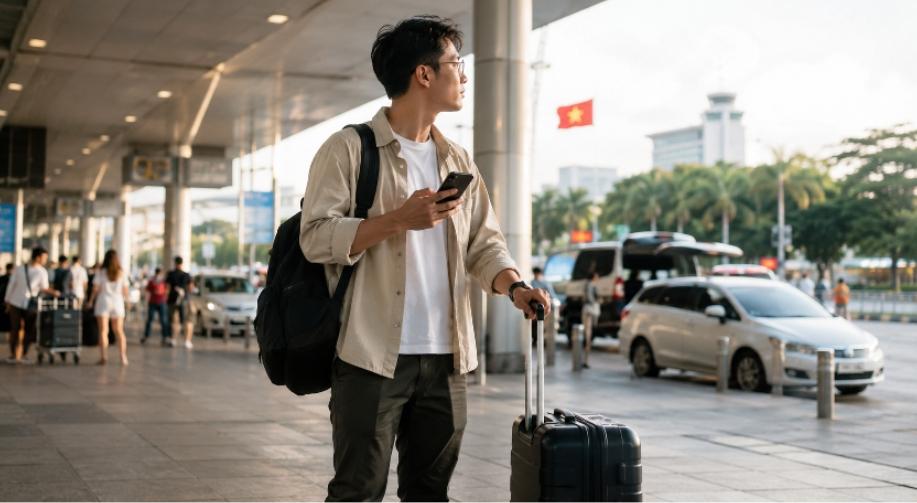
At Noi Bai Airport in Hanoi or Tan Son Nhat Airport in Ho Chi Minh City, a pickup driver may need to confirm the terminal, explain a meeting point or locate a passenger in a crowded arrivals area. Airport pickup zones can be busy, and a traveler unfamiliar with the terminal may not immediately recognize the correct exit or vehicle.
Internet messaging usually works, but it is not always the fastest option. The driver may be moving between pickup areas, the traveler may have missed a message, or both sides may be using different apps. A direct call can resolve the situation more quickly.
The same issue can appear later in the trip. A private transfer may arrive early, a hotel may need to confirm a late check-in, or a tour operator may change the pickup point because of traffic or a temporary road closure.
These are minor disruptions, but they are easier to manage when a local driver or business can call the traveler directly.
Local Services Do Not All Communicate the Same Way
Vietnam has a highly mobile travel environment, especially in Hanoi, Ho Chi Minh City, Da Nang and other major destinations.
Visitors frequently use Grab for transportation and food delivery, while Zalo remains a common communication platform among local businesses, drivers and personal contacts. Hotels, restaurants and tour operators may also communicate through WhatsApp, email, SMS or conventional calls.
An international number may work for some services, while others may request a Vietnamese number or send a verification message. However, travelers should not assume that every eSIM with a local number will automatically work with every app.
Incoming SMS, OTP verification, outgoing messages and top-up options depend on the selected mobile plan and the policies of the app being used. A local number provides more communication options than a data-only plan, but the exact functions should still be checked before purchase.
Even when app registration is not required, a domestic number may be useful for restaurant reservations, apartment hosts, local guides and smaller operators that prefer calls or text messages over email.
Who Benefits Most From a Local Number?
A local number becomes more useful as an itinerary becomes more independent or complex.
Travelers following routes such as Hanoi–Sapa–Ha Long Bay or Da Nang–Hoi An may deal with several hotels, transfer companies and activity providers. Families may want one reliable contact number for airport pickups, room arrangements or changes to a group booking.
Business travelers may need to share a local contact number with an office, supplier, conference organizer or delivery service. Longer stays can also create more situations in which a Vietnamese number is useful, including apartment viewings, coworking access, laundry collection or repeated transportation bookings.
By contrast, a traveler staying at one resort for a few days may never need a local number. The same applies to visitors on a fully guided tour where one operator manages transportation, hotels and daily activities.
The value of a local number therefore depends less on the length of the trip than on how much local coordination the traveler expects to handle personally.
Data-Only and Local-Number eSIMs Serve Different Needs
The choice is not between a good eSIM and a bad one. It is between two different types of service.
A data-only eSIM is usually the simpler option. It is suitable for maps, social media, email, web browsing and internet-based messaging. For a short city break or a highly organized trip, that may cover everything.
An eSIM with a Vietnamese number adds conventional mobile communication. Depending on the plan, it may support incoming calls, local calls, SMS or verification messages. These features can be useful when a hotel, driver or business cannot reach the traveler through an internet app.
Travelers should also avoid assuming that “unlimited data” means unlimited calling or messaging. Data allowance, voice minutes, SMS, hotspot sharing and top-up capability are separate features.
A plan may include generous data while still requiring additional credit for outgoing calls or messages. The product details should therefore be reviewed carefully rather than judged only by the headline data allowance.
eSIM or Physical SIM?
A physical SIM remains a practical option for travelers using an older device or those who prefer assistance from a mobile shop after arrival.
Buying a SIM locally may provide access to in-person support, but it also requires an additional stop. Travelers may need to remove their existing physical SIM, complete registration or wait at an airport or city phone counter.
An eSIM can be purchased and installed before departure without replacing a physical card. On a compatible dual-SIM phone, travelers can often keep their home line active while using the Vietnamese eSIM for local data and communication.
That setup requires some care. The phone must be carrier-unlocked and support eSIM technology. The Vietnamese line should normally be selected for mobile data, while roaming settings on the home line should be reviewed to avoid unexpected charges.
Travelers should also protect the installation QR code. Many travel eSIMs are designed for a single installation, so deleting the eSIM after setup may prevent it from being restored.
What to Check Before Buying
A product title stating that a local number is included does not explain every feature of the plan.
- whether the eSIM provides a real Vietnamese phone number;
- whether it can receive calls and SMS;
- whether outgoing calls or messages are included;
- whether additional balance can be added;
- whether hotspot sharing is supported;
- how much high-speed data is available;
- when the validity period begins;
- whether the device is unlocked and eSIM-compatible;
- whether the QR code can be installed only once;
- whether support is available if installation fails.
These details should be checked for the exact plan being purchased. Two eSIMs from the same provider may have different voice, SMS and top-up functions.
A local number is not necessary for every visitor to Vietnam. Travelers with a simple itinerary and pre-arranged services may need nothing more than reliable mobile data.
For independent travelers managing several hotels, transfers, tours and local contacts, however, a Vietnamese number provides useful flexibility. It gives drivers and businesses another way to make contact and reduces dependence on a single messaging app.
The right choice comes down to the itinerary. Data-only plans are often sufficient when internet access is the main priority. A local-number eSIM is more useful when direct communication inside Vietnam is likely to be part of the journey.