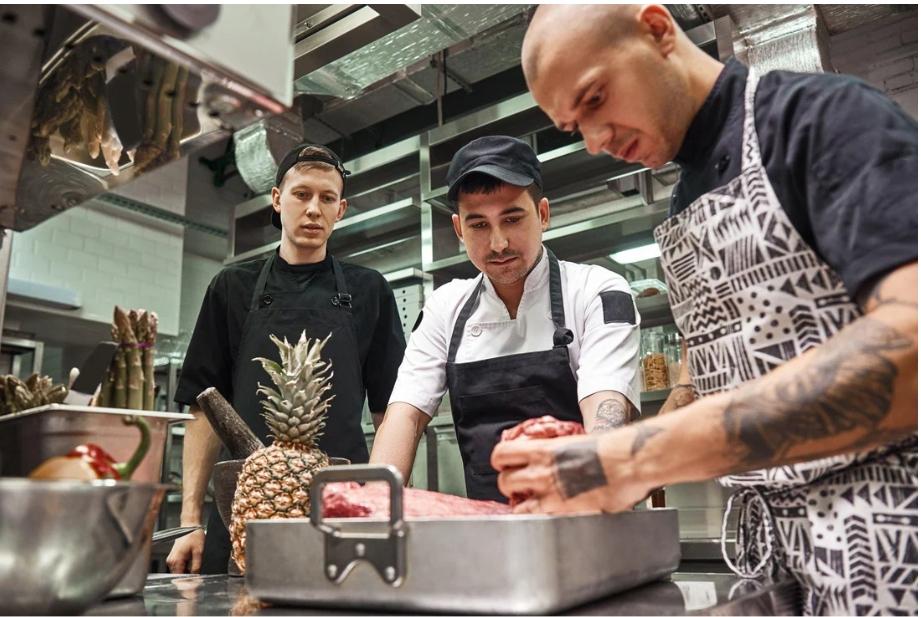
White or Black Chef Coat: Has Color Become Relevant in Modern Kitchen Wear?
In today’s ever-changing culinary scene, uniforms have transcended beyond being traditional to becoming brand names. Among all the clothing worn in kitchens, there is none that stands out as much as a chef coat. However, there is one issue that still generates controversy among chefs and restaurant owners: the color of the chef jacket.
With the rise of modern chef jackets comfortable enough for long shifts and designed with breathable fabrics, the concern has changed from mere adherence to tradition to effectiveness. However, there is more to a jacket’s color than many people think.
Traditional Symbolism Associated with White Chef Jackets
Chef coats have traditionally been known for their whiteness. Traditionally, white represented a certain level of tidiness and order. Interestingly, wearing such uniforms in professional kitchens has become a practice since the nineteenth century when chefs such as Auguste Escoffier advocated the adoption of such clothes.
In addition to serving an aesthetic function, the color white also serves a functional role. For example, white allows chefs to work comfortably in hot kitchens because white reflects heat. Additionally, it allows chefs to notice any stains instantly and maintain strict hygienic standards.
From a culinary point of view, according to one principle, white jackets help highlight the need for cleanliness in professional settings.
Moreover, the color white has traditionally been associated with prestige. Indeed, some prestigious restaurants may still prefer that chefs use white jackets in order to demonstrate their expertise and knowledge.
However, despite the significance of tradition, modern kitchens may have doubts about whether this color is convenient for them.
Advancements in the Appearance of Black Chefs’ Jackets
As opposed to classic white chef’s jackets, black jackets became increasingly popular in the past ten years in many kitchens, especially those of modern restaurants, open kitchens, and casual dining areas. Black color is considered stylish, modern and sleek, thus, it perfectly fits the trends in the hospitality industry.
A major benefit associated with black color is that it conceals stains. Indeed, in a bustling kitchen, with sauces, oils, and powdered products being used everywhere, it is impossible to keep the white color of the jacket clean all day long. Thus, black helps chefs maintain a neat appearance during a long working shift.
Moreover, black jackets imply sophistication and authority. Many head chefs or executive chefs wear black because they want to look like leaders while keeping the trendy look of their establishments. Also, in case of open kitchens, where customers are able to observe chefs’ work firsthand, black jackets create a sophisticated atmosphere.
However, despite the benefits provided by wearing black uniforms, they also have certain drawbacks, for instance, it retains more heat than white. Therefore, most of the modern kitchens combine these two colors instead of using only one.
Comfort Is Key: The Place of Chef Jackets in the Contemporary Era Comfortable Designs
The greatest change in the last few years is not the contrast between white and black—it is the emphasis on comfort and efficiency. Modern chefs must withstand tough conditions including long hours, heat stress, and intensive work. That is why there have been huge improvements in uniform designs.
Modern chef jackets that provide comfortable conditions to work now involve lightweight material, moisture control technologies, and breathable mesh sections. The latter ensure high performance and allow the chefs to concentrate only on their food.
Though double-breasted styles continue to dominate, they have undergone great changes in terms of fabric type and cutting. It results in the fact that when choosing between white and black chef coats, a chef cares less about colors and much more about comfortable clothes.
As you see, many kitchens nowadays prefer uniforms for the sake of comfort. The emergence of hybrid designs proves this point. Comfort and practicality become key factors regardless of whether the jacket is white or black.
White vs Black: Psychological and Branding Influence
Color is used subconsciously as one of the psychological components of creating an environment in the kitchen. White evokes associations with cleanness, exactness, and strictness, while black is related to confidence, contemporaneity, and sophistication.
Some restaurants make use of these connections by choosing the corresponding colors. While some high-end restaurants would go for the classic color to build tradition and authority, others will opt for black in accordance with the contemporary image of their brand.
Another point is uniforms. In some restaurants, white is reserved for the head chef and black is worn by the sous chef or other members of staff, whereas in others, the situation is reversed. That means that color codes are flexible and contextual now.
It is also worth mentioning that the perception of uniform colors differs in open-kitchen restaurants. People tend to consider black uniforms more stylish and theatrical, and white uniforms as classic ones.
Modern Chef Jackets and the Role of Harveys Workwear
One of the important factors that has contributed to the development of the chef uniforms is the workwear sector, including brands such as Harveys Workwear. Harveys and other companies have greatly helped move the chef jackets away from being restrictive and unpractical pieces of clothing and into flexible and durable clothes that can be worn in a professional setting.
Harveys Workwear provides numerous types of chef jackets which can withstand wear and tear without compromising the comfort of chefs who spend long hours at work. The company produces many chef jackets made from light fabrics with breathable patches, making it easier for chefs to perform their duties under difficult circumstances.
It would be appropriate to point out that Harveys is very important when discussing the white vs black controversy because it is one of the most flexible companies providing different types of chef uniforms. It should be mentioned that Harveys Workwear produces chef jackets in both white and black shades, making it possible for chefs to choose their uniforms according to personal preferences.
In this way, it becomes clear that Harveys Workwear has become an integral part of the history of professional kitchen clothing.
Another important element in which Harveys Workwear makes an impact is the support for a shift towards practical kitchen fashion in terms of functionality and comfort. Modern chefs are unwilling to wear bulky coats that prevent proper ventilation and hinder the movement.
In order to address this issue, Harveys offers a collection of chef jackets that feature breathability, lightness, and flexibility. This becomes important in busy kitchens, where both efficiency and comfort come together.
Another trend that can be observed in the contemporary food industry is related to customization. Today, many restaurants use uniforms not only for hygiene purposes but as elements of corporate identity. In order to meet these expectations, Harveys Workwear provides customization, which allows establishments to stay consistent and choose from such color combinations as white and black uniforms.
This brings us to one of the most crucial truths of the modern culinary world, which says that the question of white vs black uniforms is a thing of the past. The choice is made on the grounds of functional properties and corporate identity.
But Do Colors Still Play a Role in Today’s Chef Jackets?
Yes and no.
Yes, since colors still affect the perceptions of the brand, the identity of the restaurant and its hierarchy. For example, white still represents tradition and purity, whereas black represents modernity and prestige. Restaurants still apply those perceptions.
But at the same time – no, since functionality became more important. Due to modern and comfortable chef jackets, made out of breathable fabrics and designed ergonomically, chefs pay much more attention to comfort and quality than color.
Some restaurants even tend to combine the colors, assigning them different purposes: for instance, white is used for presenting, while black is used on busier days. It shows the flexibility of modern restaurants.
Thus, we can conclude that chef jacket colors became a matter of choice rather than a requirement.
Conclusion
The question of whether to use white or black chef jackets is not one of superiority but rather what each symbolizes. The white symbolizes tradition, hygiene, and history. The black symbolizes modernity, practicality, and brand flexibility. Nevertheless, the future of chef jackets clearly lies in the aspect of comfort and functionality.
Considering that modern chef jackets are becoming increasingly more comfortable for the tough kitchen environment, chefs prefer jackets based on comfort rather than adherence to tradition.
As the likes of Harveys Workwear Company keep innovating professional kitchen uniforms, it is safe to say that the future of chef jackets will depend less on their color and more on their functionality.