What to Do When You Need Emergency HVAC Repair
Recognizing When You Need Emergency HVAC Repair
A sudden HVAC emergency in Salt Lake City can be more than just uncomfortable. Imagine a freezing winter night with no heat, or a sweltering summer day without AC. These failures threaten your home’s safety and can even lead to other costly issues, like needing affordable pipe repair. Dealing with these urgent situations requires quick action and reliable solutions. We understand the stress of unexpected home repairs. This guide is here to help you navigate such emergencies effectively.
When your heating or cooling system fails, understanding how to react saves money and prevents bigger damage. This guide will show you how to recognize warning signs and what immediate steps to take. We will cover cost factors and share prevention tips. Knowing how to handle such situations promptly is key to protecting your home. We aim to give you the confidence to face unexpected HVAC challenges.
Understanding the difference between a minor hiccup and a full-blown emergency can save you time, money, and potential hazards. In Salt Lake City, where temperatures can swing dramatically, a malfunctioning HVAC system isn’t just an inconvenience; it can be a risk to your property and well-being.
Critical Warning Signs Requiring Emergency HVAC Repair
Certain indicators demand immediate professional attention. Ignoring these signs can lead to escalating damage, safety risks, or complete system failure.
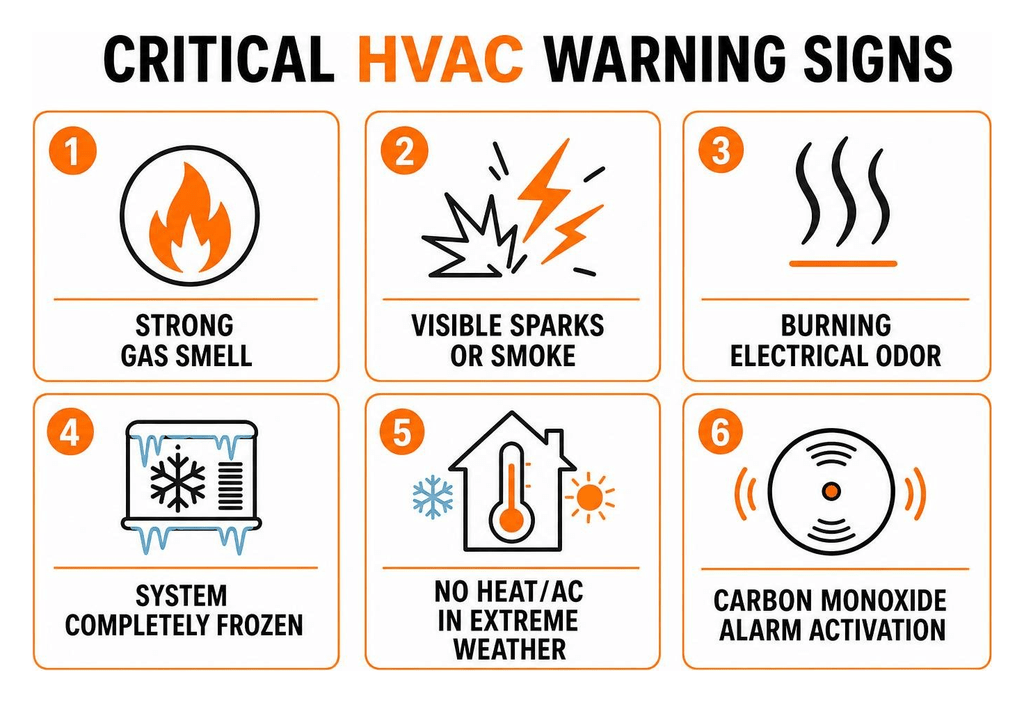
- Gas Odors: If you detect the smell of rotten eggs, which is often added to natural gas for detection, this is an immediate and severe emergency. It could indicate a gas leak from your furnace or gas line, posing a significant fire or explosion hazard. Evacuate your home immediately and contact your gas provider and emergency services.
- Electrical Sparking or Burning Smells: Any visual sign of electrical sparking, burning plastic, or wiring smells coming from your HVAC unit or vents points to a serious electrical problem. This could lead to a house fire or electrical shock. Turn off your system at the breaker box and call for emergency repair.
- Sudden System Freeze-Up: While a frozen evaporator coil can be a symptom of a larger issue like low refrigerant or poor airflow, a completely frozen outdoor unit in cold weather, or an indoor unit that’s a block of ice, indicates a severe malfunction that needs urgent attention to prevent further damage to components.
- Total Loss of Heating or Cooling in Extreme Weather: During a Salt Lake City winter, a complete furnace breakdown when temperatures are below freezing can quickly lead to frozen pipes and unsafe indoor conditions, especially for vulnerable occupants. Similarly, a total AC failure during a summer heatwave can be dangerous.
- Carbon Monoxide Detector Alarms: If your carbon monoxide detector goes off, it signals the presence of this odorless, colorless, and deadly gas, often a byproduct of incomplete combustion in furnaces. Evacuate immediately and seek fresh air.
- Loud Banging, Grinding, or Screeching Noises: While some HVAC noises are normal, sudden, loud, and unusual mechanical sounds like banging, grinding, or screeching often indicate a critical component failure, such as a motor bearing, fan blade, or compressor issue. Continued operation could cause irreparable damage.
Here’s a quick list of urgent system hazard signs to watch for:
- Strong gas smell
- Visible sparks or smoke
- Burning electrical odor
- System completely frozen
- No heat/AC in extreme weather
- Carbon monoxide alarm activation
- Loud, disruptive mechanical noises
Differentiating Routine Maintenance from Immediate Hazards
Not every HVAC issue warrants an emergency call. Understanding the distinction helps you avoid unnecessary after-hours fees and ensures you get the right service at the right time.
- Minor Airflow Issues: If you notice slightly reduced airflow from one or two vents, it might be due to a dirty filter, partially closed damper, or minor duct obstruction. These are typically not emergencies and can often be resolved with routine maintenance or a scheduled service call.
- Thermostat Calibration Problems: A thermostat that seems inaccurate or unresponsive might just need new batteries, a simple recalibration, or cleaning. Unless it’s completely failing to control the system in extreme temperatures, it’s usually not an emergency.
- Delayed Response: If your system takes a bit longer than usual to kick on or reach the desired temperature, it could be a sign of aging components or a need for a tune-up, but generally doesn’t require immediate emergency intervention unless it completely fails.
- Safety Risks: The key differentiator is often safety. If an issue poses a direct threat to your home or family—like gas leaks, electrical fires, or carbon monoxide—it’s an emergency. If it’s merely a comfort issue or a slight performance dip without immediate danger, it’s likely not.
- Outdoor Temperature: The severity of an HVAC issue is often amplified by the external environment. A lack of heat in mild fall weather is less critical than in the depths of a Salt Lake City winter.
- Electrical Strain: Flickering lights when your HVAC unit cycles on can indicate an electrical strain. While this needs attention, it might not be an immediate emergency unless accompanied by burning smells or sparking.
By carefully assessing the symptoms and considering the potential safety implications, homeowners can make informed decisions about when to seek emergency HVAC repair.
Immediate Action Steps Before the Technician Arrives
When an HVAC emergency strikes, your actions in the moments before professional help arrives can significantly impact safety, minimize damage, and potentially reduce repair costs. Knowing what to do can be crucial, especially in a city like Salt Lake City where weather conditions can quickly exacerbate problems.
Shutting Down Power and Fuel Supplies
The first and most critical step in many HVAC emergencies is to cut off the power and, if applicable, the fuel supply to the affected unit. This prevents further damage, reduces the risk of fire or electrical shock, and creates a safer environment for you and for the technician.
- Breaker Box: Locate your home’s main electrical breaker box. This is typically found in a basement, garage, utility closet, or outside wall. Identify the breaker labeled for your furnace, air conditioner, or HVAC system. Flip it to the “off” position. If labels are unclear, you can turn off the main breaker for the entire house, but be aware this will cut power to all appliances.
- Gas Shutoff Valve: For gas furnaces, locate the manual gas shutoff valve. This is usually a lever or knob on the gas supply pipe leading directly to the furnace. Turn the handle perpendicular to the pipe to shut off the gas flow. If you smell gas, evacuate immediately and contact your gas company and emergency services from a safe distance. Do not attempt to operate any electrical switches or phones inside the house.
- Main Switch: Many HVAC units, especially outdoor AC condensers or furnaces, have a dedicated service switch located on or near the unit itself. This is often a small box with a lever or pull-out fuse block. Flipping this switch to “off” will cut power directly to the unit.
- Freeze Prevention: If your heat is out in cold weather, especially in Salt Lake City’s winter, turning off the water supply to your home and opening faucets can help prevent pipes from freezing and bursting. This is a critical step to protect your home from additional damage.
- System Stabilization: By shutting down power and fuel, you effectively stabilize the system, preventing it from attempting to operate under unsafe conditions, which could lead to more extensive and costly repairs.
Protecting Home Infrastructure from Secondary Damage
An HVAC emergency can often trigger a cascade of other problems within your home. Taking proactive steps to protect your home’s infrastructure can mitigate these secondary damages, saving you significant repair expenses down the line.
- Pipe Freeze: In the event of a heating system failure during cold Salt Lake City winters, exposed pipes are highly susceptible to freezing. Insulate any visible pipes in unheated areas like basements, attics, or crawl spaces. Keep cabinet doors under sinks open to allow warmer air to circulate around plumbing. Consider a slow drip from faucets to keep water moving.
- Burst Lines: If pipes do freeze, they can burst, leading to extensive water damage. If your heat is out for an extended period, it’s wise to shut off your main water supply and drain your pipes to prevent this. This is a crucial step to avoid the need for costly pipe repairs.
- Indoor Moisture: A malfunctioning AC unit, particularly one with a clogged condensate drain, can lead to water overflowing and causing indoor moisture issues, potentially damaging ceilings, walls, and flooring. If you notice water pooling, turn off the AC and try to clear the drain if it’s easily accessible, or place towels to absorb the water.
- Thermal Loss: If your heating or cooling system is down, minimize thermal loss or gain by closing windows and doors tightly. Use towels or blankets to block drafts under doors. In winter, keep curtains open during the day to let in passive solar heat and close them at night for insulation. In summer, do the opposite.
- Emergency Repairs: Addressing the immediate HVAC issue is paramount, but understanding how to handle potential secondary issues, such as those that might necessitate various types of emergency repairs for your plumbing or other home systems, is equally important for comprehensive home protection.
- Safety Clearance: Ensure the area around the malfunctioning HVAC unit is clear of any flammable materials or obstructions. This provides a safe working space for the technician and prevents any potential fire hazards if the issue is electrical or involves overheating.
By taking these immediate actions, you not only safeguard your family but also protect your home from further damage while awaiting professional help.
Cost Factors and Common Types of Emergency HVAC Repair
When facing an HVAC emergency in Salt Lake City, understanding the potential costs and the nature of common repairs can help you prepare. While we cannot provide specific pricing, we can outline the factors that influence the final bill and the typical scenarios that lead to urgent service calls.
Typical Scenarios for Emergency HVAC Repair Services
HVAC systems are complex, and many issues can arise, some of which demand immediate attention due to their impact on comfort, safety, or the system’s integrity.
- Furnace Breakdown: This is a common emergency during Salt Lake City’s cold winters. Issues can range from a faulty ignitor or pilot light, a malfunctioning thermostat, a clogged filter restricting airflow, to a failing blower motor. A complete breakdown means no heat, which can be dangerous in freezing temperatures.
- Compressor Burnout: The compressor is the heart of an air conditioning system. If it burns out, your AC will likely stop cooling entirely. This is a major repair, often caused by poor maintenance, low refrigerant levels, or electrical problems. It’s a critical emergency during summer heatwaves.
- Refrigerant Leak: Low refrigerant levels can cause your AC to blow warm air, freeze up, or cycle on and off frequently. Leaks are problematic because they release harmful chemicals and reduce efficiency. An emergency repair involves locating and sealing the leak, then recharging the system.
- Condensate Overflow: The condensate drain line removes moisture from your AC system. If it clogs, water can back up and overflow into your home, causing water damage to ceilings, walls, or floors. This requires immediate attention to prevent extensive property damage.
- Frozen Evaporator Coil: As mentioned earlier, a frozen coil can be caused by low refrigerant, restricted airflow (e.g., a dirty filter), or a malfunctioning fan. The ice buildup prevents the system from cooling effectively and can damage the compressor if not addressed promptly.
- Motor Failure: Both the blower motor (which moves air through your ducts) and the condenser fan motor (which cools the outdoor unit) are vital. If either fails, the system cannot function properly, leading to no airflow, overheating, or complete system shutdown. Loud grinding or screeching noises often precede motor failure.
Understanding Emergency Repair Costs and Pricing Structures
While we cannot quote specific figures, several factors contribute to the overall cost of an emergency HVAC repair. These elements are consistent across Salt Lake City and the broader region.
- After-Hours Rates: Emergency services often come with premium pricing, especially if they occur outside of standard business hours, on weekends, or during holidays. Technicians need to be compensated for their immediate availability.
- Diagnostic Fee: Most reputable HVAC companies charge a diagnostic fee to send a technician to your home, assess the problem, and determine the necessary repairs. This fee covers the technician’s time, travel, and expertise in identifying the issue.
- Labor Expenses: The cost of labor is a significant component of any repair. This is influenced by the complexity of the repair, the time it takes, and the technician’s skill level. More intricate repairs requiring specialized knowledge will naturally incur higher labor costs.
- Replacement Parts: The cost of any parts that need to be replaced varies widely. Common parts like filters, capacitors, or ignitors are less expensive than major components such as compressors, heat exchangers, or entire blower assemblies. The brand and availability of the part also play a role.
- Warranty Coverage: If your HVAC system or a specific component is still under warranty, some or all of the repair costs (especially for parts) might be covered. Always check your warranty documentation before authorizing repairs.
- Complexity of the Issue: A minor adjustment or a simple part replacement will be less costly than a repair that requires extensive troubleshooting, specialized tools, or the replacement of multiple high-value components.
To illustrate the difference in how costs are structured, consider these factors:
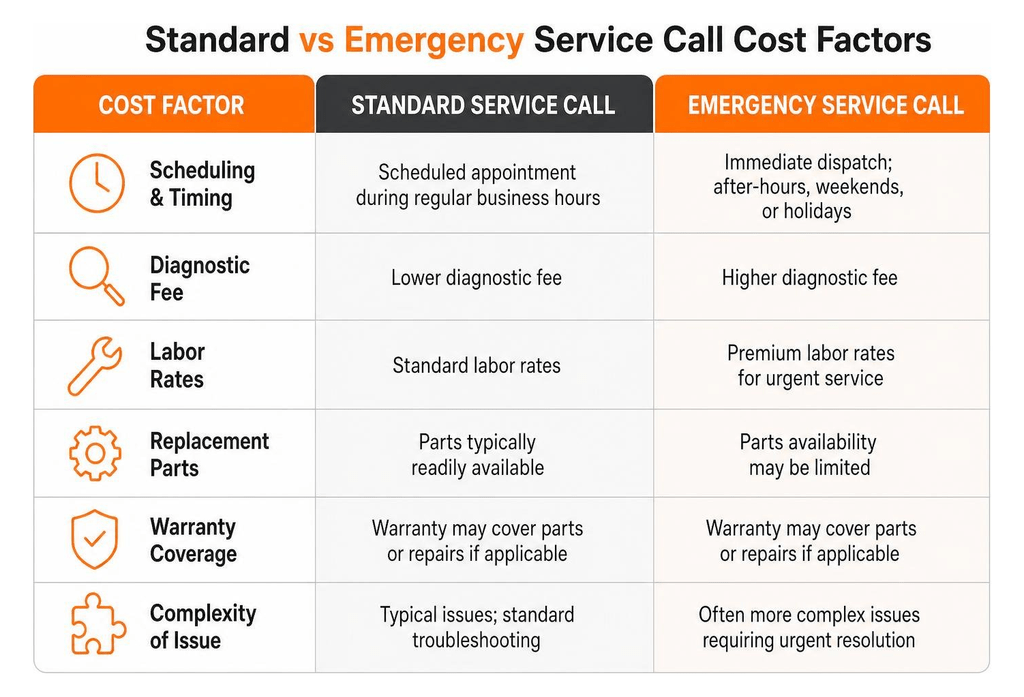
- Standard Service Call: Scheduled appointment, regular business hours, lower diagnostic fee, standard labor rates.
- Emergency Service Call: Immediate dispatch, after-hours/weekend/holiday rates, higher diagnostic fee, premium labor rates, potentially limited parts availability.
By understanding these cost factors, homeowners can better anticipate the financial implications of an emergency HVAC repair and make informed decisions.
How to Prevent Costly Emergency Breakdowns
Preventing HVAC emergencies is always more cost-effective and less stressful than reacting to them. Proactive measures, especially in Salt Lake City’s climate, can significantly extend the life of your system, improve efficiency, and help you avoid unexpected breakdowns.
Preventative Seasonal Maintenance and Inspections
Regular, professional maintenance is the single most effective way to prevent costly emergency HVAC repairs. Think of it like regular oil changes for your car; it keeps everything running smoothly and catches small issues before they become big problems.
- Filter Changes: This is perhaps the simplest yet most crucial maintenance task. A dirty air filter restricts airflow, forcing your system to work harder, reducing efficiency, and potentially leading to overheating or freezing coils. We recommend checking your filter monthly and replacing it every 1-3 months, depending on usage and household conditions (pets, allergies).
- Duct Cleaning: Over time, dust, allergens, and debris can accumulate in your ductwork, impacting air quality and airflow. While not always an annual requirement, periodic duct cleaning can improve system efficiency and reduce strain on your HVAC unit.
- Coil Maintenance: Your outdoor condenser coil and indoor evaporator coil are critical for heat exchange. They can become caked with dirt and grime, hindering their ability to transfer heat. Professional technicians clean these coils during tune-ups, ensuring optimal performance.
- Annual Tune-ups: Schedule professional HVAC tune-ups twice a year—once for your heating system in the fall and once for your cooling system in the spring. During these inspections, technicians will:
- Inspect and clean components (coils, burners, fans).
- Check refrigerant levels and pressure.
- Lubricate moving parts.
- Test electrical connections and components.
- Verify thermostat calibration.
- Inspect ductwork for leaks.
- Check safety controls and gas lines.
- Identify potential issues before they escalate into emergencies.
This proactive approach ensures your system is ready for the demands of Salt Lake City’s varying seasons, helping to prevent sudden failures.
Smart Home Monitoring and Early Detection Tools
Technology offers powerful tools to help homeowners monitor their HVAC systems and detect potential issues early, often before they become emergencies.
- Smart Thermostats: Modern smart thermostats do more than just control temperature. Many can monitor system performance, track energy usage, and even send alerts if they detect unusual cycling patterns or potential malfunctions. Some can integrate with other smart home devices to optimize comfort and efficiency.
- Freeze Sensors: These small, inexpensive devices can be placed near pipes in vulnerable areas (like unheated basements or crawl spaces). If the temperature drops to a dangerous level, they can send an alert to your phone, giving you time to take preventative action against frozen pipes, which can lead to the need for affordable pipe repair.
- Leak Alarms: Water leak detectors can be placed near your furnace, AC unit (especially near the condensate pan), or water heater. If water is detected, an alarm sounds, and many smart versions send notifications to your phone, allowing you to address a leak before it causes significant water damage.
- Early Warning Systems: Some advanced HVAC systems and smart home hubs offer comprehensive monitoring, providing early warnings about component wear, low refrigerant, or unusual system behavior. These insights can prompt you to schedule a service call before a full breakdown occurs.
- System Efficiency Tracking: Many smart devices and energy management systems allow you to track your HVAC system’s energy consumption. A sudden spike in energy use without a corresponding change in weather or usage patterns can be an early indicator of a system struggling due to a developing problem.
- Remote Shutoff: The ability to remotely shut off your HVAC system from your smartphone can be invaluable if you receive an alert about a potential issue while away from home, preventing further damage or energy waste.
By combining regular professional maintenance with smart home monitoring, homeowners in Salt Lake City can significantly reduce the likelihood of experiencing costly and inconvenient HVAC emergencies.
Frequently Asked Questions About Emergency HVAC Situations
Navigating an HVAC emergency can be daunting, and many questions often arise. Here, we address some of the most common concerns homeowners have when their heating or cooling system fails unexpectedly.
What is considered a true HVAC emergency?
A true HVAC emergency is a situation where your system failure poses an immediate threat to safety, health, or significant property damage. It’s more than just discomfort; it’s about risk.
- Extreme Temperatures: A complete loss of heating in sub-freezing Salt Lake City winter conditions, especially if there are vulnerable individuals (elderly, infants, those with health conditions) in the home, is an emergency. Similarly, a total AC failure during a severe summer heatwave can be dangerous.
- Gas Odors: Any smell of natural gas (rotten eggs) is an immediate and critical emergency. This indicates a potential gas leak, which is a severe fire and explosion hazard.
- Burning Smells or Smoke: The smell of burning plastic, electrical wiring, or visible smoke coming from your HVAC unit or vents signals an electrical fire risk.
- Electrical Hazards: Visible sparks, tripped breakers that immediately reset, or other overt electrical malfunctions within the unit indicate a dangerous situation that could lead to fire or shock.
- Vulnerable Occupants: The presence of infants, the elderly, or individuals with chronic health conditions makes any significant temperature control failure an emergency, as they are more susceptible to temperature extremes.
If your situation involves any of these factors, it warrants an immediate emergency service call.
How quickly should an emergency technician arrive?
The response time for an emergency HVAC technician can vary, but reputable companies prioritize these calls.
- Response Window: Most emergency HVAC services aim for a rapid response, often within a few hours. Many providers offer 24/7 service specifically for these urgent situations.
- Dispatch Time: The speed of dispatch depends on the company’s staffing, the current call volume, and the severity of your reported issue. True emergencies (like gas leaks) will always take precedence.
- Weather Delays: During periods of extreme weather (e.g., a major snowstorm or heatwave in Salt Lake City), all HVAC companies experience a surge in calls, which might slightly extend response times. However, emergency calls are still prioritized.
- Triage Priority: When you call, be clear and detailed about your symptoms. The dispatcher will triage your call based on the potential risks involved. Gas leaks and total system failures in extreme temperatures will typically receive the highest priority.
- 24/7 Coverage: Many Salt Lake City HVAC companies advertise 24/7 emergency service, meaning they have technicians on call around the clock to address urgent issues promptly.
When calling, always inquire about their estimated arrival time and what steps you should take in the interim.
Can an HVAC failure lead to frozen and burst household pipes?
Absolutely, and this is a critical concern for homeowners, especially in Salt Lake City’s colder months. An HVAC failure, particularly a heating system breakdown, can directly lead to frozen and burst pipes, resulting in extensive water damage and the need for significant pipe repair.
- Sub-Freezing Temperatures: If your furnace fails during prolonged periods of sub-freezing temperatures, the ambient temperature inside your home, especially in unheated areas like basements, crawl spaces, attics, or even exterior walls, can drop rapidly.
- Pipe Insulation: While pipe insulation helps, it only slows down heat loss. Without a functioning heating system, even insulated pipes can eventually freeze solid if exposed to cold enough temperatures for long enough.
- Thermal Collapse: As water freezes, it expands. This expansion creates immense pressure within the pipe. If this pressure exceeds the pipe’s capacity, it will burst, often at a weak point or a joint. The real damage occurs when the ice thaws, and water begins to pour out of the burst pipe.
- Water Damage: Burst pipes can cause catastrophic water damage to floors, walls, ceilings, furniture, and electrical systems. The cleanup and repair costs can far exceed the initial HVAC repair.
- Preventive Draining: If your heat is out and a technician’s arrival is delayed, or if you’re leaving your home vacant in winter, shutting off your main water supply and draining your pipes is a crucial preventative measure to avoid the high costs associated with affordable pipe repair in Salt Lake City due to freezing. This involves turning off the main water valve and then opening all faucets (hot and cold) to allow water to drain out.
Addressing HVAC failures promptly is not just about comfort; it’s about protecting your entire home infrastructure, including your plumbing system, from potentially devastating and expensive secondary damage.
Conclusion
Facing an HVAC emergency in your Salt Lake City home can be a stressful experience, but with the right knowledge and preparation, you can navigate these situations effectively. From recognizing critical warning signs like gas odors or total system failure in extreme weather, to taking immediate protective actions such as shutting off power and fuel, your prompt response is key to ensuring safety and minimizing damage.
We’ve explored the various factors that influence the cost of emergency repairs, emphasizing the importance of understanding after-hours rates and the value of preventative maintenance. By investing in regular seasonal tune-ups and leveraging smart home monitoring tools, you can significantly reduce the likelihood of unexpected breakdowns and extend the lifespan of your HVAC system.
An HVAC failure isn’t just about comfort; it can have serious repercussions, including the risk of frozen and burst pipes, which can lead to extensive water damage and the need for costly pipe repair. Prioritizing rapid response, ensuring household safety, and embracing proactive prevention are paramount. When an emergency strikes, rely on professional restoration to get your home back to a comfortable and safe environment.