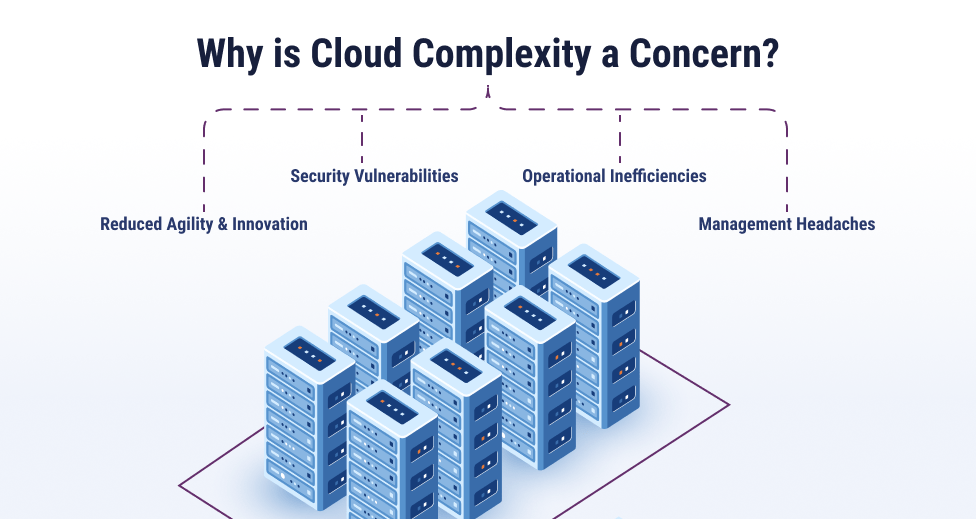
What Growing Cloud Complexity Means for Enterprise Cloud Security Solutions
Cloud adoption has transformed how organizations design, deploy, and scale technology solutions. Workloads can be moved from the public to private clouds, users can connect to the system from various locations, and developers can deploy changes to systems at a faster pace than ever before.
Such dynamism delivers business benefits but creates new opportunities for misconfiguration, permissions management, exposure of workloads, vulnerabilities, and lack of consistency in policy enforcement in an ever-changing environment. Cloud security is moving away from being a boundary issue and toward managing relationships between identities, applications, data, workloads, and infrastructures.
It is this change in focus that underlies the current enterprise cloud security solution review.
Why Cloud Complexity Keeps Growing
Cloud environments do not stand still. Companies create new accounts, services, containers, databases, APIs, development pipelines, and integrations. Moreover, there may be differences in the approach to service configuration among different teams who use the same services.
Hybrid and multi-clouds complicate the situation even more. Different cloud environments will have different controls, logs, permissions, and requirements for operation. Security professionals should correlate data from many sources in order to understand if the alert is a localized incident or the tip of the iceberg.
It is possible to develop infrastructure with code, update applications, and change permissions according to changes in teams and projects. The security audit which was relevant one month ago does not necessarily reflect the current state.
This means that there should be continuous visibility.
Visibility Becomes a Security Priority
In the complex cloud ecosystem, one of the key issues is being aware of what is really there. The security teams require visibility on assets, workloads, identities, applications, data stores, connectivity, and configuration.
The lack of context makes the alerts confusing. A security vulnerability in a workload exposed to the internet with sensitive data should be addressed promptly, whereas the same vulnerability in a sandboxed development environment can be less critical.
A mature approach will assist in answering the following questions:
- What assets are vulnerable to the Internet?
- Which identities have excessive privileges?
- Which workloads have critical vulnerabilities?
- Where does the configuration change create risks?
- Which results need remediation now?
This will reduce time spent on correlating information in various systems.
Identity and Access Become More Difficult to Manage
Cloud computing changes the definition of access controls. Instead of just focusing on typical users, businesses may have to take care of managing employees, contractors, service accounts, workloads, APIs, and even automation processes.
Every identity becomes a way to gain access to sensitive information. Too many permissions could elevate the threat of stolen credentials, and even unused identities may get ignored.
Thus, businesses will have to include identity in the cloud attack surface. Implementing least privilege access, using strong authentication, identity lifecycle management, and monitoring can minimize the unnecessary exposure.
It might be difficult for manual verification to stay updated.
Security Must Move Closer to Development
Cloud complexity also becomes different once security decisions are made. In cases where the misconfigurations of security are identified after the application is deployed, it can be costly to resolve the problem.
There are ways to secure your cloud environment by checking for configurations, dependencies, permission levels, and other components of the application prior to its deployment. It doesn’t mean that you do not need any other form of protection during runtime.
However, it helps to avoid unnecessary problems during deployment while allowing your security team to prioritize risks.
| Traditional approach | Cloud-focused approach |
| Protect a defined network perimeter | Protect identities, workloads, applications, and data |
| Review configurations periodically | Monitor configuration changes continuously |
| Investigate alerts individually | Correlate findings with risk context |
| Secure production environments | Address risk across development and runtime |
| Manage tools by security function | Connect visibility across security domains |
| Rely heavily on manual remediation | Automate repeatable tasks |
It creates a more consistent security lifecycle across teams.
Automation Helps Security Teams Scale
As cloud environments grow, the manual approach becomes increasingly difficult. People can waste quite some time gathering logs, verifying results, checking configurations, preparing evidence, and escalating problems.
Automation may be helpful for repetitive work. Automation can detect policy violations, report configuration drifts, correlate findings, and automate remediation workflows.
But human involvement is needed for complicated cases. It is better to automate routine work and provide context to the analysts.
Risk-Based Prioritization Matters
Increased visibility may lead to increased alerts. When all vulnerabilities, misconfigurations, and oddities receive equal consideration, the security staff may become swamped by their numbers.
The risk-oriented approach allows organizations to consider those elements that determine the significance of a threat, including exposure, exploitability, criticality of assets, privileges, sensitivity of data, and possible paths of attack.
The focus is shifted from the number of problems to their business risks. This becomes important when not all low-priority issues can be fixed immediately.
Governance Must Keep Pace With Technology
Technical controls are not sufficient to address cloud security issues; there is a need for well-defined ownership, policies, processes, and risk management.
A good governance framework needs to provide clarity on asset ownership, authorization process, handling of exceptions, measurement of security requirements, and escalation of any incidents. The Cybersecurity Framework 2.0 guidance offers a flexible structure to categorize cybersecurity outcomes based on risk management.
Governance needs to be dynamic since evolving services and architectures may generate risks that were not known before.
What Organizations Should Look For
While choosing the best enterprise cloud security solution, the company must prioritize the suitability of the technology to its infrastructure instead of concentrating on its feature-set.
Key factors to consider are:
- Visibility throughout cloud accounts, workloads, applications, identities, and data.
- Consistent policy enforcement in various environments.
- Risk prioritization with rich context, rather than isolated alerts.
- Development-time and runtime security support.
- Integrating into current workflows and processes.
- Automation to minimize tedious analysis and mitigation.
- Reports that facilitate security operations, governance, and compliance.
The aim is to facilitate operation of security systems with the increase in the cloud infrastructure.
Security information must be efficiently exchanged between teams. The developers require actionable results, the analysts require contextual information, the operations teams require remediation actions, while the leaders require an overview of risks.
Preparing for the Next Stage of Cloud Growth
There is no way out for cloud complexity. Companies will keep on adding more services, growing their distributed application environments, automating their infrastructures, and dealing with dynamic workforce.
As a result, adaptability is an integral part of security. Companies should have control mechanisms that are capable of following workloads, identities, and applications. The processes should be scalable without becoming manual at any point.
Cloud security guidance from the NCSC emphasizes the need to configure cloud services securely and continually review and manage security risks as cloud environments evolve.
Ultimately, effective cloud security is about maintaining visibility, reducing unnecessary exposure, controlling access, identifying meaningful risk, and responding quickly when conditions change.
Conclusion
Cloud complexity does not automatically create unacceptable risk. The bigger problem appears when security practices fail to evolve with the technology.
Organizations can address that gap by connecting visibility, identity, configuration management, development security, runtime protection, automation, and governance. The right enterprise cloud security solutions should support that model without adding unnecessary operational friction.
Security teams that prioritize context and adaptability can focus resources on the risks most likely to affect the business instead of reacting to isolated alerts.
Frequently Asked Questions:
1. Why is cloud complexity a security concern?
The complexity associated with cloud results in many assets, identities, applications, configurations, and connections that must be monitored by companies. The frequency of changes in these components makes this task challenging to maintain.
2. What role does identity play in cloud security?
Identity management controls ensure which person or thing gains access to cloud computing services. Careful handling of permissions ensures that compromised or unnecessary credentials do not lead to any form of access to the systems or information.
3. Why should security start during development?
Security problems should be tackled before deployment to keep repair costs low and avoid avoidable vulnerabilities getting into the production environment. Security checks during development are an addition to run-time security checks, not a replacement.
4. How can organizations reduce cloud security alert fatigue?
The correlation of data, context of both a business and technical nature, impact-based risk assessment, and automation of repetitive tasks are ways in which organizations may alleviate alert fatigue.