What Are the Top Trends for Home Rugs in 2026
The rug market in 2026 is telling a clear story: homeowners want spaces that feel genuinely lived-in, layered with personality, and grounded in comfort. After years of minimalist interiors that prioritized clean lines and neutral palettes almost to the point of sterility, the pendulum has swung decisively toward warmth, texture, and expressive design. Whether you’re refreshing a living room, anchoring a dining space, or adding softness to a bedroom, understanding where the rug market is heading will help you make a choice that feels current today and holds its relevance for years to come.
Expressive Color Is Back — and It’s Here to Stay
Perhaps the most defining characteristic of 2026’s rug trends is the confident return of color. Not the cautious, muted color of recent seasons, but genuinely joyful, saturated palettes that make a room feel alive. Deep terracottas, dusty blues, sage greens, and warm ochres are appearing across both luxury and accessible price points. The key difference from color trends of previous decades is the sophistication of the combinations — rather than clashing brights, today’s most compelling rugs use color with intentionality, creating palettes that feel harmonious even when bold.
The Loloi Optimism Rug is a strong example of this direction done exceptionally well. As the name suggests, it leans into a design philosophy that treats the floor as an opportunity to inject positivity and warmth into a space rather than simply filling it. Its palette and construction reflect the broader industry shift toward rugs that function as artwork — pieces that anchor a room emotionally as much as physically.
Natural Materials and Handcrafted Texture
Synthetic rugs have their place, but 2026 is firmly the year of natural fibers and handcrafted character. Wool, jute, sisal, and hand-knotted constructions are dominating the premium segment of the market as buyers increasingly prioritize longevity and tactile richness over disposable convenience. For Australian homeowners drawn to this direction, browsing a dedicated collection of jute rugs is a practical starting point — jute’s natural texture, neutral warmth, and biodegradability make it one of the most versatile and on-trend natural fiber options available right now. There’s a growing understanding among homeowners that a well-made natural fiber rug, properly maintained, will outlast multiple generations of synthetic alternatives while improving in character with age.
Handwoven and hand-tufted constructions are particularly sought after because of the slight irregularities they carry — variations in pile height, subtle inconsistencies in pattern repeats — that give each piece an authenticity that machine-made rugs simply cannot reproduce. These imperfections are increasingly celebrated rather than treated as quality concerns.
Organic Shapes and Non-Rectangular Formats
The tyranny of the rectangle is ending. Round rugs, oval formats, abstract organic shapes, and irregular edges are appearing with increasing frequency in design-forward homes. This trend reflects a broader movement in interior design toward spaces that feel curated and personal rather than showroom-perfect. A round rug under a dining table, for example, creates a softness and sense of gathering that a rectangular rug in the same position cannot replicate in quite the same way.
The Dynamic Rugs Rori collection speaks directly to this appetite for less conventional formats and more expressive design sensibilities. Collections that embrace pattern, movement, and design risk are finding a ready audience in 2026 among homeowners who want their interiors to reflect genuine personality rather than catalog conventionality.
Pattern With Purpose
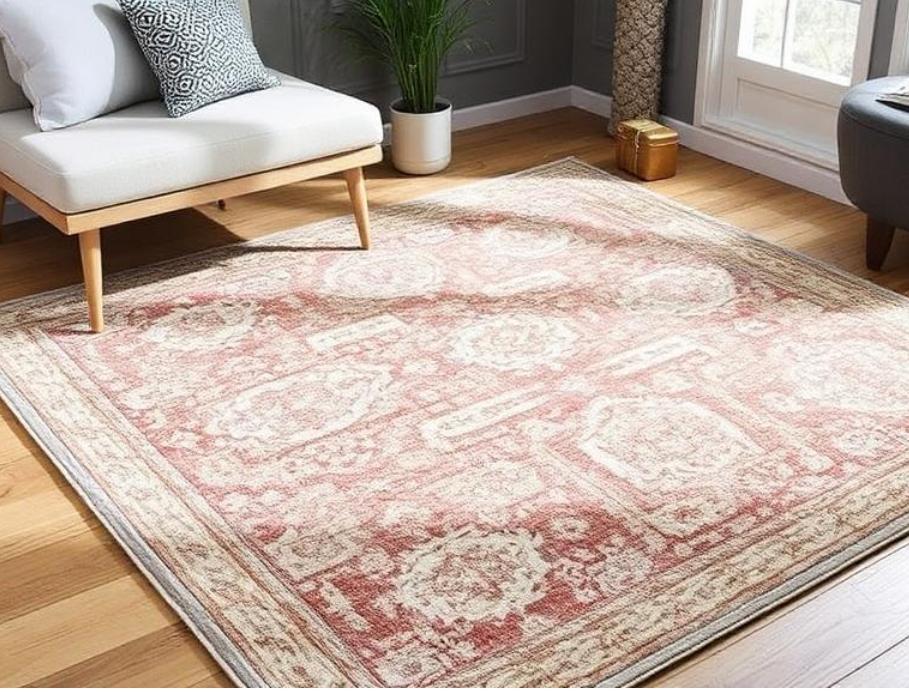
Geometric patterns, abstract expressionism, and globally inspired motifs are all having significant moments in 2026. What unites them is a sense of design intentionality — these aren’t patterns applied arbitrarily to fill a surface, but considered visual statements that reference craft traditions, artistic movements, or specific cultural aesthetics. Moroccan-inspired lattice patterns, distressed Persian-style medallions updated in contemporary colorways, and Scandinavian geometric simplicity are all performing strongly across different price categories.
Layering as a Design Strategy
One of the most influential styling shifts of recent years is the practice of layering rugs — placing a smaller, patterned rug over a larger, neutral base rug to create depth, define zones within open-plan spaces, and add visual complexity. This approach is particularly effective in living rooms and bedroom settings and gives homeowners the flexibility to refresh a look seasonally without replacing the foundational piece.
Choosing the Right Rug for Your Space
Ultimately, the best rug for any space in 2026 is the one that balances the practical demands of the room — foot traffic, maintenance requirements, furniture scale — with a design sensibility that feels genuinely authentic to how you live. The trends above provide direction, but the most enduring interiors are always built around personal conviction rather than trend compliance alone.