What are The Differences Between Concrete, Fiberglass, and Vinyl Pools?
There are three main kinds of swimming pool materials that are used in in-ground swimming pools. They are concrete, fiberglass, and vinyl. You need to know the pros and cons of each of these options so that you can make a wise and informed choice about which one is a good fit for your pool building plans.
An experienced in-ground pool builder will be able to advise you about your options when it comes to all of these different materials. Some environments and parts of the country are better suited to one type versus another and your ability to do maintenance and upkeep on the pool will also impact your choice of materials. Let’s talk more about the differences between these different pool construction materials so that you can feel confident in the choice that you make for your own swimming pool.
What Are the Differences Between Concrete, Fiberglass, and Vinyl for Swimming Pools?
Each of the three materials that are preferred for in-ground swimming pools offers benefits and detractions that pool owners need to be aware of. There are reasons that you might choose any of these three options. Be sure that you are working with a pool builder with experience in the materials that you have selected. It’s easy to assume that all pool builders use all kinds of materials when they are creating pools, but that is not always the case.
Additionally, in some areas of the country, it can be impossible to source some materials. Don’t create your entire pool build project’s plans around a product or pool style that you cannot access in your region of the world. Ultimately, the more you know about your options, the easier it will be to create a smart and well-budgeted plan for your new swimming pool. This guide will help you understand the pros and cons of each of the materials that are the most common in pool construction.
1. Concrete
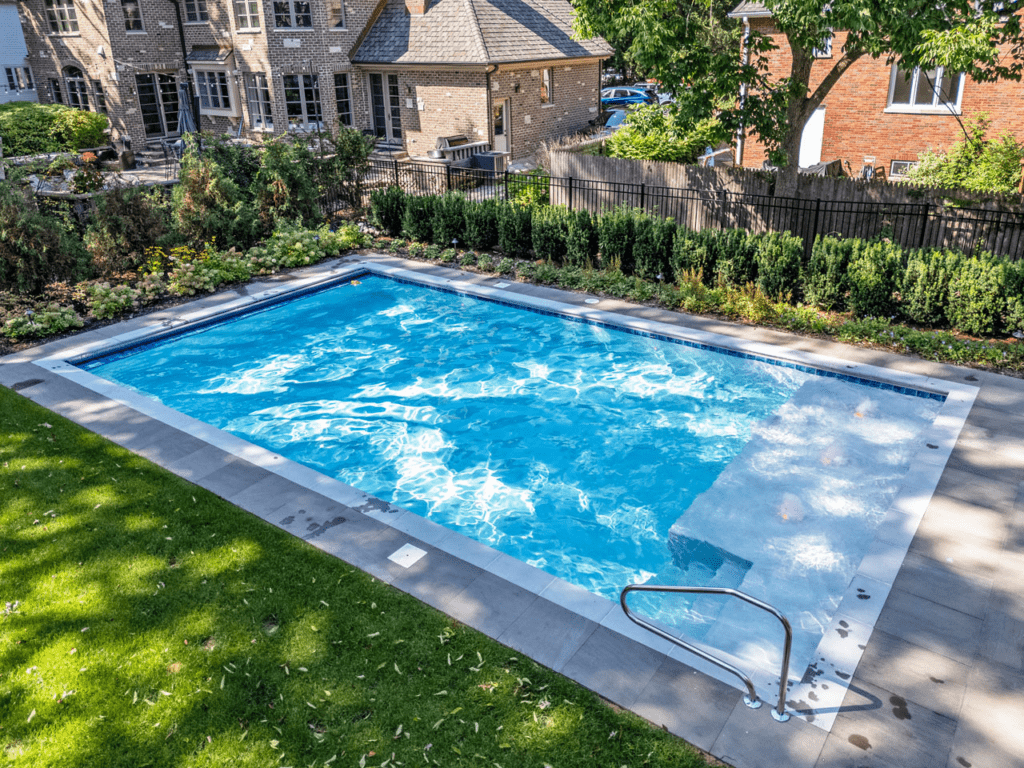
This is the most common choice for an in-ground pool for a bunch of good reasons. Concrete can be poured into nearly any shape or design, which makes it ideal for complex or customized swimming pools. It cures relatively quickly, and it doesn’t need a lot of upkeep. If you take care of your concrete swimming pool, you will have no trouble enjoying an easy 15 to 20 years of use without needing to do any significant upkeep.
The biggest downside of concrete is that it is expensive upfront. Your initial cost for your pool will be higher if you choose concrete, but you will benefit later from how durable and low-maintenance it is. One of the other downsides to concrete swimming pools is that you need to budget to have the surface acid washed from time to time, particularly if your pool gets a lot of shade and algae growth is a factor.
2. Fiberglass
This is another common option. For this kind of swimming pool, you will pick out a pre-formed shell that arrives from the factory pre-made. This will be installed in the excavated space in your yard, and then the rest of the pool build will progress from there. Fiberglass is very fast to install, which can be really ideal in some cases. It is also a low-maintenance product, which means that you won’t need to do a ton of upkeep on this kind of pool.
The design limits of this kind of pool are a big factor for many people. You can only select from specific shapes and sizes for your swimming pool, which makes it hard to have that fully customized swimming pool you have always wanted. Sometimes it’s not possible to opt for a fiberglass pool because there is not enough room to maneuver the shell into your yard to install it. Lastly, if there is an issue that leads to your swimming pool being damaged, repairs for fiberglass can be complex and costly.
3. Vinyl
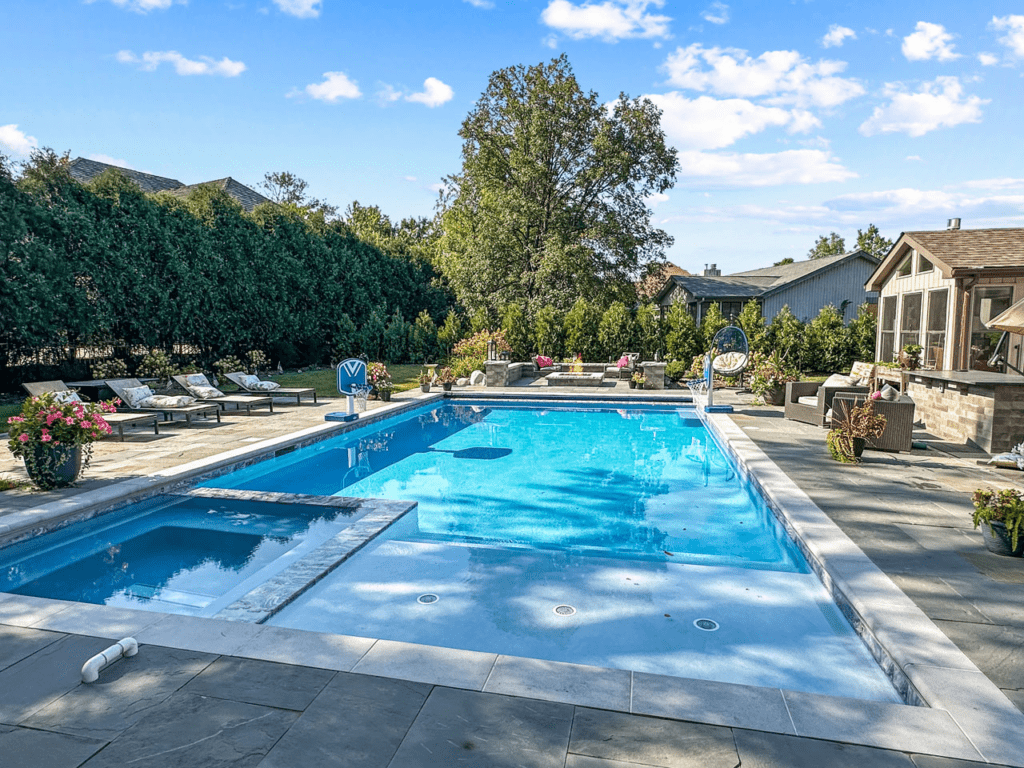
This is a customizable pool material that is installed with a custom frame and then lined with a plastic liner. This kind of pool has a lower upfront cost than some other options and it can offer a lot of design flexibility as well. Since the vinyl is so smooth, it can make the pool have a nice, soft surface, and you can pick from a variety of different colored liners to customize the way your swimming pool looks.
The downsides of vinyl have a lot to do with the liner itself. Liners wear out and need to be replaced every 7 to 10 years. They can also puncture, which can lead to major repairs for your swimming pool. This kind of pool can sometimes have a lower resale value than the other two kinds of pools in this guide because of the upkeep that is needed for vinyl swimming pools. In some ways, this kind of pool is often thought of as just a step up from an above-ground pool. The vinyl liners that are used in both designs can lead people to steer away from this kind of swimming pool design.
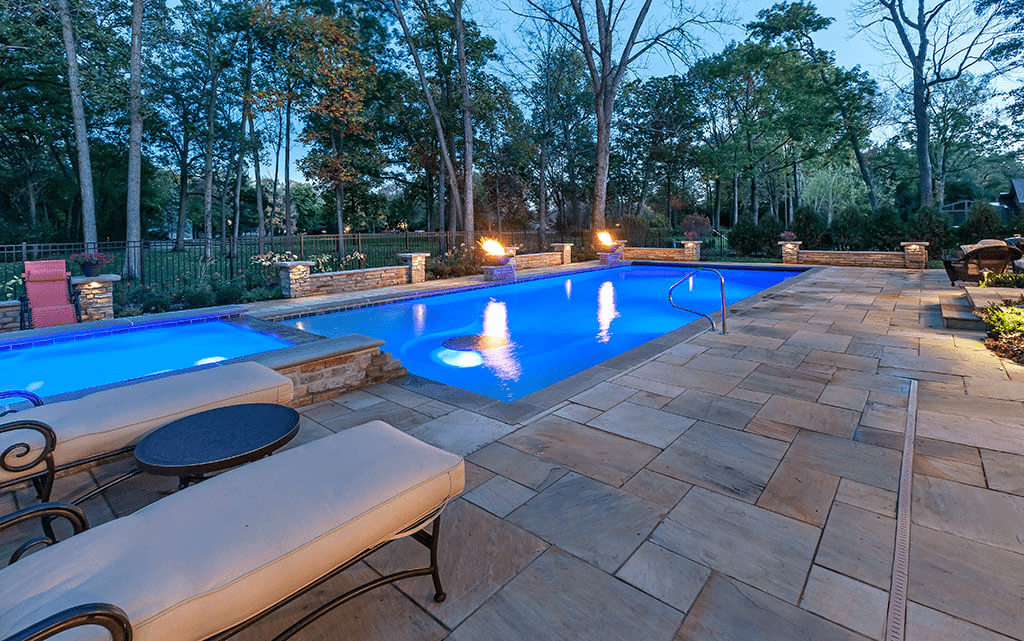
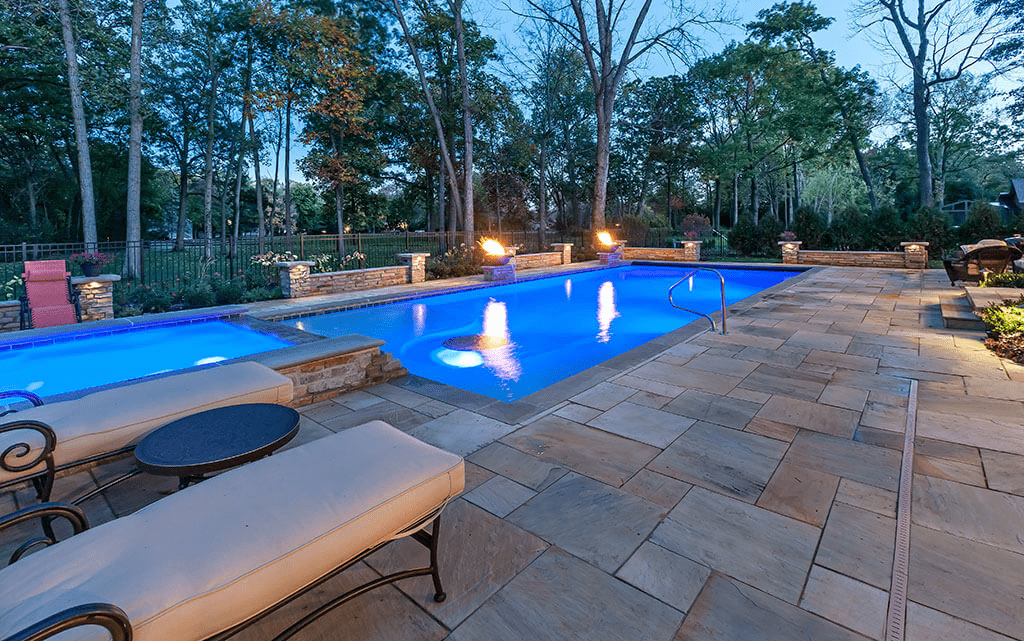
Selecting the Right Pool Materials is Key For the Longevity of Your Pool
There are lots of ways to build a swimming pool. The more you know about the options that are open to you, the easier it will be to create a swimming pool that you will enjoy and which will hold up to years of use. Make sure that you understand the realities of sourcing materials and products in your area before you ever start budgeting for your specific pool construction needs.
An experienced pool builder can help you to determine which of these kinds of swimming pools is going to be right for your needs. You might be able to look at using each of these different materials, but at the end of the day, there will be perks specific to each one that will help you make a wise choice that suits your budget.