What “4-Way Stretch” Actually Means for Swim Shorts and Why It Matters
- “4-way stretch” shows up on more swimwear tags than almost any other spec, and most of the time it’s treated as a nice-to-have buzzword rather than something worth actually understanding. For anyone stocking or reselling 4 way stretch swim shorts, that’s a mistake , the term describes a real, specific fabric property that has a direct effect on fit, comfort, and how well a short holds up over a season of actual wear.
4-Way Stretch vs. 2-Way Stretch vs. No Stretch
It helps to start with what the alternatives actually are. A non-stretch woven fabric doesn’t give at all , it’s durable, but it doesn’t move with the body, which is part of why traditional boardshorts could feel stiff and restrictive. A 2-way stretch fabric gives in one direction, usually widthwise (crosswise), and mostly recovers its shape afterward , better than nothing, but still limited when a body is moving through a full range of motion.
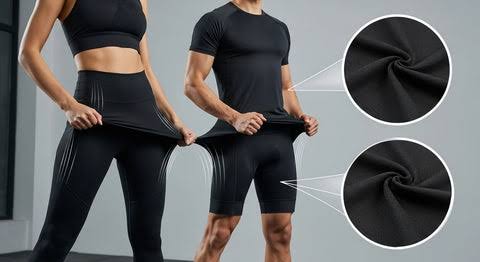
A genuine 4-way stretch fabric stretches and recovers in both directions , lengthwise and widthwise , which means it moves with the body regardless of which way that motion happens. For a swim short specifically, that’s the difference between fabric that resists a diving motion or a hard kick and fabric that simply moves with it and returns to shape afterward.
What’s Actually in the Fabric
The property itself comes from fiber composition, not just weave or knit structure. Most genuine 4-way stretch swimwear fabric is a nylon-spandex or polyester-spandex blend, with spandex (also known by the brand name Lycra or generically as elastane) doing the actual stretching and recovering. A common composition for swim fabric runs around 80% nylon to 20% spandex, though ratios vary by manufacturer and intended performance level.
The elastane percentage matters more than people expect. Lower percentages, in the 2–5% range, give a light stretch mostly for comfort and subtle shaping. The 5–10% range delivers the moderate-to-high stretch typical of most performance and swim applications. Above 10% elastane, you’re into genuinely high-stretch, high-compression territory more common in competitive swimwear than casual swim shorts. None of these ranges is inherently “better” in isolation , the right one depends on what the garment actually needs to do.
Why This Matters Specifically for Swim Shorts
This isn’t just a comfort spec , it directly affects how a swim short performs and how long it looks good. Genuine 4-way stretch gives real freedom of movement for swimming, diving, and hard kicking, without the fabric resisting or bunching at the seams the way a non-stretch woven can. Recovery matters just as much as the initial stretch: a fabric that stretches but doesn’t fully bounce back will gradually bag out at the waist and thighs after repeated wear, which is exactly the sagging, tired-looking fit that makes an older pair of swim shorts look worn out even when the fabric itself hasn’t torn.
Repeated exposure to chlorine and saltwater adds another layer of stress that non-stretch or poorly-blended fabrics handle worse over time , a well-constructed 4-way stretch blend is built to hold its recovery through that kind of repeated wear-and-rinse cycle far better than a rigid woven ever will.
How to Verify the Claim Before You Stock It
Because “4-way stretch” gets used loosely in marketing copy, it’s worth asking for specifics rather than taking the label at face value. Ask for the actual fiber content and blend ratio, not just the marketing phrase , a genuine performance blend should have a stated nylon/spandex or polyester/spandex percentage, not just a claim with no composition behind it. If possible, test the fabric by hand: pull it in both directions and check that it actually recovers to its original shape rather than staying stretched out, since initial give without real recovery is the most common way a lower-quality fabric gets marketed as “stretch” without actually delivering the performance the term implies.
If you’re building out a swim or resort line, it’s worth comparing options side by side rather than assuming every “stretch” label means the same fabric , something like a mid-weight woven with light stretch reads very differently on the rack (and on a customer) than a true 4-way nylon-spandex blend, even though both might use similar marketing language. It’s the same reasoning that applies to any performance claim on a garment tag , a pair of tailored American Apparel houndstooth shorts might use a completely different fabric construction suited to a totally different use case, so matching the fabric to the actual product category matters as much as the stretch spec itself. Our swim and resort styles and current catalog break down construction details by style if you’re comparing options for your next order.
FAQ
Is 4-way stretch always better than 2-way stretch for swim shorts? Not automatically , it depends on the intended use. For active swimming, diving, or watersports, 4-way stretch generally performs better because it moves with the body in every direction. For more casual, low-movement resort wear, a 2-way stretch or even a lightly stretch-enhanced woven can be perfectly appropriate and often costs less, so it’s worth matching the fabric to how the garment will actually be worn rather than defaulting to the highest-stretch option automatically.
Does 4-way stretch fabric hold up to chlorine and saltwater? A well-constructed nylon-spandex or polyester-spandex blend generally holds up well to repeated chlorine and saltwater exposure, though quality varies by manufacturer and finish. Cheaper or poorly-blended stretch fabrics can lose recovery faster under repeated exposure, which is part of why verifying the actual composition matters more than trusting the stretch claim alone.
Final Thought
“4-way stretch” is a real, meaningful fabric property, not just marketing language , but only when it’s backed by an actual nylon or polyester-spandex blend built for genuine recovery, not just initial give. For anyone sourcing swim shorts to resell, asking for the fiber composition behind the label is a small step that makes a real difference in how the product performs and how long it looks good on the rack and on a customer.