Microneedling for Acne Scars: How the Treatment Works and What Results to Expect
Acne scars are structural changes in the skin, not simply the red or dark marks that can remain after breakouts. They may appear as depressions, uneven texture, or raised areas depending on how the skin healed.
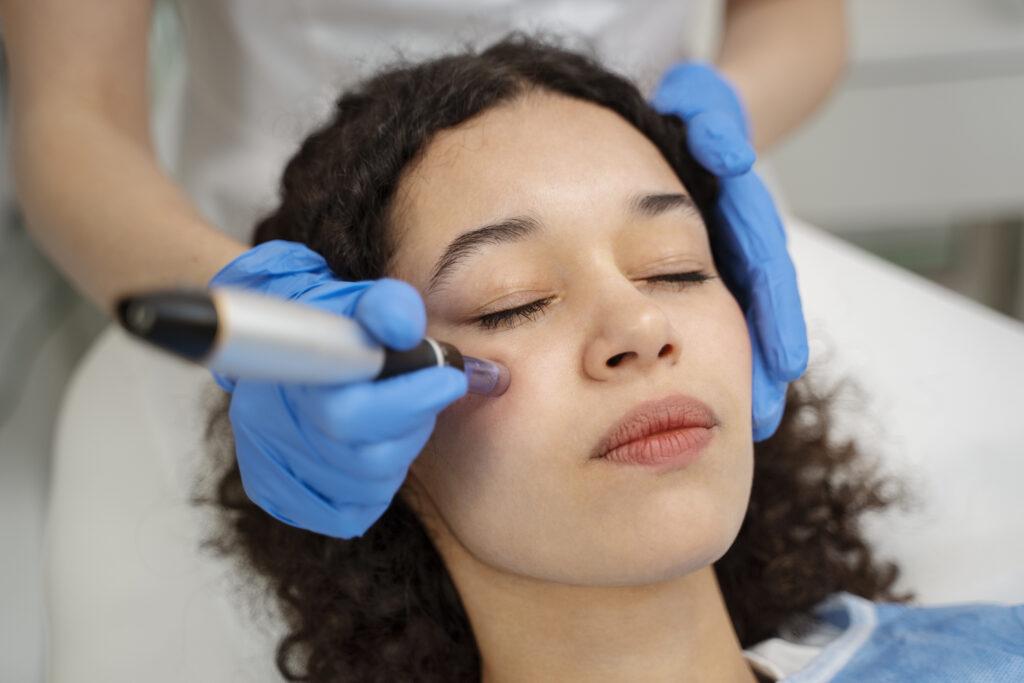
Microneedling is a professional acne scar treatment that creates controlled micro-injuries in the skin. This stimulates the body’s healing response and encourages collagen remodeling, which can gradually improve the appearance of certain depressed scars.
However, microneedling does not erase every acne scar. Results depend on scar type, depth, skin characteristics, treatment settings, number of sessions, and individual healing response.
How Does Microneedling Work on Acne Scars?
A microneedling device uses fine needles to create microscopic channels in the skin. These controlled injuries trigger a wound-healing response that involves collagen production and tissue remodeling.
Because many atrophic acne scars form where supporting tissue has been lost or damaged, collagen remodeling can help soften uneven texture and make some scars appear less noticeable.
The improvement happens gradually. Redness immediately after treatment is part of the healing response, while changes in scar texture may develop over the following weeks and months.
Which Types of Acne Scars Respond Best to Microneedling?
Not all acne scars have the same structure, so they do not respond equally to treatment.
Rolling Scars
Rolling acne scars are broad, shallow depressions with sloping edges that can give the skin a wavy appearance. Collagen remodeling may help soften their texture.
However, deeper rolling scars can sometimes be tethered to tissue underneath the skin and may require an additional treatment approach.
Boxcar Scars
Boxcar scars have more defined edges and can range from shallow to deep.
Shallower boxcar scars may respond differently from deep scars, so results can vary significantly depending on their depth and structure.
Ice-Pick Scars
Ice-pick scars are narrow and extend more deeply into the skin.
Because of their depth, microneedling alone may not provide enough improvement in some cases. Dermatologists may recommend a more targeted procedure or combination treatment.
Raised Scars
Raised or hypertrophic scars behave differently from depressed acne scars. Microneedling is not automatically appropriate for these scars, particularly for people with a history of abnormal scar formation.
Acne Scars vs. Acne Marks
Flat red, purple, or dark spots left after acne are not always true scars. These marks involve discoloration rather than structural indentations or raised tissue.
Knowing the difference matters because treatment recommendations can be very different.
What Happens During Professional Microneedling for Acne Scars?
Treatment normally begins with an assessment of the scars, skin condition, medical history, and suitability for microneedling.
The skin is cleansed and prepared, and topical numbing may be used when appropriate. The provider then treats targeted areas using a microneedling device with settings selected according to the treatment plan.
Temporary redness, sensitivity, or mild swelling may appear immediately afterward.
Why Treatment Settings and Device Control Matter
Acne scars can vary considerably in depth and structure, so treatment settings may need to be adjusted according to the scar characteristics, treatment area, device, and individual treatment plan.
In professional settings, providers may use professional microneedling machines that allow controlled treatment parameters, while some systems also deliver radiofrequency energy. The device is only one part of treatment; provider training, patient selection, sterile technique, suitable settings, and an appropriate treatment plan remain equally important.
Where RF Microneedling Fits
Standard microneedling creates mechanical micro-injuries using needles.
RF microneedling also delivers radiofrequency energy into the tissue through the treatment system. This may be considered for some acne-scar patients, but it should not automatically be described as better than standard microneedling for everyone.
Treatment suitability depends on the patient, scar pattern, device, and provider assessment. RF microneedling is a medical procedure, so appropriate provider training, patient selection, treatment settings, and risk assessment are important. The FDA has also reported serious complications with certain uses of RF microneedling, including burns, scarring, fat loss, and nerve damage, reinforcing the importance of treatment by an appropriately trained, licensed healthcare provider.
What Results Can You Realistically Expect?
Microneedling generally aims to improve acne scars rather than completely remove them.
Possible changes include smoother-looking texture, softer edges around some depressed scars, and reduced visual prominence of certain scars.
Microneedling before-and-after acne scar photographs can be helpful, but they should not be treated as a guarantee. Lighting, camera angle, treatment type, number of sessions, scar severity, and healing response can all affect the appearance of results.
Outcomes can vary based on:
- Scar type and depth
- Skin characteristics
- Treatment settings
- Number of sessions
- Healing response
- Whether combination treatments are used
How Many Microneedling Sessions Do Acne Scars Usually Need?
Acne scar microneedling often requires multiple sessions rather than one treatment.
There is no universal number that applies to everyone. A person with shallow scars may need a different plan from someone with deeper or mixed rolling, boxcar, and ice-pick scars.
Sessions are usually spaced apart to allow the skin to heal and remodel between treatments. Deeper or more complex scars may require a longer treatment plan or additional procedures.
Patients should be cautious about clinics promising the same number of sessions for everyone before assessing the skin.
How Long Does It Take to See Microneedling Results?
Recovery and collagen remodeling happen on different timelines.
First Few Days
Redness, sensitivity, mild swelling, dryness, or temporary roughness may occur. The skin can briefly look more irritated before improvement becomes noticeable.
Following Weeks
Once the immediate reaction settles, subtle changes in texture may begin to appear.
Following Months
Collagen remodeling can continue after the surface looks healed. This is why judging acne scar microneedling immediately after a session does not show the final result.
What Does Microneedling Recovery Look Like?
Microneedling recovery varies according to treatment intensity and individual skin response.
Common temporary effects include redness, sensitivity, mild swelling, dryness, or flaking.
Patients should follow their provider’s aftercare instructions carefully. Gentle skincare, sun protection, and avoiding unnecessary irritation are especially important while the skin recovers.
Picking, scratching, or aggressively exfoliating recently treated skin should also be avoided.
Risks, Side Effects, and When Microneedling May Not Be Appropriate
Although microneedling is minimally invasive, it still disrupts the skin barrier.
Potential side effects can include temporary redness, swelling, irritation, pigmentation changes, infection, or prolonged sensitivity.
Treatment may need to be delayed or reconsidered for people with active inflammatory acne, skin infections, certain inflammatory skin conditions, or a history of abnormal scarring.
Anyone considering RF microneedling should also discuss its specific risks and benefits with an appropriately trained provider.
When Acne Scars May Need More Than Microneedling
Many people have several acne scar types at the same time, which means one procedure may not treat every scar equally well.
Depending on the scar structure, a dermatologist or qualified provider may consider treatments such as:
- Subcision
- TCA CROSS
- Laser procedures
- RF microneedling
- PRP alongside selected treatments
- Other combination approaches
The goal is to match the treatment to the scar rather than assuming microneedling is appropriate for every case.
What to Ask Before Booking Microneedling for Acne Scars
Before treatment, consider asking:
- What type of acne scars do I have?
- Is microneedling suitable for my scar pattern?
- What type of microneedling will you use?
- Why is that treatment appropriate for me?
- What results are realistic?
- Approximately how many sessions might I need?
- How will treatment settings be selected?
- What downtime should I expect?
- What risks apply to my skin?
- Would another or combination treatment be more appropriate?
The most useful acne scar treatment plan begins with correctly identifying the scar type and setting realistic expectations. Choosing a procedure based only on dramatic before-and-after photos or marketing claims is rarely enough.