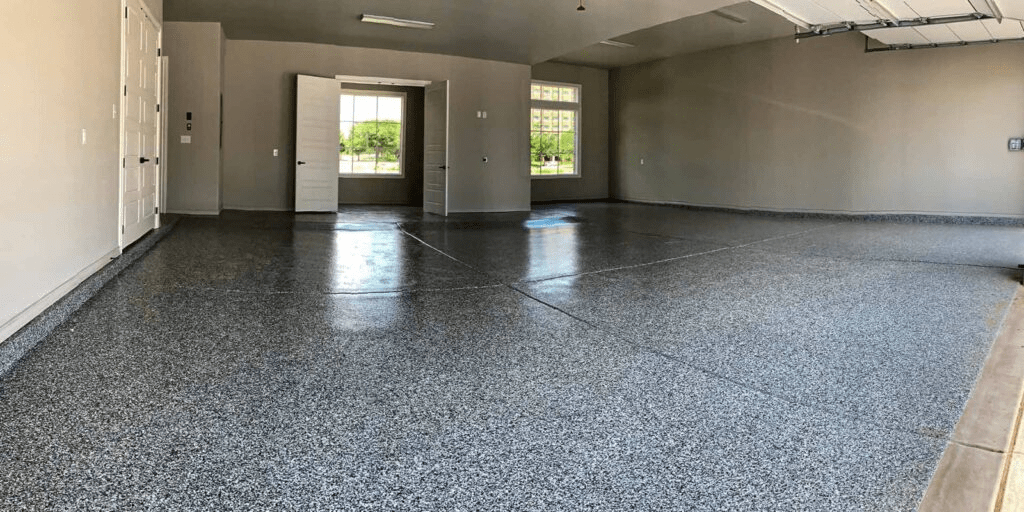
Transform Your Garage With a Durable and Stylish Flooring Solution
A garage is no longer simply a place to park vehicles or store tools, boxes, and household equipment. For many homeowners, it has become an extension of the living space, a workshop, a home gym, a hobby area, or a carefully organized storage zone. Because garages often experience heavy traffic, vehicle movement, oil spills, moisture, dirt, and accidental impacts, the condition of the floor can have a significant effect on both the appearance and functionality of the entire space. One of the most effective ways to improve this area is by installing an epoxy garage floor coating that creates a durable, attractive, and easier-to-maintain surface.
Concrete floors are commonly used in garages because they are strong and relatively inexpensive. However, bare concrete has several weaknesses. Over time, it can develop cracks, stains, surface dust, and discoloration. Automotive fluids can penetrate the porous material, while moisture and repeated temperature changes may contribute to deterioration. Even when the concrete remains structurally sound, its unfinished appearance can make the garage look neglected. A professionally installed epoxy surface can address many of these concerns while giving the garage a cleaner and more finished appearance.
What Makes Epoxy Flooring Different
Epoxy flooring is created by combining resin with a hardening agent to form a strong chemical bond. When properly mixed and applied to a prepared concrete surface, the material cures into a hard, seamless layer that is designed to withstand demanding conditions. Unlike ordinary floor paint, epoxy is formulated to provide greater resistance to abrasion, chemicals, impact, and everyday wear.
The seamless nature of an epoxy surface is another important advantage. Traditional flooring materials may have joints, seams, or gaps where dirt and moisture can accumulate. A properly installed epoxy floor creates a continuous surface that is much easier to clean. This can be especially useful in garages where dust, tire residue, mud, and automotive fluids are common.
The finished appearance can also be customized. Depending on the product and installation method, homeowners may choose different colors, decorative flakes, gloss levels, and textures. This makes epoxy flooring practical while also allowing the garage to have a more polished and intentional design.
Why Garage Floors Need Extra Protection
Garage floors are subjected to conditions that many interior floors never experience. Vehicles can bring in water, mud, road salt, sand, and other debris. Heavy equipment can be dropped, tires can leave marks, and automotive fluids can accidentally spill onto the surface. Even regular parking can expose concrete to repeated loads and friction.
Bare concrete can absorb liquids because it is naturally porous. Once oil or another chemical enters the surface, removing the stain may become difficult. Repeated exposure can also affect the appearance and condition of the concrete. Although concrete is strong, it is not completely immune to surface damage.
A protective coating provides an additional barrier between the concrete and these everyday challenges. With proper preparation and application, the coating can help reduce staining, simplify cleaning, and improve the overall durability of the floor. This protective function is one of the main reasons epoxy has become such a popular choice for garage renovation projects.
Major Benefits of Epoxy Garage Flooring
One of the biggest advantages of an epoxy garage floor coating is its durability. A properly installed system can withstand considerable daily use, including vehicle traffic, foot traffic, equipment movement, and routine impacts. The hardened surface is designed to resist wear better than many basic floor paints, making it suitable for spaces that receive frequent use.
Chemical resistance is another important benefit. Garages are often exposed to motor oil, gasoline, cleaning products, grease, and other substances. While no flooring system should be treated as completely impervious to every chemical, epoxy generally offers substantially better resistance than untreated concrete. Spills can usually be cleaned more easily when they remain on the surface instead of soaking into porous concrete.
Maintenance is also relatively straightforward. Once the coating has cured properly, routine cleaning generally involves sweeping, dusting, or mopping with an appropriate cleaner. Because the surface is smooth and seamless, dirt has fewer places to become trapped. This can make regular garage maintenance considerably less time-consuming.
Another advantage is improved visual appeal. A plain concrete floor can make an otherwise organized garage look unfinished. Epoxy can provide a uniform, glossy, or textured appearance that immediately makes the space feel cleaner and more refined. Decorative flakes can also add visual depth while helping disguise minor dirt between cleanings.
Choosing the Right Finish and Appearance
The design possibilities of epoxy flooring allow homeowners to create a garage that reflects their personal preferences. Neutral shades such as gray, beige, and white can provide a clean and professional appearance, while darker colors can create a more dramatic look. Decorative color flakes are frequently used to add contrast and texture to the floor.
The level of gloss can also influence the overall appearance. A high-gloss finish can reflect light and make the garage feel brighter, while a more subdued finish may provide a softer appearance. Textured additives can be incorporated when additional slip resistance is desired.
However, appearance should not be the only consideration. The selected system should also be appropriate for the expected traffic, environmental conditions, and intended use of the garage. A flooring professional can help determine which combination of resin, additives, color, and protective topcoat is most appropriate for the project.
The Importance of Concrete Preparation
Even the highest-quality epoxy product can fail when it is applied to poorly prepared concrete. Surface preparation is one of the most important stages of the installation process because the coating needs a clean and properly profiled surface to achieve strong adhesion.
Before application, the concrete should generally be inspected for cracks, moisture concerns, contamination, weak areas, and previous coatings. Oil, grease, dirt, dust, and other contaminants must be removed. Depending on the condition of the concrete and the coating system being used, mechanical grinding or another preparation method may be necessary to create the appropriate surface profile.
Cracks and damaged areas may also require repair before coating. Simply covering significant defects with epoxy does not necessarily solve the underlying problem. If the concrete continues to move or deteriorate, the coating above it may eventually show signs of stress.
Moisture testing can be particularly important. Excessive moisture coming through the concrete can interfere with adhesion and may contribute to bubbling, peeling, or other coating problems. Proper preparation therefore plays a major role in determining how long the finished floor will perform successfully.
Professional Installation Versus DIY Application
Some homeowners consider installing an epoxy floor themselves because do-it-yourself kits are widely available. While a DIY project can be suitable for certain situations, achieving a long-lasting result requires more than simply rolling a product across the concrete.
The condition of the concrete must be evaluated first. Surface preparation needs to be performed correctly, the components must be mixed according to the manufacturer’s specifications, and the application must occur under suitable environmental conditions. Incorrect mixing ratios, inadequate preparation, excessive moisture, or improper curing can compromise the final result.
Professional installers typically have access to specialized preparation equipment and experience working with different coating systems. They can identify potential problems before application and select appropriate materials based on the condition and intended use of the floor.
For homeowners who want predictable results and do not have the equipment or experience required for extensive preparation, professional installation can be a worthwhile investment. The quality of the preparation and application often matters just as much as the quality of the coating itself.
Understanding the Installation Process
Although specific procedures vary depending on the product and condition of the concrete, most professional installations follow a series of important steps. The first stage involves inspecting and preparing the existing floor. Dirt, oil, grease, old coatings, and other contaminants are removed so that the new system can properly bond with the concrete.
The surface may then be mechanically prepared to achieve the required texture. Any cracks, holes, or damaged sections that require repair are addressed before the coating is applied. Once preparation is complete, the floor is cleaned thoroughly to remove remaining dust and debris.
The epoxy components are then mixed carefully according to the manufacturer’s instructions. The material is applied evenly across the prepared floor, with attention given to coverage, thickness, edges, and transitions. Decorative flakes or other design elements may be broadcast into the wet coating when included in the selected system.
After the primary layer has been applied, a compatible protective topcoat may be installed. The topcoat can improve resistance to abrasion, chemicals, ultraviolet exposure, and everyday wear, depending on the product used. The completed floor must then be allowed to cure for the appropriate period before heavy traffic or vehicle use resumes.
Maintenance Tips for Long-Term Performance
Although epoxy flooring is designed to be durable, proper maintenance can help preserve its appearance and performance. Regular sweeping or dust removal is useful because accumulated dirt and grit can act as an abrasive under vehicle tires or foot traffic.
Spills should be cleaned as soon as reasonably possible. Although epoxy is resistant to many common garage substances, allowing chemicals or automotive fluids to remain on the surface for extended periods is not ideal. A mild, compatible cleaning solution and appropriate tools can generally be used for routine cleaning, but harsh chemicals should be avoided unless the flooring manufacturer specifically approves them.
Heavy objects should also be handled carefully. Epoxy is strong, but dragging extremely heavy equipment across the surface can create unnecessary wear. Rubber or protective pads under equipment and storage units can help reduce concentrated pressure and abrasion.
Regular inspection is another useful habit. Small chips, scratches, or damaged areas can sometimes be repaired before they become larger problems. Prompt attention to damage can help protect the underlying concrete and maintain the appearance of the overall flooring system.
Common Mistakes to Avoid
One common mistake is assuming that every epoxy product is the same. Different systems have different formulations, performance characteristics, application requirements, and curing times. Choosing a product solely because it is inexpensive can lead to disappointing results if it is not appropriate for the intended application.
Another mistake is rushing the preparation process. Concrete that appears clean may still contain oil, dust, or other contaminants that interfere with adhesion. Skipping mechanical preparation when it is required can also reduce the bond between the coating and concrete.
Applying the coating under unsuitable conditions is another potential problem. Temperature, humidity, ventilation, and moisture conditions can affect curing and application. Following the manufacturer’s requirements is essential.
Finally, homeowners should avoid assuming that a coating can permanently hide serious concrete problems. Significant cracks, moisture issues, structural concerns, or deteriorated concrete should be evaluated and addressed appropriately before the flooring system is installed.
Is Epoxy Flooring a Good Investment?
For many homeowners, the value of an epoxy garage floor coating extends beyond its immediate visual improvement. A high-quality flooring system can help protect the underlying concrete, simplify routine maintenance, and create a more functional environment. The garage may become easier to clean, more comfortable to use, and more attractive to family members and visitors.
The investment can be especially valuable when the garage is used for more than vehicle storage. A workshop, home gym, recreational area, or organized storage space benefits from a floor that is durable and relatively easy to maintain. A finished floor can also make the entire area feel more intentional rather than simply utilitarian.
However, the value depends heavily on the quality of the materials, preparation, and installation. A low-cost application that begins peeling or showing significant defects shortly after installation may ultimately cost more to repair or replace. For this reason, homeowners should evaluate the complete flooring system rather than focusing only on the initial price.
How to Prepare for a Flooring Project
Before beginning a garage flooring project, homeowners should remove vehicles, storage containers, tools, shelving, and other items from the floor. Clearing the space allows the installer to inspect the entire concrete surface and perform thorough preparation.
It is also useful to consider how the garage will be used after installation. If vehicles, heavy machinery, exercise equipment, or workshop tools will regularly occupy the space, the flooring system should be selected accordingly. Discussing these requirements with the installer can help ensure that the chosen system matches the expected level of use.
Homeowners should also ask about curing requirements. A newly coated floor may need to remain free from foot traffic and vehicle traffic for specified periods. Understanding these requirements in advance makes it easier to plan the project without accidentally damaging the new surface.
Final Thoughts on Garage Floor Upgrades
A garage floor has to withstand more abuse than many other surfaces around the home, yet it is often overlooked during renovation projects. Protecting the concrete with a professionally selected and properly installed epoxy garage floor coating can transform the space while improving its practicality. The combination of durability, chemical resistance, easier maintenance, and customizable appearance makes epoxy an appealing option for homeowners who want to upgrade their garages.
The success of the project depends on making informed decisions from beginning to end. Choosing a suitable coating system, preparing the concrete thoroughly, applying the materials correctly, allowing sufficient curing time, and following appropriate maintenance practices can all contribute to a longer-lasting result.
For homeowners comparing flooring options, epoxy offers a balance between performance and aesthetics that is difficult to ignore. It can turn a stained, dusty, or worn concrete floor into a clean and functional surface that supports everyday garage activities. With proper installation and care, the finished floor can remain attractive and useful for years while providing the garage with a more polished and finished appearance.