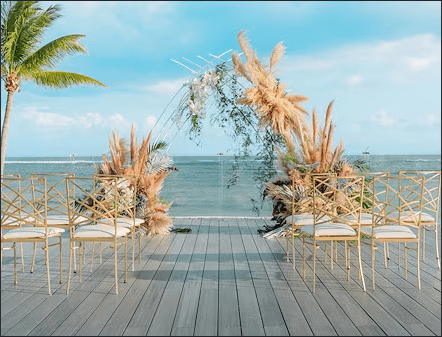
The rise of luxury destination weddings in Mexico
A destination wedding used to mean one thing: pack a bag, fly somewhere warm, say “I do,” and head home. That idea has changed. For couples today, the wedding itself is only part of the story — the real draw is everything built around it, from the first welcome drink to the last brunch the morning after.
Mexico has become one of the settings where that shift is most visible. Between its coastlines, its inland colonial cities, and a hospitality industry built to host large groups for days at a time, the country offers something harder to find elsewhere: a wedding that doubles as a shared trip for everyone who comes.
Why Mexico has become a destination wedding favorite
Part of the appeal is simply logistical. Direct flights connect most major U.S. and Canadian cities to Mexico’s biggest wedding hubs, which matters enormously when a couple is asking eighty or a hundred people to travel. But convenience alone doesn’t explain the pull.
Mexico’s range is what keeps it at the top of the list. A couple can choose a Caribbean coastline with calm, turquoise water, a jungle setting built around cenotes and dense green landscape, or a desert coastline where cliffs meet open ocean — all without leaving the same country. Add a tourism infrastructure built over decades to host large groups comfortably, a culinary scene that ranges from beachfront ceviche to formal tasting menus, and a cultural richness that gives every celebration a genuine sense of place, and it’s easy to see why so many couples land here first.
Luxury is no longer just about the venue
For years, a “luxury wedding” was shorthand for a big budget: an elaborate venue, oversized floral installations, a long guest list. That definition has narrowed in a more interesting direction.
Increasingly, luxury is measured by personalization rather than price. It shows up in the small decisions — a menu designed around a couple’s actual taste rather than a standard package, a timeline built around how the couple wants their guests to feel rather than a generic run of show, privacy that lets a celebration feel intimate even with a full guest list. Attention to detail and seamless coordination have become the real markers of a high-end wedding, more than the size of the check.
The rise of the multi-day wedding experience
That shift toward experience has extended the wedding itself well past a single afternoon. A welcome cocktail the night guests arrive, a rehearsal dinner, planned activities during the day, the ceremony and reception, and often a farewell brunch before everyone flies home — the modern destination wedding increasingly unfolds over several days rather than a single event.
For guests traveling from the U.S. or Canada, that structure changes the calculation. They’re not flying in for an afternoon; they’re committing to a short trip, and couples have responded by designing something worth that commitment — a shared experience for family and friends, not just a ceremony they happen to attend.
From Riviera Maya to Los Cabos: different destinations, different experiences
Mexico doesn’t offer one version of a destination wedding — it offers several, and the differences matter when choosing where to celebrate.
The Riviera Maya and Cancún, on the Caribbean coast, bring calm turquoise water, mangroves, and cenotes hidden throughout the jungle, along with an established network of venues built for multi-day celebrations. Tulum, just south, carries a more bohemian, design-forward identity, popular with couples drawn to a relaxed, barefoot aesthetic. On the Pacific side, Los Cabos offers a completely different landscape — dramatic desert cliffs meeting open ocean, a drier climate, and a more adults-oriented atmosphere. Each region carries its own character, and the right one depends less on which destination is “best” and more on which one matches the celebration a couple has in mind.
Why working with a local wedding planner matters
Planning any of this from another country adds a layer of complexity that’s easy to underestimate until you’re in the middle of it. Venue selection, vendor sourcing, coordinating multiple suppliers who may not speak your language, building a timeline that actually holds together, arranging transportation and accommodations for dozens of guests, managing design and decor, and being present on-site when something unexpected comes up — all of it typically falls on the couple, from thousands of miles away, unless someone local is handling it.
That’s where local expertise becomes less of a luxury and more of a necessity. A planner who already knows the region’s venues, has working relationships with its vendors, and understands how logistics actually play out on the ground can close a gap that’s difficult to close from abroad. Magic Dream Weddings specializes in destination weddings in the Riviera Maya, working primarily with international couples from the United States and Canada, and has experience coordinating celebrations at properties including Hotel Xcaret Mexico. Its founder, Medelin Dominguez, works as a wedding planner in Mexico with a focus on matching a couple’s vision to the practical realities of planning from abroad — from full wedding planning to day-of coordination and design. Working with a Mexico wedding planner who understands a specific region, rather than the country broadly, tends to make the difference between a stressful planning process and a smooth one.
What couples should consider before planning a wedding in Mexico
Once the destination feels right, a handful of practical decisions shape everything that follows. Season and weather affect both comfort and cost, particularly on the coasts, where hurricane season runs roughly June through November. Guest count determines which venues are realistic and how transportation and accommodations need to be organized. Budget and venue type are closely linked — a resort property, a private villa, and a boutique venue each come with a different cost structure and a different level of built-in infrastructure.
Vendors, timeline, and guest experience tend to move together: the more moving pieces a celebration has, the more a clear timeline matters for keeping everyone, from photographers to caterers, working in sync. And for outdoor or beachfront ceremonies, a backup plan for weather is less an afterthought than a standard part of planning. None of these decisions exist in isolation — the venue shapes the guest experience, the season shapes the venue, and the budget touches all of it.
The future of destination weddings in Mexico
The direction of travel is fairly consistent: more personalization, more multi-day experiences, and more attention paid to how guests feel throughout the celebration, not just during the ceremony itself. Couples are increasingly designing weddings around their own story and their destination’s character, rather than adapting to a standard package.
As that trend continues, Mexico’s range of coastlines, cities, and cultural texture positions it well to keep hosting a version of the destination wedding that looks less like a single event and more like a shared trip — one guests remember for reasons beyond the ceremony itself.
Frequently asked questions about destination weddings in Mexico
Is Mexico a good destination for a luxury wedding?
Mexico offers a wide range of settings, from Caribbean coastline to desert cliffs to colonial cities, along with an established hospitality and culinary scene built for hosting groups. That range, combined with genuine opportunities for personalization, makes it a strong option for couples seeking a luxury experience rather than a single fixed style of celebration.
How far in advance should you plan a destination wedding in Mexico?
Timelines vary considerably depending on the venue, season, guest count, and complexity of the celebration. A smaller, simpler gathering can come together faster than a multi-day event with a large guest list, so the realistic timeline depends more on the specifics of the wedding than on a fixed rule.
What are the best places for a destination wedding in Mexico?
Popular options include the Riviera Maya and Cancún for Caribbean coastline and cenotes, Tulum for a bohemian, design-forward atmosphere, and Los Cabos for desert scenery on the Pacific side. Each destination offers a different setting and feel, and the right fit depends on the experience a couple wants to create.
Do you need a wedding planner for a destination wedding in Mexico?
It isn’t strictly required, but working with someone who has local knowledge of vendors, venues, timelines, and logistics can meaningfully ease the process of planning from abroad. For couples managing the added complexity of coordinating a wedding in another country, that local expertise often proves valuable.
What should couples consider when choosing a wedding venue in Mexico?
Guest count, location, and accessibility all shape which venues are realistic options. Accommodations nearby, the level of privacy the space offers, how well it suits the couple’s intended style, and a weather contingency plan for outdoor spaces are also worth weighing before committing to a venue.