The Ins and Outs of Farrah Fawcett: A Survival Guide
Why Farrah Fawcett Still Matters
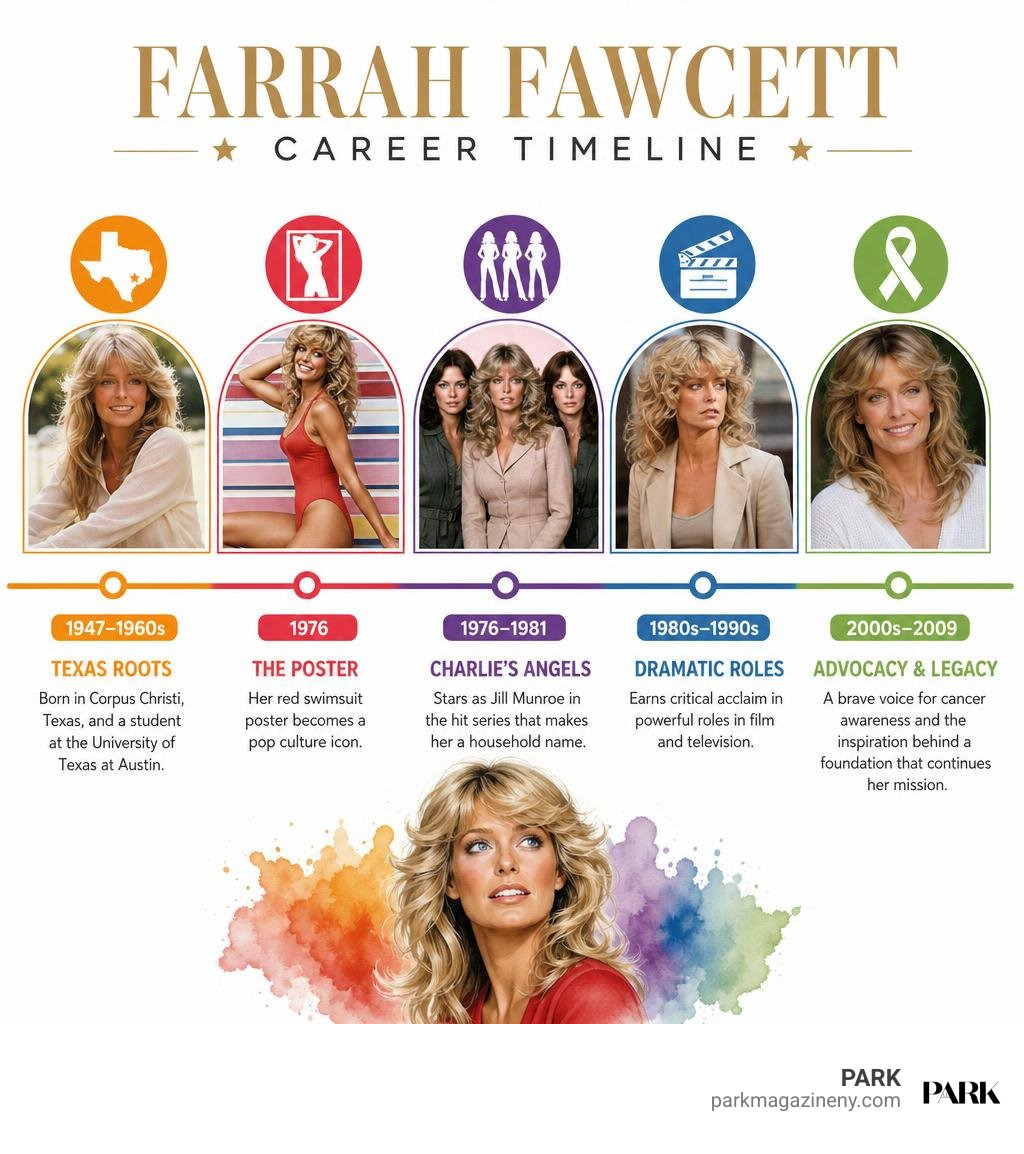
Farrah Fawcett was an American actress, model, and visual artist who became a defining star of the 1970s. Best known as Jill Munroe on Charlie’s Angels, she also created one of pop culture’s most recognizable images with her red swimsuit poster, which sold an estimated 12 million copies. Her story, though, reaches far beyond the famous hair and poster: she became an Emmy-nominated dramatic performer, a public advocate during her cancer battle, and the inspiration behind a foundation that supports cancer research, prevention, and patient assistance.
Born in Corpus Christi, Texas, on February 2, 1947, Fawcett moved from college life at the University of Texas at Austin to Hollywood stardom. She later challenged the limits of her pin-up image through serious work in The Burning Bed, Extremities, Small Sacrifices, and The Apostle.
This guide looks at the full arc of Farrah Fawcett’s life: the phenomenon, the artist, the advocate, and the cultural legacy that remains long after her death from anal cancer in 2009 at age 62. I am W.A. Muller, and we will begin with the moment she became impossible to ignore.
Farrah fawcett glossary:
- sally field
- emilia clarke
- prince harry
Breakthrough Stardom: The Poster, The Hair, and Charlie’s Angels
In mid-1970s television, network prime time commanded a unified national audience unmatched today. Fawcett did not simply step into this landscape; she redefined it. With her sun-kissed blonde locks, dazzling smile, and athletic charisma, she became an instant sensation. Before she ever booked a regular television series, she honed her screen presence through high-profile national commercial spots for brands like Ultra-Brite toothpaste and Wella Balsam shampoo, making her one of the most recognizable faces in the country. Her rapid rise into mainstream culture offers a textbook study in modern celebrity branding, as documented in Farrah Fawcett’s breakthrough history.
Early Life and Farrah Fawcett at Texas
Born Mary Ferrah Leni Fawcett to Pauline and Jim Fawcett in Corpus Christi, Texas, she was a natural athlete and student leader. Her mother reportedly invented the name “Ferrah” simply because it paired musically with their surname. At W.B. Ray High School, classmates voted her “Most Beautiful Student” all four years.
Enrolling at the University of Texas at Austin in 1965, Fawcett pursued a rigorous academic path, initially studying microbiology before shifting toward the visual arts. She pledged Delta Delta Delta and lived in the campus Jester Center dormitory. Her trajectory shifted dramatically when a photograph of her appeared in a “Ten Most Beautiful Coeds” feature in Cashbox magazine. A Hollywood talent agent spotted the feature and urged her to move west. While her parents initially hesitated, they accompanied their 21-year-old daughter to Los Angeles in the summer of 1968. Within two weeks, she signed an initial talent contract with Screen Gems paying $350 per week.
The 1976 Red Swimsuit Phenomenon and Jill Munroe
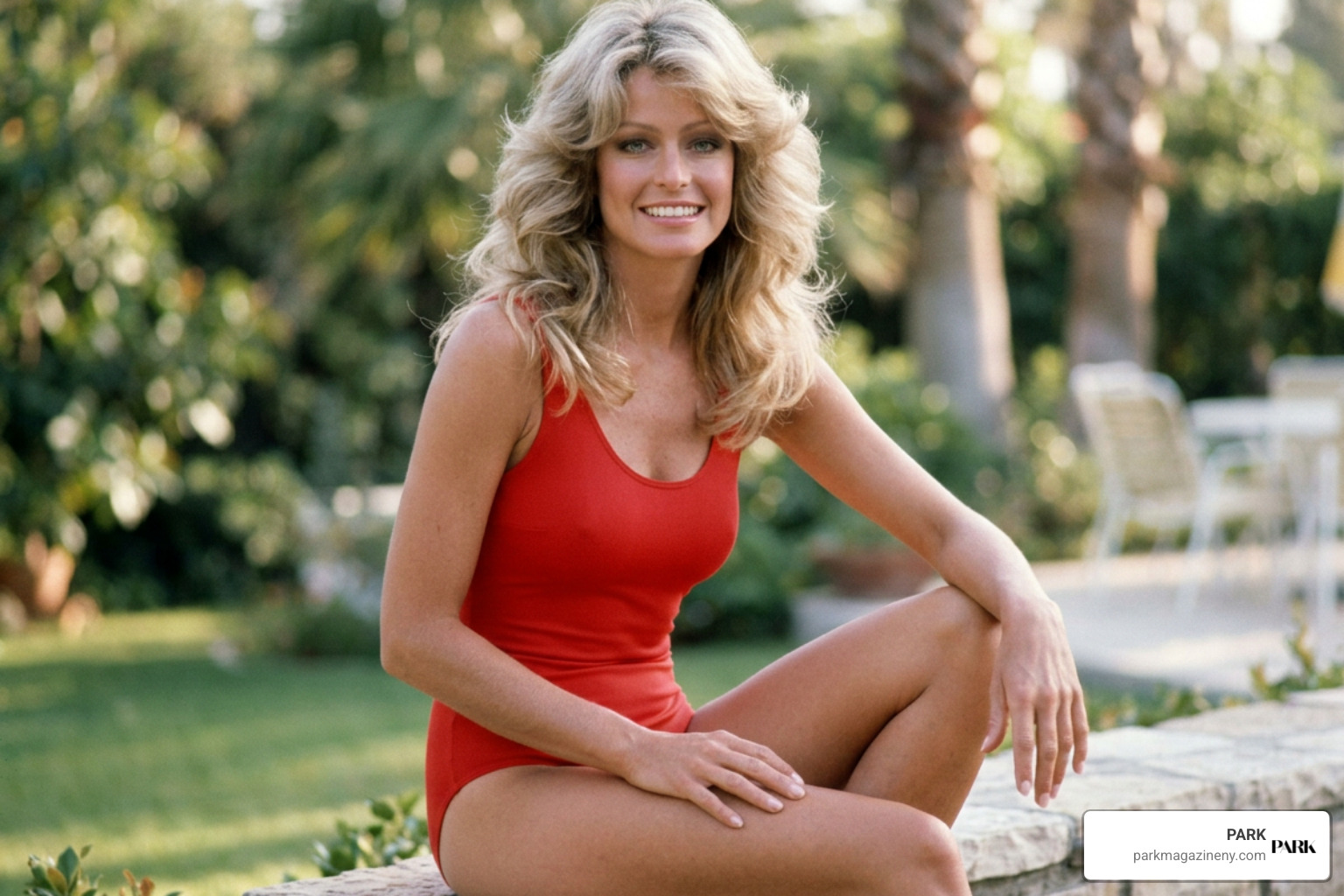
Few single photographs have ever made such an indelible impact on popular culture as the red swimsuit portrait captured by photographer Bruce McBroom in the summer of 1976. Taken at Fawcett’s home before Charlie’s Angels even debuted, the shoot was remarkably unpretentious. Rather than relying on a team of stylists, Fawcett did her own makeup without a mirror, tossed her hair using lemon juice to catch natural highlights, and chose an understated, one-piece red bathing suit designed by Norma Kamali.
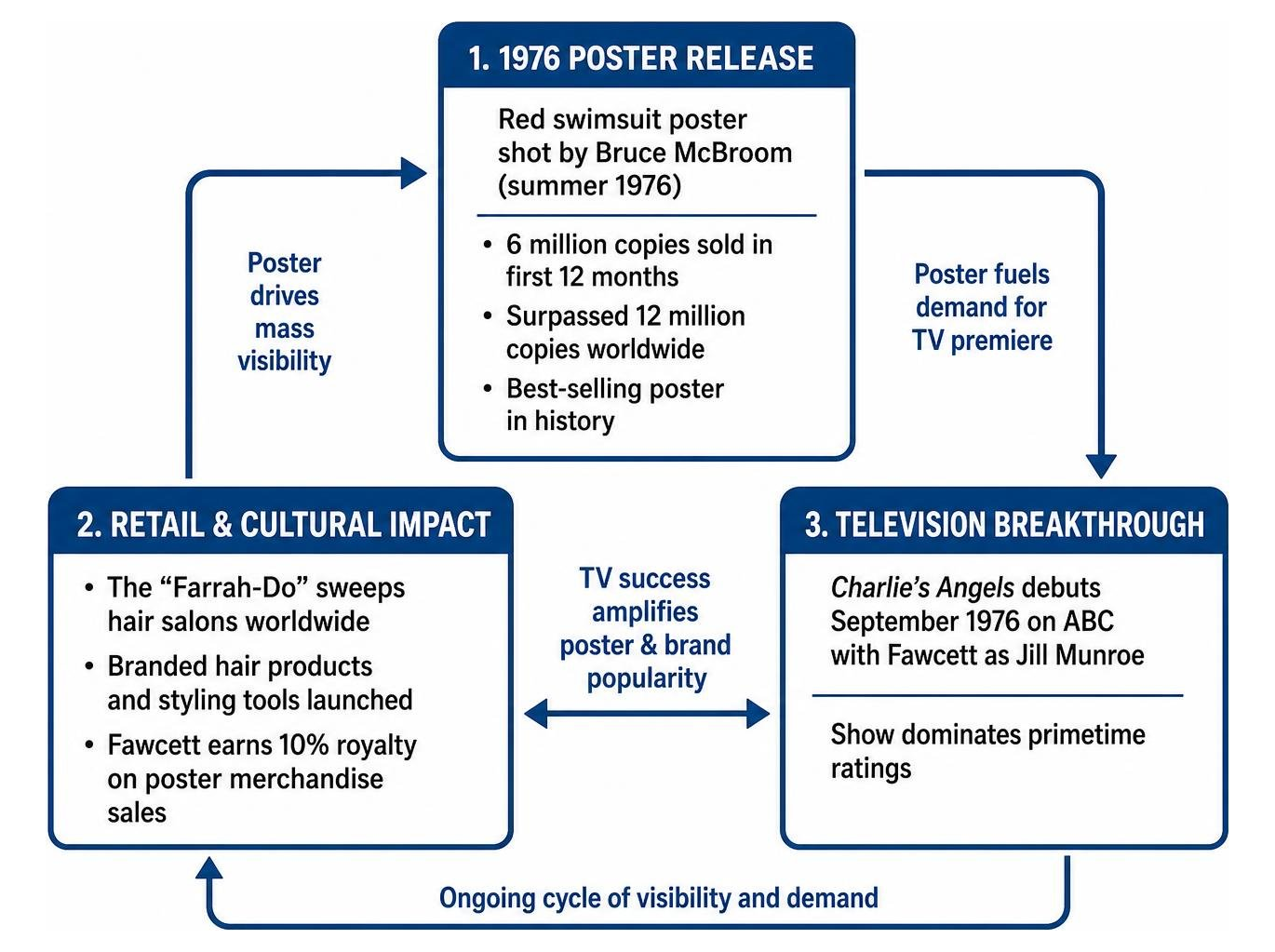
The poster became a commercial juggernaut:
- Immediate Retail Impact: The poster sold an astounding 6 million copies in its first twelve months alone, eventually surpassing 12 million copies worldwide to become the best-selling poster in history.
- The “Farrah-Do”: Her signature layered, feathered hairstyle swept hair salons from Manhattan to London, prompting the launch of branded hair products and styling tools.
- Smart Business Acumen: Showing sharp commercial foresight, Fawcett retained a 10% royalty on poster merchandise sales, earning far more from poster licensing than from her initial television wages.
- Jill Munroe on Charlie’s Angels: Debuting in September 1976 on ABC alongside Kate Jackson and Jaclyn Smith, the detective drama dominated primetime ratings. Fawcett brought vibrant energy and athletic charm to the golden-haired investigator Jill Munroe.
Beyond the Pin-Up: Dramatic Reinvention and Critical Acclaim
Achieving instant superstardom as a 1970s sex symbol could easily have trapped any performer in superficial roles. Hollywood frequently typecast blonde bombshells, but Fawcett was determined to command respect as a serious dramatic talent. Refusing to coast on glamour, she sought out complex, gritty, and socially challenging material that allowed her to demonstrate extraordinary emotional range.
Landmark Roles in The Burning Bed and Extremities
In 1983, Fawcett took the New York stage by storm when she replaced Susan Sarandon in the demanding Off-Broadway production of Extremities. Portraying a woman who turns the tables on a violent home intruder, she delivered a raw, physically exhausting performance that silenced skeptics in the theatrical community. During one live performance in Manhattan, a real-life stalker stood up in the audience to address her mid-scene, yet Fawcett remained entirely composed and stayed in character until security intervened. She later reprised the role in the 1986 film adaptation, earning a Golden Globe nomination.
Her watershed dramatic triumph came in the 1984 NBC television film The Burning Bed. Fawcett completely stripped away her glamorous persona to play Francine Hughes, a real-life battered wife pushed past endurance. Her devastating portrayal earned her first Primetime Emmy Award nomination. The broadcast made television history as the first made-for-TV movie to display a nationwide 800 toll-free helpline for domestic abuse victims, an initiative Fawcett actively supported through public advocacy.
She followed this triumph with an Emmy-nominated portrayal of convicted murderer Diane Downs in the 1989 miniseries Small Sacrifices, and received widespread acclaim opposite Robert Duvall in the 1997 independent feature The Apostle. A comprehensive catalog of her critical film and television achievements reveals an artist who consistently prioritized artistic integrity over easy Hollywood commercialism. Over her career, she received 4 Primetime Emmy Award nominations and 6 Golden Globe Award nominations.
Fine Art, Sculpture, and Independence
Parallel to her acting career, Fawcett maintained a lifelong passion for fine art. Having studied fine art and sculpture at the University of Texas under the mentorship of famed sculptor Charles Umlauf, she continued sculpting throughout her adult life.
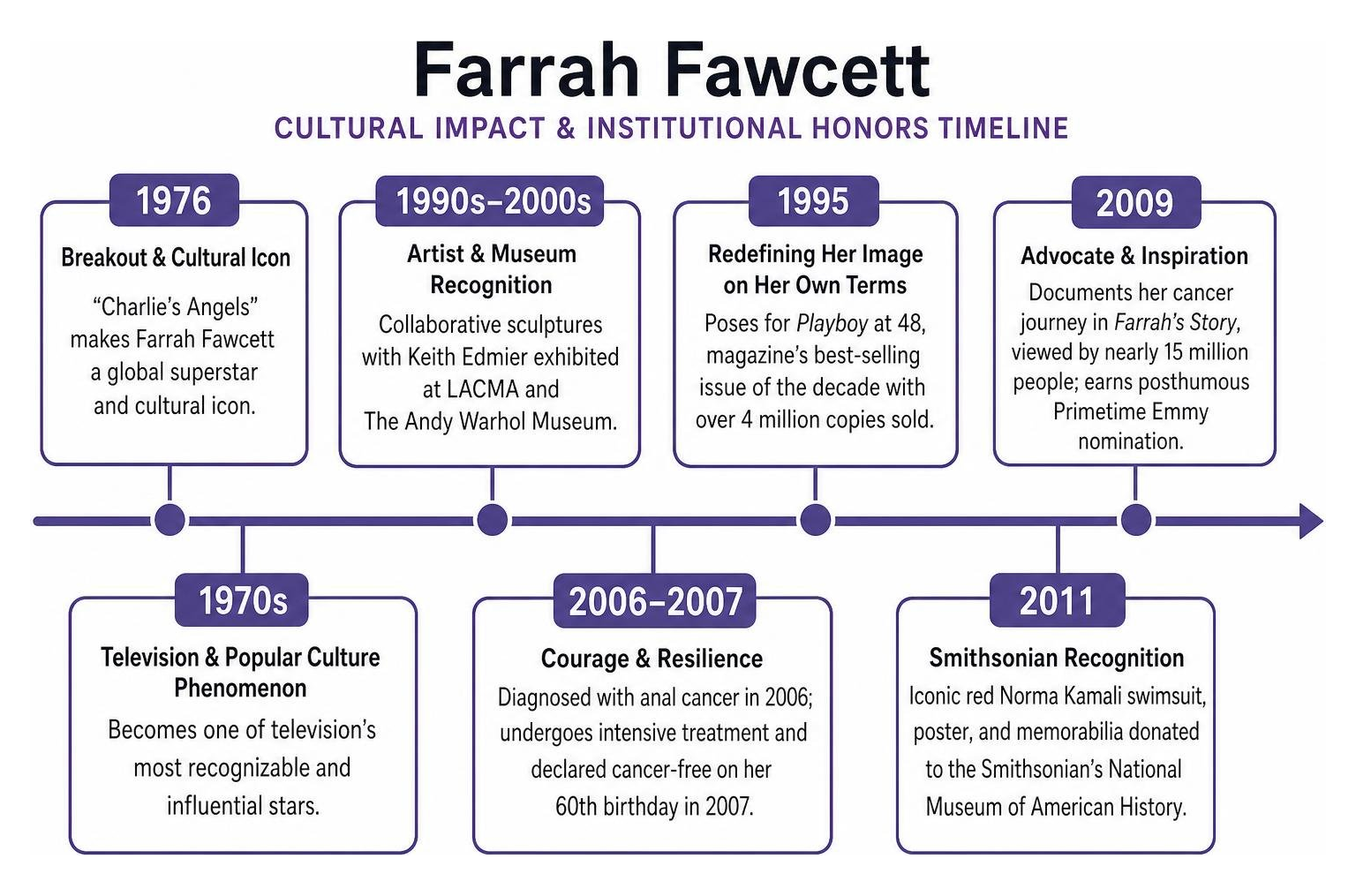
In the late 1990s and 2000s, she collaborated with prominent contemporary artist Keith Edmier. Their collaborative sculptures—exploring celebrity, portraiture, and physical form—were exhibited at major cultural venues including the Los Angeles County Museum of Art (LACMA) and The Andy Warhol Museum in Pittsburgh. She brought that same creative sovereignty to her media projects, posing for Playboy in December 1995 at age 48—producing the magazine’s best-selling issue of the decade with over 4 million copies sold—and returning at age 50 to create a video art piece where she used her own body as a brush against canvas.
Personal Life, Advocacy, and Her Final Chapter
Living in the center of global media attention brought relentless scrutiny. Yet through public relationship milestones and private personal struggles, Fawcett handled her life with distinct candor and resilience.
Relationships with Lee Majors and Ryan O’Neal
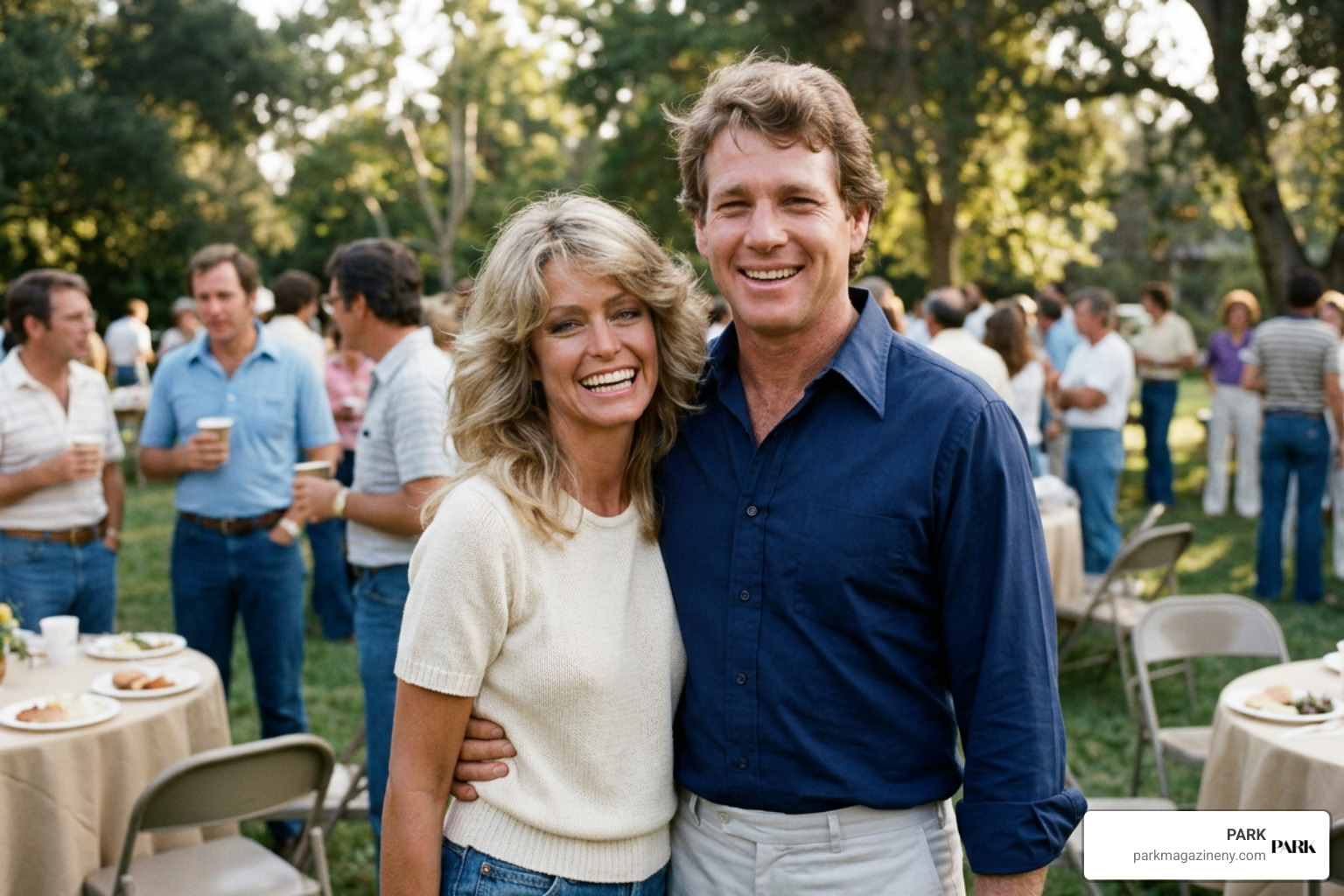
In 1968, shortly after arriving in Los Angeles, Fawcett met The Six Million Dollar Man star Lee Majors on a publicist-arranged date. The pair married in 1973, becoming one of television’s premier power couples. However, the punishing filming schedules of their respective hit series placed severe strain on the marriage, leading to their separation in 1979 and divorce in 1982.
In 1979, Fawcett began an enduring, high-profile romantic partnership with actor Ryan O’Neal. Together for decades, they welcomed their son, Redmond Fawcett O’Neal, in 1985. Through periods of separation and reunion, O’Neal remained a dedicated presence by her side, supporting her throughout her later creative work and ultimate health struggle.
How Farrah Fawcett Battled Cancer and Inspired Millions
In 2006, at age 59, Fawcett received a diagnosis of anal cancer, a rare and often stigmatized condition. After undergoing intensive chemotherapy and radiation, she was joyfully declared cancer-free on her 60th birthday in February 2007. Sadly, a routine follow-up three months later revealed that the cancer had returned and metastasized to her liver.
Refusing to surrender quietly, Fawcett sought cutting-edge medical treatments, traveling repeatedly to Germany to pursue innovative hepatic embolizations and alternative immune therapies alongside standard care. With her close friend Alana Stewart holding a handheld camera, Fawcett chose to document her medical appointments, physical pain, and moments of spiritual resolve without vanity.
The resulting documentary special, Farrah’s Story, was broadcast on NBC in May 2009. Viewed by nearly 15 million people, it demystified cancer treatment, destigmatized anal cancer, and earned a posthumous Primetime Emmy nomination for Outstanding Nonfiction Special. Fawcett passed away at age 62 on June 25, 2009, at St. John’s Health Center in Santa Monica, California, with Ryan O’Neal and close loved ones by her side. Her lasting dedication to patient support continues through the advocacy work of the Farrah Fawcett Foundation.
The Enduring Cultural Impact of Farrah Fawcett
Farrah Fawcett redefined what it meant to be a female superstar in modern American media. She demonstrated that an actress could command both unprecedented commercial appeal and deep dramatic respect, maintaining financial ownership over her image while using her public platform for profound social good.
Smithsonian Induction and Modern Style Legacy
The permanent place Fawcett occupies in American cultural history was formalized on February 2, 2011, when her family and foundation officially donated her iconic 1976 red Norma Kamali swimsuit, original poster print, and memorabilia to the Smithsonian’s National Museum of American History in Washington, D.C.
Her relaxed, athletic 1970s California aesthetic—high-waisted denim, tailored jackets, radiant skin, and buoyant feathered hair—continues to serve as a foundational mood board for luxury fashion houses and runway stylists. Decades after its introduction, the “Farrah wave” remains a standard reference in high-end editorial shoots and hair design.
The Ongoing Mission of Her Foundation
Before her passing, Fawcett established the Farrah Fawcett Foundation to ensure her health battle would yield tangible help for others. Funded by her estate and ongoing philanthropic efforts, the foundation executes a dual mission:
- Cutting-Edge Research & Prevention: Providing direct research grants to institutions focused on HPV-related cancers, innovative immunotherapies, and preventative education.
- Patient Assistance Fund: Providing financial grants to help cancer patients cover essential daily living expenses—including housing, transportation, and groceries—while undergoing demanding treatments.
Frequently Asked Questions About Farrah Fawcett
Why did Farrah Fawcett leave Charlie’s Angels after one season?
Fawcett departed Charlie’s Angels in 1977 after just 29 episodes due to a combination of factors: grueling 14-hour shooting days that strained her marriage to Lee Majors, creative dissatisfaction with the show’s lighthearted scripts, disputes over merchandise licensing royalties, and a passionate ambition to pursue serious feature films. Executive producer Aaron Spelling filed a $7 million breach-of-contract lawsuit, which was settled amicably when Fawcett agreed to make six guest appearances across seasons three and four.
How many copies of the iconic red swimsuit poster were sold?
The iconic 1976 poster photographed by Bruce McBroom sold over 6 million copies in its first year alone and went on to sell an estimated 12 million copies worldwide. It remains the best-selling commercial poster in history. Fawcett negotiated a 10% royalty on poster profits, providing her with substantial financial independence early in her career.
What was Farrah Fawcett’s final documentary project?
Her final documentary project was Farrah’s Story, a two-hour video diary chronicling her three-year battle with stage IV anal cancer. Co-produced with Alana Stewart, the documentary aired on NBC in May 2009 to 15 million viewers and earned a Primetime Emmy Award nomination for Outstanding Nonfiction Special.
Conclusion
Farrah Fawcett was a radiant symbol of 1970s optimism who successfully transformed herself into an Emmy-nominated dramatic actress, an accomplished fine artist, and a fearless patient advocate. From the sunlit campus of UT Austin to the stages of New York and the permanent collections of the Smithsonian, she navigated global fame on her own terms.
Her spirit of artistic autonomy and effortless elegance continues to inspire our look at modern culture. For more curated profiles on iconic style and timeless design, explore our retrospective on exploring iconic fashion at PARK Ave Magazine.