Karmelo Anthony Case: Everything You Need To Know About The Austin Metcalf Murder Trial
The Karmelo Anthony case centers on the fatal stabbing of 17-year-old Austin Metcalf at a Frisco, Texas, track meet on April 2, 2025. Karmelo Anthony, a Centennial High School student the same age as Metcalf, stabbed him during an altercation, and Metcalf died of his injuries. On June 9, 2026, a Collin County jury found Anthony guilty of murder and sentenced him to 35 years in prison. The case is now in the appeals stage.
This guide breaks down what actually happened, how the trial unfolded, why the case became a national flashpoint, and what is happening with Karmelo Anthony’s appeal right now.
Quick Facts: The Karmelo Anthony Case
| Detail | Information |
| Victim | Austin Metcalf, age 17 |
| Accused | Karmelo Anthony, age 17 at the time |
| Date of incident | April 2, 2025 |
| Location | David Kuykendall Stadium, Frisco, Texas |
| Charge | First-degree murder |
| Verdict | Guilty of murder |
| Verdict date | June 9, 2026 |
| Sentence | 35 years in prison |
| Presiding judge | John Roach Jr. |
| Trial location | Collin County, McKinney, Texas |
| Current case status | Post-conviction appeal, motion for new trial pending |
Read More: Magen Fieramusca
What Happened in the Karmelo Anthony Case?
The incident happened in broad daylight at a high school track meet, which is part of why it drew so much attention so quickly. Austin Metcalf, a student at Memorial High School, was fatally stabbed by Karmelo Anthony, a Centennial High School student of the same age, while attending a school track meet in Frisco, Texas. The two teenagers did not know each other well before that morning.
According to reporting on the case, the confrontation began over something that sounds almost trivial for how it ended. Witnesses, including Hunter Metcalf, Austin’s twin brother who was also at the meet, said Metcalf confronted Anthony over his presence in a seating area under a team tent. That argument escalated within moments into a physical altercation, and Anthony pulled out a knife and stabbed Metcalf once in the chest.
Metcalf collapsed and could not be revived despite efforts from bystanders and responding medics. He was pronounced dead a short time later. Anthony was arrested that same day and was initially held on a one million dollar bond before it was later reduced, allowing him to be released to house arrest while the case moved through the courts.
Quick Tip: If you are trying to understand the case quickly, remember the core dispute at trial was never really about whether Anthony caused Metcalf’s death. Everyone agreed on that. The entire trial turned on intent: did Anthony act in self-defense, or did he act with the knowing intent required for a murder conviction?
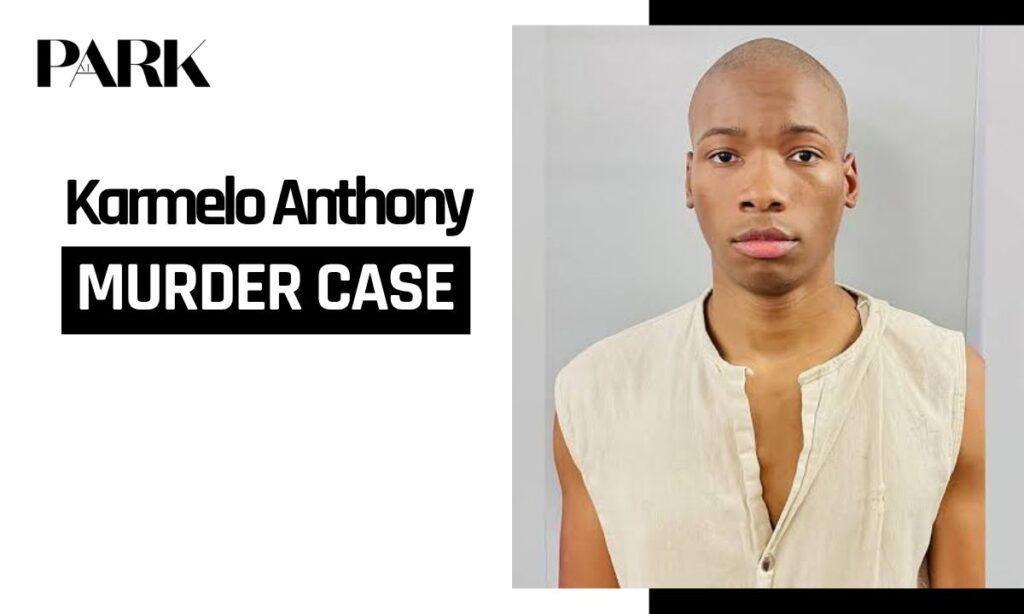
Who Is Karmelo Anthony?
Karmelo Anthony was a 17-year-old student athlete at Centennial High School in Frisco at the time of the stabbing. He is not related to NBA legend Carmelo Anthony, despite the similarity in name causing widespread confusion online in the days after the incident. He has since turned 19 during the course of the legal proceedings.
| Karmelo Anthony: Quick Facts | Details |
| Age at time of incident | 17 |
| Age at verdict | 19 |
| High school | Centennial High School, Frisco, Texas |
| Charge | First-degree murder |
| Plea | Not guilty, claimed self-defense |
| Verdict | Guilty |
| Sentence | 35 years, parole eligible after half served |
| Trial representation | Mike Howard (trial), later Russell Wilson II and Gary Bledsoe (appeal) |
Who Was Austin Metcalf?
Austin Metcalf was a well-liked, high-achieving junior whose death devastated his community. Austin Matthew Metcalf was born July 31, 2007, and died April 2, 2025. He was a junior at Memorial High School in Frisco, Texas, and served as the MVP linebacker of the school’s football team while also competing in track and field.
Metcalf had a twin brother, Hunter, who was standing near him when the stabbing occurred and later testified as a key witness. His father, Jeff Metcalf, and mother became prominent, visible figures throughout the trial, frequently speaking to media about their grief and their pursuit of justice for their son.
| Austin Metcalf: Quick Facts | Details |
| Age at death | 17 |
| School | Memorial High School, Frisco, Texas |
| Sports | Football (MVP linebacker), track and field |
| Twin brother | Hunter Metcalf |
| Cause of death | Stab wound sustained in an altercation |
| Date of death | April 2, 2025 |
Timeline Of The Karmelo Anthony Case
Because this case unfolded over more than a year, the sequence of events matters. Here is the timeline based on verified reporting.
| Date | Event |
| April 2, 2025 | Austin Metcalf is fatally stabbed by Karmelo Anthony at a track meet in Frisco, Texas |
| April 2, 2025 | Anthony is arrested and charged |
| April 14, 2025 | Anthony is released to house arrest on a reduced bond |
| June 2025 | A Collin County grand jury indicts Anthony on a first-degree murder charge |
| July 2025 | Judge John Roach Jr. issues a gag order barring parties connected to the case from public comment |
| Late 2025 | Trial date is formally set for June 1, 2026 |
| April 2026 | Judge Roach imposes additional courtroom restrictions, including bans on recording and a nine-person media cap inside the courtroom |
| June 1, 2026 | Jury selection begins as supporters of both families gather outside the courthouse |
| June 9, 2026 | The jury finds Anthony guilty of first-degree murder after roughly three hours of deliberation |
| June 9, 2026 | The jury sentences Anthony to 35 years in prison during the same-day punishment phase |
| July 2026 | Anthony’s new legal team files motions seeking a new trial and the recusal of Judge Roach |
| August 2026 | Hearings are scheduled for the recusal motion (Aug. 19) and the new trial motion (Aug. 20) |
Was There A Verdict In The Karmelo Anthony Case?
Yes, the case has already reached a verdict. The jury began deliberating midday and reached a guilty verdict for murder within about three hours. Jurors were not limited to a single option, which is an important detail many people searching for updates on this case tend to miss.
Jurors also had the option of finding Anthony guilty of manslaughter, which carries a maximum sentence of 20 years, rather than murder. The distinction between the two charges came down to intent. A murder finding meant the jury believed Anthony knowingly caused Metcalf’s death, rather than acting recklessly or without that level of intent.
What Was the Sentence in the Karmelo Anthony Case?
After the guilty verdict, the same jury moved directly into the punishment phase and reached a sentencing decision the same day. Anthony received a 35-year prison sentence and will be eligible for parole after serving at least half of that time. Prosecutors had the option to seek a term as long as life in prison, since first-degree murder in Texas can carry a sentence ranging from five years to life.
Note: A 35-year sentence with parole eligibility after half the term means Anthony could potentially be considered for parole after roughly 17 to 18 years, though parole is never guaranteed and depends on a board review, not an automatic release.
During the punishment phase, the courtroom heard directly from the people most affected by Metcalf’s death. Metcalf’s parents and his twin brother gave emotional victim impact statements addressed directly to Anthony. Jeff Metcalf described how his son’s death had changed him, characterizing his grief less as sadness and more as an ongoing, intense anger.
Read More: Kenneth Petty Net Worth
Why Is the Karmelo Anthony Case Controversial?
This case did not stay confined to Frisco or even Texas. It became a national story almost immediately, and the reasons behind that go beyond the tragedy itself.
- Racial dynamics of the case. Viral social media posts emphasized the races of the people involved, since Anthony is Black and Metcalf was white, which turned the case into a proxy for broader arguments about race and the justice system almost from day one.
- Jury composition concerns. Concerns were raised during the trial over the racial makeup of the jury, since no Black jurors were seated.
- Bond reduction backlash. Public anger flared when Anthony’s bond was reduced and he was released to house arrest before trial, with critics arguing the decision was too lenient for a murder charge.
- Gag order and closed courtroom. Restrictions barring recordings and live streaming, plus a strict cap on media inside the courtroom, fueled accusations that the public was being shut out of a case with major public interest.
- Post-verdict comments. During a podcast appearance after sentencing, Jeff Metcalf used a racially charged phrase to describe Anthony, which drew widespread criticism even from people who were otherwise sympathetic to his loss.
- Harassment on both sides. Anthony’s family relocated after reporting harassment and safety concerns, and personal information belonging to the judge who had reduced his bail circulated online.
Each of these threads kept the case in headlines long after most murder trials would have faded from national attention. If you search “why is the Karmelo Anthony case controversial,” this combination of race, media access, and online harassment is the real answer.
The Trial: How the Karmelo Anthony Case Was Argued
The trial itself, which ran through early June 2026, hinged on a straightforward legal question presented in a highly emotional setting. Prosecutors described the stabbing as senseless and argued it amounted to plain and simple murder, while the defense maintained Anthony acted in self-defense.
Jury selection alone reflected how much public interest surrounded the case. Supporters of both Anthony and Metcalf gathered outside the Collin County Courthouse as jury selection began on June 1, 2026. The courtroom itself operated under unusually tight restrictions for the entire proceeding.
| Trial Restriction | Detail |
| Recording | Photography, video, and audio recordings, along with live streaming, were prohibited |
| Note taking | Devices could be used only for silent note taking with court approval |
| Media access | A maximum of nine media members were allowed inside the courtroom at any one time |
| Public statements | A gag order barred attorneys, witnesses, law enforcement, and court staff from discussing the case publicly |
One of the most consequential trial decisions, which later became central to the appeal, involved whether Anthony would testify in his own defense. According to his current legal team, that decision was rushed and handled under significant time pressure during the trial itself.
Karmelo Anthony Case Appeal: What Is Happening Now
The case is not over. Anthony’s conviction is currently being challenged, and this is the part of the story that is actively developing as of August 2026.
After the verdict, Anthony’s new attorneys, who did not represent him at trial, filed an appeal arguing he was denied his constitutional rights. They are also asking that Judge Roach be removed from any further proceedings in the case.
The appeal rests on two central arguments:
- Restricted trial access. The defense argues the court’s restrictions on public access to the trial violated Anthony’s constitutional rights.
- Breakdown of an evidence agreement. The defense claims there was an unwritten agreement between the state and defense to exclude certain character and extraneous offense evidence, but that prosecutors broke that agreement, which the defense says effectively denied Anthony his right to testify on his own behalf.
The defense has also pointed to how little time Anthony was given to decide on testifying. His attorneys stated that when the moment came for him to decide whether to waive his Fifth Amendment privilege and testify, the court gave the defense only ten minutes to counsel a nineteen year old through that decision, and denied a request for more time.
Prosecutors have pushed back publicly on these claims. Collin County District Attorney Greg Willis has disputed allegations from the trial’s lead defense attorney, Mike Howard, that prosecutors violated an informal agreement not to introduce certain character or background evidence about Anthony or the Metcalf brothers. Willis stated he was present for the entire trial and described the prosecution team’s conduct as fair, clean, and professional.
Warning: A motion for a new trial is a legal request, not an automatic reversal. Filing it does not overturn Anthony’s conviction. A judge must review the motion and rule on it, and even a favorable ruling would only order a new trial rather than an acquittal.
Two hearings are now scheduled that will determine the next phase of this case.
| Hearing | Scheduled Date | Purpose |
| Recusal hearing | August 19, 2026 | Determine whether Judge John Roach should be removed from overseeing the appeal |
| New trial hearing | August 20, 2026 | Formally argue the motion for a new trial before a judge for the first time |
It’s worth noting what the appeal is not arguing. The filing does not challenge the jury’s guilty verdict itself, and instead focuses on how the trial was conducted, meaning the defense is not claiming Anthony is innocent so much as arguing he did not receive a fair process.
Reactions From The Families
Both families have remained publicly visible since the verdict, and their responses reflect just how raw the case remains.
Jeff Metcalf has spoken about grief, anger, and forgiveness in the same breath, which has made his public comments complicated to unpack. He stated that he forgave Anthony for killing his son because he did not want to carry hate and anger, while also insisting that he was not motivated by race. That same interview drew heavy criticism because of a racially loaded phrase he used to describe Anthony, which many viewed as undercutting his message of not being motivated by race.
Anthony’s family and supporters have continued to describe the case as one shaped heavily by external pressure and public opinion. Representatives for the family said early on that Anthony, his family, and his legal team were looking forward to presenting the facts in a court of law, a sentiment his supporters have repeated throughout the appeal process as well.
Is Karmelo Anthony Related To Carmelo Anthony the NBA Player?
No. This is one of the most searched questions connected to this case, largely because of the name overlap, and the answer is simple: there is no known family relationship between Karmelo Anthony, the Texas teenager convicted in this case, and Carmelo Anthony, the retired NBA All-Star. The similarity in names is coincidental, and no credible reporting has ever suggested a connection between the two.
Read More: What Was Bonnie Tyler Cause of Death?
Karmelo Anthony Case: Key Facts At A Glance
- The stabbing happened in front of witnesses at a school track meet, not in a private or hidden setting.
- Anthony was 17 and Metcalf was 17 at the time of the incident.
- Anthony was released on bond and placed under house arrest before trial.
- The trial lasted roughly one week before the jury reached its verdict.
- Jurors deliberated for about three hours before finding Anthony guilty of murder.
- The same jury handled both the guilty verdict and the sentencing on the same day.
- Anthony’s sentence allows for parole eligibility after half the term is served.
- A gag order and strict courtroom media rules were in place throughout the trial.
- Anthony’s post-conviction legal team is entirely new and separate from his trial attorneys.
- The appeal challenges trial procedure, not the underlying facts of the verdict.
Frequently Asked Questions
What is the Karmelo Anthony case?
It is the criminal case surrounding the April 2025 fatal stabbing of Austin Metcalf, a fellow Texas teenager, by Karmelo Anthony at a high school track meet in Frisco.
What was the verdict in the Karmelo Anthony case?
Anthony was found guilty of first-degree murder on June 9, 2026, following a jury trial in Collin County, Texas.
What is the sentence in the Karmelo Anthony case?
Anthony was sentenced to 35 years in prison and will be eligible for parole after serving at least half of that term.
Is the Karmelo Anthony case over?
No. Anthony’s conviction is currently being appealed, with hearings on a new trial motion and a judge recusal request scheduled for August 2026.
Why did Karmelo Anthony stab Austin Metcalf?
Reporting indicates the two got into a dispute over seating at a track meet that escalated into a physical confrontation, during which Anthony stabbed Metcalf.
Who is the judge in the Karmelo Anthony case?
Collin County District Judge John Roach Jr. presided over the trial and is the subject of the current recusal motion.
Why is the Karmelo Anthony case controversial?
The case became controversial due to the racial dynamics between the accused and the victim, an all-white jury, restricted media access at trial, and inflammatory public statements from both families.
What charges did Karmelo Anthony face?
Anthony was charged with first-degree murder, with manslaughter available to the jury as a lesser alternative.
Will the Karmelo Anthony case appeal succeed?
That is undecided. Hearings are scheduled for August 19 and 20, 2026, and a judge will determine whether the conviction stands or a new trial is granted.
Final Takeaway
The Karmelo Anthony case has moved through nearly every stage the American criminal justice system offers, from arrest and indictment to a public trial, a guilty verdict, sentencing, and now a formal appeal.
The June 2026 conviction and 35 year sentence closed one chapter, but the motions filed in July 2026 mean the legal fight is far from finished. Anyone following this case should watch the August 19 and 20 hearings closely, since they will determine whether Anthony’s conviction stands or whether he gets a new trial altogether.