The Benefits of Forestry Mulching for Efficient Land Management
Managing undeveloped, overgrown, or heavily vegetated land can become a challenging responsibility for property owners, land managers, and developers. Dense brush, unwanted trees, fallen branches, weeds, and thick undergrowth can make large areas difficult to access and maintain. Traditional clearing methods may require several stages, including cutting vegetation, gathering debris, transporting waste, and preparing the ground for future use. These steps can consume considerable time, labor, fuel, and equipment resources. Forestry mulching provides an efficient alternative by allowing vegetation to be cut and processed directly on the property. Specialized machinery can reduce trees, brush, and other organic growth into small pieces that remain on the ground, helping streamline the clearing process while creating useful ground cover.
Understanding the Land Clearing Process
Land clearing involves removing unwanted vegetation and obstacles so that a property can be used more effectively. Depending on the condition of the land, clearing may involve small shrubs, thick brush, young trees, fallen timber, weeds, and other organic material. The traditional process often creates large piles of debris that must eventually be loaded and hauled away. This can add additional steps to an already demanding project. Forestry mulching combines vegetation cutting and material processing into one operation, allowing the machinery to reduce much of the vegetation where it stands. Instead of creating large piles that require separate handling, the processed organic material is distributed across the ground, which can make the overall clearing operation more streamlined and manageable.
How Forestry Mulching Works
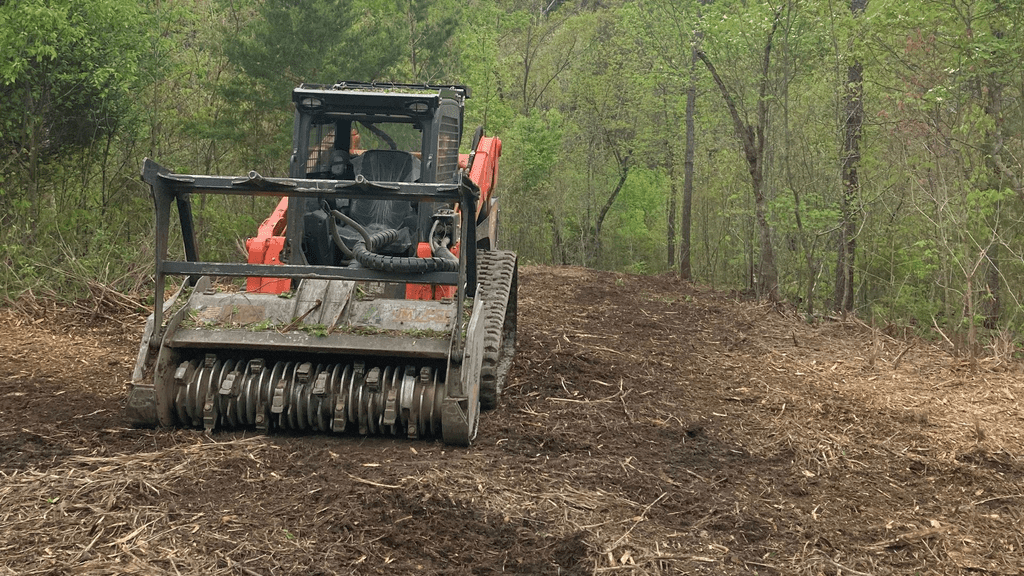
The process uses specialized heavy equipment equipped with a powerful cutting and mulching attachment. The machine moves through the designated work area while the mulching head cuts trees, shrubs, brush, and other vegetation into small pieces. The material is processed rapidly and spread across the ground rather than being left in large branches, logs, or piles. The exact result depends on the type and density of vegetation, equipment used, terrain, and the desired final appearance of the property. Forestry mulching can be adapted for different land-management objectives, including selective clearing, brush control, trail development, access improvement, and preparation for future projects. Before work begins, the property should be assessed carefully so that important trees, structures, utilities, drainage areas, and other features can be identified and protected.
Reducing the Need for Debris Hauling
One of the biggest challenges associated with conventional land clearing is managing the amount of debris produced during the process. Trees and brush can create large piles that require loaders, trucks, containers, and additional labor for transportation and disposal. Removing these piles can increase the time required to complete a project and may create additional logistical concerns. Forestry mulching reduces much of this challenge by processing organic material directly on the property. Instead of moving every branch or log to another location, the vegetation is transformed into smaller pieces and distributed over the cleared area. This can reduce the amount of material that needs to be transported and may allow the clearing project to progress more efficiently.
Improving Access to Overgrown Property
Heavy vegetation can make it difficult to move across a property, inspect land, perform maintenance, or reach important areas. Thick brush may cover pathways, obscure drainage features, restrict access to structures, and make routine inspections more difficult. Clearing selected areas can open access routes and create a more manageable landscape. Forestry mulching can be useful for reducing vegetation along paths, around property boundaries, near access routes, and throughout other areas where overgrowth has become an obstacle. Because the processed material remains on the ground, the cleared area can look more organized without requiring every piece of vegetation to be hauled away. Better access can also make future maintenance easier and allow property owners to use portions of their land that were previously difficult to reach.
Supporting Soil and Ground Cover
An important feature of mulching is that the processed vegetation remains on the property as organic ground cover. Instead of removing all plant material from the site, the mulch can spread across the soil surface. As the organic material gradually breaks down, it may contribute organic matter to the ground, although the specific effects depend on soil conditions, vegetation type, climate, and other environmental factors. Forestry mulching can therefore provide a different approach from clearing methods that remove vegetation completely. The layer of processed material may also help reduce the amount of bare soil exposed immediately after clearing. However, property owners should consider drainage, erosion potential, and future land use when determining how vegetation should be managed and how much mulch should remain in a particular area.
Managing Brush and Small Trees
Brush and young trees can grow rapidly when land is not maintained regularly. Over time, these plants can create dense vegetation that reduces visibility, limits access, and competes with desirable plants. Removing large quantities of brush manually can require substantial labor, while conventional cutting may leave piles of material that must later be removed. Forestry mulching can process many types of brush and smaller trees directly on the property, allowing large overgrown areas to be addressed more efficiently. The technique can also be useful for selective vegetation management when the goal is to preserve mature or desirable trees while reducing unwanted growth around them. A careful assessment before work begins can help determine which vegetation should be retained and which areas require more extensive clearing.
Preparing Land for Future Development
Properties may need to be cleared before construction, landscaping, recreational improvements, utility work, access-road development, or other projects can begin. Vegetation that remains in proposed work areas can interfere with surveying, equipment movement, excavation, and construction activities. Clearing the property in advance can establish a more suitable starting point for subsequent work. Forestry mulching can help reduce vegetation while minimizing the need to create large debris piles across the site. Depending on the future project, additional work such as grading, excavation, stump removal, or soil preparation may still be necessary. Planning the clearing process around the final land-use objective can help ensure that the property is prepared appropriately rather than simply removing vegetation without considering what happens next.
Creating and Maintaining Trails
Trails can provide valuable access for recreation, inspection, maintenance, walking, and property management. However, dense vegetation can quickly make existing trails difficult to use or prevent new paths from being established. Clearing vegetation along a planned route can improve visibility and make movement through the property easier. Forestry mulching can be used to reduce brush and smaller vegetation while leaving processed material along the trail surface. The approach can be useful for creating defined routes without requiring large quantities of organic debris to be transported away. Trail planning should still account for terrain, drainage, width, intended use, and long-term maintenance so that the finished path remains practical and does not create unnecessary erosion or drainage problems.
Helping Manage Vegetation Around Property Boundaries
Property boundaries can become difficult to identify when vegetation grows unchecked. Brush, vines, weeds, and young trees may spread across boundary lines and make fences difficult to inspect or maintain. Overgrown vegetation can also hide damaged fencing, fallen branches, or other issues that need attention. Clearing selected areas along boundaries can improve visibility and simplify routine property inspections. Forestry mulching can reduce unwanted vegetation around suitable boundary areas while processing the material directly on the ground. Maintaining clearer property lines can make future landscaping, fencing, maintenance, and inspections more manageable. Property owners should still verify boundaries carefully before any clearing work begins to avoid accidentally disturbing areas outside the intended work zone.
Reducing Excessive Vegetation
Dense vegetation can sometimes create maintenance and safety concerns, particularly when dry brush and accumulated plant material become concentrated around structures or access areas. While no land-clearing method can eliminate all environmental or fire-related risks, responsible vegetation management can reduce excessive growth in selected locations. Creating more manageable areas around important property features may make routine maintenance and access easier. Forestry mulching can be incorporated into a broader vegetation-management plan when reducing unwanted brush is one of the project’s objectives. Property owners should evaluate the condition of the land and consider additional measures where necessary, especially in areas that require specific safety, environmental, or fire-management practices.
Maintaining a More Attractive Property
Overgrown land can make even a well-maintained property appear neglected. Dense brush may hide landscaping features, reduce visibility, cover pathways, and create an untidy appearance. Selective vegetation reduction can open up views and reveal areas that were previously hidden by uncontrolled growth. Forestry mulching can help transform heavily overgrown sections into cleaner and more organized spaces without requiring all organic material to be removed from the site. Property owners can use the process to highlight desirable trees, improve access, define open areas, and make outdoor spaces easier to maintain. A cleaner landscape can also provide a better foundation for future landscaping or property improvements.
Choosing the Right Equipment
The equipment used for vegetation management should match the size, terrain, vegetation density, and objectives of the project. Different machines and attachments have different capabilities, and a machine that works effectively on one property may not be appropriate for another. Terrain can also influence equipment selection, especially when the work area includes slopes, wet ground, narrow access points, or obstacles. Forestry mulching requires specialized machinery and an operator who understands how to work safely around trees, structures, utilities, fences, and other property features. Before hiring a service provider, property owners should discuss the scope of work, equipment, access requirements, safety procedures, and expected results. Clear communication can help ensure that the selected approach matches the property’s actual needs.
Considering Environmental Conditions
Responsible land management requires attention to environmental conditions before vegetation is removed. Drainage patterns, soil characteristics, waterways, wildlife habitat, existing desirable vegetation, and erosion concerns should all be considered during planning. Removing too much vegetation from a sensitive area may create unwanted consequences, particularly on steep slopes or near drainage channels. Forestry mulching can be used selectively in many situations, but the clearing plan should always reflect the property’s specific environmental characteristics. Sensitive areas may require additional precautions or alternative management methods. Property owners should also determine whether permits, restrictions, or other requirements apply before beginning substantial land-clearing work.
Creating a Long-Term Maintenance Strategy
Initial land clearing is only one part of successful property management because vegetation can grow back after an area has been cleared. Without regular maintenance, brush and young trees may gradually return and create another overgrowth problem. Establishing a long-term strategy can help maintain the results of the initial clearing work. Depending on the property, future maintenance may involve mowing, selective cutting, periodic vegetation control, trail maintenance, or additional mulching. Forestry mulching can become one component of an ongoing management program rather than being treated as a one-time solution. A planned maintenance schedule can reduce the amount of vegetation that becomes established and make future clearing projects less intensive.
Benefits for Property Owners
Property owners often choose efficient clearing methods because they want to improve land usability without spending unnecessary time managing piles of organic debris. A streamlined approach can reduce the number of separate stages involved in clearing and may make the project easier to coordinate. Forestry mulching can provide several practical benefits, including improved access, reduced debris hauling, better visibility, easier brush management, and a cleaner appearance. It can also help prepare land for future projects while leaving processed organic material on the ground. The method is not suitable for every property or every land-clearing objective, but where conditions are appropriate, it can offer an efficient way to manage dense vegetation and improve the functionality of outdoor areas.
Conclusion
Effective land management requires a careful balance between removing unwanted vegetation and preserving the features that make a property useful and environmentally responsible. Overgrown brush, small trees, weeds, and fallen vegetation can make land difficult to access, maintain, and develop, while traditional clearing methods may create large quantities of debris that require additional handling. Forestry mulching offers an efficient alternative by processing vegetation directly on the property and distributing the resulting organic material across the ground. This approach can support brush management, access improvement, trail creation, property preparation, and long-term vegetation control when properly planned. The success of any clearing project depends on choosing appropriate equipment, understanding the terrain, identifying sensitive areas, and establishing realistic maintenance goals. With careful planning and experienced operation, forestry mulching can help transform overgrown land into cleaner, more accessible, and more manageable outdoor space.