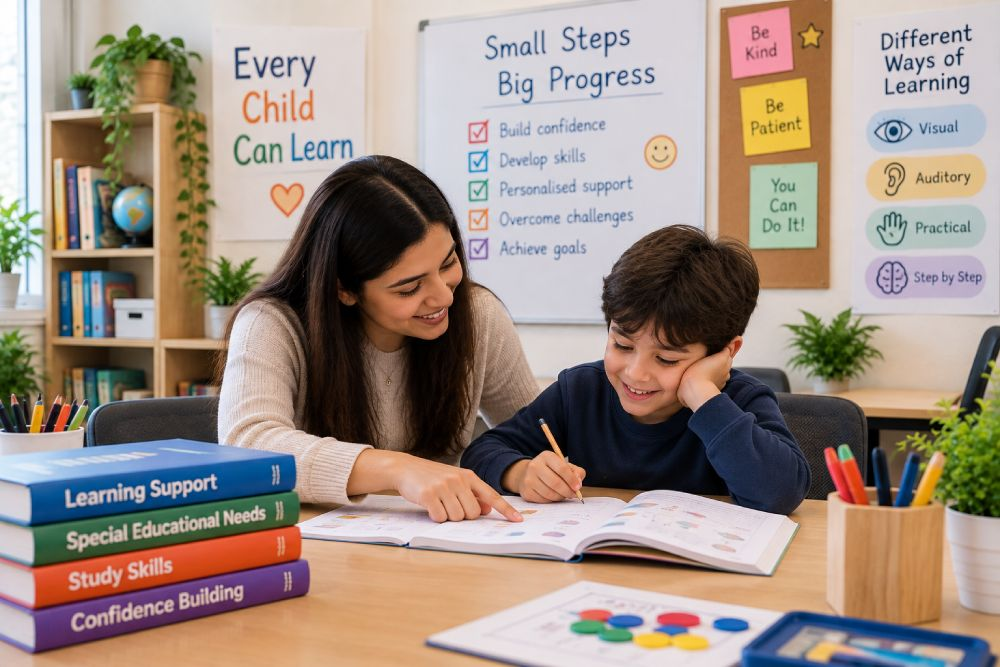
How Personalised Tutoring Can Support Different Learning Needs
Some kids can sit through a maths lesson, hear an explanation once and get straight into the questions. Others need a bit more time, a different example or someone to go over the same idea without rushing.
And then there are the students who understand everything at home but completely freeze when it’s time for a test.
Every child learns differently. That’s not necessarily a problem, but it can make school frustrating when lessons move faster than they’re comfortable with.
For Australian parents, it can be hard knowing when to step in. You don’t want to put unnecessary pressure on your child, but you also don’t want them falling further behind.
This is where personalised tutoring can make a difference.
Not Every Student Needs the Same Explanation
Think back to when you were at school. There was probably a subject you found easy and another that made absolutely no sense, no matter how carefully the teacher explained it.
Your child might be experiencing something similar.
In a classroom with 25 or more students, teachers have to balance everyone’s needs. They can’t always spend another ten minutes explaining fractions to one student while the rest of the class waits.
With one-on-one tutoring, there’s more room to slow things down.
A tutor can try another explanation, work through examples together or revisit something from an earlier year that the student hasn’t quite understood.
For example, a Year 7 student struggling with algebra might actually need more practice with fractions and basic operations.
Going straight into harder equations won’t necessarily help until those foundations are stronger.
Personalised tutoring gives students the opportunity to work through these gaps without feeling they’re holding up the entire class.
Confidence Can Be Just as Important as Marks
Sometimes the biggest issue isn’t that a child can’t do the work.
It’s that they’ve convinced themselves they can’t.
Maybe they got a disappointing maths result last term. Perhaps they were asked a question in class, answered incorrectly and felt embarrassed.
After a while, they stop putting their hand up. They might even start saying things like, “I’m just bad at maths.”
That’s a difficult mindset to shift.
A patient tutor can give students somewhere to ask questions without worrying about what their classmates might think.
There’s also something encouraging about finally solving a problem that’s been bothering you for weeks.
It might seem like a small achievement, but for a child who’s been struggling, it can mean quite a lot.
Of course, tutoring won’t magically turn every student into the most confident person in the classroom. Building confidence takes time, encouragement and a few wins along the way.
The Right Tutor Makes a Difference
Finding someone who’s good at maths doesn’t automatically mean they’ll be a good maths tutor for your child.
Teaching involves more than knowing the answers.
Some students respond well to a calm, patient approach. Others enjoy working with someone energetic who can turn tricky topics into practical examples.
Personality matters too.
A quiet student may take a few lessons to feel comfortable asking questions. A chatty student might need someone who can keep them focused without making lessons feel like a punishment.
Australian tutoring provider Erudite Tuition takes these factors into account when matching students with tutors.
The company offers one-on-one tutoring from Kindergarten through to Year 12, with support in English, maths, science and senior school subjects.
Its matching process considers subject knowledge, availability, learning preferences and personality. Families can try an initial lesson before deciding whether to continue, and there are no long-term lock-in contracts.
That flexibility is helpful because even a highly qualified tutor won’t necessarily be the right match for every child.
Tutoring Isn’t Only for Students Who Are Falling Behind
There’s a common assumption that tutoring is something you arrange when report cards start looking worrying.
But students seek extra help for all sorts of reasons.
Some are doing well at school and want more challenging work. Others need help preparing for the HSC, VCE or selective school entrance exams.
A student might also understand the subject but struggle with organising their thoughts in written answers.
Take a Year 11 student who knows their English texts inside out but keeps losing marks on essays.
The problem may not be their understanding of the material. They might need help structuring arguments, managing exam time or explaining their ideas clearly.
That’s where targeted tutoring can be useful.
Rather than repeating everything already covered at school, lessons can focus on the areas where extra practice would make the biggest difference.
Finding a Routine That Works for Your Family
Getting your child to another appointment after school isn’t always easy.
Between sport, music lessons, dinner and homework, some families barely have a spare afternoon.
Thankfully, tutoring doesn’t have to mean travelling across town every week.
Online lessons can work well for students who are comfortable learning on a screen. They can use shared whiteboards, discuss questions with their tutor and work through exercises together.
In-home tutoring may suit children who prefer face-to-face interaction or find it easier to concentrate with someone sitting beside them.
Neither option is automatically better.
Erudite Tuition offers both online and in-home lessons, allowing families to choose an arrangement that suits their circumstances.
The important thing is finding a routine your child can maintain without feeling that every afternoon is filled with extra schoolwork.
How Can Parents Tell if Tutoring Is Helping?
It’s tempting to judge tutoring by the next test result.
And while better marks are encouraging, they don’t tell the whole story.
Pay attention to how your child approaches schoolwork.
Are they spending less time getting frustrated with homework? Have they started asking more questions? Do they seem more willing to try something difficult instead of giving up immediately?
These changes can be meaningful, even before their grades improve.
It’s also worth checking in with the tutor regularly.
Ask what they’ve been working on, where your child is making progress and what still needs attention.
If something isn’t working, speak up. Tutoring should be adjusted when necessary, not treated as a fixed program that every student must follow.
Helping Children Find Their Own Way Forward
School can be challenging enough without feeling like everyone else understands something you don’t.
For some students, a little extra support is all they need to get back on track. Others benefit from regular guidance as they work through more demanding subjects.
Personalised tutoring isn’t about making children study harder every spare minute.
It’s about understanding what they need, giving them enough time to learn and helping them feel more capable of tackling difficult work.
And sometimes, the best sign that things are improving isn’t a perfect test score.
It’s watching your child sit down to do their homework without immediately saying, “I can’t do this.”