Stainless Steel vs. PVC Pool Gutters: Which Fits Your Facility?
Pool gutters rarely get the attention they deserve, yet they play a critical role in both the performance and longevity of a commercial pool. Beyond capturing surface water and debris, gutters affect wave dampening, water clarity, deck safety, and long-term maintenance costs. When it comes time to build a new pool or replace an aging gutter system, facility owners are typically faced with a choice between two dominant materials: stainless steel and PVC. Each option comes with distinct advantages and trade-offs, and the right choice depends heavily on the type of facility, budget, usage patterns, and long-term goals. Understanding how these two materials compare can help facility managers make a decision that holds up for decades.
Why Gutter Systems Matter More Than People Realize
Before comparing materials, it helps to understand what a pool gutter system is actually responsible for. Gutters run along the perimeter of a pool and are designed to capture surface water, oils, and debris, pulling them away from the swimming area and into the filtration system. In competition and high-traffic commercial pools, gutters also play a major role in wave absorption, preventing water from splashing back into the pool and creating turbulence.
A well-designed gutter system contributes to:
- Cleaner, clearer water by continuously removing surface contaminants
- Reduced wave reflection, which is especially important for competition pools
- A safer deck environment by managing overflow water effectively
- Lower long-term filtration strain, since surface debris is captured before it sinks
Because gutters are constantly exposed to water, chemicals, sunlight, and heavy foot traffic around the pool edge, material choice has a significant impact on how well the system performs over time.
Overview of Stainless Steel Gutter Systems
Stainless steel pool gutter systems are widely regarded as the premium option in commercial and competition pool construction. They are valued for their strength, longevity, and clean, professional appearance, making them a common choice for high-end aquatic facilities, competitive swimming venues, and large public pools that see heavy daily use.
Stainless steel gutters are typically fabricated from marine-grade or pool-grade stainless steel, engineered specifically to resist the corrosive effects of chlorine, bromine, and other pool chemicals. When properly specified and installed, these systems are known for holding up exceptionally well even under constant exposure to harsh water chemistry.
Advantages of Stainless Steel Pool Gutter Systems
Facilities that choose stainless steel often do so because of its long-term performance and durability. While the upfront investment is higher than PVC, many facility owners find the trade-off worthwhile for high-use environments.
Key advantages include:
- Exceptional durability, often lasting several decades with proper maintenance
- High resistance to cracking, warping, or UV degradation over time
- Strong structural integrity, which holds up well under heavy foot traffic and constant water exposure
- A sleek, professional appearance that is often preferred for competition and high-end facilities
- Excellent performance in wave dampening due to precise fabrication and rigid construction
- Compatibility with automated pool covers and other advanced facility features
Because stainless steel does not degrade the way plastic materials can over time, many facilities view it as a long-term investment that reduces the frequency and cost of future replacements.
Drawbacks of Stainless Steel Gutter Systems
Despite its advantages, stainless steel is not the right fit for every facility. The most significant barrier is cost, both for initial installation and for any necessary repairs down the line.
Common drawbacks include:
- Higher upfront material and installation costs compared to PVC
- More complex fabrication and welding required during installation
- Repairs typically require specialized welding expertise, which can be harder to source
- Potential for galvanic corrosion if incompatible metals are used nearby without proper isolation
- Longer lead times for custom fabrication, especially for pools with unusual shapes or dimensions
For facilities with tighter budgets or lower usage levels, these added costs and complexities may outweigh the long-term durability benefits.
Overview of PVC Gutter Systems
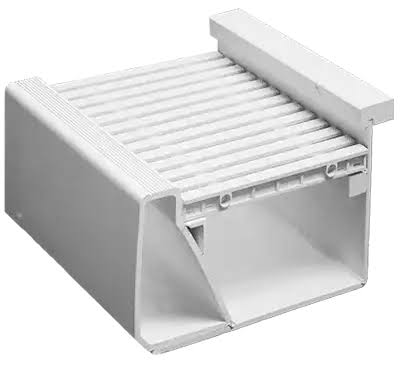
PVC gutter systems offer a lighter, more budget-friendly alternative to stainless steel. Made from durable plastic engineered to withstand pool chemical exposure, PVC gutters are commonly used in a wide range of commercial pools, from community centers to hotels to smaller municipal facilities.
PVC systems are typically installed as part of a broader pool construction package and can be manufactured in various shapes and configurations to accommodate different pool designs. Because the material is lighter and easier to work with than metal, installation timelines are often shorter as well.
Advantages of PVC Pool Gutters
PVC gutters appeal to a wide range of facilities because of their affordability and versatility. For many mid-sized commercial pools, PVC offers a practical balance between performance and cost.
Key advantages include:
- Significantly lower upfront cost compared to stainless steel systems
- Lighter weight, which can simplify installation and reduce labor costs
- Resistance to chemical corrosion, since PVC does not rust or oxidize
- Flexibility in manufacturing, allowing for a variety of shapes and custom configurations
- Faster and generally simpler repairs, since damaged sections can often be replaced without specialized welding
For facilities where budget constraints are a major factor, PVC gutters can provide reliable performance without the higher investment required for stainless steel.
Drawbacks of PVC Gutter Systems
While PVC offers real advantages, it does come with limitations that facility owners should weigh carefully, particularly for high-traffic or long-term applications.
Common drawbacks include:
- Shorter overall lifespan compared to stainless steel, especially in high-UV or high-traffic environments
- Greater susceptibility to cracking or brittleness over time, particularly with sun exposure
- Lower structural rigidity, which can affect wave dampening performance in competition settings
- Potential for discoloration or surface degradation after years of chemical and UV exposure
- May require more frequent replacement, increasing long-term costs despite lower upfront pricing
For facilities focused purely on minimizing initial construction costs, these trade-offs are sometimes acceptable. For competition venues or extremely high-traffic public pools, they can become a more significant concern over time.
Comparing Performance in Competition Settings
For pools built specifically for competitive swimming, gutter performance plays a direct role in water quality and wave management. Because stainless steel offers superior rigidity and more precise fabrication tolerances, many competition venues favor stainless steel pool gutter systems for their consistent wave absorption and long-term dimensional stability. This is especially important for facilities seeking certification for record-eligible events, where even small inconsistencies in gutter performance could affect race conditions.
PVC systems can still perform adequately in lower-level competitive settings, but facilities aiming for the highest level of certification and performance consistency often lean toward stainless steel for this reason.
Cost Considerations Over the Life of the Pool
When comparing these two materials, it is important to think beyond the initial installation price and consider the total cost of ownership over the pool’s lifespan.
Facility owners should factor in:
- Expected lifespan of each material under their specific usage conditions
- Anticipated maintenance and repair costs over a 10 to 20 year period
- Potential downtime associated with repairs, particularly for specialized welding needs
- Long-term aesthetic considerations, especially for facilities where appearance matters to guests or members
- Resale or renovation value if the facility is ever sold or repurposed
In many cases, stainless steel’s higher upfront cost is offset by decades of reliable performance, while PVC’s lower initial cost may be offset by more frequent repairs or earlier replacement.
Making the Right Choice for Your Facility
Choosing between stainless steel and PVC ultimately comes down to a facility’s specific priorities, budget, and usage patterns. High-traffic public pools, competition venues, and facilities looking for a multi-decade investment often lean toward stainless steel despite the higher cost. Facilities with tighter budgets, lower usage levels, or shorter renovation timelines may find PVC to be a practical and cost-effective solution.
Helpful questions to guide the decision include:
- How many years does the facility expect to operate this pool before major renovations
- What is the expected daily or seasonal usage volume
- Is the pool being built or renovated for competitive swimming certification
- What does the facility’s maintenance budget look like over the next decade
- How important is long-term appearance and structural consistency to the facility’s brand or reputation
Consulting with an experienced pool construction partner can help facility owners weigh these factors against real project specifics, ensuring the final decision aligns with both budget and long-term performance goals.
FAQ
Which material lasts longer, stainless steel or PVC?
Stainless steel generally lasts significantly longer, often several decades with proper maintenance, while PVC gutters typically have a shorter lifespan, especially in high-UV or high-traffic environments.
Is PVC a good choice for competition pools?
PVC can work for lower-level competitive settings, but stainless steel pool gutter systems are generally preferred for high-level competition due to their superior rigidity and consistent wave dampening performance.
Why is stainless steel more expensive than PVC?
Stainless steel requires more complex fabrication, specialized welding during installation, and higher material costs, all of which contribute to a higher upfront investment compared to PVC.
Are PVC gutters more prone to damage over time?
Yes. PVC can become brittle or crack with prolonged UV and chemical exposure, while stainless steel is more resistant to these long-term environmental stressors.
Can PVC gutters be repaired easily?
Generally, yes. Damaged PVC sections can often be replaced without specialized welding, making repairs simpler and faster compared to stainless steel systems.
Does gutter material affect water quality?
Both materials can support effective water capture and filtration when properly designed, but stainless steel’s rigidity often provides more consistent long-term performance, particularly in high-use facilities.
Weighing Long-Term Value Against Upfront Cost
There is no universal right answer when choosing between stainless steel and PVC gutter systems. The best choice depends on a facility’s budget, expected usage, and long-term goals. Facilities prioritizing durability, appearance, and competition-level performance often find the investment in stainless steel worthwhile, while facilities focused on affordability and simpler repairs may find PVC to be the more practical option. Taking the time to evaluate these factors carefully, ideally with input from an experienced pool construction professional, helps ensure the final decision supports the facility’s needs for years to come.