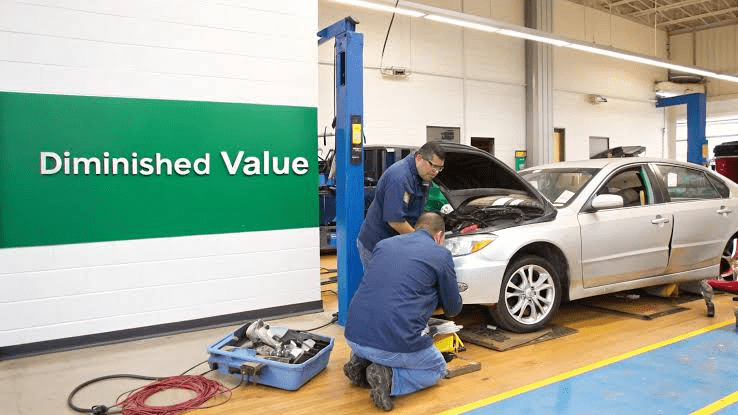
Six-Figure Repair Estimates and the Diminished-Value Fight
When a high-value vehicle gets hit, the damage goes beyond what the body shop can fix. The repair estimate is one problem. The fight over what parts go into the car is another. And the loss that persists after the car comes back from the shop — the reduction in resale value that follows a vehicle for the rest of its life — is the third problem, and often the largest one. Owners of luxury and exotic vehicles who understand how to pursue vehicle property damage claims beyond the basic repair estimate consistently recover more than those who accept the first number the insurance company produces.
What follows is how that process actually works — and where most high-value vehicle owners leave money on the table.
Why Luxury Repair Estimates Get Denied or Reduced
Insurance adjusters approach repair estimates the same way regardless of what vehicle is in front of them. They are working from cost-containment frameworks that were designed around average vehicles, and those frameworks do not translate well to cars with aluminum spaceframes, carbon fiber body panels, composite structural components, or factory-certified repair requirements.
The first friction point is labor rate. Authorized repair facilities for Porsche, BMW, Mercedes-Benz, Ferrari, and similar brands charge substantially higher labor rates than general body shops. Those rates exist because the technicians are certified to manufacturer specifications, the equipment is brand-specific, and the liability for incorrect repairs on a vehicle that costs $150,000 is not the same as on a vehicle that costs $22,000. Insurers routinely push back on these rates, steering claimants toward non-authorized shops that cannot legally perform the required work to factory standards.
The second friction point is diagnostic scope. Modern luxury vehicles contain dozens of interconnected electronic systems. A collision that looks like a straightforward rear-quarter panel repair may involve recalibration of adaptive cruise control sensors, driver assistance cameras, parking systems, and structural monitoring components. An authorized facility will identify these requirements in the estimate. A general body shop may not — and an adjuster working from a software-generated estimate almost certainly will not include them.
The result is an estimate that appears to cover the damage but does not actually return the vehicle to pre-accident condition. For standard vehicles, this gap is annoying. For high-value vehicles, it is the difference between a properly repaired asset and a car with documented repair deficiencies that will follow it through every future appraisal.
The OEM Versus Aftermarket Parts Dispute
The parts argument is where high-value vehicle claims most consistently produce conflict.
Insurance companies have a financial incentive to specify aftermarket parts — components manufactured by third parties rather than the original vehicle manufacturer. On a standard vehicle, this distinction is often minor. On a luxury or exotic vehicle, it is not.
The market does not treat aftermarket parts as equivalent to OEM components on high-value vehicles. Buyers at the level where these cars trade — through dealers, at auction, through private sales — discount vehicles repaired with non-original parts more aggressively than the insurance adjustment process accounts for. This is not a theoretical concern. It shows up in actual transaction prices for vehicles with documented repair histories involving non-OEM components.
The practical consequence is a compounding problem. If your Porsche 911 is repaired using aftermarket body panels, the repair estimate is lower, the insurance company pays less, and the car now carries a documented repair history involving non-manufacturer components. When you go to sell it, the buyer’s offer reflects all of this. You absorbed a loss at the repair stage and you will absorb it again at the resale stage.
Several states have addressed this through disclosure requirements — insurers in some jurisdictions must notify policyholders when aftermarket parts are specified and offer OEM alternatives at the claimant’s incremental cost. The regulatory landscape varies considerably, and the burden of knowing your rights and asserting them falls almost entirely on the vehicle owner.
The practical approach for high-value vehicle owners is to document, in writing, your requirement for OEM parts before repairs begin. If the insurer refuses, you have a documented basis for the additional diminished value that results from the substitution.
Proving Diminished Value on a Car That Will Never Appraise the Same
Diminished value is the financial loss that exists after the repairs are done — the gap between what your vehicle was worth before the accident and what it is worth now, despite being repaired.
This loss is real and measurable. Vehicles lose anywhere from 10 to 30 percent of their pre-accident market value after a collision, with luxury vehicles consistently falling at the higher end of that range. A vehicle worth $180,000 before an accident may be worth $140,000 or less after a structurally significant repair, regardless of the quality of the work. The accident history is on CARFAX. It follows the car. Every sophisticated buyer at that price point will factor it into their offer.
Insurers have a formula for calculating diminished value called Rule 17c, which applies a baseline of 10 percent of the vehicle’s pre-accident value and then applies reductions for mileage and damage severity. For most luxury vehicles, this formula dramatically underestimates actual market loss. A 10 percent cap on a $180,000 vehicle produces an $18,000 maximum — which sounds significant until you model the actual resale transaction and find the real loss is closer to $40,000.
Challenging the insurer’s diminished value calculation requires documentation that the formula does not produce. This means a professional appraisal from a qualified diminished value appraiser — someone who can analyze comparable sales data for identical vehicles with clean history versus accident history, document the specific factors in your vehicle’s repair that drive additional value loss (structural damage, airbag deployment, non-OEM parts, frame repair), and produce a defensible written report that can be used in negotiation or litigation.
The appraisal is not optional if you are pursuing a serious diminished value claim. An adjuster’s formula is not evidence. A professional report based on actual comparable market transactions is.
What the Claim Process Actually Looks Like
Diminished value claims are third-party claims — meaning you pursue them against the at-fault driver’s insurer, not your own. This distinction matters because first-party claims (against your own policy) often involve contractual limitations that do not apply to third-party liability claims.
The claim process involves notifying the at-fault insurer of your intent to pursue diminished value separately from the repair claim, obtaining your professional appraisal, submitting a demand letter with supporting documentation, and negotiating from that position. The insurer will counter with their formula. Your appraiser’s report is your response.
If the insurer refuses to engage meaningfully, the options escalate to appraisal arbitration under the policy terms, or litigation. For high-value vehicles where the gap between the insurer’s formula and the actual market loss runs into five figures, litigation is often economically rational. Insurers are aware of this, which is part of why documented professional appraisals produce better negotiated outcomes than undocumented demands.
The Colorado Angle
Colorado drivers with high-value vehicles face the same dynamics as any luxury car owner in any major market — with some additional context. The state’s modified comparative negligence framework means that fault allocation affects recovery, and the three-year statute of limitations for property damage claims creates a window that owners of high-value vehicles should not assume is infinite.
Colorado also has significant front-range hail exposure, which produces a particular category of high-value vehicle claim: comprehensive claims where the vehicle sustains cosmetic damage across every exterior panel. These claims produce their own diminished value losses — a hail-repaired luxury vehicle carries that history in a way that affects appraisals — and the same OEM-versus-aftermarket dispute can arise when the insurer specifies aftermarket panels for what amounts to a full exterior refinish.
The Denver personal injury attorneys at Zaner Law handle vehicle property damage claims for owners across Colorado, including disputes over repair estimates, parts specifications, and diminished value recovery on high-value vehicles.
The Bottom Line
A luxury vehicle is an asset, and its value is not fully restored by a repair estimate that gets the car back on the road. The fight over what goes into the repair, who performs it, and what the car is worth afterward is a fight worth having — and worth having with documentation, professional support, and a clear understanding of what the actual loss looks like.
The first number the insurance company produces is not the last word.