Selecting Windows and Doors That Balance Energy Efficiency, Security, and Style
Key Takeaways
- Start with the comfort, moisture, noise, and operation problems in each room.
- Compare U-factor, solar heat gain coefficient, visible transmittance, air leakage, and condensation resistance.
- Match glass, frames, and opening styles to the home’s climate, orientation, and daily use.
- Treat installation, flashing, and air sealing as part of the product decision.
- Plan windows and exterior doors as a whole-home system, not as isolated purchases.
Windows and exterior doors do far more than complete a home’s appearance. They influence indoor temperature, daylight, ventilation, outdoor noise, privacy, security, and the view from each room. Homeowners considering energy-efficient window installations should begin by assessing how the home feels today, then select products that address those specific problems. This approach can prevent a project from becoming overly focused on color, grids, or other visual details before the more important performance and usability decisions have been made.
Why Windows and Doors Deserve a Careful Plan
Glass and frames are part of the building envelope, which means their performance can affect heating and cooling demand. A poorly operating patio door, a drafty bedroom window, or a sunny room that overheats in the afternoon may have different causes and different solutions.
Replacement is not always the first answer. Weatherstripping, repair work, storm panels, exterior shading, and maintenance can help when the existing unit is structurally sound. Repeated drafts, water staining, soft or deteriorated framing, fogging between panes, failed hardware, or doors that will not latch reliably are stronger signs that replacement should be considered. It is also helpful to distinguish between a problem with the window or door itself and one caused by surrounding siding, trim, wall insulation, drainage, or indoor humidity levels.
Step 1: Identify Problems Room by Room
Walk through the home in different weather conditions and at different times of day. Make notes rather than assuming every opening needs the same upgrade. A bedroom may need quieter glass and more privacy, while a kitchen may benefit from easy-clean ventilation.
For each opening, note whether the issue happens only during wind, heavy rain, extreme temperatures, or direct sunlight. Photos of staining, condensation, damaged trim, or difficult-to-operate hardware can also make conversations with contractors more productive and help identify recurring patterns.
Comfort also depends on the heating and cooling system that serves the space. When rooms remain uneven after obvious window or door issues are addressed, an assessment from veteran-led HVAC services can help determine whether airflow, equipment sizing, duct condition, or controls are contributing to the problem.
- Cold interior surfaces or noticeable drafts near frames and thresholds
- Condensation on interior glass or between insulated glass panes
- Water stains, peeling paint, soft wood, or recurring leaks
- Excess glare, fading concerns, or uncomfortable afternoon heat
- Outdoor traffic, neighbors, or weather noise entering easily
- Windows that stick, or doors that rub, drag, or fail to lock smoothly
Step 2: Read the Performance Label
Performance labels make it easier to compare complete products rather than relying on pane count or marketing language. The National Fenestration Rating Council label typically lists values for insulation, solar control, daylight, and air movement.
The following ratings are especially useful when comparing similar styles and sizes.
| Rating | What It Indicates | General Shopping Goal |
| U-factor | Rate of heat transfer | Lower usually insulates better |
| SHGC | Solar heat admitted indoors | Lower can limit unwanted sun heat |
| Visible transmittance | Natural light through the glass | Balance daylight with glare control |
| Air leakage | Air passing through a closed unit | Lower helps reduce drafts |
Ratings should be compared carefully because size, configuration, glazing, and operating style can affect the overall result. A fixed picture window and an operable window may serve different purposes, so the better product is not always the one with a single lowest number. The goal is to compare like with like while keeping the room’s needs in view.
Condensation resistance is also worth reviewing, particularly in cold regions or rooms with higher indoor humidity. Products certified through independent NFRC testing and verification provide a more consistent basis for comparing listed performance values.
Step 3: Match Products to Climate and Orientation
The right choice for a cold northern climate may not be ideal for a hot, sunny location. In colder conditions, low U-factor, low air leakage, and good condensation resistance are important priorities. In warm climates, a lower solar heat gain coefficient can help reduce unwanted solar heat, especially on east-, west-, and south-facing openings.
Mixed climates require a balanced approach. Consider each opening’s direction, overhangs, nearby trees, rooflines, room use, and whether the home relies heavily on heating or cooling. The Department of Energy explains that window and door performance varies by climate, so a single specification for every room may not be the best approach. Seasonal changes matter as well: a tree that shades a window in summer may allow significantly more direct sun into that room after leaves fall.
Step 4: Select the Glass Package
Double-pane insulated glass is common in replacement windows, while triple-pane units can provide additional insulation and may help with sound control. Low-emissivity coatings help manage radiant heat transfer and can also reduce ultraviolet exposure. Gas fills, such as argon, can improve insulating performance when the sealed glass unit remains intact.
Laminated glass may be appropriate where sound reduction or impact resistance is a priority. Tempered glass is used in locations where safety glazing is required, such as certain doors, low windows, and areas near tubs or showers. A large west-facing living room window may need a different package than a smaller north-facing bedroom opening. Ask whether decorative grids, tinting, obscured glass, or integrated blinds will change the appearance, maintenance needs, daylight level, or performance of the selected unit.
Step 5: Choose Styles That Support Daily Use
Operating style changes how a window ventilates, cleans, and fits around outdoor walkways or interior furniture. Double-hung windows offer familiar operation, casements can provide broad ventilation when opened, awning windows may allow limited ventilation during light rain, and picture windows maximize light and views without opening.
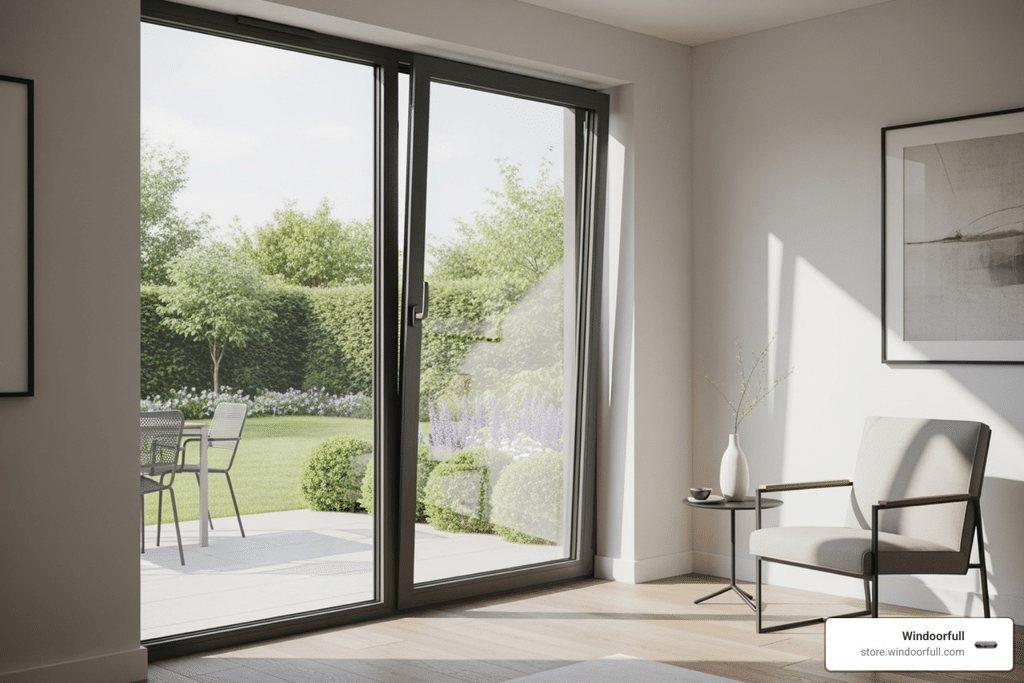
For doors, sliding patio doors save floor space because they do not swing into the room. Hinged exterior doors provide a traditional entry option with many panel, glass, and hardware choices. Before ordering, confirm clearance for screens, window treatments, furniture, railings, and exterior paths. Consider who will use the opening most often, including children, older adults, guests, or anyone who may need an easier-to-operate handle, lock, or threshold.
Step 6: Compare Frame Materials as Part of a System
Vinyl frames are often selected for low maintenance and insulating properties. Wood offers a traditional appearance but needs consistent protection from moisture. Fiberglass can offer strength and dimensional stability, while aluminum provides slim profiles and durability but needs thermal breaks to improve insulation. Composite frames vary by manufacturer and construction.
Do not judge a frame material in isolation. Glass, spacers, weatherstripping, hardware, drainage design, and installation all contribute to the finished result. Finish color, exposure to intense sun, and the ability to repair or repaint the surface can also affect long-term satisfaction.
Step 7: Balance Daylight, Privacy, and Comfort
More glass can make a room feel brighter and more open, but it can also introduce glare, heat, fading risk, and privacy concerns. Consider where people sit, where screens are placed, how shades will operate, and whether direct sun affects flooring, artwork, or electronics. Exterior overhangs, trees, and properly selected shades can help control light without eliminating the view.
Privacy needs can vary even within one home. Clear glass may be desirable for a rear-facing view, while obscured glazing, higher sill heights, landscaping, or window treatments may make more sense near sidewalks, neighboring homes, bathrooms, and entry doors.
Step 8: Treat Installation as Essential
Even a well-rated product can disappoint if it is measured incorrectly or installed without proper leveling, flashing, insulation, and air sealing. Ask who takes final measurements, how the rough opening will be prepared, what water-management materials will be used, and how the crew will test operation before leaving. If the project also involves heating or cooling system upgrades, coordinate the window work with heating and AC installation to ensure the improvements support your home’s overall comfort and efficiency.
It is also reasonable to ask how existing trim, siding, interior finishes, and exterior cladding will be protected or restored. Clear expectations about disposal, dust control, daily access, and what happens if concealed damage is found can reduce surprises once work begins.
Common Mistakes to Avoid
- Choosing by appearance or price alone
- Comparing only the number of glass panes
- Ignoring orientation, climate, and exterior shading
- Overlooking cleaning, furniture placement, privacy, and ventilation
- Assuming replacement windows will solve every comfort issue in the home
- Skipping written details on installation scope, cleanup, and warranties
A Simple Shopping Checklist
- List the problems associated with every window and exterior door.
- Record approximate sizes, room use, direction, and sun exposure.
- Set performance goals before choosing colors or decorative options.
- Compare labels, glass packages, frames, hardware, and operating styles.
- Request written estimates that separate products, labor, and installation details.
- Review warranty terms, timeline, cleanup expectations, and final inspection steps.
Conclusion
The best window or door is not necessarily the largest or most expensive option. It is the product that fits the room, climate, home design, budget, and long-term maintenance expectations. A careful comparison of ratings, glass, frames, operation, and installation details can lead to brighter, quieter, more comfortable rooms throughout the year.