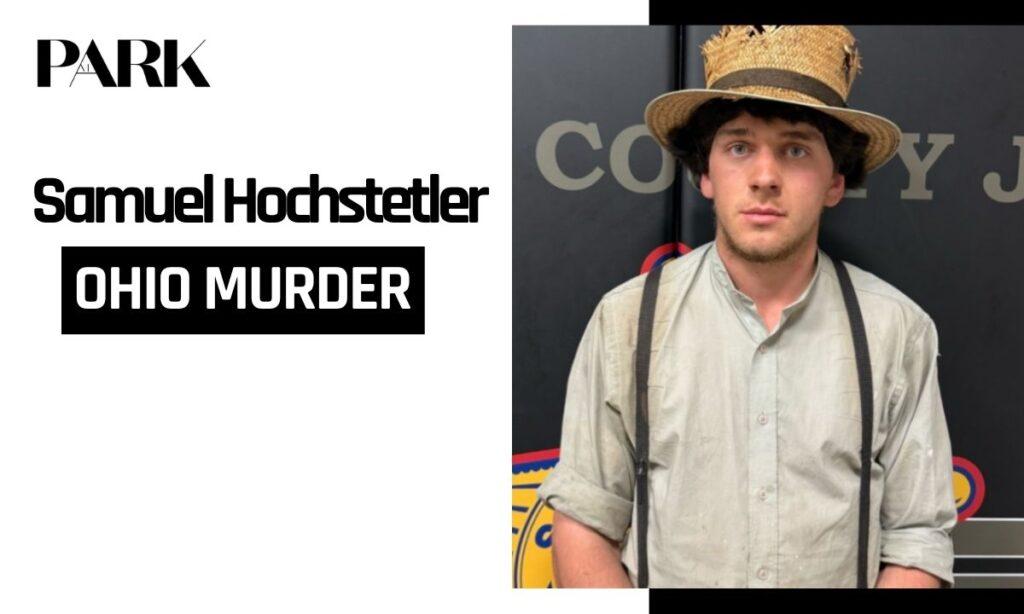
Samuel Hochstetler: The Meigs County, Ohio Murder Case Explained
Samuel Hochstetler is a young Amish man from Rutland, Ohio, who pleaded guilty to the aggravated murder of Rosanna Kinsinger, a 28 year old woman from Pomeroy, Ohio, and was sentenced to life in prison with the possibility of parole after 25 years.
If you searched for Samuel Hochstetler because you heard about a Kentucky connection, a Meigs County trial, or a recent verdict, this guide walks through exactly what happened, in the order it happened, using only information confirmed by law enforcement, prosecutors, and courtroom reporting.
This is a difficult case to read about. It involves the death of a young woman in a small, tight knit Amish community, and it raises real questions about how the justice system handles a defendant raised almost entirely outside mainstream American culture. The goal of this article is not to sensationalize any of that. It is to give you an accurate, complete, and clearly organized record of the case, from the day Rosanna Kinsinger was found dead through the final sentencing hearing.
Quick Facts: Samuel Hochstetler Case
| Detail | Information |
| Defendant | Samuel Hochstetler, born around 2006 or 2007 |
| Age at arrest | 18 |
| Age at sentencing | 19 |
| Hometown before Ohio | An Amish community in Kentucky |
| Location of offense | Rutland, Meigs County, Ohio |
| Victim | Rosanna Kinsinger, 28, of Pomeroy, Ohio |
| Date of the victim’s death | March 12, 2025 |
| Date the body was found | March 13, 2025 |
| Date of arrest | May 5, 2025 |
| Final charge pleaded to | Aggravated murder |
| Plea entered | Guilty, July 24, 2026 |
| Sentence | Life in prison, eligible for parole after 25 years |
| Additional requirements | Registration as a Tier III sex offender and a violent offender |
Who Is Samuel Hochstetler?
Samuel Hochstetler was raised in an Old Order Amish community in Kentucky, where, according to court filings, Amish life typically means no television, no secular schooling past a certain grade, little exposure to English language media, and almost no contact with government officials, police, or attorneys.
He moved from that Kentucky community to an Amish settlement in Meigs County, Ohio, in the fall of 2024. That single detail turned out to matter a great deal later in the case, because his defense argued he did not fully understand the legal rights he was read by detectives.
Understanding his background is not about making excuses. It is about understanding why this case unfolded the way it did in court, including a major pretrial ruling about his confession.
Hochstetler’s first language is Pennsylvania Dutch, and while a judge later found he was proficient enough in English to get by day to day, she also found he struggled with core legal concepts like what a court of law actually is, or what an attorney actually does for a defendant. That gap between everyday English and legal English became one of the most consequential issues in the entire case.
Read More: Nick Reiner Parents
Timeline Of The Samuel Hochstetler Murder Case
Here is the full sequence of events, pulled directly from sheriff’s office statements, prosecutor releases, and courtroom reporting.
| Date | Event |
| Fall 2024 | Hochstetler relocates from an Amish community in Kentucky to Meigs County, Ohio |
| March 12, 2025 | Rosanna Kinsinger is killed at her home on Dye Road in Rutland, Ohio |
| March 13, 2025 | Deputies respond to a report of a suspicious death and find Kinsinger’s body |
| March to May 2025 | Meigs County Sheriff’s Office investigates, serving search warrants and conducting interviews |
| May 5, 2025 | Hochstetler is brought in for questioning, then arrested and charged with murder |
| May 13, 2025 | Hochstetler waives his preliminary hearing; case is bound over to a grand jury |
| May 22, 2025 | A Meigs County grand jury indicts Hochstetler on aggravated murder, murder, rape, kidnapping, and strangulation |
| May 23, 2025 | Hochstetler is arraigned and pleads not guilty |
| Fall 2025 | A judge rules that Hochstetler’s statements to detectives are inadmissible at trial |
| December 8, 2025 (scheduled) | Jury trial originally set for this date |
| July 24, 2026 | Hochstetler withdraws his not guilty plea and pleads guilty to aggravated murder |
| July 24, 2026 | Hochstetler is sentenced to life in prison, parole eligible after 25 years |
What Happened To Rosanna Kinsinger?
Rosanna Kinsinger was a 28 year old woman living on Dye Road in Rutland, in Meigs County, Ohio. Her family and friends described her as outgoing and well liked, the kind of person who was genuinely enjoyed by the people around her in a small, close community. Her father, Moses Kinsinger, spoke publicly about how shocking her death was to everyone who knew her.
On March 12, 2025, Kinsinger was working alongside Hochstetler and others on a greenhouse project, according to courtroom reporting. She was found dead in her home the following day, March 13, 2025, and her death was ruled suspicious by investigators. Her body was found along with her pet goat, a detail that appeared repeatedly in early news coverage of the case.
An initial autopsy by the Montgomery County Coroner’s Office came back inconclusive, which meant investigators had to build the case largely through interviews, search warrants, and physical evidence rather than a single clear-cut forensic finding.
Note: Investigators later said friends of Kinsinger described Hochstetler as having shown romantic interest in her, or attempting to flirt with her, even though she was not interested in him. This detail became part of the broader picture prosecutors built of the relationship between the two before her death.
Rosanna Kinsinger Investigation And Arrest
The Meigs County Sheriff’s Office, led by Sheriff Scott Fitch, spent almost two months building the case before making an arrest. Detectives worked the case continuously, serving search warrants, conducting interviews, processing physical evidence, and following up on every tip, lead, and rumor that came in. That kind of methodical approach is fairly normal in cases where the initial forensic results are inconclusive, because investigators have to lean more heavily on witness accounts and circumstantial evidence to build probable cause.
That work eventually led detectives to identify Hochstetler as a person of interest. He was living with a family across the road from Kinsinger at the time. On May 5, 2025, deputies brought him in for questioning. According to later court filings, deputies spoke with him both during and after the drive to the sheriff’s office about Kinsinger’s death, his relationship with her, and his own thoughts on what had happened. After that interview, he was arrested and formally charged with murder.
He was arraigned the next morning in front of Meigs County Judge Mick Barr and held on a one million dollar bond, with no ten percent surety option granted, meaning he could not simply post ten percent of that amount to be released. He waived his right to a preliminary hearing on May 13, 2025, which sent the case directly to a grand jury for consideration of formal charges.
The Indictment: What Charges Did Samuel Hochstetler Face?
On May 22, 2025, a Meigs County grand jury indicted Hochstetler on a serious set of charges. This is the point where the case escalated well beyond the initial murder charge from his arrest.
- Aggravated murder, an unclassified felony
- Two counts of murder, an unclassified felony
- Rape, a first degree felony
- Two counts of kidnapping, a first degree felony
- Strangulation, a second degree felony
The grand jury also returned two specifications alongside those charges: a sexual motivation specification and a sexually violent predator specification. Those specifications mattered enormously, because under Ohio law, a conviction on the aggravated murder charge combined with those specifications would have made a sentence of life without the possibility of parole mandatory. That is a critical piece of context for understanding why the eventual plea agreement looked the way it did.
Hochstetler was arraigned on these charges on May 23, 2025, and entered a plea of not guilty, setting the case on a path toward trial.
Read More: Robert Pickton Victims
The Fight Over His Confession
One of the most legally significant moments in this case had nothing to do with the crime itself. It had to do with whether Hochstetler’s own statements to police could even be used against him at trial.
In the fall of 2025, following a hearing, Judge Linda R. Warner ruled that the statements Hochstetler made to Meigs County Sheriff’s Office detectives would be suppressed, meaning prosecutors could not use them at trial. Her reasoning centered on his upbringing.
She wrote that in his Amish community, people typically do not watch television, read secular or English language materials, or have dealings with government officials, the criminal justice system, or attorneys. That background, she found, put him in a meaningfully different position than an average English-speaking suspect being read the same rights.
Judge Warner found that while Hochstetler was proficient enough in everyday English, he did not grasp concepts central to understanding his rights, including what a court of law is and what an attorney actually does. Because of that, she ruled he did not knowingly and voluntarily waive his rights when he spoke to detectives, which is a constitutional requirement for a confession to be admissible.
Why this matters beyond this case: This ruling is a real world example of how a defendant’s cultural and linguistic background can directly affect whether police statements are allowed as evidence, regardless of what was actually said. Prosecutors pushed back and asked the judge to reconsider the ruling, underscoring just how much was riding on this single legal question heading into what was originally scheduled to be a December 2025 trial.
The Guilty Plea And Sentencing
The case was originally scheduled to go to a jury trial, with a pretrial hearing set for October 22, 2025, a final pretrial hearing set for November 25, 2025, and the trial itself set for December 8, 2025. That trial date did not hold. The case was later rescheduled, and Hochstetler ultimately appeared in court on July 24, 2026, the week his trial was set to begin, and changed his plea.
On July 24, 2026, Hochstetler withdrew his not guilty plea and pleaded guilty to aggravated murder, an unclassified felony, in the Meigs County Court of Common Pleas. As part of the agreement, the prosecutor’s office moved to dismiss the remaining charges and specifications, including the rape, kidnapping, and strangulation counts, along with the sexual motivation and sexually violent predator specifications that would have required a mandatory sentence of life without parole.
That same day, the judge sentenced Hochstetler to life in prison, with the possibility of parole after 25 years. He was given credit for time already served since his arrest in May 2025. He is also required to register as both a violent offender and a Tier III sex offender, which is the most serious registration tier under Ohio law and generally requires lifetime registration with in person verification requirements.
Meigs County Sheriff Scott Fitch commented publicly that while no court outcome can undo what the victim’s family lost, the office hoped the guilty plea would give the family a measure of justice and help move them closer to healing.
Quick takeaway: A guilty plea to aggravated murder, without the specifications, carries a parole eligible life sentence in Ohio. If Hochstetler had gone to trial and been convicted on the original aggravated murder charge along with the sexually violent predator specification, Ohio law would have required a mandatory sentence of life without any possibility of parole. The plea deal changed that outcome significantly.
A Disturbing Detail That Drew National Attention
One detail from this case drew significant national coverage well beyond local Ohio outlets: after Kinsinger’s death, Hochstetler reportedly helped her family with funeral planning and stayed in their home, all while investigators were still working to identify her killer.
Investigators also said he had volunteered to help notify her parents of her death. That detail, more than almost any other piece of the case, is what pushed this story from regional news into wider national coverage once the guilty plea became public.
Court reporting also indicated that Hochstetler told investigators Kinsinger was already dead when he rolled her over, an account that became part of the broader picture prosecutors built during the investigation.
Read More: What Happened To Athena Strand
Understanding the Amish Community Context
A lot of readers searching for this case are trying to understand the Amish angle specifically, so it is worth addressing directly and carefully. Both Hochstetler and Kinsinger were part of Amish communities; he was originally from Kentucky and she was a resident of the Meigs County area near Pomeroy.
Amish communities in the United States are not uniform; they vary widely in their level of engagement with mainstream American institutions, but Old Order communities like the one Judge Warner described in her ruling tend to have minimal contact with police, courts, and English-language media.
That context does not change the facts of what happened to Rosanna Kinsinger, and it did not change the outcome of the case in the end, since Hochstetler ultimately pleaded guilty and received a substantial prison sentence. What it did change was a single but important pretrial ruling about the admissibility of his statements to police, which is exactly the kind of legal nuance that generic crime coverage often leaves out.
Frequently Asked Questions
Who is Samuel Hochstetler?
He is a young Amish man, originally from a Kentucky Amish community, who pleaded guilty to the aggravated murder of Rosanna Kinsinger in Meigs County, Ohio.
What was the verdict in the Samuel Hochstetler case?
There was no jury verdict. Hochstetler pleaded guilty to aggravated murder on July 24, 2026, before the case reached trial.
What was Samuel Hochstetler sentence?
He was sentenced to life in prison with the possibility of parole after 25 years, with credit for time already served.
Who was the victim in the Samuel Hochstetler case?
The victim was Rosanna Kinsinger, a 28 year old woman from Pomeroy, Ohio, who was found dead at her home on Dye Road in Rutland on March 13, 2025.
Where did the Samuel Hochstetler case take place?
The crime occurred in Rutland, Meigs County, Ohio. Hochstetler had moved there from an Amish community in Kentucky in the fall of 2024.
Was Samuel Hochstetler’s confession used at trial?
No. A judge suppressed his statements to detectives in the fall of 2025, ruling he did not fully understand his rights when he waived them.
Did the Samuel Hochstetler case go to trial?
No. A jury trial was scheduled for December 2025 and later for late July 2026, but Hochstetler pleaded guilty before either trial began.
What charges was Samuel Hochstetler originally facing?
He was originally indicted on aggravated murder, two counts of murder, rape, two counts of kidnapping, and strangulation, with sexual motivation and sexually violent predator specifications.
Is Samuel Hochstetler a registered sex offender?
Yes. As part of his sentence, he must register as a Tier III sex offender, the most serious registration tier under Ohio law, along with registering as a violent offender.
Where is Samuel Hochstetler now?
Following his July 24, 2026 sentencing, he is serving a life sentence in the Ohio prison system, with parole eligibility after 25 years.
Final Takeaway
The Samuel Hochstetler case moved from a suspicious death report in rural Meigs County, Ohio, to a national news story about an Amish community, a suppressed confession, and ultimately a guilty plea and life sentence.
If you take one thing away from this case, it should be that a guilty plea to aggravated murder, without the specifications, carries a different legal outcome than a jury conviction with those specifications attached, and that single legal distinction shaped exactly how this case ended.
For the family of Rosanna Kinsinger, the sentencing on July 24, 2026, closed a court process that began with her death on March 12, 2025, more than sixteen months earlier.