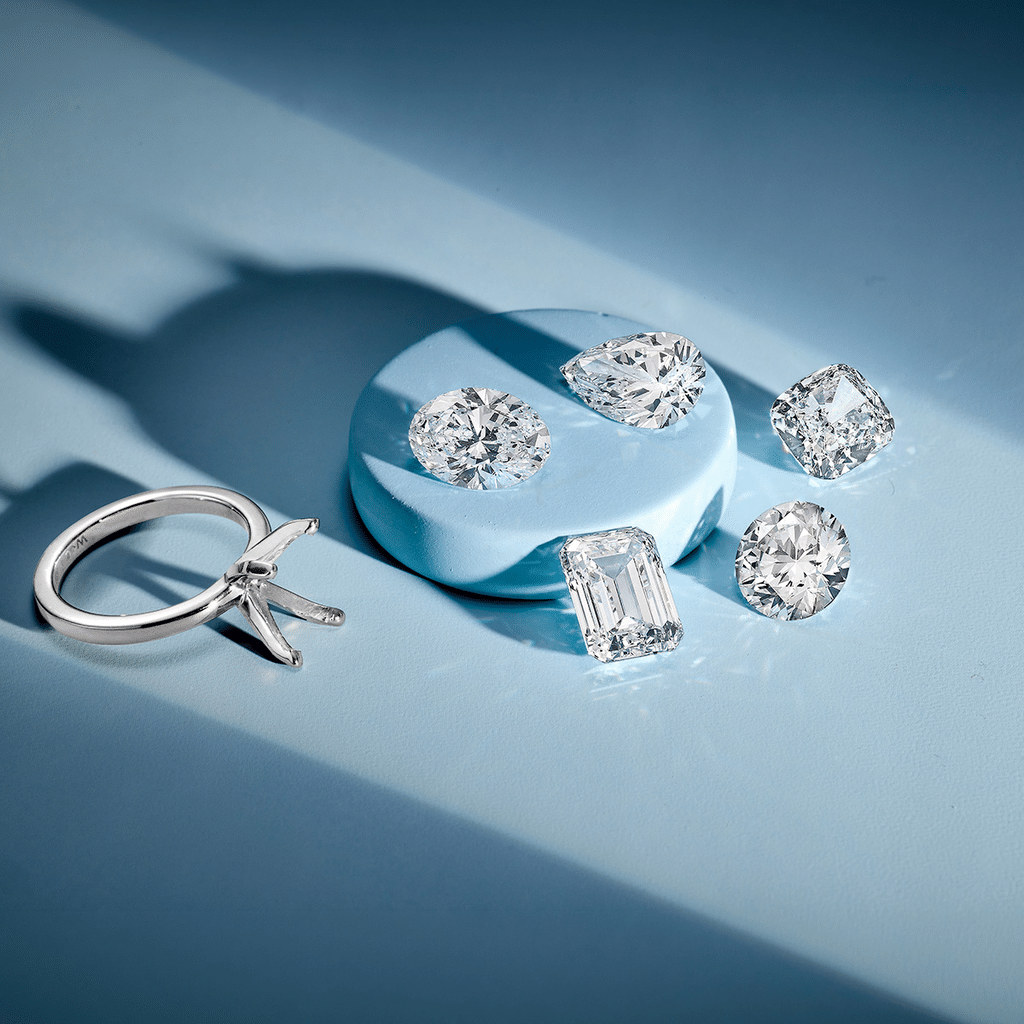
Round, Pear or Marquise: How 3 Engagement Ring Shapes Flatter the Hand Differently
A diamond’s outline changes how an engagement ring looks on the hand before band details or accent diamonds enter the picture. A round diamond distributes its dimensions evenly, a pear combines a rounded end with a taper, and a marquise places a point at each end of an elongated outline.
Choosing between them starts with the effect the wearer prefers: balanced coverage, a gradual taper, or a more pronounced emphasis on length. Finger proportions matter, but they do not determine which shape someone should wear. The useful question is how each design looks and feels on that particular hand.
Round: Balanced Proportions Without a Directional Emphasis
A round brilliant diamond combines a circular shape with facets arranged to create brightness and flashes of color. Buyers considering round-cut engagement rings often choose them for this lively appearance. A well-cut example reflects white light brightly and shows changing flashes as the hand moves.
On the hand, the rounded outline gives you several styling possibilities. A polished solitaire keeps the design simple, a pavé band adds diamond detail, and a halo creates a fuller look around the center. Let your usual jewelry preferences guide the choice, then try the complete ring alongside your intended wedding band to judge the combined proportions.
Prioritize cut quality when selecting the diamond, since shape alone doesn’t guarantee brilliance. An Excellent cut grade is a useful starting point for a GIA-graded round brilliant, followed by viewing the diamond in different lighting. Check its diameter in millimeters, too, so you can compare its actual coverage on your hand rather than choosing by carat weight alone.
Pear: A Rounded End With a Tapered Finish
A pear-shaped diamond combines a rounded end with a pointed tip and brilliant-style facets that deliver brightness and flashes of color. Set vertically, a pear-shaped engagement ring can create a lengthening effect on the finger while offering a less symmetrical look than round.
Pears come in a range of proportions to suit different tastes. A shorter, fuller pear may appeal if you love rounded shapes but want a pointed finish. A longer, narrower pear suits someone who prefers a slender outline and a more pronounced emphasis on length. Compare both on your hand rather than choosing by carat weight alone.
When assessing brilliance, check for the bow-tie effect: a dark, bow-tie-shaped area across the diamond’s middle. Its visibility varies between diamonds and viewing conditions. Tilt each example under different lighting and look for a subtle bow-tie that doesn’t distract from the diamond’s overall brightness.
Try wearing the point toward the fingertip and toward the hand to see which arrangement you prefer. Whichever direction you choose, check that the setting protects the tip with a V-prong or surrounding bezel.
Marquise: Length Defined by Two Points
A marquise diamond has curved sides and two pointed ends, creating an elongated, boat-like outline. A marquise engagement ring suits someone who enjoys a distinctive shape with a vintage feel. Worn vertically, it can make the finger appear longer and more slender.
The shape’s history adds to its appeal. According to legend, Louis XV commissioned a diamond resembling the lips of the Marquise de Pompadour. Today, marquise diamonds are attracting renewed interest, with jewelers reporting more requests and celebrity rings, including Selena Gomez’s, bringing the shape back into the spotlight.
Brilliance is another reason to consider it. Its brilliant-style faceting creates bright reflections and flashes of color as the diamond moves. Like pears, marquise diamonds can show a bow-tie across the center, so compare examples under different lighting and look for one where that contrast complements the overall brightness.
For the fit on your hand, compare a slender marquise with a shorter, fuller example. You can also explore an east-west setting if you prefer the diamond positioned across the finger. Whichever design you choose, check that the setting protects both pointed tips and sits comfortably beside your wedding band.
Choose the Effect That Suits the Wearer
When considering a diamond ring from With Clarity, use the same comparison process: assess the outline, check the measurements, and review the complete setting. Keep the preferred effect on the hand central to the decision, alongside comfort and wedding-band compatibility.
Round offers evenly balanced dimensions, pear introduces a single taper, and marquise emphasizes length between two points. The most flattering choice is the one whose proportions the wearer enjoys on their own hand and whose finished design feels comfortable to wear.