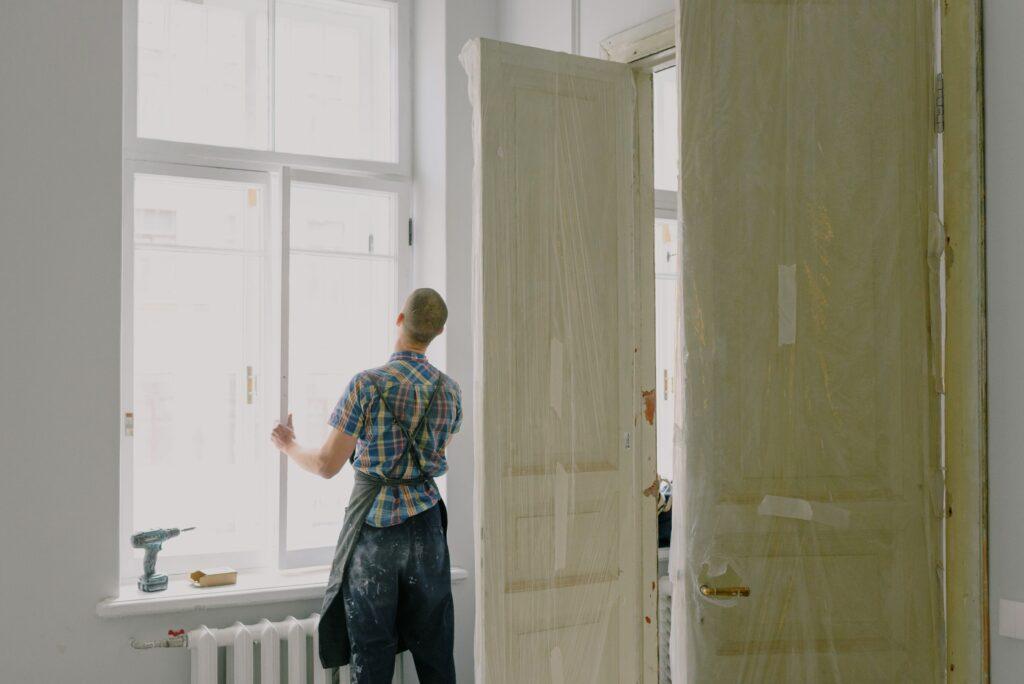
Renovating a Rental Apartment Between Tenants: Costs, Rules and Payback
Every tenant move-out is a decision point for a landlord. The unit can be cleaned and relisted in a week, refreshed for a modest rent increase, or fully renovated to reposition it in the market. Each option has a different cost, a different vacancy period and a different payback, and in older Northeast housing stock each one also triggers different legal obligations.
This guide sets out typical turnover costs, how to judge which upgrades pay for themselves, the lead paint rules that apply in Massachusetts and New York, and how to run the work so that the unit is empty for as short a time as possible.
What a turnover costs
A widely cited survey of property managers put the average cost of a unit turnover at about 3,872 USD, and roughly 40 percent of a typical turnover cost is lost rent rather than work. The scope chosen at move-out drives the rest.
| Turnover level | Typical cost per unit | What it includes |
| Make-ready | 800 to 2,500 USD | Cleaning, paint touch up, minor repairs, smoke and carbon monoxide detector checks |
| Classic refresh | 3,500 to 7,500 USD | Full repaint, new flooring in main rooms, lighting, hardware, some appliances |
| Full renovation | 10,000 to 25,000 USD | New kitchen and bathroom finishes, flooring throughout, updated electrical |
Older buildings sit at the top of each range. Plaster walls, uneven floors and outdated wiring add labor that a newer building does not need.
Which upgrades pay back
An upgrade pays for itself when the rent increase it supports covers its cost within a reasonable horizon. The calculation is simple and is worth doing for every unit.
| Example | Cost | Monthly rent increase | Payback |
| Classic refresh | 4,500 USD | 90 USD | About 50 months |
| Full renovation | 15,000 USD | 225 USD | About 67 months |
| Make-ready only | 1,500 USD | 0 to 50 USD | Recovered through faster leasing |
Paybacks of four to six years are acceptable for long term owners, but only if the rent increase is real. Before committing, compare listings for renovated and unrenovated units in the same building or block. In most Northeast markets the upgrades that move rents are in-unit laundry, updated kitchens, durable flooring and good lighting. Finishes chosen for the owner rather than for the market rarely pay back.
Lead paint rules landlords must follow
Most rental buildings in Boston and New York predate the 1978 federal ban on lead paint, which makes lead the most important legal issue in any turnover renovation.
| Rule | Where it applies | What it requires |
| Federal renovation rule | Housing built before 1978 | Contractors who disturb painted surfaces must be certified and follow lead safe practices |
| Massachusetts lead law | Homes built before 1978 where a child under six lives | Deleading or interim control, confirmed by a letter from a licensed inspector |
| Massachusetts tax credit | Owners who fully delead | State credit of up to 3,000 USD per unit |
| New York City Local Law 1 | Buildings built before 1960, and 1960 to 1978 where lead is known | Hazard remediation at every turnover, including smooth, cleanable floors and treated window and door friction surfaces |
| New York City lead testing | Same buildings | Testing of all units by a certified inspector, with records kept and produced on request |
In Massachusetts, the obligation is triggered by the presence of a young child, and refusing to rent to families to avoid it is unlawful. In New York City, turnover work is mandatory whether or not a child will live in the unit. In both places, a turnover is the cheapest moment to do lead work, because the unit is empty and the floors and windows are already being touched.
Running the turnover to cut vacancy
Because lost rent is a large share of turnover cost, speed matters as much as price. The fastest turnovers are planned before the tenant leaves.
- Walk the unit with notice before move-out and write the scope then
- Order flooring, appliances and fixtures before the unit is vacant
- Book trades in sequence: repairs, electrical and plumbing, paint, flooring, cleaning
- Schedule lead work and clearance testing into the sequence, not after it
- Photograph the finished unit for listings before the final clean
- Start marketing as soon as the completion date is fixed
A make-ready turnover can be finished in five to ten days and a classic refresh in two to three weeks. A full renovation usually takes four to eight weeks, longer if permits are needed for electrical or plumbing changes.
Buying the work like a portfolio
Owners with more than a handful of units can reduce costs by pricing turnovers as a program rather than one unit at a time. A standard scope for each turnover level, priced per unit and agreed in advance, gives contractors steady work and gives the owner a fixed cost and a faster start every time a unit becomes vacant.
The same principle applies to one-off renovations: describe the scope once and let several contractors price it. A platform designed to get competing contractor bids makes the comparison straightforward and keeps the scope consistent across bidders. Owners with buildings in New York can shortlist from a directory of general contractors licensed in New York that shows license numbers and active status, which matters because licensing there is local and does not carry over from one jurisdiction to the next.
Frequently asked questions
How much does it cost to turn over a rental unit?
A simple make-ready costs 800 to 2,500 USD, a classic refresh 3,500 to 7,500 USD and a full renovation 10,000 to 25,000 USD per unit. Survey averages sit close to 4,000 USD once lost rent is included.
Which rental upgrades add the most value?
In-unit laundry, updated kitchens, durable flooring and better lighting are the upgrades most often reflected in rent. Confirm with comparable listings before investing.
Does a Massachusetts landlord have to delead before renting?
Deleading or interim control is required when a child under six lives in a home built before 1978. Full deleading qualifies for a state tax credit of up to 3,000 USD per unit.
What does Local Law 1 require at turnover in New York City?
In covered buildings, owners must remediate lead hazards before a new tenant moves in, including making floors smooth and cleanable and treating window and door friction surfaces, unless testing shows those surfaces are free of lead paint.
How long should a unit stay vacant for renovation?
As briefly as possible. Five to ten days for a make-ready, two to three weeks for a refresh and four to eight weeks for a full renovation are achievable when materials are ordered before move-out.
Should I use one contractor for all turnovers?
A single contractor on agreed unit prices speeds up every turnover, but the prices should be tested against the market periodically by asking other firms to bid the same standard scope.