Planning a Standby Generator for Coastal Homes: Sizing, Placement, and Fuel Decisions
Coastal storms can knock out power for days, which makes a permanently installed standby generator attractive for homeowners and small businesses along the Gulf. Yet a dependable installation involves more than picking a wattage number. Flood zones affect where a unit can sit, salt air influences enclosure and hardware choices, gas supply may be limited during emergencies, and property lines or openings constrain placement. Add in sound ordinances, HOA rules, and permitting, and the best plan is one grounded in your property’s specifics. Here is a focused, practical look at the decisions that shape a reliable, code-compliant generator setup in coastal communities.
- Identify Critical Circuits Before You Size the Generator
Start with a circuit-by-circuit inventory. List refrigeration, a sump or well pump, medical devices, the internet modem and router, garage door openers, key lighting circuits, and at least one microwave or small appliance circuit. Note starting wattage as well as running wattage, since motors and compressors draw more current on startup. Central air conditioning often dictates size because its compressor has inrush current; soft starters can reduce that spike. Document whether your furnace or heat pump uses electric heat strips, and whether your range, dryer, or water heater are gas or electric. A local installer who knows utility requirements, such as Forrest Jordan & Associates of Freeport, can also reconcile loads with available gas supply or propane tank options.
Decide early between a whole-house approach and an essential-circuits approach. Whole-house systems typically require a larger generator and a service-entrance-rated automatic transfer switch (ATS). An essential-circuits plan routes only priority loads to a dedicated subpanel, allowing a smaller unit to run meaningful essentials. Load shedding modules can pause large appliances like a water heater or a second air conditioner so the generator never overloads. For example, an all-electric home with a heat pump might run one HVAC stage, refrigeration, and lighting continuously while letting the dryer and pool pump resume only when there is headroom.
- Natural Gas vs Propane: Reliability and Logistics
Natural gas is convenient, with no refueling logistics and typically steady pipeline supply. However, outages can coincide with pressure drops or shutoffs if utilities isolate sections for repairs. Confirm your gas meter and regulator can deliver the BTU demand at the pressure your generator requires; upgrades are common. Long branch runs to the pad increase pressure loss, so pipe sizing matters. In one neighborhood scenario, several homes lose main line pressure after a storm; correctly sized piping and an upgraded meter help prevent voltage sag and nuisance shutdowns when the generator tries to start a compressor.
Propane offers independence from the gas grid and predictable on-site storage, but it requires planning. Tank size (for example, 250- or 500-gallon above-ground units) determines run time and delivery frequency. Ensure a truck can access the tank after storms; downed limbs and saturated ground can block routes. Two-stage regulators reduce pressure for the appliance while managing longer piping between tank and generator. Place and anchor tanks and pads to address flood buoyancy and local setback rules, and keep regulators shielded from wind-driven rain. Because fuel consumption rises with load, schedule top-offs ahead of hurricane season rather than waiting until supply chains are strained.
- Place the Generator for Clearances, Flood Elevation, and Noise
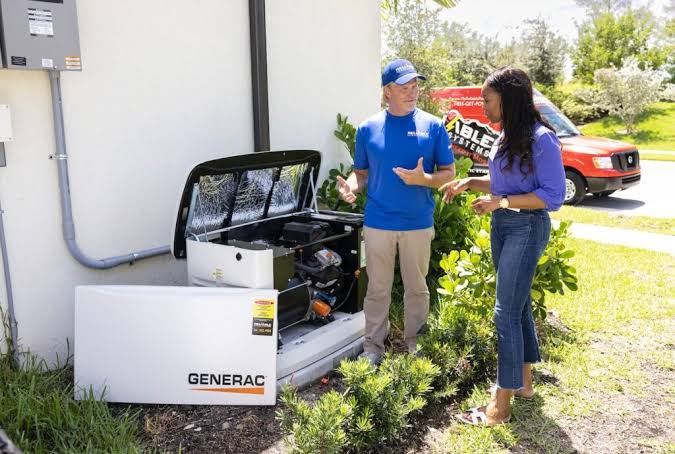
Location drives comfort, safety, and longevity. Codes and manufacturer instructions set minimum clearances from doors, windows, and vents to prevent exhaust from entering the building. Avoid corners that trap hot discharge, and aim the exhaust away from occupied areas and neighbors. In coastal zones, elevate the concrete pad above frequent pooling and meet flood elevation requirements; corrosion-resistant anchors and stainless fasteners help in salty air. Maintain working space for oil and filter changes and a straight conduit path back to the ATS. On a small lot where the meter wall is under a bedroom, it can be quieter to place the unit near the garage and use longer gas and electrical runs with protective sweep elbows rather than hugging the shortest path.
- Pair the Transfer Switch and Electrical Service Correctly
Your transfer gear must match the way your service is built. A service-entrance-rated ATS can replace the main disconnect for whole-house backup on 200- or 400-amp services. If your panel has large electric appliances but you are targeting essentials, a subpanel fed through a non-service-rated ATS keeps the main panel intact. Load management modules can temporarily shed an air conditioner, oven, or water heater when the generator nears capacity. Coordinate with the utility to prevent backfeed during outages, obtain permits, and schedule inspections. Sensitive electronics benefit from whole-house surge protection, and some installations require switched neutrals or specific grounding to work well with the ATS and generator design.
After Installation: Exercise, Maintenance, and Storm Readiness
Automatic exercise cycles keep the engine lubricated, but periodic under-load tests prove the entire system works. Before storm season, simulate a brief outage, confirm the ATS transfers smoothly, and verify large loads start without dimming or stalling. Adhere to the manufacturer’s schedule for oil and filter changes, air filter replacement, and spark plug inspection. Replace the starting battery on an interval rather than waiting for failure. In salty air, rinse the enclosure periodically, inspect louvers and hinges for corrosion, and keep vegetation trimmed to maintain airflow through intake and exhaust grilles.
Build a simple checklist. For propane, schedule a pre-season fill and confirm tank gauges and shutoff valves are labeled and accessible. For natural gas, note the meter upgrade documentation and emergency contact numbers. Keep spare engine oil, filters, and fuses on hand. Post laminated instructions near the electrical equipment so family members or staff know how to observe the generator, silence alarms, and call for service. Remote monitoring can send alerts for low battery, missed exercise, or fault codes, which allows issues to be resolved before a storm arrives.
A dependable standby system comes from several decisions working together: clearly defined priority circuits, a fuel plan suited to your property and outage patterns, placement that respects clearances and flood risks, and transfer gear matched to your service. When those pieces align, routine exercise and seasonal checks keep everything ready. For coastal homeowners and businesses, that preparation can turn an extended outage into a manageable inconvenience instead of a scramble. Careful planning now is what makes the generator feel unremarkable later, which is exactly the point of having one.