Kling 2.6 API in the New Pace of Visual Storytelling
Visual storytelling no longer moves at the speed of traditional production calendars. Brand campaigns shift faster, editorial concepts change more quickly, and creative teams are now expected to turn ideas into moving assets with far less time between concept and release. Across media, fashion, culture, luxury, and digital publishing, the question is no longer whether visual storytelling matters. The question is how teams keep pace without flattening every idea into the same hurried format.
That is where Kling 2.6 video API starts to matter in a more practical way. For developers and workflow teams supporting creative production, its value is not only tied to video generation itself. More importantly, it offers a route for turning written concepts, static assets, and campaign direction into moving visual material that better matches the rhythm of current digital storytelling.
Visual Storytelling Now Moves Faster Than Traditional Production Cycles
Creative work used to tolerate longer gaps between idea, approval, and final presentation. That gap has narrowed. Campaigns now need short-form video, moving product visuals, launch materials, and socially adaptable storytelling much earlier in the process. Editorial and brand teams are not simply producing more content. They are producing more visual content at a faster pace.
Pressure builds because audience attention has changed too. Static content still matters, but moving image formats now carry more of the first impression. For many brands and media teams, visual rhythm has become part of how a story feels before it is fully read.
Creative Teams Face a New Demand for Constant Visual Output
One campaign rarely stays in one format. Launch messaging turns into cutdowns, visual teasers, digital issue support, and social fragments. Output volume rises quickly.
Brand Narratives No Longer Live in Text Alone
Written language still anchors the message, but visual layers increasingly determine whether the message feels current, premium, or culturally aware.
Kling 2.6 API Brings Video Generation Closer to Everyday Creative Work
The most useful way to understand Kling 2.6 API is not as a distant production technology, but as part of everyday visual development. Creative teams already work from messaging decks, launch themes, campaign briefs, editorial concepts, and static art direction. A video API becomes relevant when it can enter that flow without demanding an entirely separate process.
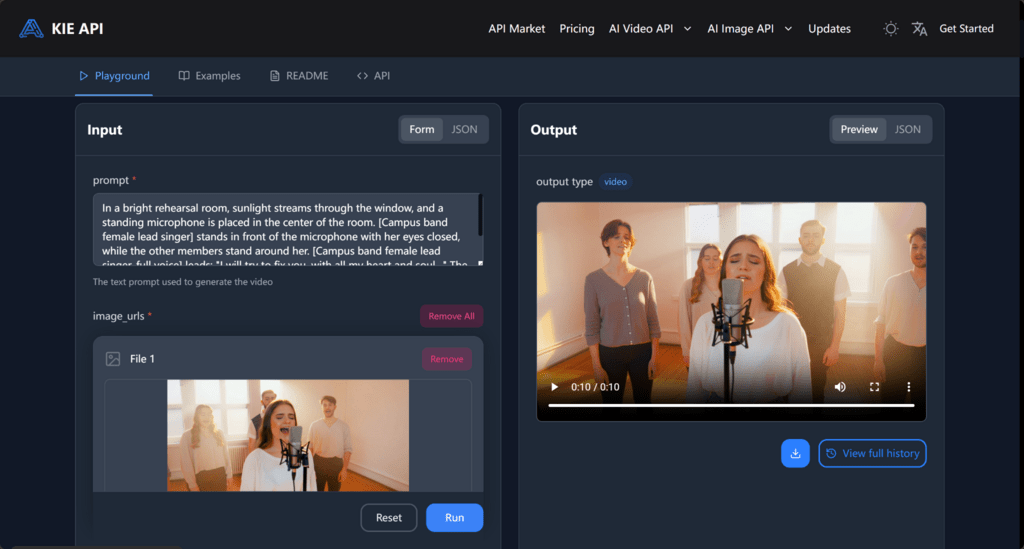
That is why Kling Text to Video API and Kling Image to Video API matter in practical terms. One route starts with a written direction. The other starts with visual assets that already exist. Together, they make the API more adaptable to how modern teams actually build.
Kling Text to Video API Fits Message-Led Visual Development
Campaigns often begin as language: a launch narrative, a brand direction, a scene description, a product story. Message-led teams need a way to move from those words to early visual form quickly enough to keep momentum.
Kling Image to Video API Extends Existing Visual Material
Static brand assets, editorial imagery, key art, and product visuals often carry most of the creative direction already. Extending those materials into motion is frequently more useful than starting from zero.
Kling Video 2.6 API Matters More When Visual Rhythm Becomes Part of the Brand
Visual storytelling today is not only about what appears on screen. It is also about timing, motion, continuity, and how an audience experiences pace. A brand can feel modern, cinematic, restrained, or dynamic partly because of how visual information moves, not just because of how it looks in one still frame.
That is one reason Kling Video 2.6 API deserves attention beyond technical categories. When visual rhythm becomes part of the brand experience, video generation stops being a novelty layer and starts becoming a workflow layer.
Faster Visual Assets Change How Stories Reach Audiences
A strong concept introduced at the right moment can create a very different response from the same concept arriving late or in a weaker format.
Kling AI 2.6 API Supports Creative Teams Working Under Shorter Timelines
Shorter timelines do not remove the need for quality. They make adaptable workflows more important. Creative teams need tools that help them respond without collapsing into generic output.
Kling 2.6 API Price and Access Shape Real Adoption
Attention often begins with visuals, but adoption usually depends on more practical things. Teams need to understand what access looks like, how quickly testing can begin, and whether Kling 2.6 API price feels manageable once generation becomes routine rather than occasional.
That is especially true in environments where visual production keeps repeating. Once a brand, publication, or creative studio starts using generated video as part of normal storytelling, pricing stops being a minor line item and becomes part of content planning.
Kling 2.6 API Price Matters Once Visual Production Becomes Routine
One successful draft tells very little about long-term viability. Repeated use is where cost becomes meaningful.
Kling 2.6 API Documentation and Key Access Influence Workflow Confidence
Early testing depends on more than interest. Teams need a clear route through Kling 2.6 API documentation and a workable path to Kling 2.6 API key access before any workflow becomes credible.
Kling AI API Fits a Wider Shift in Digital Creativity
Digital creativity is moving toward more immediate, more iterative, and more layered visual communication. That shift is not limited to advertising or tech startups. It is visible in editorial production, cultural publishing, premium brand storytelling, and creative commerce. Speed alone does not define the shift. Continuity between concept and output does.
That is where Kling AI API becomes relevant in a broader sense. It belongs to a landscape where moving from idea to visual direction now needs to happen faster, with less friction between strategy and expression.
Creative Utility Now Matters as Much as Novelty
Spectacle may attract attention, but usable creative infrastructure is what teams return to. Long-term value comes from fit, not surprise.
Kling Video Generation API Reflects a More Immediate Creative Era
Modern visual storytelling now expects motion, adaptability, and faster iteration to be part of ordinary production, not exceptional production.
Kling 2.6 API Beyond Technical Adoption
The deeper significance of Kling 2.6 API lies in what it represents for creative and communication workflows. Text-to-video, image-to-video, accessible entry points, and manageable workflow value matter because they change how quickly a story can move from concept to felt experience. For developers supporting creative systems and teams shaping modern brand narratives, that shift is no longer peripheral. It is part of the new pace of visual storytelling itself.