How E-Bikes Are Quietly Redefining the Weekend Escape for Urban New Yorkers
The weekend trip from New York has followed the same script for years. Train to a small town. Walk the main street. Find the one café everyone recommends on social media. Walk back to the station. The geography stays beautiful, but the radius stays small — limited to whatever is within walking distance of the platform.
That script is starting to change, and the catalyst isn’t a new train line or a better rideshare app. It’s an electric bike.
Beyond the Train Station
The appeal is less about the bike itself and more about what it unlocks. Places like Beacon, Cold Spring, and the small towns along the Hudson Valley have long been popular day trips from Grand Central. But their best offerings — the farm stands on back roads, the river overlooks a few miles from Main Street, the galleries that relocated to old barns outside town — have always been just out of reach for visitors arriving without a car.
An e-bike closes that gap quietly. A 15-mile loop through the countryside that would be ambitious on foot becomes an effortless hour of riding. The towns that felt like a three-block walking tour suddenly open up into full landscapes — orchards, vineyards, riverside paths that stretch past the last crosswalk.
For anyone who has taken the Metro North to Tarrytown and wondered what’s beyond Sleepy Hollow’s main cemetery, or arrived in Rhinebeck and wished they could reach the farms that always seem to be ten minutes by car — this is the practical answer no one expected.
Why Non-Cyclists Are the Ones Driving This
What’s unusual about this shift is who’s leading it. It’s not the weekend warriors in lycra. It’s couples in their 40s and 50s who haven’t ridden a bike in years. It’s friends who want a more active alternative to the “brunch and browse” formula. It’s people who would never call themselves cyclists.
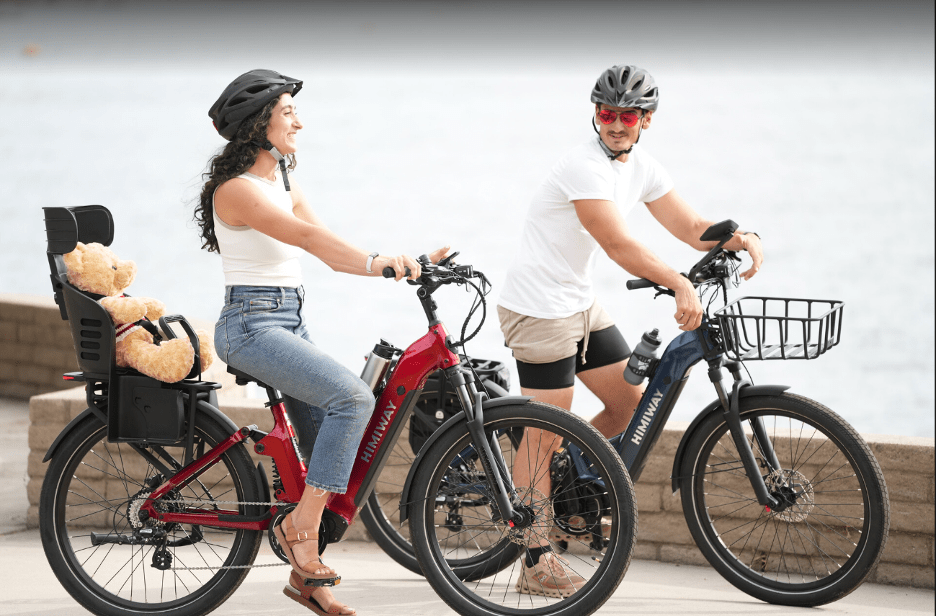
The current generation of step through electric bike designs has removed most of the barriers that kept casual riders away. Low frames that don’t require swinging a leg over. Geometry that feels stable at walking speed. Weight distribution that doesn’t demand athletic balance. For a Park Avenue professional in sneakers and a linen shirt, the experience of getting on and riding feels closer to walking than to traditional cycling.
This is also why rental fleets are appearing at Hudson Valley B&Bs and boutique hotels — the operators noticed that guests wanted to explore beyond the property, but didn’t want to drive, hike, or commit to a three-hour guided tour. An e-bike splits the difference.
The Riding Experience, Simplified
For anyone unfamiliar with how these machines actually work: a pedal assist electric bike reads your pedaling effort and adds proportional motor support. Turn the pedals gently, and the motor matches that energy. Push harder on a hill, and the motor pushes harder with you. The effort feels like walking on level ground — steady, conversational, and not the kind of exertion that arrives at a winery covered in sweat.
Most systems offer three to five levels of assistance, which in practice means one setting for flat rail trails and another for the hill outside Cold Spring that makes the Hudson River view worth it. Battery range on a full charge comfortably covers 40 to 60 miles for most current models — more than enough for a full day of exploring without the range anxiety that haunts electric car owners.
The learning curve is measured in minutes, not hours. Riders who haven’t been on a bicycle since college typically report that the first half-mile feels unfamiliar, and the next ten feel entirely natural.
Where to Actually Do This
The infrastructure exists — and it’s better than most people assume.
The Empire State Trail alone offers over 750 miles of multi-use paths connecting communities across New York. Sections of it parallel the Metro North corridor, meaning a rider can step off a train in Beacon or Poughkeepsie with a rented or folded e-bike and immediately access a separated trail network.
Rail trails — former railroad corridors converted to paved paths — are the most underappreciated resource in the weekend trip toolkit. The Dutchess Rail Trail, the Walkway Over the Hudson, and the Harlem Valley Rail Trail all offer flat, car-free routes through some of the most scenic countryside within two hours of the city. The surfaces are smooth enough that tire choice barely matters and the grades gentle enough that minimal assist makes the riding feel effortless.
For a first outing, the combination of a Metro North ticket to Beacon and a loop through the surrounding trail system offers a proof of concept: the weekend escape without the car, the parking search, or the constraint of staying within walking distance of a platform.
A Shift in How We Think About Distance
The broader change happening quietly in the background isn’t really about e-bikes at all. It’s about what “close to the city” actually means when your mobility options expand beyond walking and driving.
Towns that were always technically accessible by train but practically limited to a two-block walking radius now function as gateways to a much larger landscape. The weekend trip that used to cover a few square blocks can now cover 30 square miles. The places that felt remote without a car suddenly feel intimate with a little assist.
The rental car industry probably won’t notice. But the train towns will.