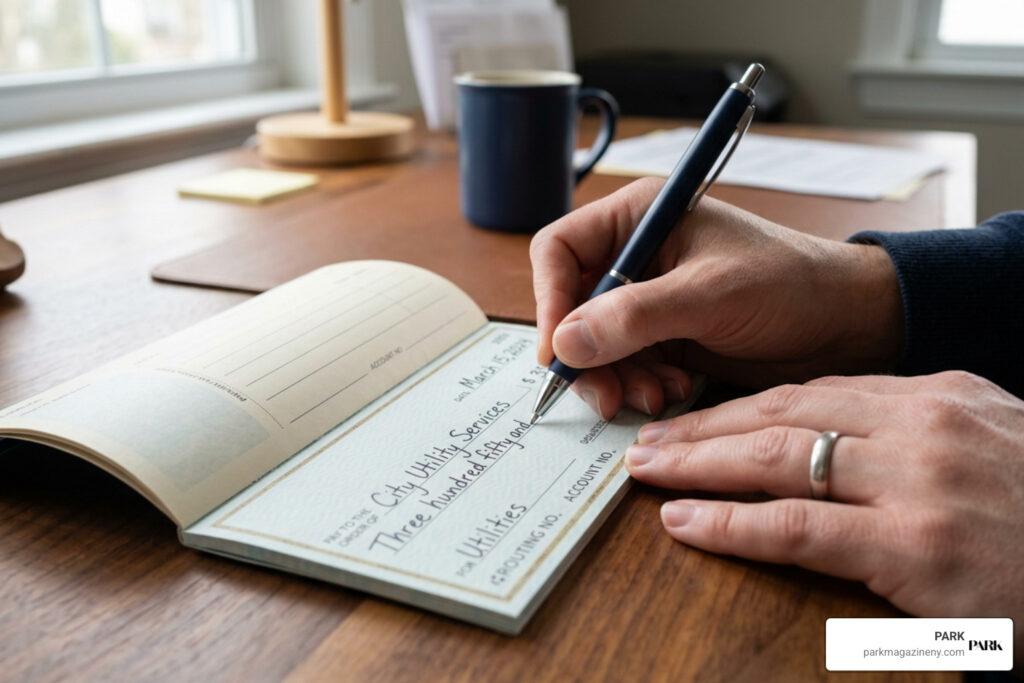
How to Master Writing a Check in 30 Days
How to Write a Check Correctly and Securely
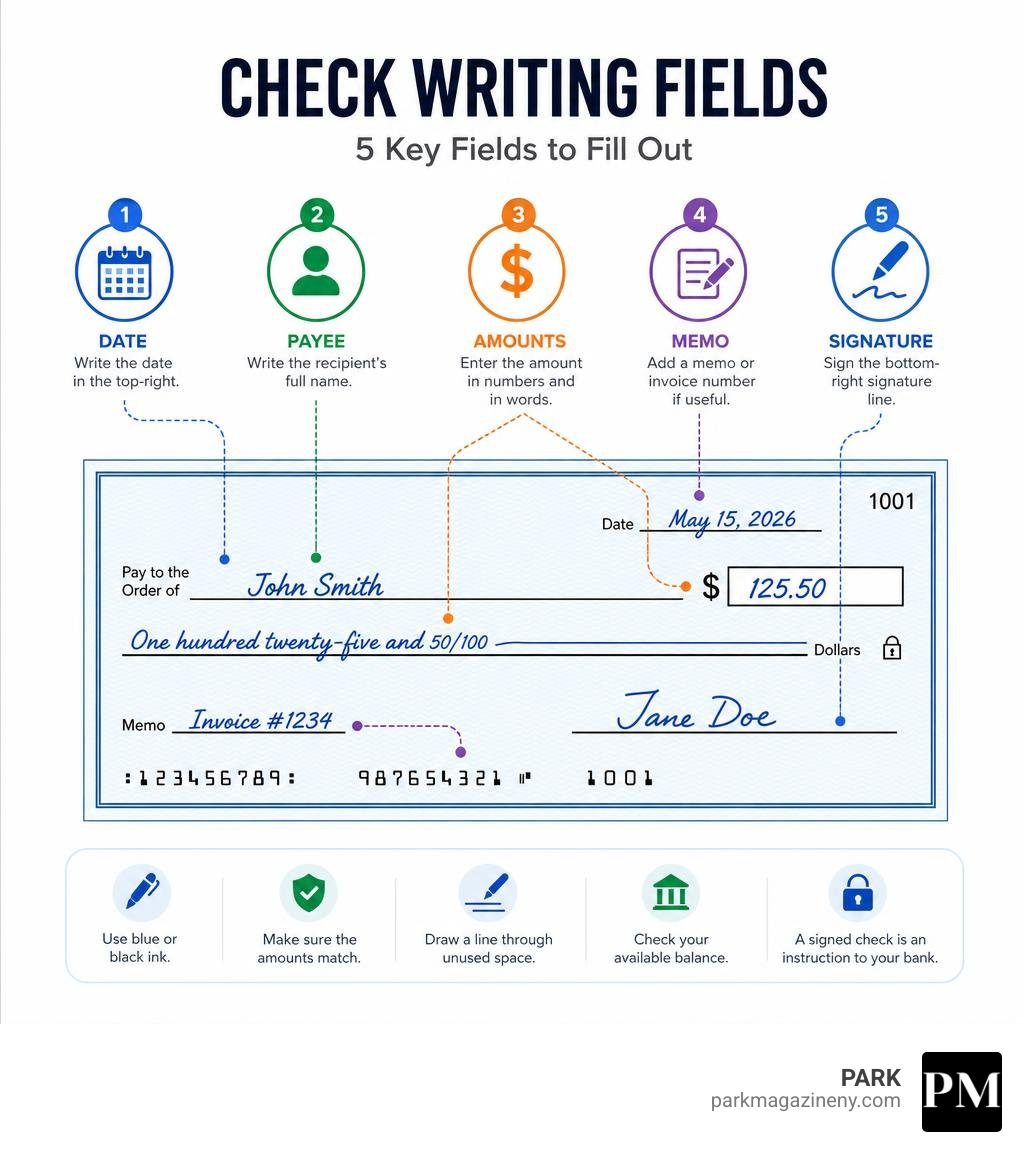
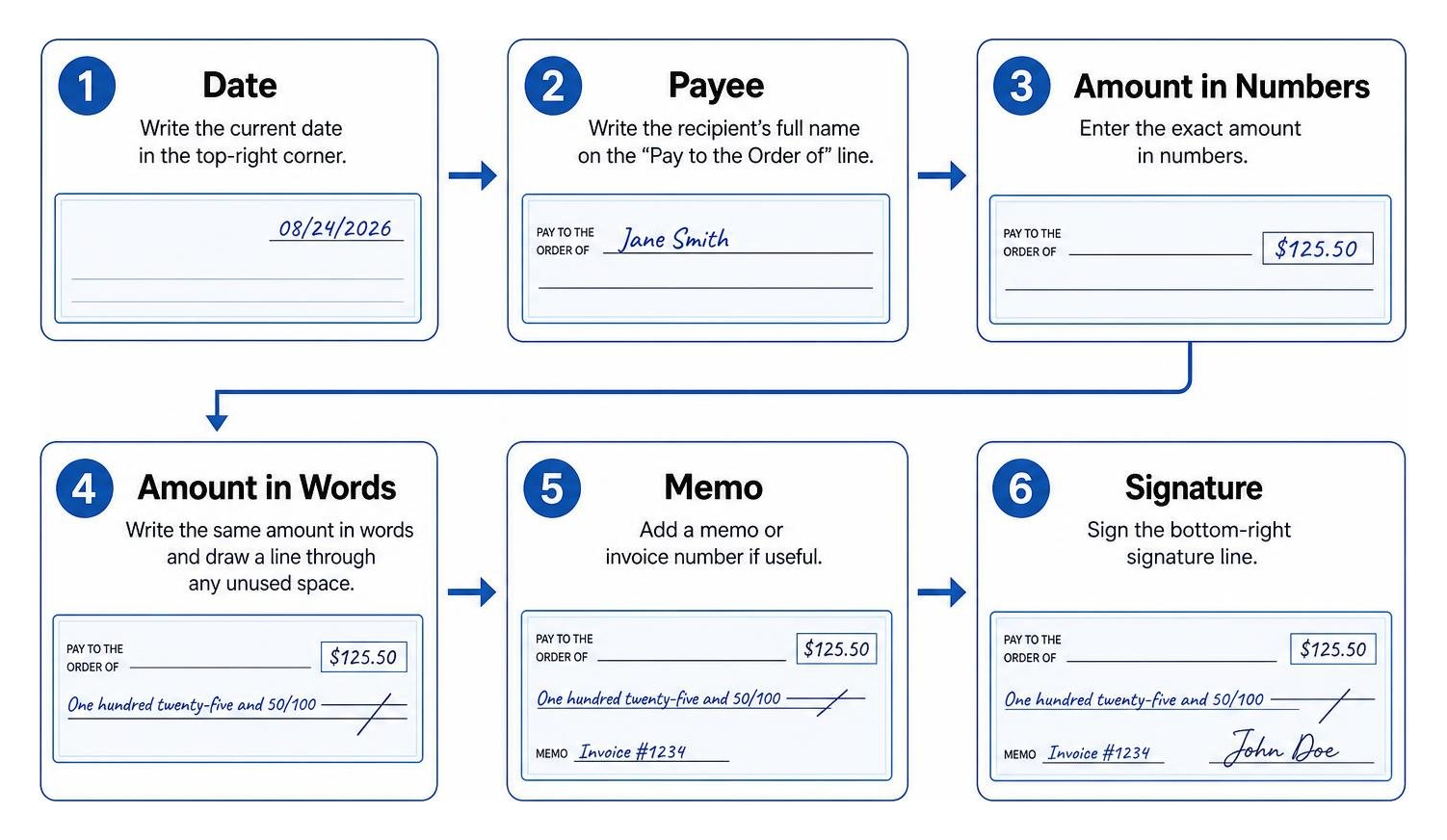
To write a check, fill in six key fields in this order:
- Add the date in the top-right corner.
- Write the recipient’s full name on the “Pay to the Order of” line.
- Enter the exact amount in numbers, such as
$125.50. - Write the same amount in words: One hundred twenty-five and 50/100.
- Add a memo or invoice number if useful.
- Sign the bottom-right signature line.
Use permanent blue or black ink, make sure the number and word amounts match, and draw a line through unused space on the written-amount line. A signed check is an instruction for your bank to pay from your account, so check your available balance before handing it over.
Writing a check may be less common now, but it remains useful for rent, contractors, gifts, and certain official payments. The next steps show how to complete every field with clarity, avoid costly errors, and reduce the risk of check fraud.
I am W.A. Muller, and I will walk you through the habits that make check writing simple, accurate, and secure.
Step-by-Step Guide: How to Write a Check Correctly
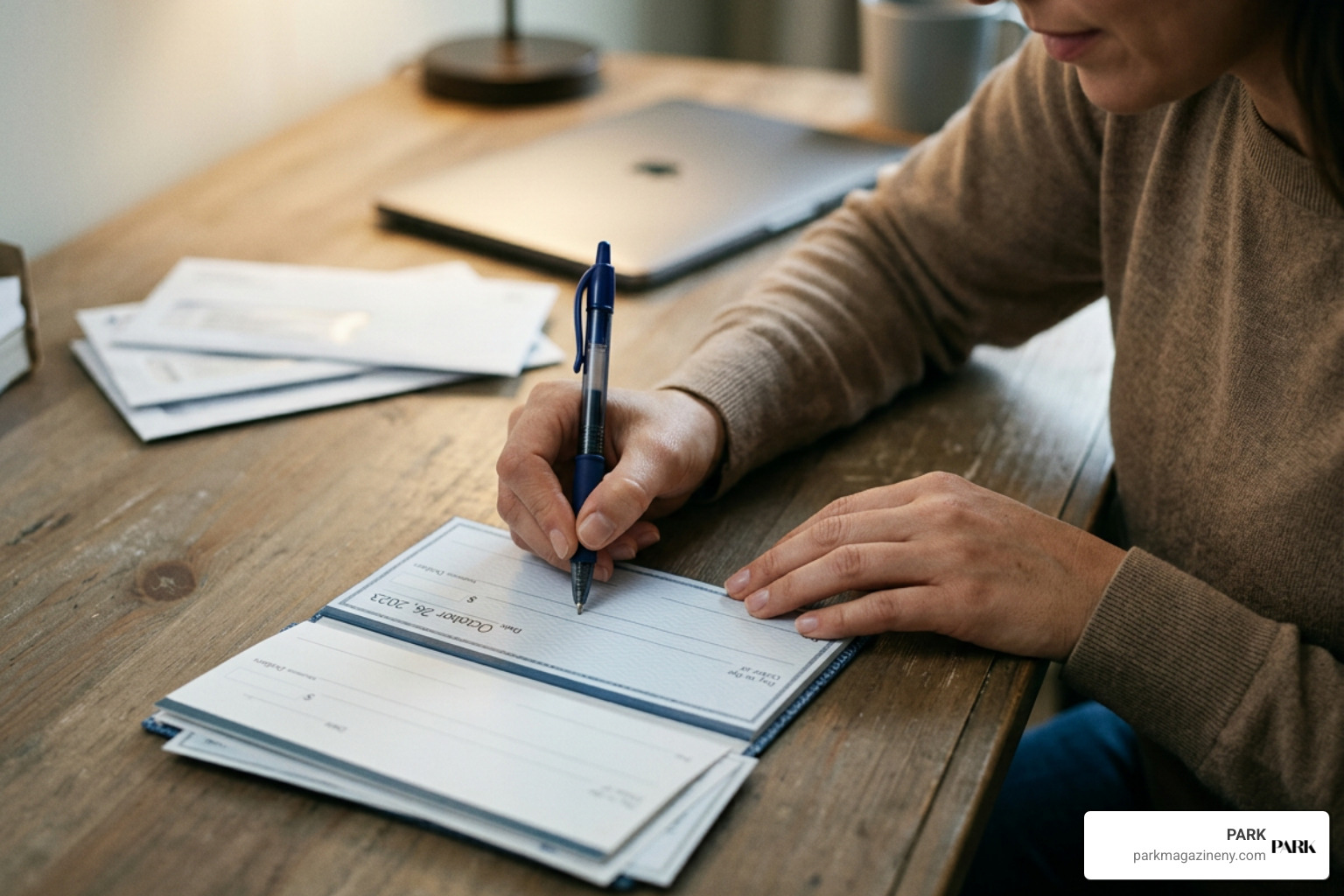
Mastering the physical check comes down to building a repeatable routine. When we sit down to issue a payment, following a strict structural order prevents errors, ensures clear communication with processing software, and keeps our funds secure.
Dating and Specifying the Payee
Every check begins at the top. In the upper-right corner, write the current calendar date. You can format this numerically (for example, 08/24/2026) or write it out in full (August 24, 2026). Writing out the month in words adds an extra layer of defense against tampering, as numbers are simpler for fraudsters to alter.
Directly below your personal information, locate the line marked Pay to the Order of. Here, print the complete legal name of the individual or business entity receiving the money.
- Never leave this line blank; an unassigned check can be claimed by anyone holding it.
- Avoid informal nicknames or vague acronyms unless specifically requested by the recipient.
- Use clear block printing for the payee name to ensure automated bank Optical Character Recognition (OCR) systems process it without manual intervention.
Writing Currency Amounts: How to Write Check Cents and Round Figures
Checks require the payment value to be recorded in two distinct formats: numbers and words. Learning how to write a check with cents and round values accurately guarantees that financial institutions clear the transaction smoothly.
First, locate the numerical dollar box on the right-hand side. Write the exact amount starting hard against the left border to prevent unauthorized digits from being slipped in front. Always include the decimal point and cents:
- For standard amounts:
$1,250.75 - For round dollar figures:
$200.00
Second, move to the line directly underneath the payee field. Here, spell out the dollar amount in words, followed by the cents expressed as a fraction over 100. The word “and” should only be used directly before the fractional cents to indicate the decimal point:
- $1,250.75 is written as: One thousand two hundred fifty and 75/100
- $410.00 is written as: Four hundred ten and 00/100
- $50.00 is written as: Fifty and 00/100
If there is leftover blank space between your fractional cents and the printed word “Dollars” at the end of the line, draw a single, straight horizontal line through that empty area. This strikethrough prevents anyone from inserting extra words to alter your payout. For comprehensive structural breakdowns, explore How to write a check: A step-by-step guide | Wells Fargo and review How to Write a Check: 6 Steps (with Pictures) – wikiHow .
Completing the Memo Line and Bottom-Right Signature
The bottom half of the check finalizes your transaction record and provides the legal authorization required for clearing.
- The Memo Line (Bottom-Left): This optional field serves as a personal reference for both you and the payee. We recommend writing your customer account number for utility bills, your apartment number for residential rent, or an invoice reference. That automated bank sorting ignores the memo field; it is primarily an accounting aid.
- The Signature Line (Bottom-Right): Sign your official legal name in cursive on the designated line. Make sure your signature closely matches the signature card your financial institution holds on file. Never sign a check before all other fields are completed. An unsigned check is simple paper, but a pre-signed blank check exposes your entire account balance to catastrophic theft.
Critical Rules for Numbers, Words, and Multiple Payees
Executing a personal check correctly requires understanding the legal parameters banks use to interpret negotiable instruments.
Legal Precedence of Written Words Over Numbers
Discrepancies happen. You might accidentally write $150.00 in the numerical box while spelling out One hundred five and 00/100 on the legal line.
Under Uniform Commercial Code (UCC) rules and Consumer Financial Protection Bureau guidelines, the amount written in words legally takes precedence over the numerical figure. If the two fields differ, the financial institution will process the transaction based on the written words. Always double-check that your numerical box and your legal text line match before parting with the check. For additional legal formatting standards, see How to Write a Check | Banking Advice .
Rules for Multiple Payees and Making Checks to Cash
When writing a check to more than one individual, the coordinating conjunction you choose changes how the funds can be accessed:
- Using “AND” (e.g., “Jane Doe and John Doe”): Both parties must endorse the back of the check to cash or deposit it into an account. This format is ideal when you want both recipients to participate in the transaction, such as joint wedding gifts.
- Using “OR” (e.g., “Jane Doe or John Doe”): Either individual can endorse and negotiate the check independently without the presence or signature of the other.
Writing a check payable to “Cash” should be avoided whenever possible. A check made out to “Cash” is legally classified as bearer paper. Whoever physically holds bearer paper can cash or deposit it. If that check is lost or stolen on a Manhattan subway platform, anyone who picks it up can walk into a branch and demand the funds. If you need cash, withdraw it directly at an ATM or make the check payable to your own legal name.
Postdating Risks and Stale-Dated Check Expiration
Postdating involves writing a future date on a check with the expectation that the recipient and their bank will wait until that date to deposit it.
In practice, postdating provides no legal protection against immediate cashing. Under standard banking laws, financial institutions may legally process a check as soon as it is presented, regardless of the date written on its face, unless you file a formal notice of postdating with your bank. If the payee deposits the draft early, it can clear immediately and trigger overdraft charges.
Furthermore, physical checks do not remain valid indefinitely:
| Check Type | Standard Expiration Timeline | Governing Guidelines |
|---|---|---|
| Personal Checks | 6 Months (180 Days) | Considered stale-dated; banks may reject or honor at discretion |
| Business Payroll Checks | 6 Months to 1 Year | Varies by state statute and issuer policies |
| U.S. Treasury Checks | 1 Year (365 Days) | Governed by federal IRS and Treasury rules |
| Cashier’s / Certified Checks | Varies (State Escheatment) | Funds are guaranteed; subject to state unclaimed property laws |
To review more examples of standard banking rules, visit How to write a check | Fidelity and How to Write a Check in 6 Simple Steps – NerdWallet .
Security Best Practices and Modern Fraud Prevention
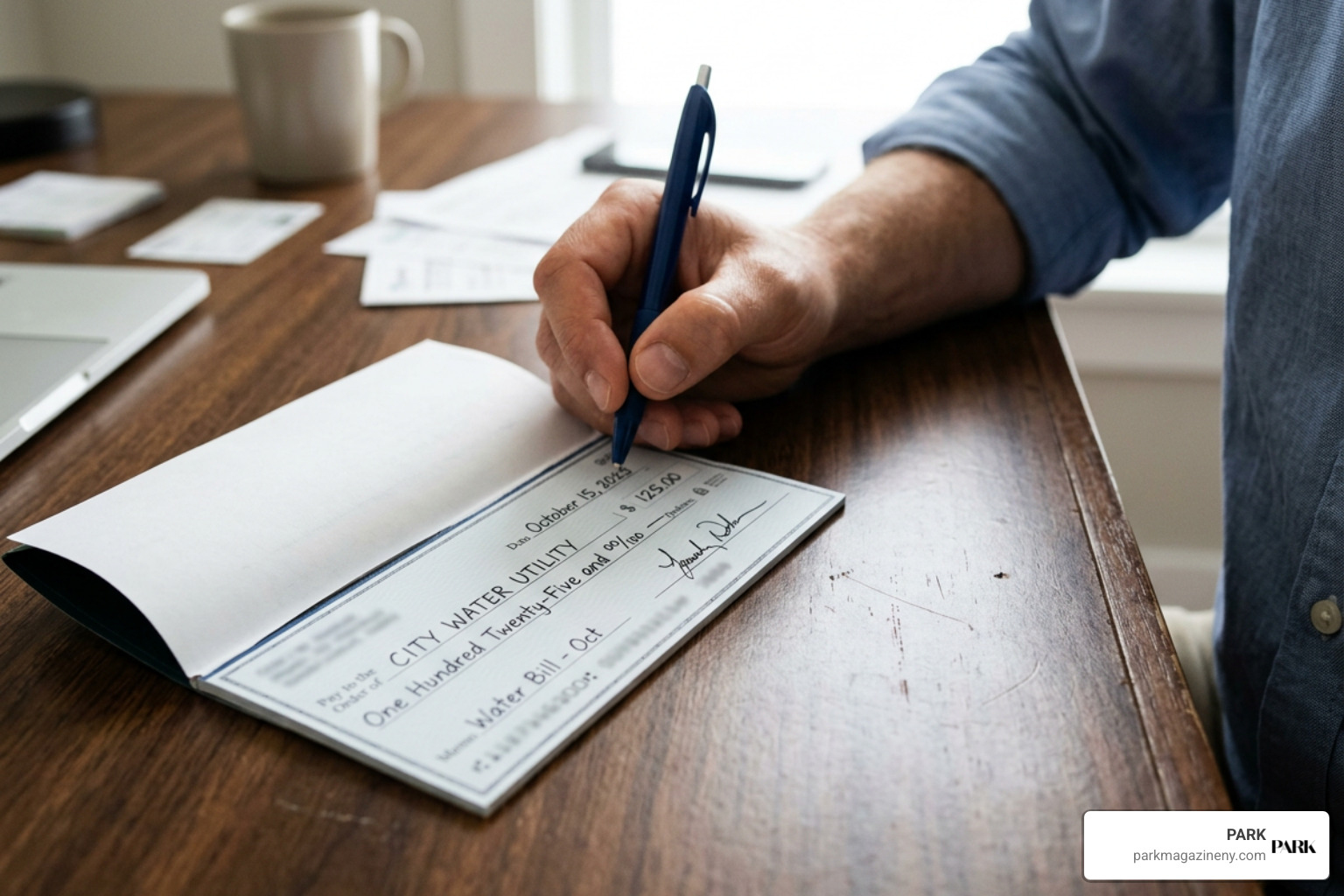
While digital payment systems face digital vulnerabilities, paper checks face physical exploitation. Modern financial crime requires proactive security habits whenever you write and mail a check.
Check Washing Defense and Gel Pen Usage
The Financial Crimes Enforcement Network (FinCEN) has highlighted significant surges in mail theft and check washing. Check washing occurs when criminals steal envelopes from collection bins and use household solvents like acetone or bleach to remove the ballpoint pen ink from the payee and dollar lines, leaving the authentic signature intact. They then insert a new payee name and an inflated numerical amount.
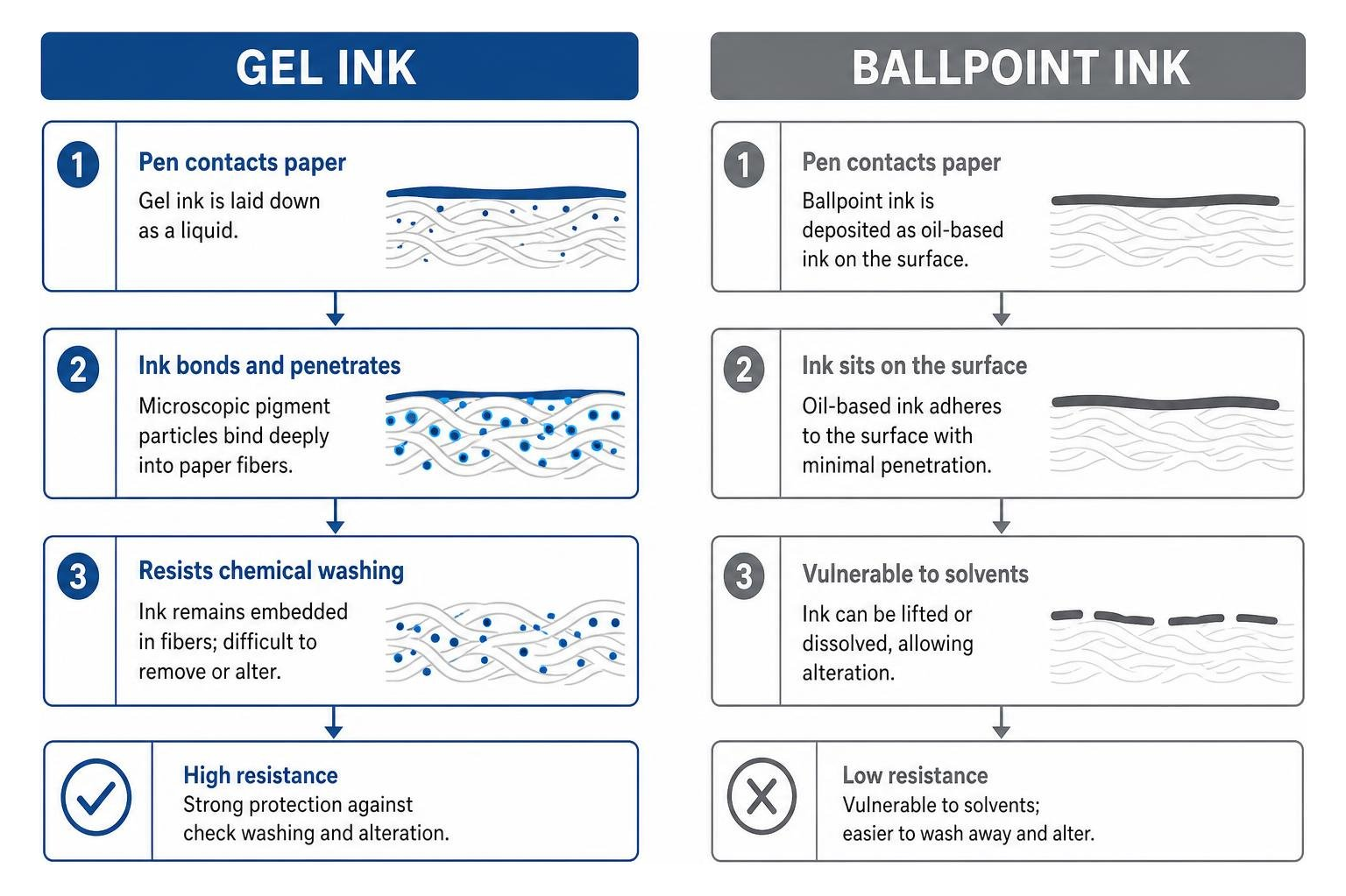
To protect yourself against check alteration:
- Use Black or Blue Gel Pens: Gel ink contains microscopic pigment particles that bind deeply into paper cellulose fibers, making it highly resistant to chemical solvent washing compared to standard oil-based ballpoint ink.
- Never Use Pencils or Erasable Pens: Erasable inks can be wiped clean in seconds without leaving a trace.
- Drop Mail Inside the Post Office: Avoid leaving outgoing bill payments in unsecured residential mailboxes or public blue drop boxes overnight. Deposit envelopes containing checks directly inside a secure U.S. Postal Service lobby.
- Fill All Blank Space: Never leave wide margins on the payee or dollar lines where extra letters or digits could be forged.
- Monitor Accounts Regularly: Use online banking to review cleared check images, ensuring the processed amount matches what you originally wrote.
For additional fraud guidance, read How to Write a Check | Chase and check out How to Write a Check: Step-by-Step Instructions | California & North Island Credit Union .
Fixing Errors: How to Handle Check Mistakes and Voiding Procedures
If you make a minor spelling error or write the wrong dollar amount while drafting a check, do not attempt to scribble over the mistake or use correction fluid. Banks train their automated optical sorters and human tellers to flag and reject altered checks to prevent unauthorized tampering.
Follow the standard voiding protocol:
- Write the word “VOID” in bold, prominent block letters across the front of the check.
- Ensure you write across the primary text fields (payee and amount boxes).
- If voiding the check for direct deposit setup, ensure the Magnetic Ink Character Recognition (MICR) routing and account numbers along the bottom rim remain completely legible.
- Log the voided check number in your checkbook register to keep transaction sequencing clean.
- If the voided check is not being used for direct deposit verification, shred it immediately using a cross-cut paper shredder.
For an illustrated walk-through on voiding methods, consult How to Write a Check: A Step-by-Step Guide | Calculatethis.io and watch How to Write a Check – YouTube .
Financial Hygiene: Balancing Your Checkbook Register and Managing Account Funds
Writing the check is only the first half of the transaction. The second half is ensuring that your checking account reflects pending debits so you avoid unexpected overdrafts.
Tracking Debits and Monthly Bank Reconciliation
Your physical checkbook comes equipped with a register—a compact ledger designed to record outgoing paper debits, debit card swipes, and electronic transfers.
Whenever you issue a check, log these four details immediately:
- The four-digit check serial number (found in the top and bottom right corners).
- The transaction date.
- The payee name or payment description.
- The exact dollar amount to be deducted.
Subtract the check value from your running balance on the spot. Because paper checks can take days or weeks to clear depending on when the payee deposits them, relying solely on your mobile banking app balance can be deceptive. A mobile balance shows settled funds, not checks currently sitting on someone’s kitchen counter. Reconcile your manual register against your monthly bank statement to account for outstanding checks that have not yet cleared.
Preventing Bounced Checks and Overdraft Fees
A check “bounces” when it is presented for clearing against an account that lacks sufficient funds (Non-Sufficient Funds or NSF).
When a check bounces:
- Your bank can return the check unpaid and assess an NSF penalty fee.
- The recipient’s bank may charge them a returned deposit fee, which they will pass back to you alongside administrative surcharges.
- Repeatedly bouncing checks can damage your standing with consumer reporting agencies like ChexSystems, making it difficult to open standard checking accounts in the future.
- Intentionally issuing checks without sufficient funds is illegal.
Always confirm your available balance—not just your total ledger balance—before writing a check.
Frequently Asked Questions About Writing Checks
Can I write a check using a pencil or erasable pen?
No. Never write any part of a check using a pencil or erasable pen. Financial institutions will frequently reject checks written in pencil due to tampering vulnerabilities. Using pencil makes it trivial for bad actors to alter the recipient name or add zeroes to the payment amount. Always use non-erasable, permanent blue or black gel ink.
What is the difference between writing “and” versus “or” for joint payees?
The word linking two payee names determines who must endorse the document. If you write “John and Jane Doe,” the bank legally requires endorsements from both John and Jane before the funds are released. If you write “John or Jane Doe,” either party can endorse and deposit or cash the check independently.
How long does a personal check remain valid before expiring?
Under standard commercial banking standards, personal checks are considered valid for six months (180 days) from the date written on the face. After 180 days, the check becomes “stale-dated.” Banks have the legal option to reject stale-dated checks, though they may process them at their discretion if they believe the funds are legitimate. Federal U.S. Treasury checks remain valid for one year.
Conclusion
Mastering how to write a check accurately ensures that your personal payments remain orderly, verifiable, and secure against modern financial fraud. By following exact formatting standards—from positioning fractional cents to drawing strikethrough lines and logging check serial numbers—you protect your hard-earned assets with every signature.
At PARK, we believe that true sophistication lies in mastering everyday precision. Just as environmental scientists rely on rigorous accuracy when evaluating tools like precision in precipitation monitoring, managing your personal finances requires attention to detail. Integrate these check-writing habits into your financial routine to take complete control of your financial life.