How to Establish Responsibility After a Motorcycle Crash in Fayetteville, NC
Motorcyclists must stay alert to traffic around them, but safe riding cannot prevent every collision. A driver who changes lanes without checking a blind spot or turns across an approaching motorcycle can cause a serious crash. In Fayetteville, determining responsibility requires looking at the actions of everyone involved, not simply assuming the rider was at fault.
A motorcycle accident lawyer in Fayetteville, NC, may review the circumstances of the crash, including driver decisions, road conditions, and available evidence. Examining these details can help clarify how the collision happened and who may be responsible under North Carolina law.
Start by Reconstructing the Events Before Impact
Determining fault often begins with the actions of everyone involved before the collision. Rather than focusing only on the point of impact, investigators look at the events that led up to it.
Several questions may help explain what happened:
- Was a driver turning across the motorcycle’s path?
- Did either vehicle change lanes without checking nearby traffic?
- Was someone speeding, distracted, or following too closely?
- Did a driver fail to yield at an intersection?
The answers help establish the sequence of events. For example, a driver may claim that a motorcycle was travelling too fast, but other details might show that the driver entered the rider’s path without enough space. Examining the full sequence helps investigators assess each person’s actions instead of relying on assumptions.
Read the Clues Left at the Crash Scene
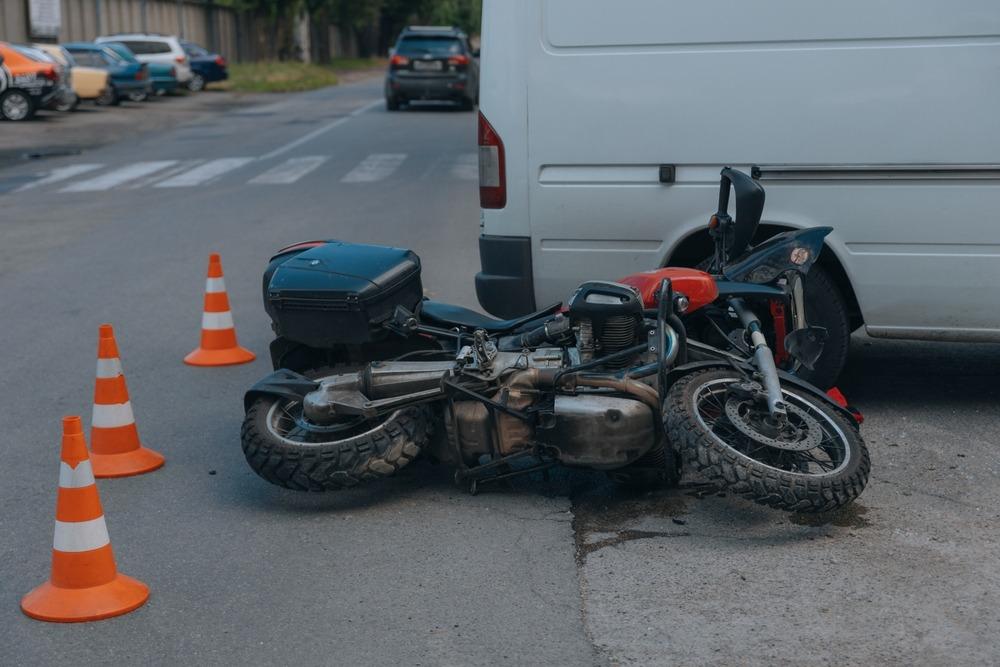
The crash scene can provide information that drivers may not remember clearly or agree about. Physical details can help explain vehicle movements, the direction of impact, and the conditions surrounding the collision.
Investigators may examine:
- Vehicle damage: The location and type of damage may help explain how the vehicles collided.
- Skid marks: Tire marks can offer clues about braking, although they do not always establish speed or fault on their own.
- Debris patterns: The location of broken parts or scattered materials may help indicate where the collision occurred.
- Road layout: Lane markings, traffic signals, visibility, and nearby obstructions may affect what each driver could see.
These details need to be considered together. A damaged motorcycle alone does not prove who caused the crash. The goal is to connect the physical evidence with the accounts of those involved and develop a clearer explanation of the collision.
Consider Whether Another Party Contributed to the Crash
Responsibility does not always end with the motorcycle rider and the other driver. Depending on the circumstances, another person or organization may also have contributed to the collision.
For example, an employer could potentially share responsibility if a commercial driver caused a crash while performing work duties. A vehicle owner may also be responsible under certain circumstances involving the driver’s permission to use the vehicle.
Dangerous road conditions can raise additional questions. A deep pothole, missing warning sign, or poorly maintained road surface might contribute to a rider losing control. However, responsibility for road hazards depends on who controlled the area, what duties applied, and whether the required legal conditions are met.
Identifying every potentially responsible party helps prevent an investigation from overlooking an important cause. It does not mean that every person connected to the crash is automatically liable.
Resolve Conflicting Accounts With Supporting Facts
Disagreements are common after motorcycle crashes. A driver may insist that the rider was speeding, while a witness may describe a different sequence of events. Insurance companies may also interpret the available information differently.
Statements should therefore be compared with other available details. Investigators may review photographs, witness accounts, vehicle damage, traffic camera recordings, and crash reports to determine whether each explanation fits the facts.
A police report can provide useful information about the collision, but it may not answer every question about civil responsibility. Similarly, an insurance company’s initial decision does not necessarily settle a disputed claim.
Keeping personal opinions separate from verifiable facts is important. A consistent account supported by reliable information can help clarify disagreements and identify details that require further investigation.
Why Fault Details Matter Under North Carolina Law
North Carolina generally follows a contributory negligence rule. Under this rule, an injured person whose own negligence contributed to the crash may be barred from recovering damages, even if another party was also negligent, subject to applicable exceptions.
This makes the rider’s actions an important part of the investigation. Questions about speed, lane position, attention, and compliance with traffic rules may affect how a claim is evaluated.
For example, an insurance company might argue that a motorcyclist contributed to a collision by traveling too quickly. The rider’s account, physical evidence, and other reliable information may help assess whether that claim is supported.
Because the consequences can be significant, disputed fault should be examined carefully rather than accepted without review.
Choose Practical Steps That Preserve Important Details
After a motorcycle crash, taking a few careful steps can help preserve important information and clarify who may be responsible. Riders in Fayetteville, NC, can consider the following actions:
- Get medical care: Seek prompt treatment for injuries and keep records of medical visits and recommended care.
- Save relevant information: Keep photographs, witness contact details, crash reports, and insurance correspondence.
- Track expenses: Record medical bills, missed work, and other costs related to the collision.
- Handle insurance statements carefully: Stick to facts you know and avoid guessing about details you cannot remember.
- Get legal guidance: A motorcycle accident lawyer in Fayetteville, NC, may review the available evidence, assess disputed fault, and explain possible options for pursuing compensation.
Keeping these details organized can make it easier to review the circumstances of the crash and respond to questions about responsibility.
Build a Clearer Understanding of Who Was Responsible
Establishing responsibility after a motorcycle crash requires more than deciding which driver appears to be at fault. The events before impact, physical clues, road conditions, and conflicting accounts all deserve careful consideration. North Carolina’s fault rules make that review especially important for injured riders.
If you are facing questions about responsibility after a crash in Fayetteville, consider speaking with a motorcycle accident attorney about your circumstances. A careful review of the available facts can help you understand the issues affecting your claim and decide what steps to take next.