How to Design Safer Livestock Areas in the North Carolina Piedmont
Key Takeaways
- Safe livestock areas begin with a site plan that accounts for animal behavior, worker movement, terrain, and weather.
- Direct animal flow, reliable gates, solid footing, and clear escape routes can reduce daily handling risks.
- North Carolina Piedmont farms need to plan for rain, clay soils, erosion, summer heat, and changing ground conditions.
- Older facilities can often become safer through phased repairs before a complete redesign is necessary.
Across the North Carolina Piedmont, livestock areas often serve several purposes at once: grazing access, feeding, loading, sorting, treatment, and routine care. A thoughtful layout helps make those jobs more predictable for both animals and people. When planning a new enclosure or improving a worn pasture boundary, working with a local fence manufacturer can help property owners match gates, perimeter barriers, and rehabilitation work to the way the land is actually used.
Safety is not simply a matter of building a stronger fence. It comes from designing spaces that allow animals to move calmly, give workers room to operate, and stay usable after a hard rain or a busy weekend of handling. For farms near Dallas, Gastonia, and throughout the western Piedmont, practical improvements should account for rolling ground, compacted heavy-use areas, and the quick runoff that can develop around barns, waterers, and gates.
Start With a Clear Site Assessment
Begin by walking the livestock area during a normal workday. Follow the same route used to bring animals in, move them between paddocks, feed them, load them, or provide treatment. Mark places where water stands, mud collects, footing becomes slick, visibility is poor, or people have to squeeze between an animal and a fixed object.
Ask everyone who works on the property where delays, close calls, escapes, and difficult turns occur. Include the location of water points, shade, feed storage, equipment traffic, utility lines, and drainage paths. A design that looks efficient on paper may cause trouble if it conflicts with the farm’s daily rhythm.
Design Around Natural Animal Movement
Livestock generally move more readily when they can see a clear route and remain with other animals. Create travel lanes that lead toward the next destination without abrupt turns, blind corners, clutter, or unnecessary dead ends. Keep loose tarps, dangling hoses, reflective objects, and stored equipment out of handling paths because unfamiliar visual distractions can slow movement.
For cattle, a gradual approach to pens, alleys, and loading areas is often easier to manage than a route that requires repeated backing and turning. For smaller stock, close attention to corners and gaps matters just as much. Sheep and goats can test small openings, while horses need smooth, highly visible boundaries that do not create entanglement hazards.
Match the Layout to the Species
A single design is rarely ideal for every animal. Cattle need sturdy barriers, dependable latches, adequate turning space, and protected places for handlers. Horses benefit from smooth surfaces and fencing that avoids sharp projections. Goats and sheep require secure containment with attention to climbable features, low gaps, and weak corner connections. Poultry areas need clean service access, suitable ventilation, and separation from vehicle traffic.
Mixed-species farms should avoid assuming that a barrier suitable for one group will contain another. Use separate zones when animal size, behavior, feeding routines, or health-management needs differ. This also makes it easier to isolate an animal for observation or veterinary care without disrupting the entire group.
Create Separation Between People and Animals
Workers need a safe place to stand before they need it. Near gates, chutes, sorting points, and treatment areas, provide an exit path that stays clear of buckets, feed bags, tools, and parked equipment. Position latches so a person can operate them without stepping into a tight animal path. Where appropriate, use rails, catwalks, or protected work zones that allow handling tasks to happen beside animals rather than directly behind them.
Documenting inspections and repairs is also worthwhile. North Carolina livestock owners are responsible for keeping animals contained, and records of fence inspections and repairs can help demonstrate that routine precautions were taken after storms or other events.
Choose Stable Footing and Reliable Drainage
Footing affects animal confidence, worker safety, and the lifespan of gates and posts. Inspect high-traffic locations for loose gravel, exposed roots, slick concrete, deep mud, erosion, or sharp debris. Prioritize firm, well-drained surfaces at entrances, around waterers, beside feeders, and in loading zones. Repair ruts before runoff deepens them or animals begin avoiding the area.
In Piedmont clay soils, water can quickly concentrate around low spots and compacted lanes. Grade ground so runoff moves away from buildings, feed areas, and heavily used gates. Keep drainage channels vegetated where feasible, and avoid sending runoff toward streams or ponds. On pasture properties with waterways, fencing livestock away from streambanks can help protect unstable ground and improve water management.
Build Gates and Barriers for Daily Use
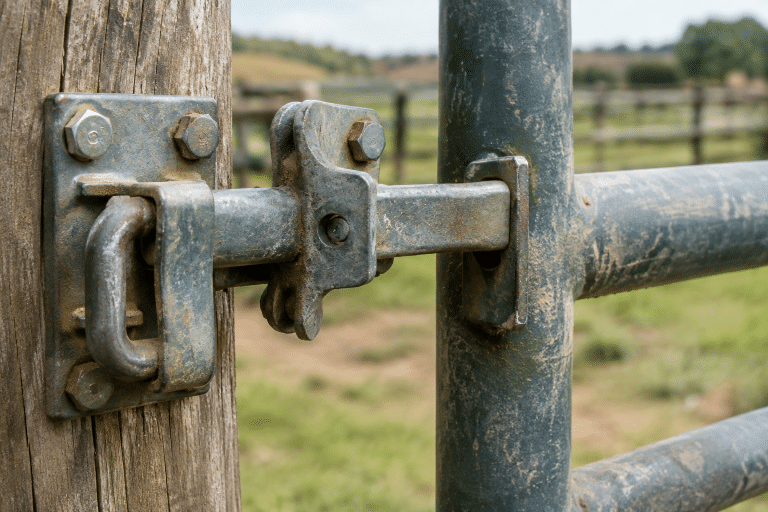
A gate that is awkward to open becomes a daily safety problem. Choose swing direction and placement based on routine animal flow and equipment access. Inspect hinges, posts, welds, fasteners, wire, and latches regularly. Remove broken boards, protruding hardware, loose wire, and damaged panels promptly.
Make emergency access points easy to recognize, but keep them secured against accidental opening. Gates near public roads, driveways, or delivery areas deserve special attention because an escape can quickly become a serious hazard. Clear labels and a consistent gate-closing routine help every worker follow the same process.
Plan Loading, Treatment, and Holding Areas Carefully
Loading and treatment areas bring animals, people, vehicles, and equipment into close proximity. Keep trailers on stable ground with enough room to approach and leave without backing through a crowded livestock zone. Reduce sudden shifts in light, sound, and surface texture along the route. Leave space for veterinarians, handlers, and equipment without blocking the escape path.
Review the route from the holding area to the chute, scale, trailer, or treatment point. Animals should not need to backtrack through a congested pen whenever possible. A simple, repeatable path is usually easier to operate safely than a complicated system with many temporary panels.
Improve Older Areas in Stages
A full rebuild is not the only route to a safer farm. Start with the most urgent hazards, then make upgrades in a logical order:
- Repair damaged fencing, loose posts, failing latches, and sharp edges.
- Clear clutter and restore open escape routes.
- Improve footing at gates, feeders, waterers, and handling lanes.
- Add protected worker positions where animals are sorted or restrained.
- Address drainage, erosion, and larger flow problems in later phases.
Use a Routine Inspection Checklist
Inspect high-use areas frequently and complete a broader review after severe weather, herd changes, or a near miss. Check whether gates latch, fences remain tight, animals can see the intended route, surfaces are stable, water is accessible, and workers can quickly reach a safe position. Note repairs in a log, take photos when useful, and schedule follow-up work before a minor defect becomes a failure.
Know When to Seek Technical Help
Consult a qualified agricultural adviser, engineer, veterinarian, safety professional, or experienced installer when a project involves major grading, drainage, structural work, large or unpredictable animals, or repeated handling incidents. Professional input is especially valuable when a property must accommodate several species, expanding herd numbers, or a complicated combination of slopes, streams, roads, and buildings.
Conclusion
Safer livestock areas are built through observation, maintenance, and practical design choices that fit the property. By improving animal flow, protecting workers, maintaining barriers, and planning for North Carolina Piedmont weather, farm owners can create spaces that work more smoothly today and remain easier to manage in the years ahead.