How Do Ray-Ban Meta Glasses Work With Prescription Lenses for Everyday Wear?
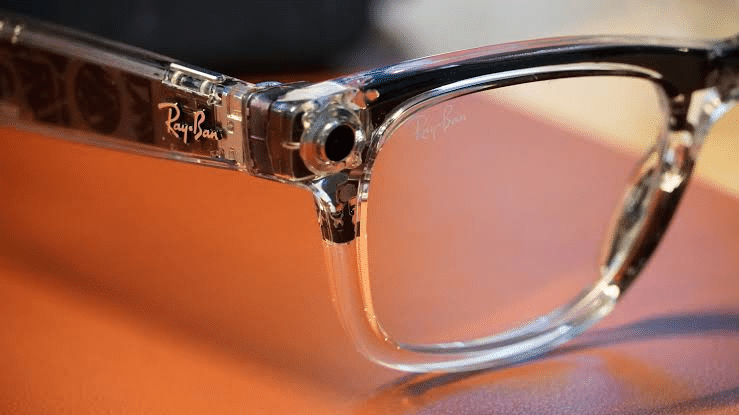
Yes, standard Ray-Ban Meta frames accept full-strength prescription lenses because they do not contain a heads-up display embedded inside the glass. Optical labs cut and edge custom corrective lenses—including single-vision, progressive, blue-violet light filtering, polarized sun, and Transitions photochromic options—directly into the acetate chassis just like conventional designer eyewear. All cameras, microphones, batteries, and open-ear speakers live inside the hinges, browline corners, and temple arms, leaving the front rims completely free for medical-grade optics.
That single architectural choice explains why this product line survived where a decade of face-mounted computing failed. Tech executives spent years trying to convince commuters to strap miniature projectors onto their noses. Consumers took one look in the mirror and walked away. Nobody in New York wants to look like an off-duty cyborg while ordering an espresso in SoHo.
Strip out the floating screen, keep the classic Wayfarer or Skyler silhouette, and suddenly the unit economics change overnight. You are no longer asking someone to adopt a strange gadget; you are upgrading an object they already put on their face before checking their phone in the morning.
Why Are Display-Less AI Glasses Replacing Clunky Heads-Up Visors?
Hardware marketers love complexity because complexity justifies bloated keynote presentations. Buyers hate complexity because weight on the bridge of the nose hurts after forty-five minutes.
When Counterpoint Research tracked the wearable eyewear sector in the first half of 2026, they found that global AI glasses shipments surged 263% year over year, with display-less models accounting for 96% of total volume and Meta capturing 94% of that segment. Read those numbers twice. Augmented-reality visors grabbed the magazine covers, yet ninety-six out of every hundred pairs actually sold had zero screen in the lens.
Three factors drove that lopsided split:
- Weight distribution: Waveguide displays and micro-projectors push mass forward onto the nasal pads, causing pressure marks and slippage. Removing the screen keeps the center of gravity closer to standard acetate frames.
- Battery longevity: Powering a bright optical display drains tiny temple cells in under two hours, whereas audio-and-camera hardware runs comfortably through an active day with quick top-ups from the charging case.
- Social camouflage: Zero-display lenses eliminate the eerie inward glow that immediately signals to everyone across a dinner table that you are reading notifications mid-conversation.
This shift mirrors what editors covering AI-integrated luxury eyewear have observed across Manhattan retail: modern luxury technology wins only when it refuses to announce itself. A camera tucked cleanly behind a corner rivet passes the glance test at three feet. A glowing prism glued to your cornea never will.
Who Actually Needs Prescription Integration in Connected Eyewear?
Most early gadget reviews suffer from a massive blind spot: they are written by twenty-something tech reporters with 20/20 vision testing non-prescription demo pairs for a weekend. Real life looks nothing like a press junket.
According to the National Eye Institute, more than 150 million Americans live with a refractive error such as myopia, hyperopia, astigmatism, or age-related presbyopia. Zoom out to broader adult vision habits and the addressable market gets even larger. Data published by The Vision Council shows that more than 80 percent of adults rely on some form of vision correction in their daily routines.
Think about what happens when you sell a non-prescription wearable to someone who already wears glasses twelve hours a day. You force them into an annoying daily tradeoff. Either they shove contact lenses into dry eyes just to take hands-free calls on their walk to work, or they leave the connected frames sitting in a drawer because seeing street signs clearly beats listening to a podcast.
Once corrective optics enter the frame, friction vanishes. You wake up, put on one pair of glasses, and walk out the door. That operational simplicity is precisely why Meta partnered deeply with EssilorLuxottica’s global eyewear manufacturing empire rather than trying to build an optical supply chain from scratch. Silicon Valley knows how to train multimodal voice models, while Milan and Paris know how to bevel a minus-four polycarbonate lens without warping an acetate rim.
Where Can You Order Ray-Ban Meta Frames Fitted to Your Exact Rx?
Buying connected eyewear with a medical prescription is not identical to tossing a standard pair of sunglasses into an online shopping cart. Temple arms house delicate flex circuits and acoustic drivers, which means an inexperienced third-party lab using excessive heat during lens insertion can damage internal wiring or void warranty coverage.
Authorized optical retailers solve that problem by pairing certified lab surfacing with in-person optical measurements. Shoppers looking for Ray-Ban Meta glasses with prescription lenses can order complete, custom-ground pairs through LensCrafters either online or in store, where licensed opticians verify pupillary distance, segment height, and frame balance before cutting the glass.
Several technical details separate a mediocre Rx build from one you will actually wear for fourteen hours straight:
- Supported power range: Standard single-vision configurations support combined prescriptions from -12.00 to +6.00 diopters depending on the specific Gen 2 frame style, covering the vast majority of nearsighted and farsighted buyers.
- Lens index selection: Anyone with a correction stronger than +/-2.00 should skip basic 1.50 plastic and upgrade to 1.59 polycarbonate or thin high-index materials. Thinner edges prevent the front of the frame from turning nose-heavy.
- Frame geometry: Beyond classic Wayfarer, Skyler, and Headliner silhouettes, newer optical-first shapes like Blayzer Optics and Scriber Optics are engineered specifically around all-day prescription ergonomics.
- Benefits eligibility: Because these frames carry medical corrective lenses, buyers can apply vision insurance benefits as well as HSA or FSA dollars toward the purchase.
Anyone familiar with classic Ray-Ban frame craftsmanship already knows that acetate density and barrel-hinge tolerances dictate how a frame ages over two or three years of daily wear. Adding onboard electronics makes proper temple alignment even less forgiving if the frame sits crooked across your ears.
Which Lens Options Make Sense for Daily City Commutes?
Choosing the frame shape takes five minutes; choosing the lens treatment determines whether you end up carrying a second glasses case in your bag.
Should you pick clear lenses or Transitions?
If you spend six hours under fluorescent office lights and two hours walking outside, Transitions lenses eliminate the constant indoor-outdoor swap. They stay virtually clear indoors while darkening automatically under UV exposure on the street. Clear lenses with a blue-violet light filter make more sense if you already own dedicated prescription sunglasses for driving or bright afternoons.
Do polarized prescription lenses interfere with phone screens?
Polarized sun lenses cut horizontal glare off wet asphalt, windshields, and water, making them ideal for outdoor daylight wear. Certain older OLED phone screens can show slight rainbow banding at extreme angles through polarized filters, though modern smartphone displays handle vertical polarization cleanly.
Is an anti-reflective coating worth the extra cost?
Yes, every single time. Uncoated prescription lenses bounce overhead streetlights and subway glare straight back into your eyes, and internal reflections around the rim edge can fatigue your vision after dark.
How Do People Actually Use Camera-Equipped Frames in Real Life?
Forget the glossy commercials showing extreme athletes skydiving while livestreaming to three platforms. Real consumers use wearable tech for mundane, repetitive micro-tasks that save them from pulling a six-inch glass slab out of their pocket twenty times an hour.
A 2026 consumer adoption report by Security.org revealed that roughly 5% of U.S. adults—around 13.4 million people—already own camera-equipped eyewear, and their top daily behaviors are surprisingly practical. Nearly half of owners—48%—use their frames primarily to listen to audio, while 47% rely on hands-free recording and 45% use them for phone calls.
Notice what sits at the top of that list. Audio. Not cinema-grade filmmaking.
Open-ear directional speakers tucked into the temples let you listen to morning briefings, take client calls, or hear turn-by-turn pedestrian directions without jamming silicone earbuds into your ear canals. In a dense city where cyclists, delivery e-bikes, and crosstown buses share narrow intersections, keeping your ear canals uncovered is a genuine safety advantage.
The 3K ultra-wide camera and multimodal voice assistant fill in the secondary moments. You can snap a quick photo while holding a coffee and a leash, translate a printed menu across six supported languages even in airplane mode, or ask Meta AI to read small ingredient labels aloud. A visible LED indicator on the front frame lights up whenever the camera records, signaling clearly to people nearby that capture is active.
What Should You Verify Before Buying Prescription AI Eyewear?
Skip the impulse click and check five concrete details before placing an order:
- Prescription expiration date: Most U.S. vision prescriptions expire after one or two years, and optical labs will reject outdated paperwork automatically.
- Millimeter PD accuracy: Ask your optometrist for your exact monocular or binocular pupillary distance so the optical center of each lens aligns squarely with your pupils.
- Bridge and temple fit: Try on the exact frame width in person if possible, because thick acetate rims cannot be bent aggressively at the temple hinge where the electronics sit.
- Lens thickness upgrade: Opt for polycarbonate or high-index lenses whenever your sphere or cylinder values exceed +/-2.00 diopters.
- Charging case compatibility: Confirm that your chosen frame size matches the included charging case, as larger 53mm Wayfarer builds and standard 50mm frames require properly sized contact pins inside the nose-bridge dock.
Every generation of consumer electronics eventually faces the same brutal filter: either it disappears into normal human habits, or it ends up in a landfill next to forgotten fitness wristbands. Putting real optical lenses inside an iconic acetate frame solved the adoption puzzle without asking buyers to sacrifice their eyesight or their personal style.