How Physiotherapy Can Help You Stay Active as You Age
There comes a point for many people when physical activity starts to feel like it requires more negotiation than it used to. A walk that once felt effortless now leaves the knees sore. A morning round of golf demands an hour of warming up first. Gardening, once a simple pleasure, turns into two days of back stiffness. This is not the body giving up. It is the body changing, and there is a significant difference between the two.
Staying active as you age does not mean forcing yourself to perform the same way you did at thirty. It means adapting intelligently, understanding what your body needs now, and making movement work for you rather than against you. Physiotherapy plays a practical and often underappreciated role in making that possible.
Why the Body Moves Differently With Age
Several physical changes happen gradually as we get older, and understanding them helps explain why movement can start to feel different.
Muscle mass tends to decline from around the age of thirty onwards, a process called sarcopenia. This affects strength, power, and the ability to recover after exertion. Connective tissue, including tendons and ligaments, loses some of its elasticity, which contributes to reduced joint range of motion and the stiffness many people notice after sitting for long periods or first thing in the morning.
Balance becomes more complex with age as well. The body relies on a combination of vision, inner ear signals, and sensory feedback from the joints and feet to stay upright. Each of these systems can shift subtly over time, which is one reason why balance challenges that felt minor at forty can feel more significant at sixty-five.
Recovery also takes longer. Muscles repair more slowly after strenuous exercise, and underestimating this leads to accumulated fatigue, soreness, and eventually a reluctance to keep going. None of these changes are uniform. Two people of the same age can have entirely different physical profiles depending on their activity history, previous injuries, and overall health. This is precisely why a one-size approach to exercise rarely works well for older adults.
Why Staying Active Is Worth the Effort
The reasons to keep moving go well beyond fitness. Regular physical activity supports bone density, which matters particularly for postmenopausal women and older men at risk of osteoporosis. It supports cardiovascular health, helps regulate blood pressure and blood sugar, reduces the risk of certain chronic conditions, and has a well-documented positive effect on mood, sleep quality, and mental sharpness.
More practically, staying active preserves the physical capacity to do ordinary things without help. Getting up from a low chair, carrying shopping, climbing stairs, bending to pick something up from the floor. These abilities feel unremarkable until they start to require effort, and the gap between managing them independently and needing assistance is often bridged by consistent movement.
Strength, balance, aerobic fitness, and flexibility do not work in isolation. A person who walks regularly but does no strength work may find their legs unreliable on uneven ground. Someone who stretches but avoids load-bearing activity may maintain their flexibility while quietly losing bone density. A well-rounded routine that combines these elements tends to serve people much better over the long term.
What a Physiotherapist Can Do for You
Physiotherapy is strongly associated in most people’s minds with injury recovery, and it certainly serves that purpose well. But it is just as relevant as a proactive resource for people who want to maintain physical function, return to an activity they have stepped back from, or simply get more confident in their movement as they age.
The starting point is always assessment. A physiotherapist will look at how you move, your posture, your gait, your strength, your balance, and your range of motion. They will ask about your goals, your history, and any symptoms you have noticed. From this picture, they can identify specific areas that may be limiting your movement or setting you up for problems. A good recovery-focused physiotherapy clinic will build a program around where you actually are, not where a generic protocol assumes you should be, and adjust it progressively as your capacity improves.
Physiotherapists also teach movement strategies that most people have never been shown. How to get up from the floor safely. How to load the body during certain activities to reduce strain on vulnerable joints. How to pace a return to exercise after a long break. This kind of practical education is often as valuable as the exercise program itself.
Building Strength Is Not Optional
Muscle strength underpins almost everything. It keeps joints stable, makes stairs manageable, supports balance, and determines how easily you can perform everyday tasks. Yet strength training is consistently underused among older adults, particularly those who associate exercise primarily with walking or gentle stretching.
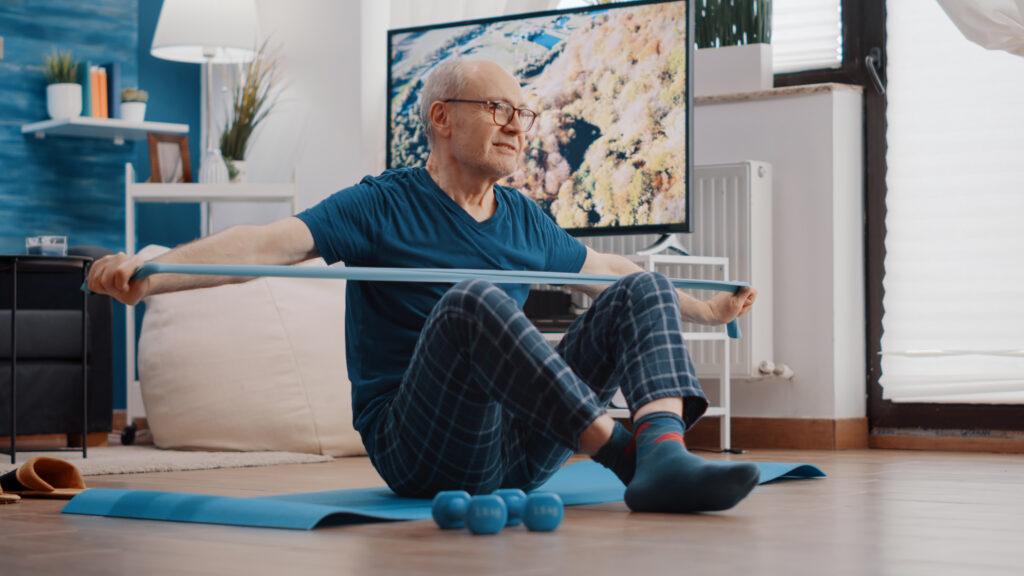
The reassuring reality is that muscle tissue remains trainable throughout life. A physiotherapy-guided strength program does not require a gym or heavy equipment. Depending on the individual, it might begin with bodyweight exercises, sit-to-stand repetitions, wall push-ups, step-ups onto a low surface, before gradually introducing resistance bands or light free weights. The principle is progressive overload: gradually increasing the demand on muscles over time so that they continue to adapt and grow stronger.
Functional movements tend to produce the most useful gains. Training the muscles involved in rising from a chair, carrying bags, climbing stairs, and stabilising yourself on uneven terrain translates directly into everyday life. The right starting point and pace depends entirely on the person’s current condition, any existing joint problems, and what they are working toward.
Balance Improves More Than People Expect
A common assumption is that declining balance is simply part of aging and cannot be meaningfully changed. In practice, balance responds well to consistent, targeted training.
A physiotherapist will typically assess several aspects of balance: static stability, meaning the ability to stand still without swaying; dynamic stability during movement; lower-body strength; coordination; and confidence. Confidence matters more than it might seem. People who feel uncertain about their balance often move more cautiously and tentatively, which can gradually weaken the very muscles and reflexes needed to maintain stability.
Balance training does not need to be complicated. Standing on one leg, walking heel to toe along a line, stepping over low objects, and practicing deliberate weight shifts are all examples of exercises that challenge the balance system appropriately without being risky. These exercises become progressively more demanding as ability improves. The purpose is not to achieve an impressive balance score. It is to feel steady and confident during the activities that matter to you.
Mobility and the Everyday Movements That Matter Most
Reaching overhead to retrieve something from a shelf. Turning to check your blind spot while driving. Bending to tie a shoe. Getting in and out of a car without bracing for discomfort. These movements are so routine that most people do not think about them until they start to feel restricted.
Mobility refers to the active ability to move a joint through its full range. Flexibility relates to the length and pliability of the surrounding muscles and soft tissue. Both decline without appropriate attention, and both respond well to consistent work.
Rather than following a generic daily stretch routine, a physiotherapist can identify exactly where mobility is limited and what is causing the restriction. Sometimes it is joint stiffness. Sometimes it is tight surrounding muscles. Sometimes it is a habitual movement pattern that has gradually shortened the available range. Targeted work on the actual source of restriction tends to produce more useful results than broad, undirected stretching.
Managing Pain Without Stopping Entirely
Pain is one of the most common reasons older adults reduce their activity levels, and it is also one of the most poorly managed. The instinct to rest completely until pain goes away is understandable, but it often makes things worse. Prolonged rest weakens muscles, reduces joint nutrition, and can make a manageable problem significantly harder to recover from.
A more useful approach, where appropriate, is activity modification rather than avoidance. This means identifying which specific movements or loads aggravate symptoms and adjusting intensity, range, or duration to allow continued movement within a comfortable range. Over time, a carefully graduated program builds tissue tolerance so that activities which were once provocative become manageable again.
Accessing physiotherapy services for pain relief is not only about hands-on treatment. Education is a substantial part of what physiotherapists offer, and it is frequently undervalued. Understanding why something hurts, what is safe to continue doing, how to pace activity intelligently, and when to push gently versus when to rest are all pieces of knowledge that change how people manage their symptoms day to day.
Persistent, severe, or unexplained pain, particularly if it is new or accompanied by other symptoms, should always be assessed medically before beginning an exercise program. Pain that has a known cause and a manageable pattern is a very different situation from pain that has never been properly investigated.
The Real Goal Is Doing What You Actually Want to Do
Abstract fitness targets only matter when they connect to something meaningful. For a sixty-two-year-old who wants to keep cycling, the relevant question is not whether they can achieve a particular strength score. It is whether they can ride comfortably for two hours without hip pain. For someone planning to travel, what matters is whether they can handle a full day of walking a new city without their knees failing by midday.
Physiotherapy is most effective when it is organized around concrete personal goals. Walking longer distances without stopping. Hiking with family on holiday. Gardening through a full weekend without consequences. Swimming regularly again. Playing comfortably with grandchildren. Returning to a gym routine after years away. Getting through a flight and a busy travel day without bracing for the aftermath.
When goals are specific and personally meaningful, exercise programs can be built to target them directly. The motivation to stick with a program is also considerably stronger when the outcome connects to real life rather than a generic health metric.
When to Consider Seeing a Physiotherapist
Physiotherapy is not something everyone needs on an ongoing basis, but there are situations where a professional assessment can make a meaningful difference.
Persistent stiffness or pain that does not resolve with rest and simple measures is worth having looked at properly. Noticeable changes in balance, or a growing fear of falling, deserve attention early rather than later. Difficulty with everyday tasks that were previously manageable, climbing stairs, walking distances that used to feel easy, getting up and down from the floor, can indicate changes that are far easier to address before they become entrenched.
Returning to exercise after a long gap, particularly following an injury, surgery, or a period of illness, is another situation where guidance makes the process both safer and more likely to succeed. People managing chronic conditions such as arthritis or osteoporosis can also benefit from a program that is designed around those conditions rather than working awkwardly around them.
Keeping It Going
The most consistent predictor of staying active over the long term is not intensity. It is regularity. A moderate routine maintained reliably over months and years produces far better outcomes than bursts of high effort followed by long gaps of inactivity.
A sustainable active-aging routine tends to include some strength work two or three times a week, regular aerobic activity suited to the person’s preferences and fitness level, mobility and flexibility exercises, and balance training where relevant. The specific combination depends on the individual. Recovery deserves genuine respect, particularly as we age. Scheduling easier days, paying attention to how the body responds after activity, and adapting when symptoms change are all signs of an intelligent approach to training, not weakness.
Adapting an activity is almost always preferable to abandoning it. The goal is continued movement in whatever form serves you best, because that movement is what supports strength, independence, confidence, and quality of life well into the decades ahead.