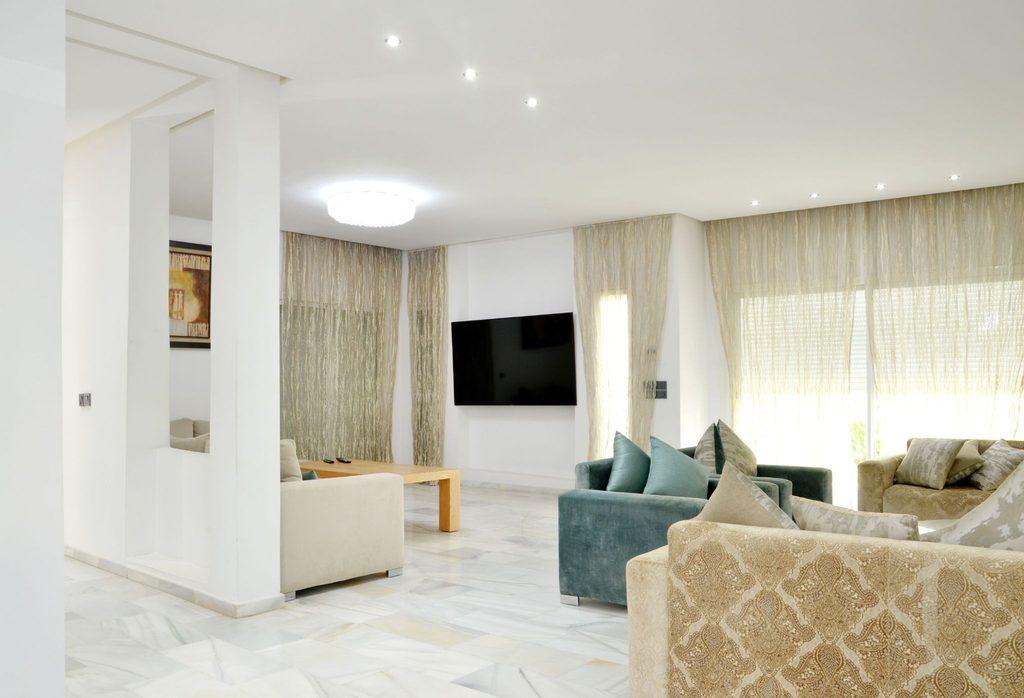
7 Living Room Interior Design Trends Shaping Modern Spaces In 2026
Living rooms have stopped functioning as quiet, museum-like showpieces. In 2026, interior design focuses on rooms that support daily routines, absorb natural light, and adapt to changing floor plans. Sterile white boxes and oversized, immovable sectionals are giving way to warm textures, flexible footprints, and tactile craftsmanship.
Whether you are furnishing an urban apartment or reworking an open-plan family zone, these seven living room interior design trends define how contemporary homes look and function right now.
1. Soft geometry and low-slung silhouettes
Sharp, boxy corners dominated living rooms for more than a decade. Now, designers are replacing rigid 90-degree angles with curved silhouettes, rounded armrests, and low-slung profiles. A sofa with a gentle arc or a kidney-shaped coffee table softens the visual grid of a rectangular room and improves foot traffic around tight walkways.
Low-profile seating also keeps sightlines open. When backrests sit between 70 cm and 78 cm high, natural light travels unobstructed across the room from windows to adjoining dining areas. The trade-off is neck support—if you spend hours upright watching films, pair a low-slung frame with deep lumbar cushions or a high-backed accent chair.
2. Compact seating and broken-plan zoning
Open-concept floor plans often suffer from one major flaw: a lack of intimacy. Rather than anchoring a room with a massive four-meter modular couch that swallows every square centimeter, homeowners are adopting broken-plan zoning. Using area rugs, open shelving, and smaller seating pieces creates distinct areas for reading, conversation, and remote work without erecting drywall.
“People are realizing that a giant sectional locks a room into a single rigid layout,” says Madrid-based interior architect Elena Vance. “When you scale down the primary seating footprint, you gain breathing room, better natural light flow, and the freedom to rearrange for guests.”
This shift is why compact 2 seater sofas have become a staple in both city apartments and generous suburban lounges. Measuring roughly 150 cm to 185 cm wide, a well-proportioned loveseat anchors a cozy conversation zone on its own or pairs across from two swivel armchairs. You get comfortable, shared seating while leaving at least 80 cm of clear walking space around the perimeter.
3. Mixed wood tones over matched sets
Buying a coordinated three-piece wood furniture set—matching coffee table, media console, and side tables—makes a living room look like a showroom catalog rather than a lived-in home. Designers in 2026 deliberately mix light, medium, and dark timber grains in the same space.
To pull off mixed woods without visual clutter, follow three practical rules:
- Match the undertones: Pair warm-toned timbers like honey oak, teak, and walnut together, or keep cool-toned ash and whitewashed pine in the same room.
- Vary the grain texture: Balance a smooth, oiled walnut media unit with a raw, wire-brushed oak coffee table.
- Repeat each wood tone at least twice: If you introduce a dark walnut side table, echo that shade in a picture frame or lamp base across the room so it looks intentional.
4. Tactile textiles and honest materials
Visual minimalism only works when a room feels rich to the touch. Flat, synthetic microfibers are losing ground to heavyweight linens, bouclé weaves, washed cottons, and unsealed stone. Materials with visible slubs, knots, and natural grain bring warmth to neutral rooms without relying on loud patterns.
Sustainability also plays a practical role in upholstery choices. Recycled polyester chenilles and 100% recycled PET fabrics now replicate the soft hand-feel of natural wool while resisting spills, pet claws, and UV fading far better than delicate Belgian linen. Always check the Martindale rub count before buying—aim for 30,000 rubs or higher for an everyday living room sofa.
5. Saturated earth pigments and deep indigo
Stark gallery-white walls are stepping aside for grounded, atmospheric color palettes. Terracotta, warm ochre, olive green, and deep indigo are leading living room color schemes. Rather than painting a single accent wall, designers are wrapping entire rooms—including baseboards and crown moldings—in a single matte hue.
If color-drenching your walls feels like too much commitment, apply the classic 60-30-10 color rule:
- 60% dominant neutral: Warm oatmeal walls, travertine surfaces, and a large hand-knotted wool rug.
- 30% secondary tone: A deep indigo or cognac leather sofa paired with mid-tone timber shelving.
- 10% concentrated accent: Smoked amber glass vases, rust linen cushions, or ceramic table lamps.
6. Layered, glare-free ambient lighting
A single overhead downlight flattens shadows and makes even expensive furniture look harsh. Current living room lighting design eliminates overhead glare in favor of three distinct light sources placed at varying heights.
Combine a diffused paper or linen pendant light for general warmth, an arched floor lamp angled over a reading corner, and a cordless ceramic table lamp tucked onto a bookshelf. Choose bulbs rated at 2700K (warm white) with a Color Rendering Index (CRI) above 90 so wood grains and textile colors appear true to life after sunset.
7. Modern heritage and collected objects
The most compelling living rooms in 2026 look assembled over years rather than ordered in a single afternoon. Known as Modern Heritage, this approach pairs clean-lined contemporary furniture with vintage ceramics, inherited timber stools, and framed travel photography.
“A room needs friction between old and new to feel human,” notes Melbourne textile stylist Marcus Thorne. “When a crisp modern sofa sits beside a weathered vintage timber bench and a hand-loomed rug, the space immediately tells you who lives there.”
Skip mass-produced canvas prints and identical shelf fillers. Leave 30% of your shelving empty so individual objects—a sculptural stoneware vessel, stacked art monographs, or a hand-carved wooden bowl—have room to breathe.
Designing a room that ages well
Trends work best when they solve real spatial problems rather than forcing you to redecorate every two years. Start with durable, well-proportioned anchor pieces—a solid timber table, a compact sofa built for your actual floor plan, and natural-fiber rugs—then layer in seasonal color through textiles and lighting. When every item earns its footprint, your living room stays comfortable, adaptable, and effortless to live in.